
Underground Good: Linda Rube of Goodwater Crossing
“It has been surprising to me to see how well a housing first model works! When people step up and take responsibility for themselves and make decisions for themselves, they’re much more apt to follow through. They are doing what they want to do with their lives. There’s hope in that.”
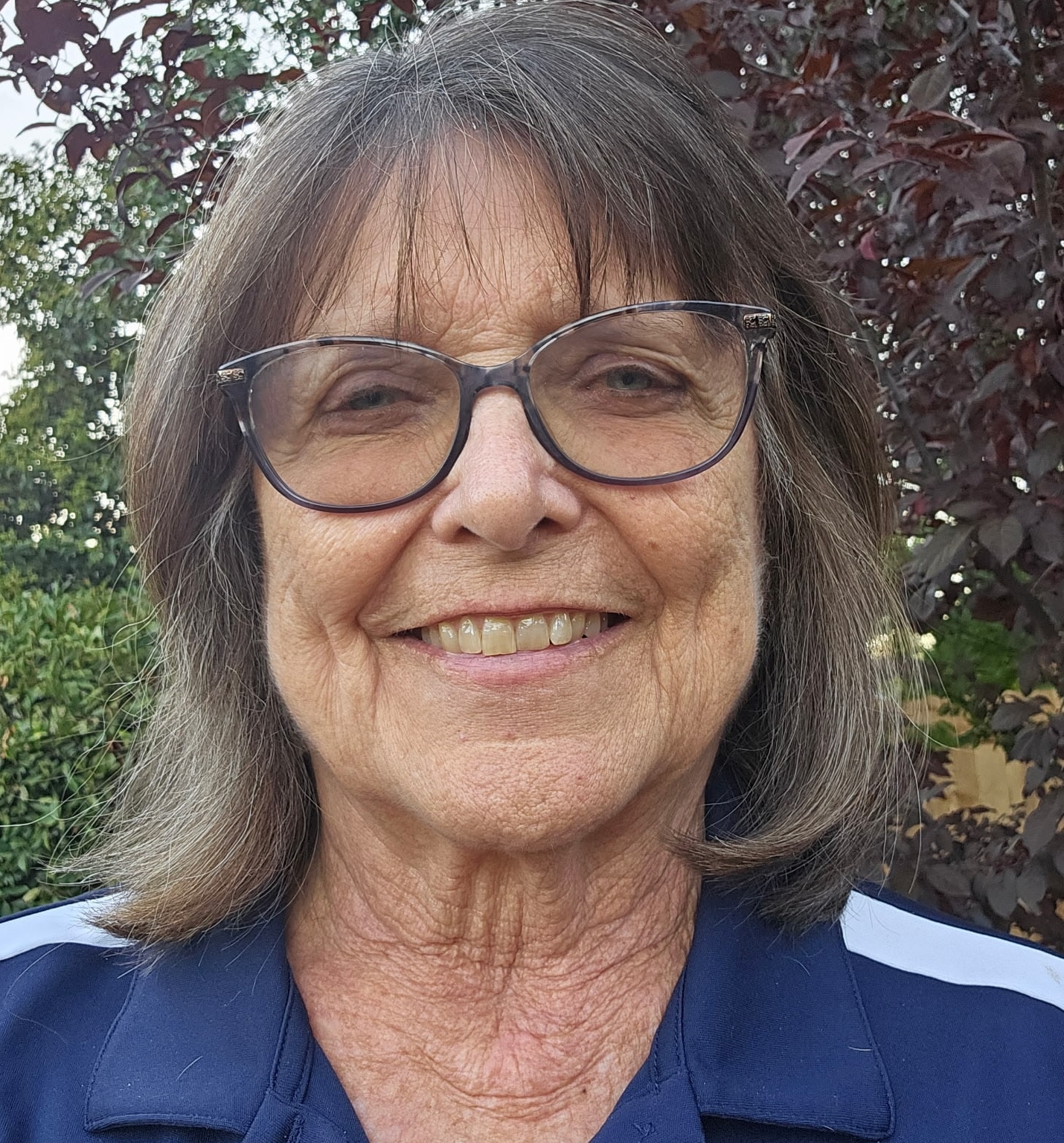
Editor’s Note: This Opinion piece is part of our Underground Good series, which focuses on providing a window into the mindsets of ordinary people doing good work in their community. It’s written by sociologist, coach and evaluation consultant Sharon Brisolara. You can find the rest of our Underground Good series here. Want to nominate someone? You can do that here.
Linda Rube is one of those people who make you feel as if you belong.
She has worked with various projects focused on homelessness in the past and has been involved in the Goodwater Crossing Micro Shelter site since its inception. In this conversation, she shares insights about the Goodwater community, the residents, the possibilities she sees in this model and what she continues to learn.
How would you like to introduce yourself to readers?
My name is Linda Rube. I’ve lived in Redding for about 8 years. I retired after 15 years of working as a hospice chaplain and moved here to be near my son and grandkids. Since I’m a deacon in the Lutheran church, I connected with St. James Lutheran and utilized my professional experience to become a kind of official church liaison between St. James Lutheran and Goodwater Crossing, our micro shelter program that has evolved over the last few years. I’m the Operations Coordinator there — that has been my main focus during the last couple of years. It has been a nice retirement opportunity and I am enjoying my role.
Tell us about Goodwater Crossing and how you define “micro shelter.”
A micro shelter community is a community for the unhoused. Micro shelters are generally small cabins that have a bed, a desk, small area, air conditioning and heating. At Goodwater, we have a community room with laundry and cooking facilities, a meeting area and a separate hygiene unit with a shower and bathroom.
The units themselves are pretty small, about 8 by 12 feet or 8 by 16. We have four cabins at Goodwater Crossing and one of the units is a double so we can have up to five people in the cabins. They are considered emergency housing.
Our micro shelters are authorized by the city of Redding under a special resolution that recognized an emergency situation for the unhoused in our city. We’ve been open for almost a year now, and we follow a housing first model, a low barrier program. That means that there aren’t a lot of requirements to be in our housing units. To be in our housing, you have to want to move toward permanent housing, be in the Homeless Management Information System (HMIS) coordinated entry data system, be documented as unhoused and be working toward the goals set with your case manager.
There aren’t a lot of rules. The community makes some of their own. We have basic rules that there is no drug or alcohol use on campus, but there’s no control over what someone does outside of campus as long as a person’s behavior is not disrupting community life or someone’s safety. It is also a closed community; friends cannot come and go. If your family wanted to see where you were living, their visit would have to be approved through the case manager. We respect our residents’ needs for confidentiality.
Is there one case manager for all residents?
Yes, one case manager that we share between Goodwater and the South Market micro shelter community. There is a similar program there on Mark street, off South Market, that is administered by the United Way of Northern California. It has been open for a little over 2 years and they have had really good results using a housing first model.
We also have a three-quarter time site manager that works only on our site. Both of those positions are covered by Lutheran Social Services (LSS) through grants. Our residents come in from a variety of different backgrounds and situations, so their needs and goals are different. As a result, the response is very individualized.
How many residents do you have currently?
We currently have four residents. We have one opening right now and are interviewing people for that spot. We also have what we call Accompaniment Partners (APs). They are volunteers that walk alongside our residents, not as counselors or professionals, just somebody to be a listening ear.
What needs to happen for someone to transition to permanent housing?
The goal is to transition from emergency housing, the HUD (Housing and Urban Development) category we’re in now, into more permanent housing. For most people, that means getting on a HUD waiting list for permanent housing vouchers, something that can take 2 years to receive. That timeline doesn’t match up with our 10 months of stay very well. When we can get people entering our micro shelters that are already on that waiting list, it’s a little easier to meet that timeframe. But if they come to us before getting on the housing list, that’s a real problem, in part because the city doesn’t have a lot of housing available for them to take that next step. Also once you get a HUD voucher, you only have three months to find a place, otherwise that voucher becomes invalid. That is another challenge.
I know there are some grants out there for shared housing situations with support and case management. We’re looking at how to fill in that space between what we are already offering at the micro shelter with a somewhat longer-term housing situation that offers a more realistic time frame for somebody to get into their own place and live independently.
Everybody’s situation is different. For some, once they receive disability support or if they are able to be employed, they might be able to afford their own apartment without the HUD voucher. Or at least they could get started until the voucher comes through.
What are examples of other barriers you have seen?
The group we have is really working hard at getting everything in place. We have had two residents who didn’t even have IDs when they came in. They had to start with getting their birth certificates, then medical services/MediCal, and, if eligible, disability. Most have many tasks to complete before they can connect with services, and, unfortunately, residents are only given a 10 month time period to be in the shelters because that is the time that the city has given us.
One resident was living for years in what she calls “the woods.” She applied for disability. I’m not clear whether she had it before, but sometimes you lose eligibility if you are living in a place where you can’t have mail, or you don’t have a connection with organizations, or you just fail to make those connections for one reason or another. We have had one man who was an IHSS worker but after living in camps, he lost that status and had to start over. That’s a lot of it. People just lose their connections and any paperwork they had already done. If you don’t meet the deadlines and fill out all the paperwork — and it’s a lot — you won’t be able to get services.
Given that, do you have any concerns with the changes that will be happening in how people maintain eligibility for Medi Cal and SNAP (Supplemental Nutrition Assistance Program) benefits that will go into effect after the midterm elections?
We’re waiting to see how all that comes down. One big concern is that agencies like ours will lose a lot of their housing grant income and support from MediCal. Also, for people who live here, a lot of them are on food stamps (SNAP). We don’t provide a meal program at Goodwater, except for the Friday night meals. So they are pretty dependent on food stamp income.
Tell me about Friday night meals.
Here at Goodwater, we host Friday night dinners, communal meals that are an opportunity for residents to eat together with a group of community members that are connected to several churches in Redding. The church members bring food to share. The dinners are a nice way to let the community in on what’s happening at Goodwater, hearing some of the stories and realizing our residents are just people who had some bad experiences in their lives, like a car accident or losing their job.
I think we were just trying to think of ways to expand the sense of community and support in a way where everyone, our residents and people coming in, were equal. Being around the dinner table is a family-like situation. We wanted people in the community to have a chance to meet our residents and get to know what it’s like to be unhoused. And we wanted a chance for our residents to just sit down and be regular people at a dinner table, having conversations.
I was talking to a couple of our residents last week because, although we have a small air conditioning unit in that community room, it gets way too hot at dinner time during the summer. I said, “We’ve got some options. We can move over to the church and have dinner over there. Or we could just quit for the summer. I don’t want you to feel obligated to come to these dinners just because we have them.” I hadn’t really asked that question since we first started. And the two people I was talking to both said, “No, no. We love those Friday night dinners. We like the food, but we also like just being able to sit down and talk.” So that was affirming for me.
What have you noticed in terms of mutual support and sense of community among residents?
l would say we’re still working on how to develop that sense of community while recognizing that people really appreciate their solitude, too. For some of them, it’s the first time in a long time that they are outside their car, or outside of a camp and have this little space they can call their own where they feel safe. They can have their dog there with them if they want. It depends on the person, but some of them just enjoy that space.
Sometimes developing that sense of community is hard with only four or five people. We are thinking of planning some more events, especially in the summer where it’s so hot you have to stay in your cabin. Maybe we can take trips to the movies or to the bowling alley, like one person suggested. Things to get people out of that little space and connect them to the wider community; we might invite our Accompaniment Partners, too.
We also have a communal garden. We’ve been thinking about having some cooking classes, how to use the produce, how to do simple cooking for not so much cost, maybe when it cools off a little. Two wonderful master gardeners have helped with that project. We had a grant from a church in San Francisco and started the garden with their support. Once a month the mater gardeners come, bring lunch, do a different project or give a talk. It’s a really nice garden area.
Recently, one of the gardeners was asking a resident how they thought the garden was going. He gave a plant-by-plant description of how the zucchini and other plants were doing. He thought the beans might need a little bit more water. The master gardener said she hadn’t known he was so interested. Another resident attends every time the gardeners come; he loves the garden part. One thing we learned was that we had to tell everyone that they could actually pick the vegetables and eat them!
What are you hoping that people learn or take from their interactions with residents?
That every person has a story, and it’s not the typical story that we conjure up in our heads when we see someone out on the streets. I think the only way to get to know those stories is to sit down with somebody in a situation that is comfortable for everybody. I’ve been surprised, at our dinners, how much our residents will share about their lives. They’ve been very open about what they’ve been through — what got them there, what they’ve learned, what they’re committed to doing at this point in their lives. Even though I’ve worked in this field for years, I still hear so many different stories and appreciate their perseverance when they decide they’re ready to move on and work toward permanent housing.
We have a new program that our case manager just started called Ready to Rent. It’s a six-week in-depth program about what is expected of a renter and how to manage money. It teaches them about leases and how to be a good renter. Jenny, our case manager, is teaching it to all micro shelter residents in Redding. Taking it is voluntary, and residents put in time and effort to take the course. But they seem glad to do it. In the end, they get a certificate that they can present to a prospective landlord.
What ways do you provide support to the Goodwater community?
I first became involved as a member of the church when we engaged in a discernment process. We had a committee to look at if this was something we, as a church, feel we’re called to do? Can do? Want to do? Then we became involved with a community homeless advocate named Laural Park who had a group for maybe five, six years, looking at micro shelters before she finally got the city to look at them a little more seriously.
After that, I became part of the St. James Lutheran construction committee and a fundraising committee that met weekly. There were a lot of intensive things going on over a period of a couple of years before we even opened. Once we opened, before we had staff, I was a little more involved on a day-to-day basis.
Now I’m the support person, from the church’s standpoint, for staff and the point person for our volunteers, especially the APs. Volunteers get together once a month for training. I’m also the point person for our management committee which includes some of our partner churches. It’s an oversight committee for finances, insurance, liability, and general operations. Currently, I’m at Goodwater two or three times a week and connect with Friday night dinners with residents.
In these Underground Good interviews, people often share what they have received by volunteering or things they have learned about themselves. Is there anything like that for you?
This is the first time I’ve worked in a housing first situation. Before, all the government money went to programs where people were drug tested, had to be clean, and follow a whole lot of rules and regulations. It has been surprising to me to see how well a housing first model works! When people step up and take responsibility for themselves and make decisions for themselves, they’re much more apt to follow through. They are doing what they want to do with their lives. There’s hope in that. It is joyful and hopeful, and it comes from them.
They’re seeing a way ahead. And they’re thankful for the support that’s there. They may not have jobs to go to yet, but they are working — even to emotionally get in the right place to move forward is a big step. We’ve had one resident move into senior housing recently. She’s putting together her apartment and is so happy. She had never had a place of her own, ever. We can see the direction our residents are going: there’s light out there and they’re heading toward it. I wish we had a little more time to support them, but it’s a joyful thing to witness.
This is not a faith-based program. It can’t be, according to regulations, and we wouldn’t want it to be. But, for a person of faith like myself, it is a calling to be alongside people and be active in some way that is going to be helpful, supportive for people. From a personal faith standpoint, I feel like this is where the church should be. You’re not trying to get people to come into a church, you’re just going where the needs are. I’m really happy to be part of a church community that sees that as what we are called to do.
The people, the residents, are wonderful and our staff are great people to work with. I’ve learned so much from them. I love my three days a week when I go over to church and drop in and see what’s going on. It’s great to be a part of something that’s making such a difference in people’s lives. People smile more after they’ve been there for a while. They’ve got hope and goals they can see themselves moving toward.
Is there anything else you would like to say by way of ending our interview?
Maybe just the fact that Goodwater Crossing has been, from the beginning, a community-wide collaboration. Katie Swartz, our Minister of Faith Formation, went to the city’s first seminar three years ago where she heard about the idea of micro shelter communities. They invited churches and nonprofits to attend and we were the only ones that stepped forward. Katie went to the city manager and said, “We’ve got land, but we don’t have money” and they said, “We can work with that.”
We knew we couldn’t do it ourselves. From the beginning, we’ve had different churches work with us. The ones that we’re working the most closely with right now are Mystic Heart, First Christian, the Mormon Church, Methodist Church and Pilgrim. California Heritage Youth Build Academy (CHYBA) has been a great partner; they were already pre-building some of these micro shelter units before we started. They have worked with us for a couple of years, providing absolutely free labor for this project.
Community foundations, different groups and individuals have given us money. People skilled in construction have helped, too. We had a thank you event a couple of months ago for all the individuals and funders, construction companies, CHYBA, roofing companies and churches that had been a part of making Goodwater Crossing happen. It was really nice to see and to be able to thank everybody involved.
Anyone interested in volunteering to serve as an Accompaniment Partner or to bring a meal to residents can contact Linda at lindarube@gmail.com.
Do you have a correction to share? Email us: editor@shastascout.org.
Author
Comments (2)
Comments are closed.
Related Articles
Underground Good: Kelly Hemphill, Lelnamis Wintu Qol
“As we continued with class, we began to think there’s more to Wintu Qol than learning the language. Language is community, it’s culture, it’s who you are and how you connect with the community, your family, and your history.”
Underground Good: Greg Lawson and Vicki Ono
“I told him I hadn’t brought a guitar and he sent me to borrow one from a woman who turned out to be Sarah Lee Guthrie, Arlo Guthrie’s daughter. That was an incredible moment for me, to be standing in the Capitol Mall, on a stage, using Guthrie’s guitar and singing one of my songs about Darfur.”
Underground Good: Samantha Breton
We’re all here for a reason. We might not know what our purpose is, but we can do something nice for someone else or ourselves… We can talk to someone that is down and out. If I can give people hope, that’s what I want to do.
It’s so heartening to me to learn more about this welcoming effort to help our unhoused citizens make their way to having a decent place to live. Thanks to Linda Rube and everyone else involved!
homeless person used to mean bum, what happened?