
Underground Good: Patrick Moriarty
“People with severe limitations and obstacles in their lives, with hardships and pain, have as much to teach and to give the world as people with signs of success. In some ways, the people who persevere in those kinds of circumstances teach us the most important things about, love, perseverance, and courage. There are no prerequisites to being a loving person.”

Ed Note: This Opinion piece is part of our new series, Underground Good, which focuses on providing a window into the mindsets of ordinary people doing good work in their community. It’s written by sociologist and educator Sharon Brisolara. You can find the rest of our Underground Good series here. Want to nominate someone you see doing good? You can do that here.
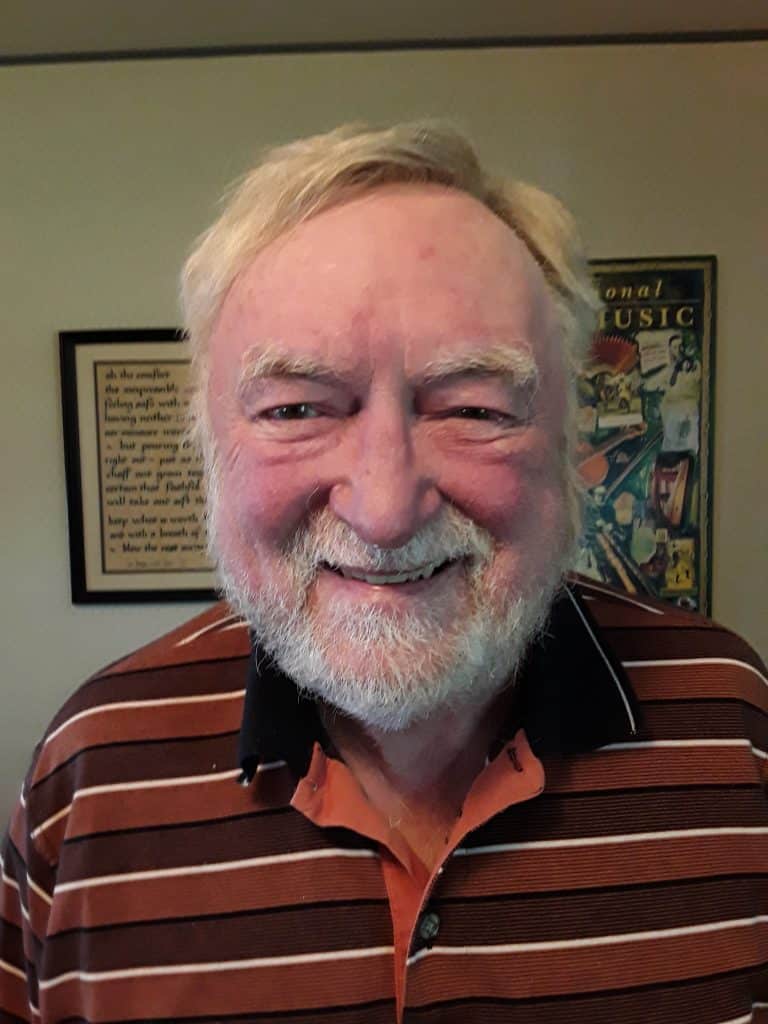
Patrick Moriarty is a long-time resident of Shasta County and a native of Ireland.
He was nominated for Underground Good by a community member who wrote simply, “know him.”
It turns out that I do know Patrick, or “Podge” as he is called by his friends. We met nearly twenty-five years ago and he has been a friend and important part of my family’s life since then.
Having been witness to his way of showing up in the world, I understood the phrase “know him” to mean don’t just look at what he does, but who he is. And that, really, is the heart of what Underground Good explores.
My conversation with Patrick for this column flowed from exploration of his paid and unpaid service with and for people living with mental illness, to his gift for creating community, and ended with his attention to daily practices that remind him of what he feels is most important.
We talk about programs he has been part of developing throughout his working life and also about how he has engaged in the world since leaving full time employment.
Podge is fond of saying that his way of being in the world is driven by “his needs, impulses, and desires”. Because he is cautious about any attempt to hold up his service as special, it took quite a bit of effort to convince him to speak with me for this interview. In part, this hesitancy reflects his deep belief that we all have the capacity to benefit others.
To listen to Podge is to recognize that what matters to him is people, community, and hospitality. Our conversation turned out to be, for me, a reflection on ways of being present to what truly matters as well as an invitation to consider how important it is to care for ourselves in the same ways we care for others.
I hope that, as you read, you find your own invitation and recognize what is in your own special care, including yourself.
How did you first become interested in working with people experiencing mental illness?
I just kind of landed into the whole mental illness world because I applied for a job in Redding as the Director of a Social rehabilitation program. I didn’t really have the qualifications at the time but in the application I said something about being interested in being helpful to people on the fringes of society. Apparently that statement just jumped out at the man who hired me. What I didn’t know then was that I didn’t know anything!
My early history did prepare me somewhat as I found myself exposed to different kinds of suffering and trying to be a part of alleviating pain. As a youngster, my brother Sean, my close friends and I used to visit an orphanage and part of those visits included seeing people in what we call the “County Home.” It was a very sad place that taught me about different kinds of suffering.
As a young person you entered the seminary and became a priest for many years. What was the connection, for you, between those early years and your decision to enter the seminary?
There’s no profound answer . . . At least 30% of my class from high school would have thought about going into seminary. But I think some of it, for me, was about being on a path of service. For me, living a life of service is like being on a train. It’s harder to get off than to get on.
As a young person, I was, I suppose, fairly spiritual. Sometimes when we were told we had to go to church, I would duck and go someplace else, but then at other times, I would go in and hang out in the chapel when nobody else was there. I guess I have some kind of bent that way.
My understanding of Christianity has always been that it’s about love – for family, friends, and strangers – just being a loving person.
I know I learned a lot from my mother. She was a very loving person. She left school when she was 13 years old, but she was well known in the neighborhood as a wise woman. If someone was sick, the moms in the neighborhood came to her for recommendations. She was not just loved; she was looked up to. She was open to helping other people.
For example, we had people in our community called Tinkers because they tinkered with things, fixing broken umbrellas or leaking pots, etc. Now they’re called the Travelers, a nomadic kind of people. They lived in horse caravans along the side of the road, some would beg and people kind of resented them. But my mother, even though she had ten kids, always found something to give them, shoes, or coats that were no longer needed in our family. It was a kind of focus on the “underdog”. I may have inherited a bit of that!!
You were instrumental in developing Stillwater. Can you share a little about your time there?
Stillwater was a small nonprofit organization that started out in south Shasta County as just a day center for people learning social skills and trying to make friends. That’s important because loneliness and isolation is a huge part of the lives of people living with mental illness.
We evolved into a program with a little deli sandwich establishment and then a residential program, a six-bed facility that we later lost because of budget cuts. Eventually, we were able to get some case management. Through that, I got connected with NAMI (the National Alliance on Mental Illness). I think I went to every Shasta County chapter NAMI meeting for ten years.
Much later, there was a group of people living with mental illnesses that wanted to have more client-driven programs and they started meeting at my house on Saturday mornings. We applied for nonprofit status. Later, Stillwater became the Olberg Center and after that it transformed into Sunrise Wellness Mountain Center.
You have been involved connecting people living with mental illness in a variety of ways, including driving folks to potluck sing-a-longs. How did that start?
There was a group of people at the First United Methodist Church here in Redding- Nancy Bray, Ann and Damon Cropsey and others- who wanted to do some kind of outreach to homeless folks. So we started to do what we called Inclusive Ministries. In the end, the outreach to those who were unsheltered just didn’t work; I don’t know why. Then I got the idea that maybe folks living in residential programs for mental illness might enjoy the same thing.
What does it involve?
Potluck meals at the church, essentially. And then we bring people from places like LeBrun, Ridgeview, and Promise House, residential programs for people living with mental illness. We all sing a few songs for about a half an hour, they get a lovely meal, and then we take them home. We have four to six other drivers, including myself.
People have songbooks so that they can follow along and sing. We’ve noticed now, since COVID, they’re asking for songs that aren’t in the book. Some are much younger than those of us helping and leading the singing!
At those gatherings, you always sing He’s got the whole world in his hands, right?
We do. That’s quite popular. We sing each person’s name, and that’s always a challenge because there’s often new people there that I don’t know. So, it’s like a test to see if you can get the names right. I always make a point of including the people preparing the meal in the kitchen because they’re such an important part of the event. They give up their time to cook and serve food, including Vicki Ono, the very generous organizer of the meals. She is very, very dedicated. That song is probably the one that they join in on most.
What is important for people to understand about living with mental illness?
Families, in some ways, suffer as much as the person. A lot of times the person with the illness doesn’t feel like there’s anything the matter. And then there’s the level of frustration for families around getting help, whether their loved one doesn’t want the help or they need it and the system isn’t ready for them when they need it.
What’s “Driveway Sitting” and how did that start?
Driveway Sitting started when we were doing something called the Health Improvement Partnership here in Shasta County and we were trying to encourage positive activities in neighborhoods. There were a bunch of trainings in asset-based community development and, one day during that process, somebody mentioned to me: “as a society we’ve replaced porches with garage door openers.”
That thought just stuck with me, and I thought- that has happened to me! So, I began opening the garage door and sitting in the driveway and waving to people passing by.
People don’t stop as much and visit as they did before COVID. But, through doing the driveway sitting, I have made good connections with neighbors even those with whom I had very strong disagreements. They still enjoyed walking across the street and talking. At one point, people were even there when I got home from work; friends staying with me at the time had put together a little concert for the neighborhood.
What motivates you to do what you do?
I would say a lot of things. Some it is my need to be needed and to be liked, some of it is wanting to be helpful, and some of it is about looking for social interaction. My family is in Ireland so my friends are my family. I was in a very bad accident a number of years ago and I just wouldn’t have survived emotionally without my friends.
You have spoken about how you were raised with the sense that helping others is just what one does. How is that integrated into what sustains you?
I don’t know how to do life any other way, really.
Shortly after I left working at the County, people asked “Are you retired?” I don’t understand the word retired. I’m not the kind of person that has a lot of hobbies. People are more of my thing. There’s a saying about that I like very much: “make hospitality your special care.”
One of the ways you practice hospitality is your Shindigs. How did those start?
It all started when I was having dinner out in Happy Valley with my friends Lana and Robbie Fry. It was at Bob Ferreira’s house. He was a school principal out there and one of the people at the dinner was a fellow named Greg Parker, a teacher. And we got to talking about music and the Clancy Brothers who were part of a revival in Ireland of traditional folk music. Through him I got introduced to Bill Woods and we got together and hosted two shindigs- with music and singing- once in my tiny, 800 square foot home.
Once I moved into town, and into a bigger house, we started having shindigs four or five times a year. At the beginning, it was a lot of Irish music. Then, the more musicians that came, it morphed. Bill and Dwight Woods do a lot of bluegrass. Later we had a number of people leading songs from lots of different genres. A small shindig might be 30 people with ten musicians or more. And they are intergenerational. Some of the most fun ones were when people would bring children that were learning musical instruments and they would get to play for the first time for an audience.
One thing that I’ve appreciated about you is your capacity for presence and authenticity. You’ve certainly been very authentic with me, which sometimes involves telling me things that initially tick me off.But I always know I can count on you to be honest and true. It seems that presence and that ability to witness and see people is closely connected to what is important to you about hospitality.
Some of it has to do with the fact that people don’t always feel that somebody is listening to them. People know when someone else is not really listening. I think that is part of being authentic. I have had people in my life that were really good at that and when they were with you, you always felt that they were being completely attentive. I saw a quote from Mary Oliver recently that speaks to this for me. She wrote, attention is the beginning of devotion.
To me, it’s just being a loving person. It’s about understanding what’s going on in another person’s life beyond the superficial kind of thing. I think some of it is that I grew up in an environment where feelings weren’t important. We heard about our behavior, but I don’t know if I was ever asked about what I was feeling. There was no “what would you like for breakfast?” back in the day. You’re going to eat porridge or you’re going to go hungry. So I think that’s part of it: I want to help people feel heard.
If someone reading this is interested in supporting some of the work that you mentioned, particularly with people living with mental illness, what would you suggest?
NAMI is absolutely an area that could use some help especially from younger people. They’ve had a hard time finding people to lead those who aren’t also dealing with their own crises on an ongoing basis.
They have support groups twice a month so that families can come and share their experiences. They also try to offer eight-to-ten-week courses with a set curriculum including Family to Family, and Peer to Peer.
Those courses are important. I’ve heard people say that the Family to Family course is a game changer for them in terms of understanding what’s going on with their loved ones, a source of hope that they can have a little bit more influence on the situation.
What would you say to those people who want to do something similar to one of the things you have described, but don’t feel that they have the right skills or personality?
There are just no qualifications or prerequisites; all you need is an interest in being a positive influence. It’s about authenticity. Introverts and extroverts will do it differently.
That was one of the things about Stillwater, I would see incredible acts of generosity among people. I would often tell the story about L’Arche to every new person in the larger community. L’Arche communities are places where people with severe disabilities, people that were looked down on as the “a drain on society” live and work together with people whose limitations were less noticeable. We all have limitations, you know.
Part of the philosophy of L’Arche is that people with severe limitations and obstacles in their lives, with hardships and pain, have as much to teach and to give the world as people with signs of success like houses, money, relationships, jobs and all of that stuff. In some ways, the people who persevere in those kinds of circumstances teach us the most important things about, love, perseverance, and courage.
You don’t need any books for that. There are no prerequisites to being a loving person. And at the end of the day, that’s the lens that I use to look at people beyond life circumstances.
“People with severe limitations and obstacles in their lives, with hardships and pain, have as much to teach and to give the world as people with signs of success. . . In some ways, the people who persevere in those kinds of circumstances teach us the most important things about, love, perseverance, and courage. There are no prerequisites to being a loving person.”
Patrick Moriarty
How do you bring yourself back to center when things get difficult?
I have a daily practice of a series of mantras. One of them is a quote from Thich Nhat Hahn: “Waking up this morning, I give thanks. A brand new day lies before me. I vow to appreciate each moment, and to look on all with the eyes of compassion.”
There are quotes that remind me of my limited time on earth and to remember to make the best of it. There are several I read and think about, and that’s pretty much a daily practice.
It’s also about keeping perspective, especially with so much negative stuff going on now. One of the quotes that reminds me of this is “We’re all warmed by fires we did not build and drink from wells we did not dig.”
It’s easy to get caught up in the negative. I love it when we hear positive stories- like, what you’re trying to do now. Even though I wish you would have interviewed somebody else!
I know. Is there anything else you wish I would have asked you or that you would like to say?
Like mentioning my attachment to my own needs and impulses? They are much more prominent and part of my thinking than the good that I do, let me tell you.
One of the quotes I read in the morning as a reminder is:“the thing in life that would give you the most trouble is looking at you in the mirror every morning.” There’s insecurity in most people’s lives – certainly in mine – and ultimately I work to keep that in mind.
I do think I have tried to be a good person. And I try to balance other parts of myself with those daily practices. Hopefully, if there’s a ledger out there recording what I do, as I get older, at the end of the day, the good and the not-so-good will balance each other.
Do you have a question or comment about this story? Reach out: editor@shastascout.org
Author

Related Articles
Underground Good: Kelly Hemphill, Lelnamis Wintu Qol
“As we continued with class, we began to think there’s more to Wintu Qol than learning the language. Language is community, it’s culture, it’s who you are and how you connect with the community, your family, and your history.”
Underground Good: Linda Rube of Goodwater Crossing
“It has been surprising to me to see how well a housing first model works! When people step up and take responsibility for themselves and make decisions for themselves, they’re much more apt to follow through. They are doing what they want to do with their lives. There’s hope in that.”

Letter to the Editor: Redistricting California is not a fight the Democrats can win
Anderson resident Curtis Scott draws on current events to scrutinize the value of a proposed redistricting effort by California Democrats. He describes himself as a 50-year resident of Shasta County and life-long progressive.