
Underground Good: Samantha Breton
We’re all here for a reason. We might not know what our purpose is, but we can do something nice for someone else or ourselves… We can talk to someone that is down and out. If I can give people hope, that’s what I want to do.
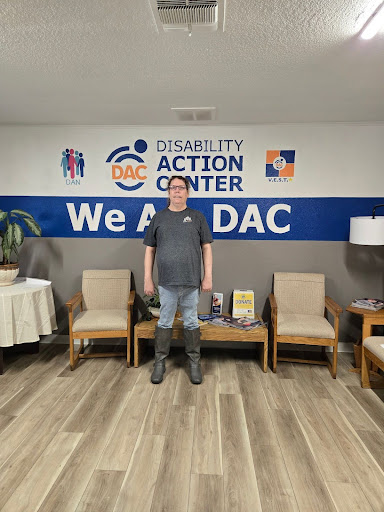
Ed Note: This Opinion piece is part of our Underground Good series, which focuses on providing a window into the mindsets of ordinary people doing good work in their community. It’s written by sociologist, coach and evaluation consultant Sharon Brisolara. You can find the rest of our Underground Good series here. Want to nominate someone? You can do that here.
4.28.25 12:39 pm: We have updated the story to correct the title of a DAC staffer.
Wendy Longwell of the Disability Action Center introduced me to Samantha, a volunteer she met through some of her own community service. In our subsequent conversation, Samantha shared her experience navigating life after a number of health issues, including multiple back surgeries. Samantha’s pain and mobility challenges have limited her employment opportunities but not her capacity and desire to volunteer. Over the years she has supported individuals and organizations in a number of ways, always leading from her lived experience. Speaking to Samantha, you can sense her commitment to giving back, her empathy, and her gratitude for the dedicated providers she has encountered. I get the sense that there are likely many individuals equally as grateful for her as I am.
When did you first connect with the Disability Action Center?
I met the Program Manager for the Disability Action Center (DAC) in Redding, Wendy Longwell, last year. Wendy and I were both on a couple of different boards and committees together and one day she asked me if I would like to run two support groups. One group was for people with mobility challenges. The other was the Rainbow Group for members of the LGBTQ+ community who are dealing with a disability.
From what I understand, the Disability Action Center is there to help with any kind of disability you have, if you need to get information or sign up for services, they’re there.
What interested you about running support groups?
I’ve been involved in a couple of efforts during the last three years that have included people in their late teens and early twenties who are having to learn to use a walker, cane, or wheelchair.
I am also mobility challenged. After I had back surgery for the second time, I didn’t want to use a walker again, so I understand people being hesitant about having to use certain aids and feeling too young to be using a walker.
Then, last year I had a fall in my bathroom and woke up in a pool of blood because the fall opened up the back of my head. My doctors told me: “Well, you got two new best friends: your walker and your cell phone. Don’t go anywhere without them.”
With the mobility group, we are trying to help people who are using a walker, a cane, or are in a wheelchair, and to let them know that there are people out here that do care and are here if you need us. We need to see it not as something that’s bad, but something that’s helpful. One thing I’ve liked about the walker is if I go to the pharmacy and there’s a long line and my legs and my back start hurting from standing, I can just sit down.
Why might someone want to be involved in a support group?
Being involved in a support group is about being around people who have gone through or are going through what you’re experiencing.
When I have attended groups in the past, if the person leading didn’t know what I was going through, I didn’t get much out of those groups. But when the facilitators are people with lived experience, they can relate to you. That’s one of the main reasons that I have gotten involved, because of my own experiences.
Personally, I also reach out to friends for support. My friends and I are part of each others’ support systems and we understand each others’ perspectives and learn about different ways of doing things.
What are some of the ongoing, daily challenges that people who are mobility challenged face?
During the wintertime, when we have rain, most people can just get into their vehicles. I have to use the walker. My IHSS worker puts the walker in the backseat of her car, and then we take off. Not being able to use an umbrella at the same time, we can get really wet. I try to limit those experiences, but sometimes appointments happen.
I can’t do the laundry on my own because bending over and picking up things is challenging. When we’re shopping and I go to pick up something on the bottom shelf, my worker will say, “Let me take care of that for you.” I think those are things that people don’t think about.
Also, after my fall last year my friends and my worker aren’t letting me walk to places or take the bus like I used to. They’ll say, “What happens if you’re using your walker, but you’re in the middle of the street, and you go down?”
If I know I’m doing shopping and my back feels okay, I’ll just use the cart. If not, I have my worker push the cart and we do the shopping that way, but she always checks with me before we go out. She’ll say, “Hey, do you need your walker? How is your back?”
It does help having people asking those questions so that you remember. I don’t get mad like I used to. I might not like it all the time, but I do understand. It’s just that some people, like me, feel like we’re giving up a little bit of independence.
The other thing that people might not realize is that people use the handicap parking spaces for a reason, not because they want to be up front. A couple of times, even though I have the handicap placard, if I don’t have my walker, some people look at me as if to say, “Why are you parking there?” I do try to be cognizant of using handicap spaces when I see an elderly person — I’ll have my worker park a little bit further down so that they can use that spot.
How has your disability affected your ability to secure housing?
I’ve been homeless in the past. Where I’m living right now is the longest I’ve lived in one place in my life. On May 23 it will be eight years, and it’s supportive housing. There is a case manager here and sometimes they have peer support people who come in. I try to take advantage of everything that is offered.
I owe so much to Hill Country, Shasta County Mental Health, Shasta Community Health Clinic, North Valley Catholic Social Services, and others who were involved in getting me where I’m living.
I had to get on a waiting list for a two bedroom at the apartment complex where I’m living because the doctor told me that, at some point, I’m probably going to need to have to have a caregiver living with me. That’s not something that I want. I begged, I pleaded with the doctors, but they insisted. They said, “Look at how long the waiting lists are to sign up for apartments! If you don’t get it now, then when?”
I have been able to help plan the Thanksgiving and Christmas banquets and the support groups offered at different complexes. It felt really good to be able to do that. I take pride in this community.
What other efforts have you been involved in?
Over time, I’ve participated in a lot of training. About eight years ago, I completed peer support training and was volunteering at Hill Country Clinic’s Care Center — until I had some issues of my own and had to spend time in the hospital.
I trained so that I could be a member of the Hope Program Consumer Advisory Board and I have served as an Advisory Board member since. I even tried to apply to serve on the IHSS Advisory Committee last year, but someone spoke up before the board and made some comments about me just because I’m transgender.
There were a lot of things said about me that were false. I ended up filing a restraining order against that person and I didn’t apply given the makeup of the Board of Supervisors at the time. After that happened, I got depressed. It hit me really hard. It doesn’t matter who we are. We all have feelings and people who care about us.
I remember attending a leadership summit in Nashville. After I came back, I told the people in charge, “Hey, you guys have lit this fire in me!” I was asked if I would consider being on the Board of Directors at Shasta Community Health Center as a consumer and I said “Sure!”
Also, after I had gone to a few NorCal Continuum of Care (CoC) meetings, I saw that the LGBTQ plus community wasn’t being represented, so I put my application in. Now, I’m a voting member on the NorCal COC too.
I’m glad that we’ve got places like the Disability Action Center. I’m grateful that we have Shasta Community Health Center. I’ve never been around so many caring people than I have at both places. I know they could be working at other places making double, triple, what they’re making, but they have a heart for our community.
Has anyone told you what it’s meant to them to be in one of your support groups or to receive support from you?
The one thing I keep hearing is that I’m easy to talk to.
I’ve had several people in the complex tell me they want to be where I am. I tell them “No, you don’t. You want to be better than where I am.” What people are seeing in my life now took a lot of blood, sweat and tears. And it feels really good to have graduated out of the mental health system but that doesn’t mean that my mental illness has gone away, it’s just that I’ve been able to do other things.
I still keep in touch with people that I was going to groups with. They know that they can always come and talk to me. I just tell them that, “hey, if it’s after nine o’clock at night or before nine o’clock in the morning, please don’t call unless you’re dying, alright?” There’s been a couple of times that I’ve had to tell people, “hey, I need a break here.” Some understand, and others don’t.
At Hill Country, when the case managers were busy and the therapist was busy, I could talk to people while they waited. Sometimes people came in and they didn’t want to talk to a case manager, they didn’t want to talk to the therapist, they wanted to talk to me. I was sometimes there four hours a day, five days a week. When I left, people told me that they always knew I could handle any situation and any person who came through the front door.
I try to remember back to when I was in their shoes. I have a lot of gratitude for where my life is right now. I never expected my life to be the way it is. I never expected to live in my apartment for as long as I have or that I would have the same phone number, as long as I’ve had it. In fact, I never thought I would live to see 21 let alone 54. I figure if I’m here another 10 years, I’ll be happy. When I was younger I didn’t take care of my body and today I am dealing with many challenges.
What motivates you to be involved in so much?
My doctors have told me that I can’t go back to work. I am too much of a liability risk. We never know if I’m going to fall. If I had a job and something happened to me and I couldn’t make it to work, I wouldn’t have that job for long. They’re okay with me volunteering so I volunteer about four hours a week. If I’m not feeling well — or my back or something really aches too much where I just can’t do it — then it’s okay, people understand.
I want to do what I can. Even though I can’t work, at least I’m giving back to society. And I do have a heart for this community. I’ve lived here since the day before Thanksgiving in 2001.
My grandfather told me, I don’t care how old you get. If you’re not doing something every day, then just curl up in a ball in that corner and wait for life to pass you by.
Basically, my bills are taken care of and I feel if I can give back in any way, that’s what I want to do. I remember being at different places in my life; I can understand some of the things people are going through. The one thing that I hope people get from me is that if you can help someone, if you can share your experiences with them — that you’ve been there before — that can be more important for them than you’ll ever know.
At one place, even when I wasn’t there, I would have staff members call me and ask if I would be able to talk to someone over the phone. Sometimes they were people who are in the transgender community and were struggling. I didn’t hesitate to do that. I’d say, ‘Yes, put them on the line.’
Helping others also helps me. I just want to be of service.
We’re all here for a reason. We might not know what our purpose is, but we can do something nice for someone else or ourselves for that day, even if it’s drinking another bottle of water ourselves, or giving someone a bottle of water. We can talk to someone that is down and out. If I can give people hope, that’s what I want to do.
Do you have a correction to share? Email us: editor@shastascout.org.
Author

Related Articles
Underground Good: Terri and Gary Orwig
“I love to encourage people to become volunteers. There are so many opportunities out there that could match your interests. If they have time, it’s such a fulfilling thing for your spirit, for your heart. That’s important to me. I want to leave this earth knowing I did good work, that I helped people.”
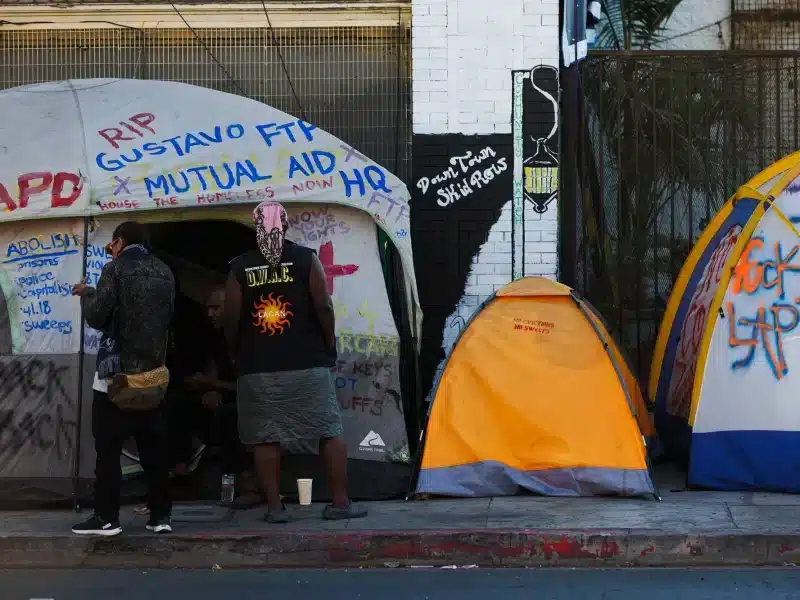
Opinion: It ‘took a village’ to heal her trauma and homelessness. Will California keep funding this help?
This story is part of California Voices, a commentary forum aiming to broaden our understanding of the state and spotlight Californians directly impacted by policy or its absence.
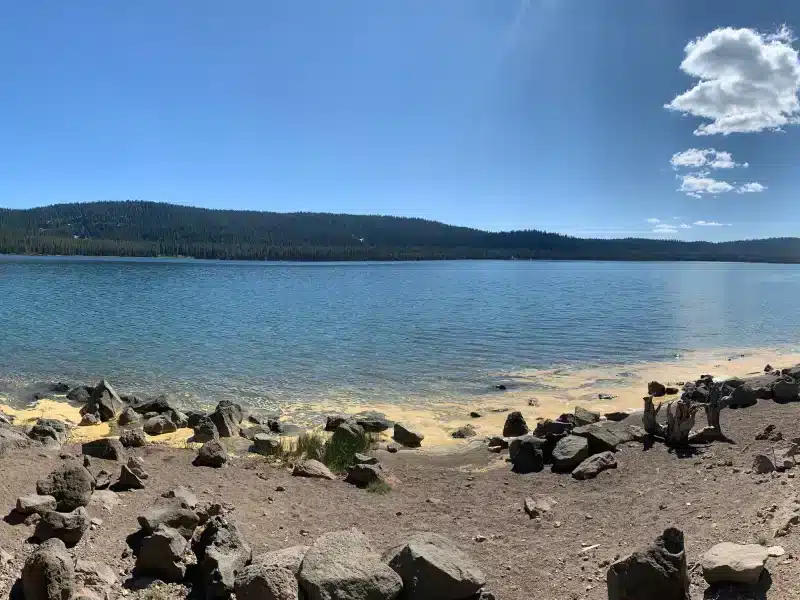
Opinion: What We Lose If We Lose the Sáttítla Highlands National Monument
Trump’s “Energy Emergency” Threatens Endangered Species, an Enormous Aquifer, a Sacred Place of Peace—And So Much More