
Underground Good: Sky Scholfield
“Work in your circle but consider the impact of your actions for not only yourself but for generations to come . . . follow your passion, be respectful, learn as much as you can, and think as far forward as possible. You can find good in so many different places.”
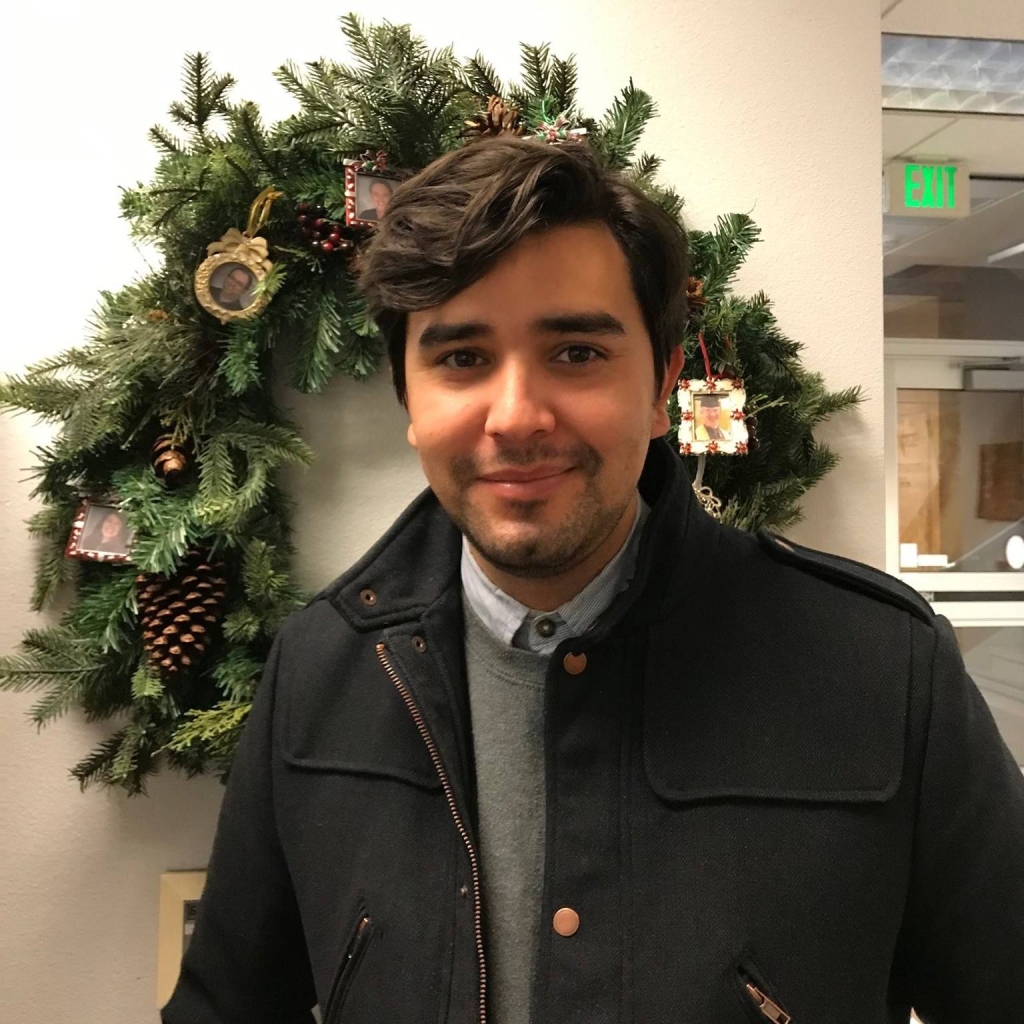
Ed Note: This Opinion piece is part of our Underground Good series, which focuses on providing a window into the mindsets of ordinary people doing good work in their community. It’s written by sociologist, coach and evaluation consultant Sharon Brisolara. You can find the rest of our Underground Good series here. Want to nominate someone? You can do that here.
4.30.24 4:10 pm: We have updated this story to correct an error about Scholfield’s current role.
In this conversation, I speak with Sky Scholfield, a media artist, educator, creative, culture bearer, and advocate. Until very recently, he lived and worked in Shasta County. Even with his new position with Children of the Setting Sun, in the Pacific Northwest, he visits family here and continues work on many projects with roots in our county.
Please introduce yourself to our readers with whatever is most important for you to ground our conversation?
I don’t know really where to pinpoint that grounding for myself, other than I think a lot of it goes back to the earth, taking care of the planet we live on. A cross-cultural connection is where I live and work and think. Seeing communities thrive, whether it’s Native community or Non-Native community or both together.
I just learned not too long ago, maybe five or ten years ago, that I’m Dau Pom Wintu: Lully, my great, great, great grandfather, was from Baird which is close to the Dau Pom cluster.
Technically, the Wintu trace lineage through your grandma. And so my great-grandma was from an area a little closer towards Redding — that’s Dau Pom. Chief Sisk is Winnemem Wintu, which means Middle Water People from the McCloud River.
I love what we call edutainment. I love learning, sharing with other people, and learning about other people. Wherever two or more groups can find common ground and enjoy life, through food and music or entertainment, through dance and the arts — that’s where I want to be, really.
That really resonates with me being from New Orleans. What’s your sense of where that came from for you?
I think it is cultural, a pan-Native American thing: generosity and gratitude are core to our culture. When you want to make baskets, for example, you make an offering to the plants that you gather from; when you learn how to make a basket, you make offerings to your teacher. In our culture, the first object you make, you’re supposed to give away. So, the first basket you make, you are supposed to give it away. Everything goes back to contributing to the circle of life and understanding that we’re on a planet, a kind of closed-circuit system, a gratitude economy.
There are different terms to describe this approach: instead of seeking compensation for every interaction, thinking more from a pay-it-forward mentality where you are a part of the system. That’s a lot more enjoyable than a transactional relationship with everything around you, where you are expecting a return of equal or greater value and if you don’t get that return, you’re at a loss. Everything ties back to that gratitude: it makes the world more enjoyable because instead of seeking compensation, you’re finding gifts everywhere.
How do you think about media-making as an artistic expression and a social justice approach?
I grew up outside of Redding in the country. I lived kind of by myself out there. So, books, radio, and television were my connection to the world. It sated the desire I have to be learning about something new at all times. Media gave me an incredible palette to draw from, in understanding the world and learning about new things. I love to consume content and media that way.
As a youngster, my mom worked in education for the Title IX Indian Education program. My siblings and I were like little cultural ambassadors; we’d go to schools and do presentations about our culture and share some of the special aspects of our culture to let people know who we are and who we were in this area. Then, at one point, the Seventh Generation Fund for Indigenous Development came to Redding. They asked for any interested youngsters who might be a little tech savvy, and that was me. Through tech, you can learn, capture, digest and teach any topic that you want to, and make connections.
As a kid, though, the biggest part of learning about my culture was sitting and listening to elders speak and share their wisdom. Listening was a natural skill that I worked on for quite a while. That parlays right into journalism, what we’re doing right now — just talking and listening, and trying to internalize everything you learn. I was kind of primed for that, so when it came to choosing what to major in in college, journalism seemed like the best way to use all of those skills. That’s where I find myself now.
What kind of media or artistic projects or topics are you drawn to?
I always have a docket of things. There’s a portion of what I work on that is what I want to work on, things that I’m drawn to. And the other portion is what the community needs or is expressing interest in.
I tell students to follow your interests, your personal interests, because that will keep a fire under you, and you’ll be naturally drawn forward by your fear or curiosity. It will allow you to push through when things become tedious or difficult to the final draft. You’ll get things done.
I just happen to have spent a lot of COVID watching cooking shows. I thought, oh my god, we have got to get a Native American cooking show. Because when you learn about different foods, you learn about different tribes, and you’re doing it through something that captivates everyone’s attention, food.
Food is so great, because through talking about food you talk about how Native Americans really see themselves, which is their connection to their land. When we discuss food, we talk about gratitude; when you’re giving thanks to the things that sustain you, then you are also taking care of them, because they’re taking care of you.
That’s really strong for tribes up and down the coast. You take care of your salmon people, they take care of you. You fertilize the entire landscape and feed everyone else as well. So anywhere I can find connections like that, that seem cyclical or lead to a positive feedback loop, I’m really interested in that, especially when it connects with my personal interests.
A show allows for multimedia, multidisciplinary content. Food shows need music and visuals. So you have artists, film, TV, and music. You get the most bang for your buck and have concentrated material, which I like.
There is a lot of research on how art and creativity can bypass some of our preconceived ideas.
Yeah, you can’t tell your stomach your political stance on buffalo or fresh deer meat. They say there’s a second brain in your stomach, too, because of the amount of production of serotonin in your gut. I like to think that’s more of your heart-centered brain. If you can, you know, cook a good meal for someone, you can quiet the other brain a little bit and maybe rethink some things.
What other personal projects are you working on that you want to share?
I think you’re aware of the documentary I’m working on. Another dream I have is to do a Native American cooking show. Whenever I’m working in the office, fast music or history documentaries, like ones about the Tribes of Europe, keep me going.
There has been a lot of cultural focus on Rome and I have wondered where this colonial mindset comes from. It was because they were colonized themselves, and they fought against their own tribal people and stuff. I used to think there’s just more of a written record on Europe, that’s why we know so much more about them. Which is partly true. But there’s so much information about specific Tribes and Tribal histories that’s more recent; we could benefit from some sort of simple, easy-to-understand histories about different Tribal nations and their relationships with the United States government. I’d love to do a series on some of that legal history in the future at some point.
One big goal for the documentary I am working on is not reinventing the wheel, but updating some of the information contained within films like 47 Cents and Dispossessed. And also to pump up the tainment part of edutainment.
I’d also like to learn and become well versed in new technology, because I know that that’s what draws the attention of the youth: VR, AR, what AI is going to do. Tech doesn’t have to take them away from who they are, it can be another avenue to get closer to who they are. With Native issues, we can incorporate the old with the new. Creative expression can be a way to work with the world they were presented with.
What are your desires for the films that you create?
There are a lot of things. One, I want to give my ancestors the proper respect, care, and love they deserve. I want to show what they are doing now and the struggles they went through to get here. Most immediately, I’m going to city council meetings, Board of Supervisor meetings, especially concerning the Redding waterfront development, talking with people about issues that are important to us with the full knowledge that they may have little to no information about who’s standing in front of them.
The education I got through the public school system about Native Americans was about the same as you might get from a video game character. Here’s the type of house that they lived in. They wore this, and now they’re gone. The history is not there.
You can’t even begin to have any sort of conversation or debate with someone who hasn’t had the privilege to learn about the area; even if they are interested, resources are scarce. Also, there are a lot of people vying to tell a story. They may have ulterior motives or offer misinformation. When people are interested, they may know a lot about the tragic history, but less about the more positive or uplifting history. Cultural references or significance is often not a part of information sources people find.
We really need education for education’s sake and to help people learn about the history of the area they live in. When the public suffers from ignorance, that allows some people to take advantage of groups or to develop something that may be not in the public’s interest.
For example, fossil fuel projects may be advertised as something beneficial for communities, but they’re mostly beneficial for the corporations that run them. Indigenous people have always fought for environmental protections and for things that consider the long term. We live in a political environment; politicians are incentivized to work towards short-term goals.
Through education, we can acquire more allies who can understand who we are, what we’ve been through, and what we’re fighting for. Often, you hear criticisms of Native Americans who don’t want to see development projects go through as if they just are looking for handouts, or they just hate big government or something. But Native Americans have the most experience with exploitative practices by corporations. We know from our brothers and sisters in different communities how harmful projects like that can be. Like the amount of cancer inflicted on the Hopi and Navajo tribes through uranium extraction. And up in the Northwest, the depletion of natural food sources like salmon. I just hope to educate people so that we can stand on the same ground as someone else when debating how our cities and communities are run, how we are affected by large projects, and our need to contribute our voice to the development of the communities we live in.
What has your involvement been with the language revitalization project?
Since I was very little, I was kind of a cultural ambassador, which involved being a participant, then a counselor, and then a teacher, at a Native American camp, Pe’Leen Boos. When I was younger, it used to be held out at WES Camp. We’d go out there and camp for a week, and there’d be 50 to 100 Native American kids and we’d do cultural activities: native botany, sing, dance, language, food, regalia making, and music.
As part of that, I was both student and, later, teacher of language. We were in a position where, at that time, there was one fluent speaker left. Florence Jones was a very important figure spiritually and culturally among the Wintu. There was another gentleman named Bob Burns, he kind of kept to himself and wasn’t really amenable to teaching that much. But Florence was, and a lot of people learned from her. But she passed away, and we were left with a handful of resources, puzzle pieces, that can be put back together into a full living language. That requires intense and continuous work from a whole cast of characters, including linguists and speakers who are learning a language that they’re putting back together at the same time.
For a while, we just had a lot of vocabulary, ethnographic reports on the grammar, and several dictionaries. It has gone from a living language to a language only on paper, and we have been trying to put it back together since I was a kid. Keeping what we do know alive and gathering any additional materials we can, talking to elders who may remember this and that, but not the whole language. We have a cassette tape collection of a woman named Grace McKibben that has a lot of songs, stories and language. We’ve worked with a German linguist for a long time, specifically on the Winnemem Wintu language and also this gentleman named Bruce Nevin, who I believe is an anthropologist, and specializes in Pit River language but helps with Winnemem Wintu as well.
How many language revitalization projects are there in Shasta County or nearby?
They could all fall into two camps: Wintu and Pit River. My mom and Jesse are in one camp for the Wintu language. And then Chief Caleen Sisk and her crew are another group working on the Winnemem Wintu language. I can’t really speak to Caleen’s group and what they’ve been doing. But for us, we have been acquiring and holding on to a lot of language resources and materials.
The work comes and goes because you can get burnt out on trying to do the job of twenty people from twenty different disciplines. There have been four or five different times when we got a language class going and were consistent for a while. Each time, we’ve become more and more advanced. We’re moving from vocabulary to grammar.
There are the Wintu projects that are happening. And then Connor Yiamkis and Paul Cason are working on the Pit River language with Bruce Nevin. They’ve been doing language training through a program called “Where Are My Keys?” It’s a teaching style where you refer to a lot of things that you’d say naturally, focusing on objects so you can start to connect to them. They are gamifying language.
You start with domains, like your kitchen, or your coffee area, and you try to get down every name for the objects in this area and label them so you can soak it in. They rented a house in Montgomery Creek and labeled everything in the entire house with a Pit River word. They’re doing some really exciting stuff. There are also about three camps in Shasta Lake. They’re all using different techniques and support each other because there’s some solidarity.
Sometimes the names we have now came from settlers or from a different tribe or started as a derogatory term or something. But a lot of tribe names and Native languages are very tied to human beings. A lot of tribe names just mean person. Wintu means person. What’s really interesting is, our number for twenty is k’ete wintu which means one person, because you have ten fingers and ten toes. Everything is at a very human level, even our numbers connect back to something tangible.
You sound passionate about these projects.
I’m inspired by the story of the Wampanoag, the tribe that greeted the Mayflower — they had some verbs that are dynamic, and some that are static. You can tell if something is moving or still based on just the word. Their word for the sun was static, and the word for the earth was dynamic. By knowing the language, you can learn extra information about the world and how they viewed it. They knew that the sun stays still and we moved around it which I thought was really cool. I’m curious about and excited about all the treasures embedded in a language.
Hawaii is a really inspiring case too; not too long ago their language was considered dead. And now they have fluent speakers, language schools and they’re just kicking butt. It can seem overwhelming, especially for a small tribe like us, but it’s possible and doable.
We’ve been doing that throughout my life; my mom, Michelle Radcliffe Garcia, and Jesse Naomie would be the ones to speak to on the current project. During high school, I started working with the Seventh Generation Fund for Indigenous Development, tagging along as you do as a native youth. That’s the first step of being a leader, if that’s what you want to do: just hanging out and listening and being helpful. If you want to play a bigger role, you show up the first five or six times to be helpful and thankful.
Originally, media was my way of working with the Seventh Generations Fund, which eventually brought me to the United Nations Permanent Forum on Indigenous Issues; eventually, I went to Humboldt State and started working at Seventh Generation Fund as an admin assistant, and media person. That’s where I started doing things professionally. I’ve continued to either have a media job and I’ll do Native American stuff on the side or have a Native American job and do media stuff on the side. In my new position up in Washington, I’ll be doing both of those things at once.
What is that position and what excites you about it?
Everything about it excites me, it is the culmination of the work that I’ve done throughout my life. I’ll be the Executive Director of the Setting Sun Institute, a new Native American think tank, working in conjunction with the Children of the Setting Sun Productions, a media production house. Together, they’ll strategize to leverage media to further indigenous goals, which would be to affect policy, increase education, and become a voice regionally and internationally on sustainability and youth leadership.
What do you say to people who want to become more involved in doing good?
I would say the same thing that I tell kids doing media training and the same thing I tell myself: follow your passion. Find out what it is that really inspires you. Get to know yourself more. If you follow your passion, you’ll have the fuel to continue on.
In everything you do, be humble. If you’re new to a space, there are most likely people who have been there for a while. So don’t come in like a wrecking ball. Follow your passion and be respectful. If you choose something you’re passionate about, you’ll also be encouraged to learn more, which is really important.
Finally, we live in a country where development is equated with progress. Someone else might think, build something or make something new or tear up the earth. Work in your circle but consider the impact of your actions for not only yourself but for generations to come. How are they going to benefit? That’s not exclusively a Native American idea. It’s hard to think in those terms, but that would be my advice: follow your passion, be respectful, learn as much as you can, and think as far forward as possible-. You can find good in so many different places. If you find something that interests you, you’ll do even more good because you’ll naturally stick around.
Do you have a correction to this story? You can submit it here. Do you have information to share? Email us: editor@shastascout.org
Author

Related Articles
Underground Good: Terri and Gary Orwig
“I love to encourage people to become volunteers. There are so many opportunities out there that could match your interests. If they have time, it’s such a fulfilling thing for your spirit, for your heart. That’s important to me. I want to leave this earth knowing I did good work, that I helped people.”
Opinion: It ‘took a village’ to heal her trauma and homelessness. Will California keep funding this help?
This story is part of California Voices, a commentary forum aiming to broaden our understanding of the state and spotlight Californians directly impacted by policy or its absence.
Opinion: What We Lose If We Lose the Sáttítla Highlands National Monument
Trump’s “Energy Emergency” Threatens Endangered Species, an Enormous Aquifer, a Sacred Place of Peace—And So Much More