
With Closing of Lim’s Café, Local Native Community Mourns a Beloved Sanctuary of Cross-Cultural Connection
For many years Lim’s Café on Market Street was known as an oasis of hospitality for the Native community. Its closure this September marked the end of a remarkable space of connection created by two communities with complicated histories. Their collective pasts contain more intersections and encounters than is widely known.
When she and her younger sister Caleen were little girls, Helene Sisk says she spent a lot of time at their grandmother’s house across the street from the Lim family, who owned and operated the beloved local Chinese restaurant known as Lim’s Café.
Sisk, now the Winnemem Wintu Tribe’s ceremonial song leader, remembers spending her days playing and riding bikes with the Lim children, and May, the Lim matriarch, giving them spicy Chinese candy. After getting to know the Lims, their mother Dorothy Ward worked nights for several years at the café, and Sisk and her sister would sometimes tag along to help peel potatoes and chop onions.
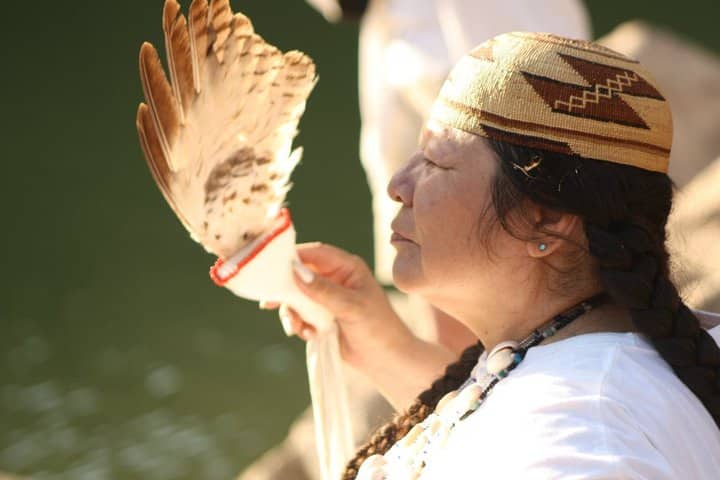
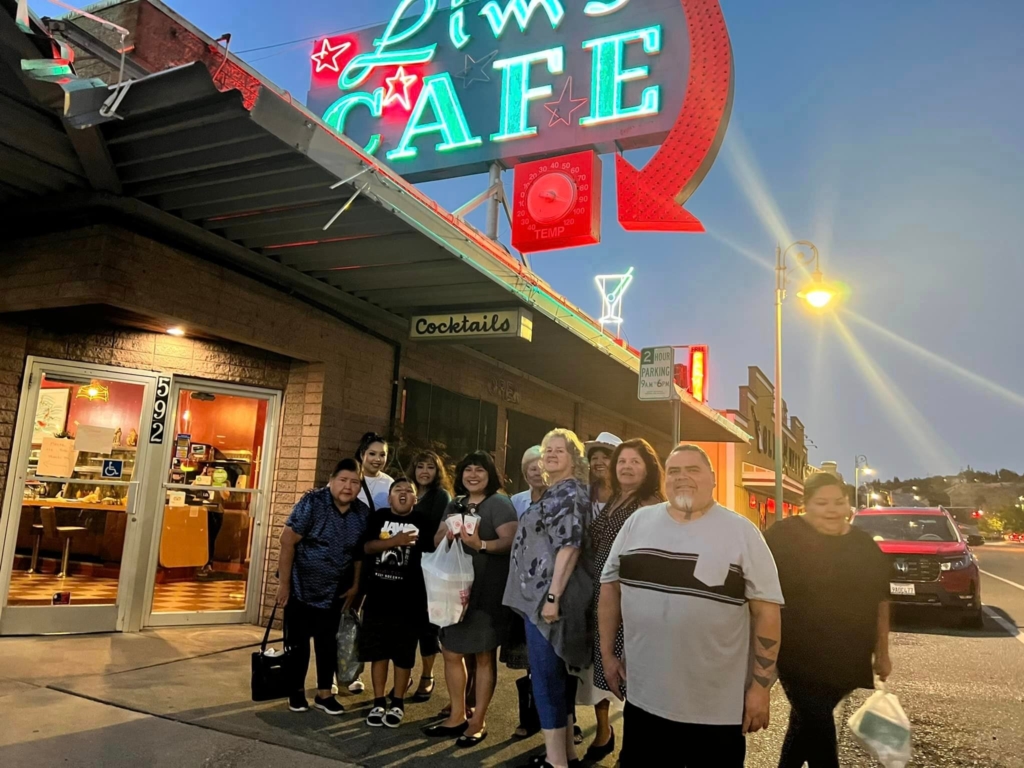
As adults, Sisk and her sister Caleen, who is now the Tribe’s spiritual leader, would become regular diners at the Café. Lim’s was located on Market St.’s “Miracle Mile” where its iconic, retro-neon sign limned the streetscape in red and aquamarine. Sisk said the friendliness she found playing on her grandmother’s street with the Lim children also extended to the café.
She wasn’t alone in the experience. Years ago, Lim’s became a de facto Native gathering place in Redding, because it was one of the few downtown spaces where they didn’t experience simmering racism or outright hostility, especially in the 50s and 60s when some Native people say establishments posted “No dogs or Indians allowed” signs.
“All the Native people went there because they welcomed us,” Sisk said. “Some places were mean or acted like you were invisible, but at Lim’s they would talk to us and laugh with us like Indians do. It was good there.”
The restaurant, which was established by Chinese immigrant Peter Lim and his wife May in the mid-1930s, finally closed this September after nearly a century, ending its run as Redding’s oldest continuously family-owned restaurant. Its closure has led to a profound sense of mourning in the local Native community. For decades, Lim’s was a storied place for Native families, who gathered there for birthdays, anniversaries and special occasions. Some made familial connections with the Lims, whose humor and hospitality made them feel at home.
Redding Rancheria Chairman Jack Potter regularly promoted Lim’s in posts on social media because of the restaurant’s special relationship to the Native community. In 2020, when the Redding Rancheria allocated a pot of Covid relief monies for Tribal Council Members to donate $5,000 to 20 local businesses for Covid relief, Potter chose to donate his funds to Lim’s. Like many Native families who have inter-generational memories of eating there, Potter fondly remembers going to Lim’s as a kid with his grandparents. He says he rarely ate at other restaurants until recently because of the pervasive racism he experienced.
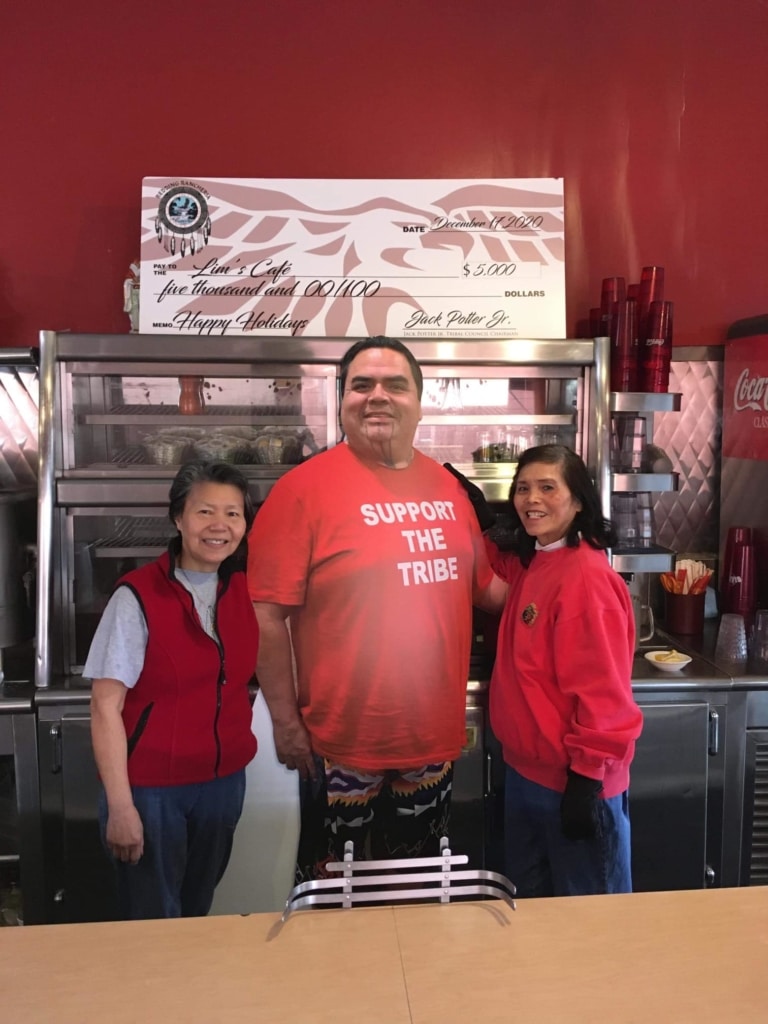
“It felt like home,” Potter said of Lim’s. “Whenever we’d go there, we’d see four or five other Indian families there. It was the place to be if you’re Native.”
Ron Lim, the son of Peter and May Lim and the owner of Lim’s Pharmacy, said his parents came from the southern Chinese city of Canton, now called Guangzhou, home to a populace that Chinese elites often denigrated as “country bumpkins” and “lower class.” Those humble origins imbued them with a generous and kind spirit, he says, which is what he suspects Native community members found comforting. Lim recalled a time when a Chinese family from Los Angeles were stranded in Redding after the father was injured and hospitalized, and his parents put them up at their home and fed them at the restaurant until they were ready to leave.
“They were just kind to everybody,” Lim said of his parents. “They just believed in treating people the way they wanted to be treated.” His parents passed away in the early 90s, he said. Recently, the family decided to close the restaurant because the next generation of Lims weren’t interested in taking over the family business.
Potter said he arranged to be part of the last formal dinner before the restaurant’s closure, shedding tears as he dined with sixteen other Native friends and relatives. That night, he said he was allowed to venture up to the café’s attic, where he found old guest books scribbled with the signatures of many Native elders who had once dined there but have since crossed over. It was a deeply emotional experience, Potter said.
The story of the Native community’s special connection to Lim’s Café is a reminder of the way collective histories have often intertwined. Indigenous and Chinese-American peoples’ pasts didn’t unfold on separate timelines. Rather, local history is actually a dense cascade of relationships, conflicts and encounters among interwoven spools of humanity that defy simplistic categorization.
Chinese immigrants and their descendants have a long and complex history of interactions with Native people that extends well before Lim’s Café opened. While Native people and Chinese immigrants occasionally clashed over land incursions during the Gold Rush in Northern California, some scholars say there’s evidence they also exchanged knowledge about medicinal plants. Potter said Wintu in the old days referred to Chinese immigrants as “Chino Wintu.” “Wintu” translates simply to “people”, and Potter believes this was a sign 19th-century Wintu afforded Chinese newcomers a certain respect.
The ancestors of local Native and Chinese people suffered similar experiences of forced removals, coerced labor or enslavement, and violent reprisals, specifically in Redding. During the genocidal era of the mid-19th Century, old Shasta City authorities “institutionalized” the mass murder of local Native people by offering $5 bounties for Indian heads, which historian Benjamin Madley theorizes turned the town into a hub for professional Indian hunters. Potter said that elders have told him that when settlers couldn’t find an Indian, they’d kill Chinese men, who also had long, braided hair and whose scalps presumably weren’t easily distinguished from those of Native people.
Violence targeting both groups didn’t end there. Early Euro-American settlers in California coveted Indian land, deploying mass violence and anti-Indian legislation to dispossess Native people. Historian Jean Pfaelzer argues that the mass expulsions of Native people from their ancestral homelands in the mid-19th century foreshadowed a similar approach to driving out Chinese immigrants decades later.
In 1886, following the passage of the federal Chinese Exclusion Act, a Redding mob that reportedly included judges and lawyers drove out Chinese residents and burned down Chinatown. Afterward, a local newspaper boasted: “Redding is now a white man’s town,” Pfaelzer wrote in her book Driven Out: The Forgotten War Against Chinese Americans.
For several decades, Redding remained bereft of a Chinese populace as a result of the violence, but Ron Lim said his father was among the first Chinese people to re-establish a foothold in the community after their expulsion.
According to a 2015 Shasta Historical Society piece by Anne Kennedy Peterson, Peter Lim’s birth name was Ong Wei. In Southern China he was separated from his parents at a young age and sold into indentured servitude to work “in the field.” Seeking a better life, in 1924 at age 14 he arrived in California, changed his name and got a job as a dishwasher at the Hotel Tremont in Red Bluff where he also learned to cook.
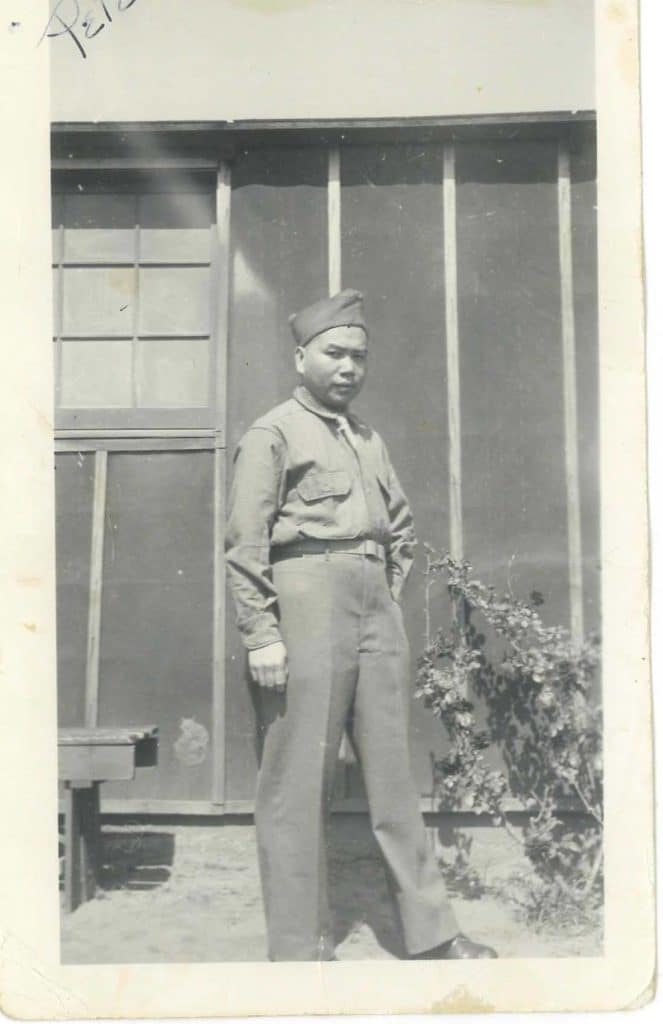
He eventually got another gig cooking at Kim Sing, a Chinese restaurant on Tehama Street in Redding, which he would later come to own and rename the House of Lim. In 1957, the House of Lim moved to its long-term Market Street location, where its retro-50s look and comfort-food-laden menu, especially tailored for a particular American palette, made it a Redding institution.
Helene Sisk said she couldn’t believe the news when she heard Lim’s was closing. She says she misses the pork chow mein. Potter agreed, saying he can’t find a chow mein or chicken soup that tastes the same. “Nowhere has the same old-school recipes,” he said.
When he drives by the now vacant Market Street location, Potter said he still instinctively wants to pull in and stop for another meal, nostalgic for the restaurant that was once the one and only place for Native people to dine. When his wife Myrna was 14, Potter says, she found herself stranded in Redding, unable to find a way home to Burney. Luckily, her grandfather, Raymond Lego, the renowned Pit River activist, spotted her while driving down California Street and stopped to pick her up.
Seeing how distressed she was, Lego told Myrna: “Before I take you back home, let’s eat at Lim’s.”
Author

Related Articles
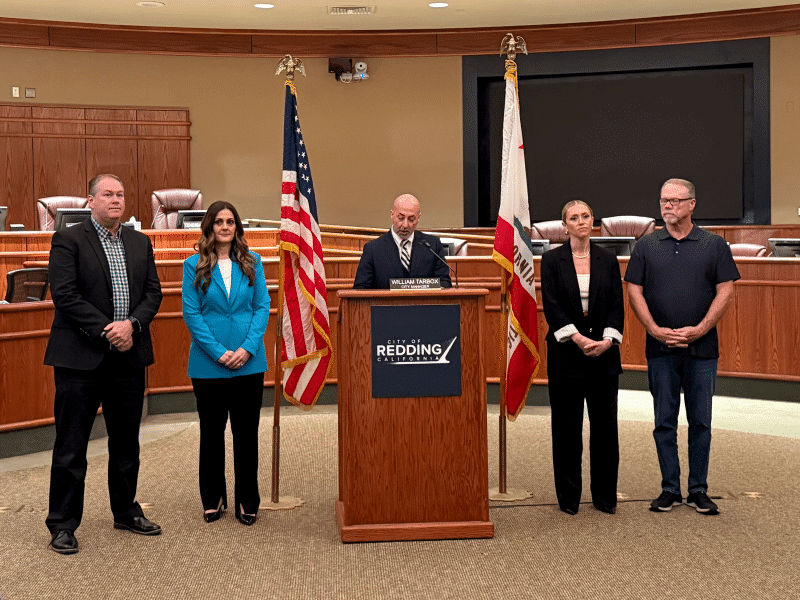
New Redding manager announces “assault” style overhaul of city operations
During what was originally planned as a press conference about city electric rates, Redding’s recently-hired city manager William Tarbox announced a “new era” in Redding’s governance. Council members haven’t yet met publicly to discuss such a plan but some say they’re on board.

Get ready for California’s 2026 primary. Your questions about voting, answered
Get answers to your election questions ahead of California’s June 2 primary election.

No state funds for proposed True North Behavioral Health campus
State funding wasn’t awarded to build a proposed behavioral health campus that supporters said would have met intersectional county needs. Local leaders say problems have been identified and solutions are still needed.