
Shasta County’s IHSS Workers are Asking for a Living Wage. Here’s What You Need to Know.
Amidst a County-wide healthcare shortage, more than 4,000 IHSS workers are serving on the frontlines for $18.10 an hour. They’re negotiating for more.
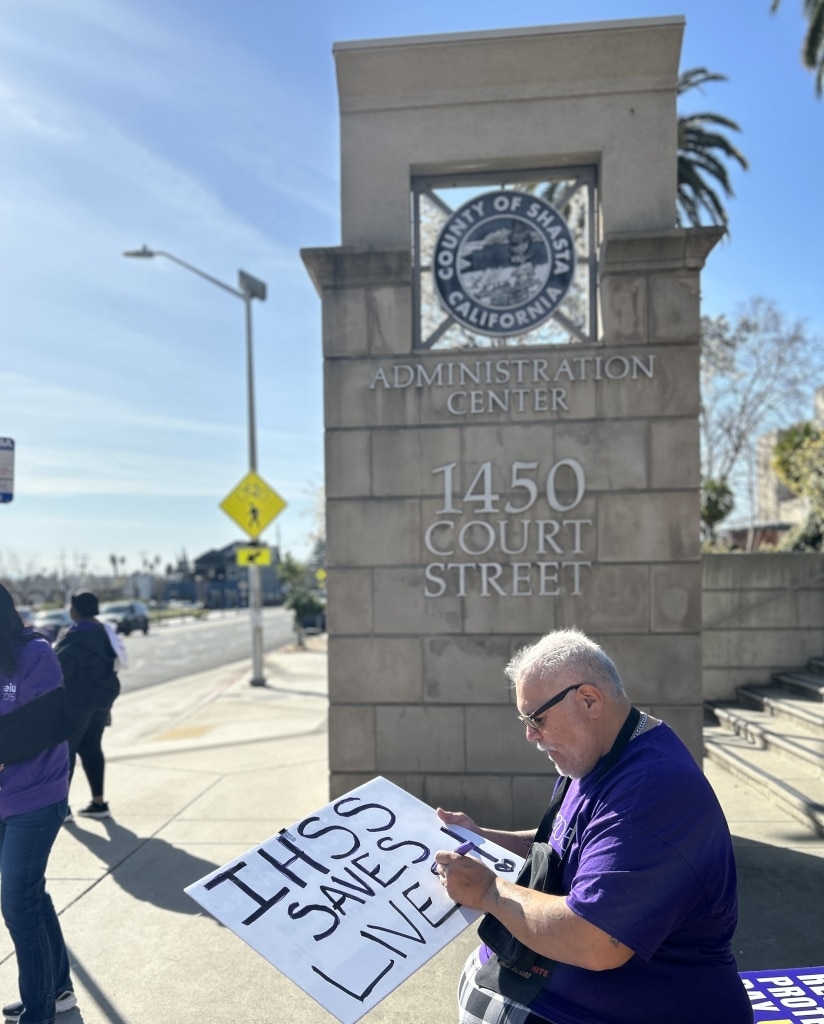
In-Home Supportive Services (IHSS) workers rallied outside Shasta’s Administrative Building for the second time this year on March 11 — they’re hoping their third union contract with the County will include a living wage.
IHSS workers assist people who aren’t able to manage life at home safely, without support. The paid job includes helping with daily tasks of living like cooking, cleaning, bathing and medical support like administering medications.
Shasta County’s IHSS workers are organized under SEIU Local 2015. Ongoing negotiations are currently occurring in closed sessions with the Shasta County Board of Supervisors.
They currently make $18.10 per hour, just $1.60 above California’s minimum wage. Those wages are determined at the county level, and vary from county to county. Statewide, the lowest pay rate is $16.50 per hour, which is what’s provided in Siskiyou county.
MIT’s living wage calculator – which tracks the full-time hourly rate someone would need to earn to support themselves in a given part of the country – places Shasta County’s living wage at $23.44 for a household with no children.
Madalynn Clark, an IHSS worker and organizer at SEIU Local 2015, credits past union negotiations with local workers current pay and benefits, which include dental insurance and sick pay.
“Without the union, everyone would be making minimum wage,” Clark said.

On February 4, noise from an IHSS rally briefly echoed inside a County Board meeting. Clark said the group passed by the Board chambers as they demonstrated but did not go inside to avoid interrupting the proceedings.
“We had come to two other meetings beforehand to try to give (the IHSS providers) a chance to speak, but they were out-waited, they had to leave,” Clark said, explaining that the Board’s long meetings can make it difficult for public speakers to stay long enough to have a chance to voice their concerns.
“This was how the providers felt like they were going to be seen and heard, and we did see some progress with our negotiations after that.”
IHHS employment is “open shop” meaning IHSS workers are not required to pay union dues to receive the union’s benefits. Brandon Lim, a spokesperson for SEIU 2015 declined to confirm how many IHSS workers pay into the union, emphasizing that SEIU 2015 represents all IHSS employees, regardless.
“We don’t distinguish between those who pay dues and those who don’t,” Lim emphasized. “We have a duty to represent all IHSS workers in the county.”
At the community-level, there is a gap between the number of available IHSS providers and the demand for their services. In Shasta County, about 4500 people have applied and are eligible to receive caregiving services through IHSS, but there are only around 4300 providers to serve their needs. The low hourly pay, Clark said, contributes to the gap.
“In order to make ends meet, a lot of (the providers) have to have more than one recipient (of their care),” Clark said, explaining that for those receiving IHSS services. “You cannot keep and maintain quality, individual care, if you don’t have a personal stake in the issue, for $18.10 per hour.”
Many IHSS workers have that personal stake. Clark, for example, takes care of her grandfather. Another supportive services worker who spoke to Shasta Scout by phone, Ronnie Dillon, said she takes care of her son. According to both Clark and Dillon, family care is fairly common for IHSS providers.
“Generally about 70% of IHSS providers are family providers,” Clark said. “For the folks who aren’t a family provider, they’re making it possible for the family of their recipient to go to work.”
Shasta County’s lack of IHSS workers reflects a County-wide healthcare worker shortage, which looms in the backdrop of the contract negotiations. A 2022 Community Health Needs Assessment from Mercy Medical Center in Redding identified Shasta County as a medically underserved area, with provider shortages in primary care, dental care and mental health care.
Specialty medical care, which includes skilled nursing facilities, hospice care and in-home healthcare, is also in short demand across Shasta County. In an analysis of specialty care access, the Community Health Needs Assessment documented long wait times for specialty care, difficulty recruiting and retaining specialists and high out-of-pocket costs in Shasta County. The report particularly called for more extended-care options for seniors.
One nursing home in Redding, Copper Ridge Care Center, applied for a Workforce Shortage Waiver through the California Department of Public Health for the fiscal year 2024/2025. The waiver removes the minimum number of hours a patient is required to be seen on any given day in cases where there’s not enough workers to give them that care. And it’s not just Copper Ridge Care Center experiencing a worker shortage, Clark said, explaining that nursing homes in the county are generally overcrowded.
“There’s no room for these folks to go to, even if they needed to go there, even if they could somehow afford it,” Clark emphasized. “We know that people’s quality of life… (and) life span is greatly increased by being able to stay in the dignity of their own homes.”
In a public comment at the March 11 County Board meeting, supportive services worker Dillon characterized IHSS staff as frontline workers amidst the County-wide healthcare shortage. She explained that she’s also noticed overcrowding in the daytime rehabilitation center her son goes to.
“If we had more IHSS workers and people dedicated to doing IHSS work, it would help alleviate some of that congestion in our care facilities,” Dillon said.
Because it falls under Medi-Cal, IHSS is what is known as an entitlement program. Entitlement programs are government-provided services that are a legal right for those who meet eligibility requirements. In other words, IHSS isn’t an optional part of the County budget.
The cost of IHSS care is shared between the federal government, the state government and counties. The federal slice of the pie is tied to Medicaid, and usually falls somewhere around 50%. Counties pay a set amount, known as a “maintenance of effort” or MOE, and the state is responsible for whatever is left.
While SEIU 2015 and the Board of Supervisors continue to negotiate over IHSS wages, Shasta County’s Health and Human Services Agency (HHSA) has also been negotiating with the Board over how to pay their portion of IHSS costs.
Earlier this month, budgeting issues at HHSA left the County’s largest agency without the money needed to cover the County’s portion of IHSS costs. HHSA asked the Board of Supervisors to approve a transfer of $10.5 million from County general funds to cover the fees, a decision that was unanimously approved March 18. HHSA plans to repay the County’s general funds by June 30.
Kimberly Evon, an executive vice president at SEIU 2015 says the Board’s decision was important.
“SEIU Local 2015 is glad the Board made the right decision to unanimously approve the use of county general funds to pay for critical social services, including essential long-term care provided to Shasta County by In-Home Supportive Services workers,” Evon said in an email to Shasta Scout.
“Our hope is the Board will continue negotiating in good faith with our union’s bargaining team to reach an agreement on a new union contract for Shasta IHSS workers that will help the county better serve the nearly 9,000 constituents impacted by the IHSS program.”
The most recent closed session negotiation between the Board of Supervisors and SEIU 2015 was held March 25. There is no set date for finalizing negotiations.
Annelise Pierce contributed reporting for this story.
Do you have a correction to share? Email us: editor@shastascout.org
Author

Related Articles
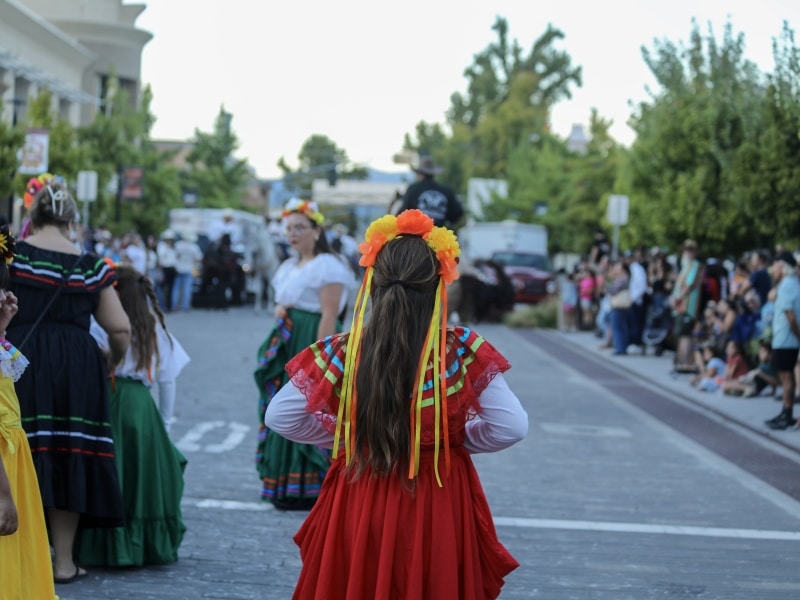
Gallery: Downtown Redding hosts fourth annual Hispanic Heritage Month celebration
Red Bluff-based entrepreneur Araceli Gutierrez collaborated with Viva Downtown to bring the celebration of Hispanic Heritage Month to Redding.
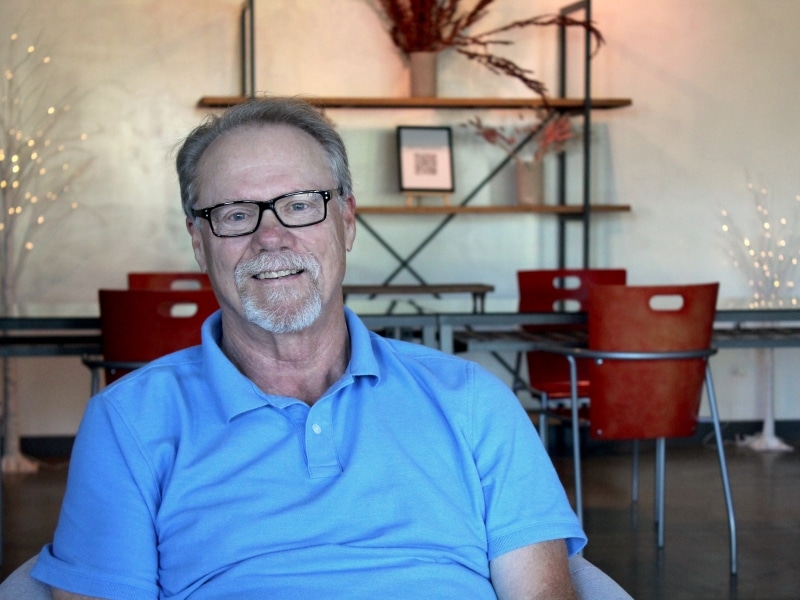
Meet Jack Munns for Redding City Council
There are three council seats on the ballot this November, and nine candidates are running. Munns is a current council member and former police officer.
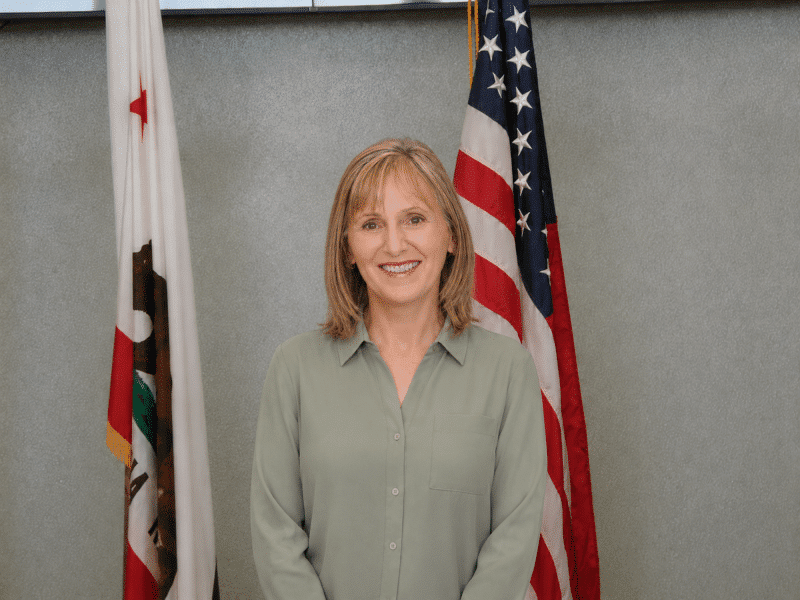
Meet Lisa Barry for Shasta County Office of Education Trustee
Lisa Barry is running for one of seven seats on SCOE. She has a background of service in the Intermountain area including as a community organizer with Burney Friends and Neighbors.