
Nurses demonstrate outside Shasta Regional Medical Center, claiming poor working conditions
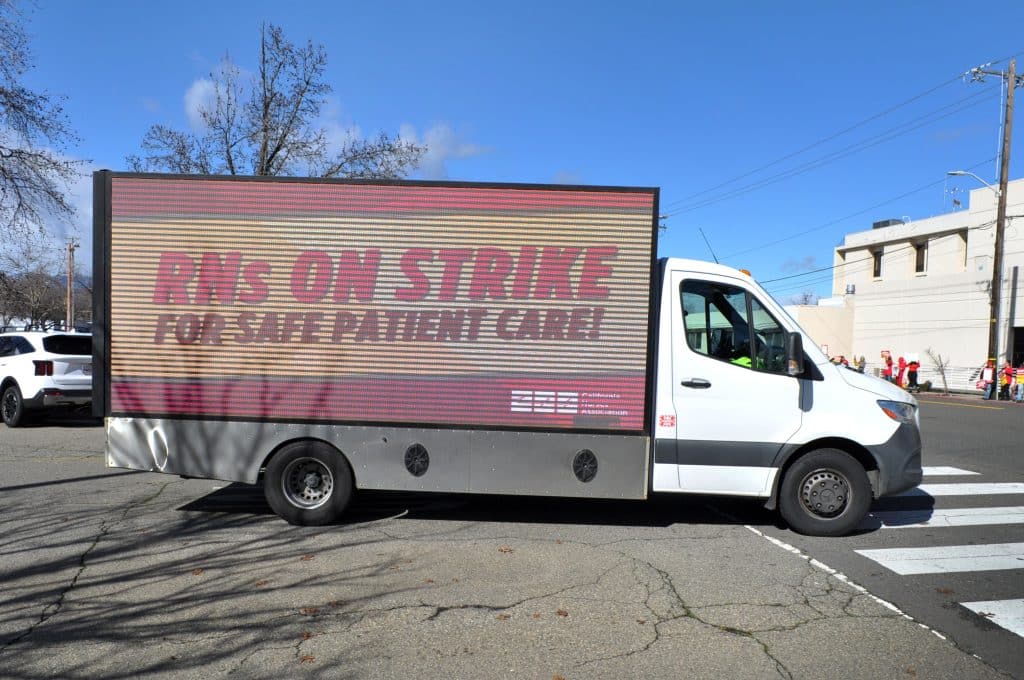
The California Nurses Association and the Caregivers and Healthcare Employees Union have organized a strike of nurses at Shasta Regional amid stalled contract negotiations with the hospital.
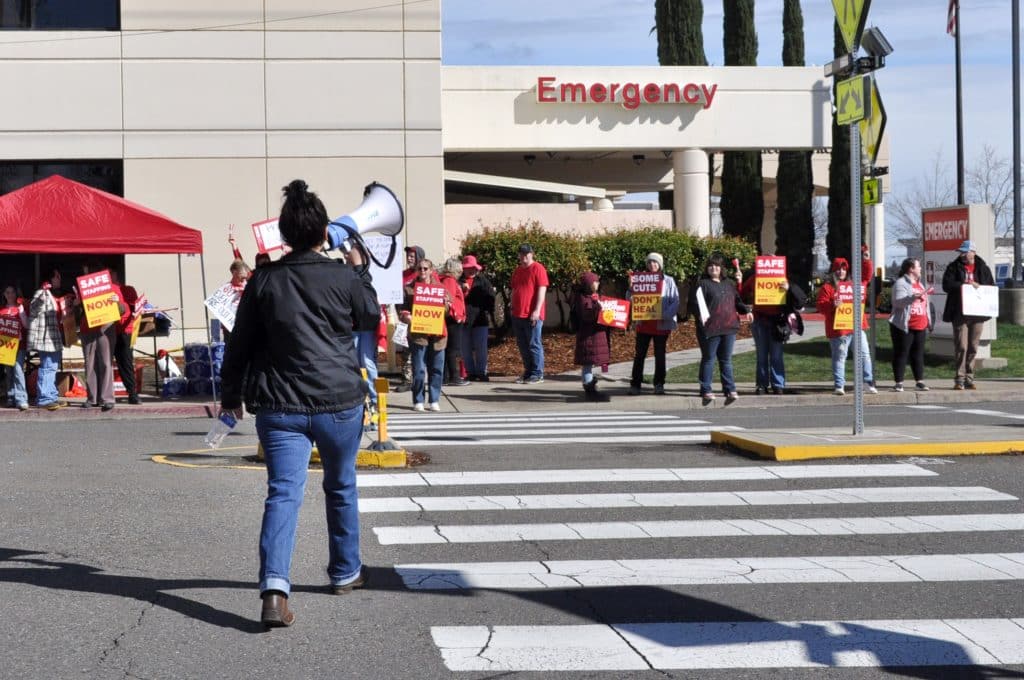
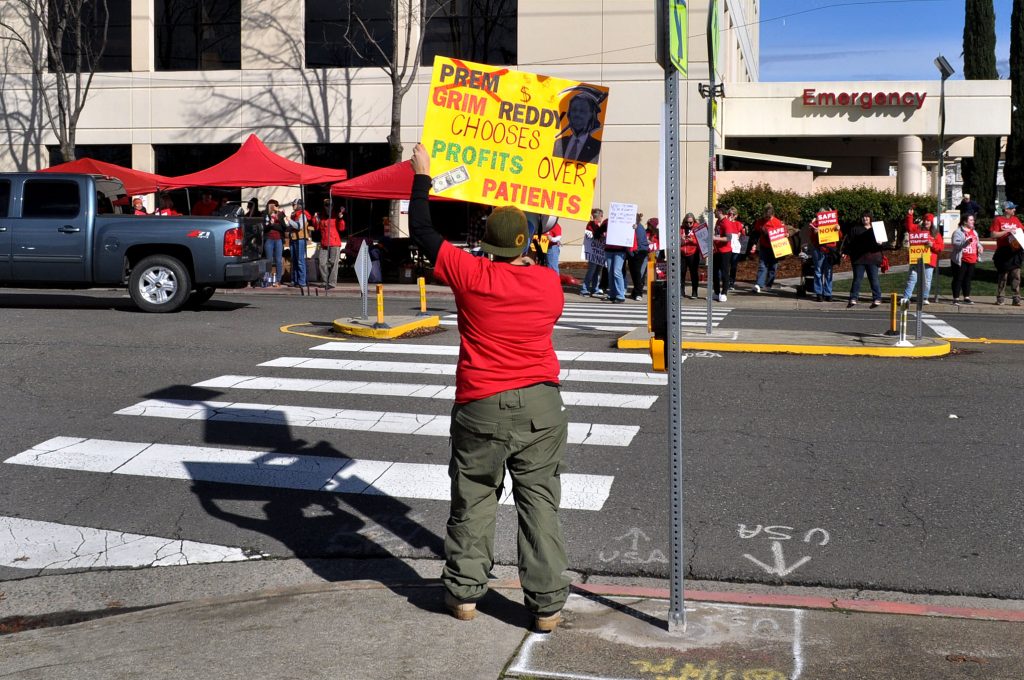
“Shame on you Shasta Regional; shame on you Prem Reddy!” rang out from a megaphone as striking nursing staff gathered in front of Shasta Regional Medical Center today. The subject of their chants included the CEO of Prime Healthcare, the company that owns Shasta Regional Medical Center where they work along with 53 other hospitals.
Earlier this month, nurses at Shasta Regional in downtown Redding announced their plan to strike Feb. 19, after their union failed to reach a contract with the hospital despite months of negotiations that began in August 2025. A California Nurses Association press release on Feb. 6 stated that the negotiations had resulted in “little to no movement on key issues.”
Lynnann Foster, a spokesperson from Shasta Regional, provided a statement to Shasta Scout saying that the hospital had been bargaining in good faith and was disappointed by the nurse’s decision to strike. The statement claimed the hospital has already implemented wage increases for staff “that will provide millions of dollars in additional compensation to our employees over the next three years.”
The hospital also said the strike “will not affect Shasta Regional Medical Center’s unwavering commitment to remain fully open and appropriately staffed with qualified professionals to deliver safe, high-quality care.”
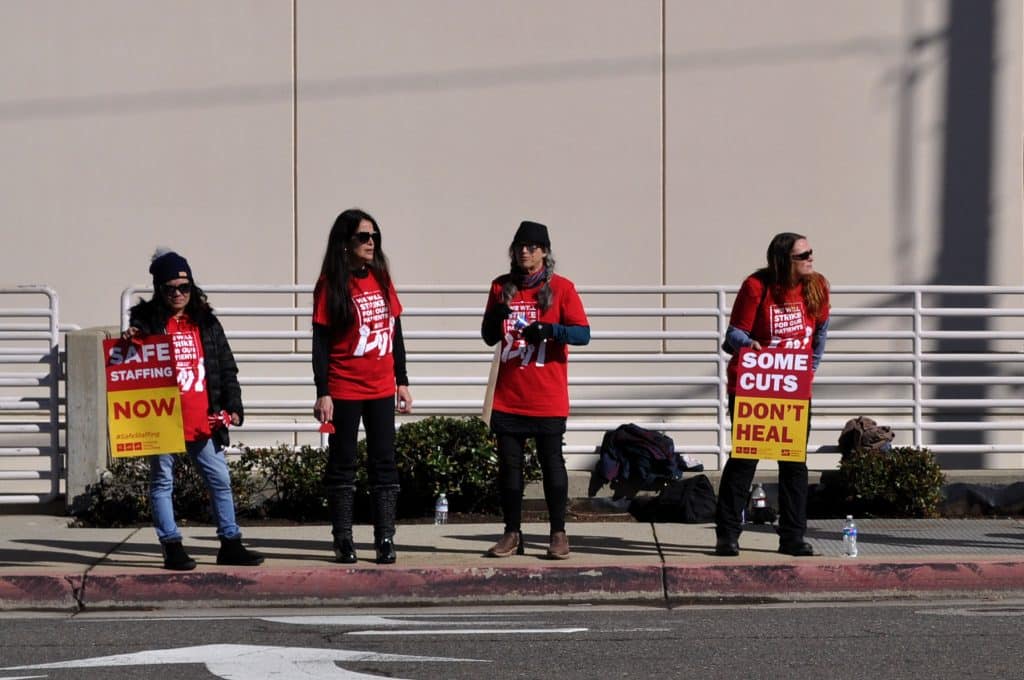
The nurses’ signs and slogans revealed a little bit about their demands. One read “burn out caused this turnout,” another “dear public, your life depends on the safe ratios,” referring to the nurse-to-patient ratio that California law requires. Those were two of the same grievances cited by Michelle Gaffney, the union representative for the nurses on strike.
“Our goal here,” Gaffney explained in a remark linking safe patient care with adequate pay, “is a contract that provides us with structure, for not only workplace safety and patient safety concerns, but also retaining staff.”
According to the California Department of Health, in 2025, Shasta Regional received 102 complaints/reported incidents in comparison to the statewide average of 45 for a hospital of its size. Of those 102 complaints, 13 were “substantiated” after an investigation while another 7 were “substantiated without deficiencies,” meaning that no regulatory requirements were violated.
“If you have facilities that focus on the bottom line and not maintaining services and adequate staffing,” Gaffney explained, “patients are forced to go elsewhere, and it overwhelms whatever resources they already currently have in the region.”
Rural California at large is particularly strained for medical infrastructure, and the county’s lack of doctors led Shasta’s Health Officer Dr. James Mu to declare a public health crisis several months ago. Given this scarcity, Gaffney explained the mindset behind the decision for nurses to strike from work.
She wagered that the nursing shortage should actually be thought of as “a shortage of nurses that are willing to work in poor conditions.” Gaffney described the hospital’s priorities as “the bottom line” rather than the working environment, and said if things remain as is, the medical provider shortage will remain a problem.
“Our job is to speak up for the people that can’t speak for themselves. You can only allow something to continue — where you see this continuous pattern of short staffing — when you have to say, hey, look, we need to change.”
As she stood on the picket line today, Gaffney joked about being tired saying she joined the strike after an overnight shift in the ICU.
Do you have a correction to share? Email us: editor@shastascout.org.
Related Articles
Redding high school students call for tobacco ordinance enforcement
Students called on the Redding City Council to follow through on enforcement of a tobacco ordinance passed last year. Doing so, they said, would help address Shasta County’s high rate of teen tobacco use.

Redding declares emergency in anticipation of El Niño, makes plans to clear congested drainage ditch
The cyclical weather event is expected to bring heavy rainfall to Northern California this winter, something especially worrisome for those who experienced severe impacts from last year’s flooding.
Flock talk fizzles at Anderson council meeting
The council took no action even after Anderson Police Chief Oliver Collins’ acknowledged that the Anderson Police Department had previously granted Flock login access to employees of other agencies, something he described as “wrong.”
