
Underground Good: Terri and Gary Orwig
“I love to encourage people to become volunteers. There are so many opportunities out there that could match your interests. If they have time, it’s such a fulfilling thing for your spirit, for your heart. That’s important to me. I want to leave this earth knowing I did good work, that I helped people.”
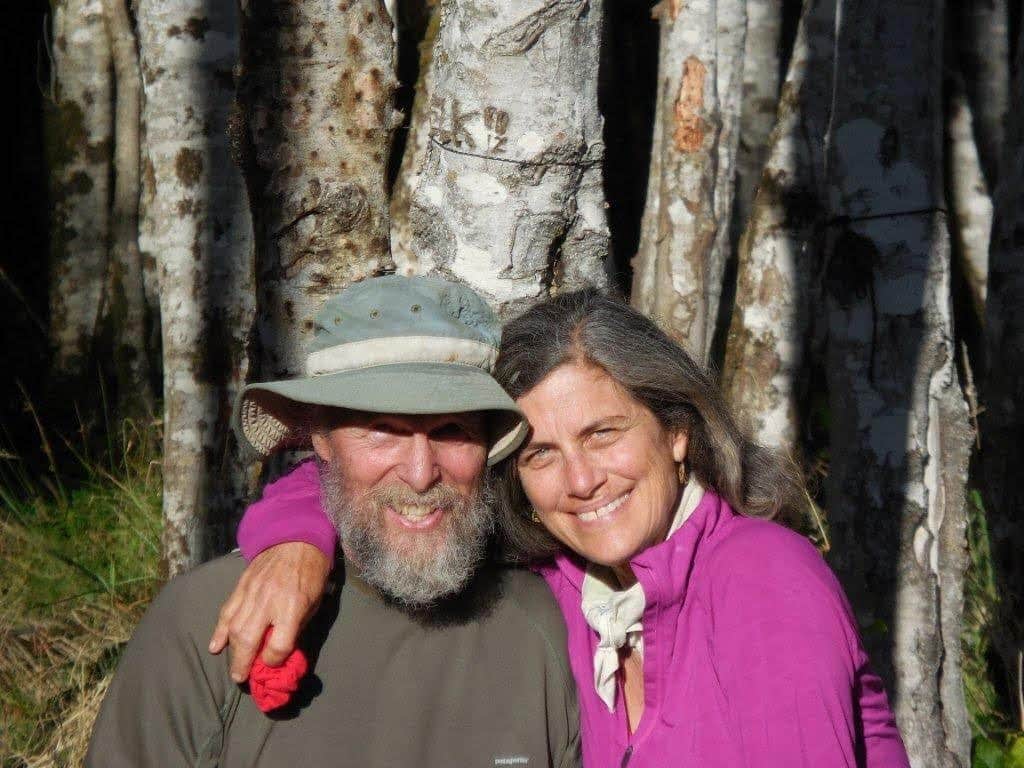
Ed Note: This Opinion piece is part of our Underground Good series, which focuses on providing a window into the mindsets of ordinary people doing good work in their community. It’s written by sociologist, coach and evaluation consultant Sharon Brisolara. You can find the rest of our Underground Good series here. Want to nominate someone? You can do that here.
Introduction: Terri and Gary Orwig are one of those couples who seem to show up wherever help is needed in their communities. They cook and serve at the KKRN breakfast and other fundraisers, work to support and grow the Big Bend Land Trust and have been key to ensuring that food distribution happens in Big Bend. Their joy and the love they have for their community — and each other — is palpable to everyone who interacts with them. You’ll find some of that joy and love here.
How would you like to introduce yourselves to readers?
Terri: My name is Terri Soranno Orwig, and I am a long-time resident of Big Bend. We have been here 46 years. I feel very connected to our communities.
Gary: My name is Gary Orwig, Terri’s husband. We’re so fortunate to live in this area; it is a little jewel. I was fortunate enough to work at the school down in Big Bend for 25 years, and I got to the community that way. Now, we’re living our dream, gardening, cultivating fruit trees and living out in the woods. We just really love where we live.
People think about volunteering in different ways. How do you describe the ways that you give?
Terri: I really enjoy it. I love helping people. I think being involved with Hill Country Community Clinic in Round Mountain from its beginning gave me a sense of community, and helping people through my role there helped. I helped grow Hill Country, but it helped grow me, too. It helped shape the person I am today.
It just feels good to be helping people, to do service. I think everybody ought to be doing service, if they’re able. It comes back at you 100-fold, the goodness from it. That’s how I feel about it.
Gary, what would you say?
Gary: When I retired, I had extra time on my hands. At that point, I wasn’t volunteering for anything, and Terri suggested that I try something. That was when KKRN (the radio station) was in its very beginning stages. I began doing programming and logging, more technical things. Then the opportunity for participating in the food giveaway kind of came along.
Terri: Volunteering is rewarding, especially the food giveaway. People are 100% appreciative of what we’re doing. In all the years we’ve been doing it, we haven’t had a negative comment. People really appreciate it, and they tell us so. That’s very rewarding.
How did you get involved in food giveaways?
Terri: After I retired, a friend, Staci Wadley, called. They were in desperate need of some volunteers in Round Mountain to help with food distribution (commodity boxes and senior boxes). They asked if Gary and I would be willing and able to do it and, of course, I said yes. And then I asked Gary!
Gary: That’s actually how it works.
Terri: He’s such a good sport about it all. I knew so many people through my 28 years at Hill Country Community Clinic. We used to give TB tests to all the food giveaway workers as required by law, so I knew all the ladies involved. When Stacey asked me, I thought that it would be a fun thing to do after retirement.
I also serve on the board of the Big Bend Community Land Trust which, among many things, promotes permaculture and uplift of our community by providing employment and food for community residents. It’s a fantastic project. We have a huge garden that allows us to grow a lot of food for our community. Our gardener Hannah brought over 600 pounds of tomatoes up to the Mountain Union School District families and staff. The garden is open on Wednesdays and on Saturdays, when we also have a little thrift store. We call it The Donation Station, and people come and get fresh produce, as well. We love it if they volunteer, too. We do ask for donations if people are able and willing to give.
Terri: People can check out the website to learn the history about how we started and what we’re up to. We’re also becoming a Firewise community and doing things to bring our community together. Big Bend has shrunk considerably since we first came here. We try to make sure everyone is included, and so we have many open board meetings. We’re trying to get the community involved in good work, like gardening and producing food for families. The land trust is the most exciting project for me.
Gary: We’re trying to resurrect a community, really. Our little school, Indian Springs, closed a couple years ago now. Now kids get bused up to Montgomery Creek school. They do have more opportunities than they would in Big Bend. They have activities, after-school programs and sports and even a cross-country team. The truth is, all rural communities are shrinking.
Back in the 1970s, this was the second richest school district in the state of California. We had timber taxes and funds from the hydroelectric power station and the three dams in the district. Now they’re trying to sell the school. It became the property of Mountain Union School District, and it has been on sale for a little while now. They still owe a lot of money on it. While I was on staff, I did everything from maintenance, bus driving, landscaping, serving as janitor, swimming teacher, basketball coach, a little bit of everything. It was a wonderful job.
How does the food bank operate?
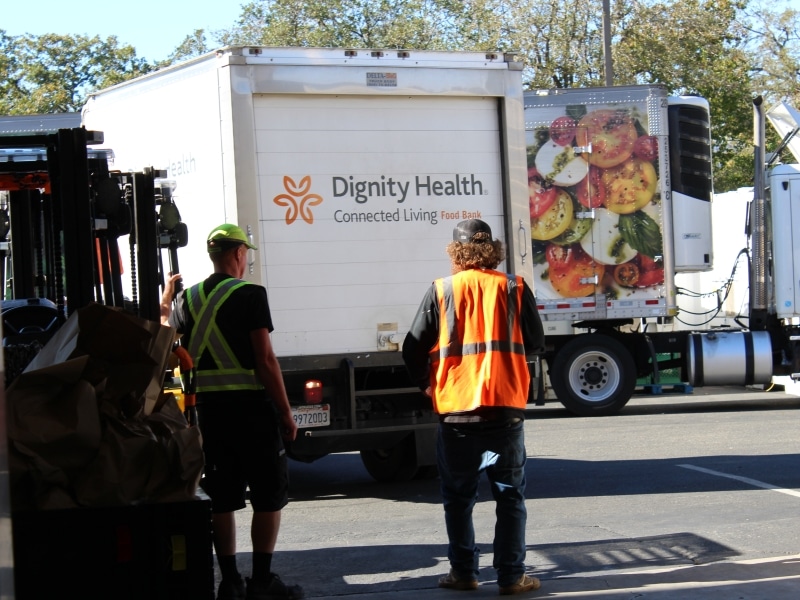
Terri: A truck from Dignity Health Connected Living comes up with commodities and senior boxes that we unload. We’ve got two people who do the intake. The driver and his wife, Jim and Nancy, are a wonderful couple. He is a pastor at the Presbyterian Church, and they also go up to Lakehead with a truckload of food. They are very special people.
When someone comes to get food, they show a volunteer their license, and the volunteer will find them on the list. That said, you can come get food even if you haven’t been here before, fill out the intake form and walk away with food. There is an income criteria. You have to have low income, but the cutoffs are pretty generous. You would need a monthly income for one person of $3,064 or less. There are similar requirements for commodity boxes.
Gary: It takes a number of volunteers. They always need help at Dignity Health to load boxes and fill bags at their facility in Redding.
Terri: In terms of food, we often have milk, some kind of dairy products, and there is almost always meat. Gary often does the senior boxes, and that usually comes with cheese. If there are two or more seniors in the household, they each get a box, but there is only one commodities bag per household.
Gary: They just bumped the senior box from 25 to 35 pounds per box. So that’s a good increase in the amount of food people get there. The trucks are somewhat limited by the allowed weight that they can travel with, which limits the amount of food they can bring up.
Terri: That restriction bums us out as folks sometimes wait quite awhile for their turn, and when there isn’t much food, it’s kind of embarrassing. We usually have about 75 to 90 people who come for food. People always tell us they are grateful, though. People even brought us cookies in December during the holidays as thanks.
How has your own sense of community or belonging been shaped through your experiences volunteering?
Terri: It makes us feel like more of a community. You know, Gary and I bring food to folks who can’t come out to the distribution in Big Bend because they are working or have no transportation or for some other reason. We’re happy to do that. It may take us another half hour of our time to drop food off, and everyone is so appreciative. It makes you feel good that you’re helping your community.
Gary: Also, there’s communication that goes on during the distribution, and that’s a bridge into the community. Terri knows a lot of people. She is always saying, “Oh, hi! How are you? Oh, let me hold the baby. . .”, that sort of thing. As far as creating community, these things create opportunities for more communication. That’s one of the benefits.
Providers who serve rural areas like ours often speak about the impact of stigma as well as the tendency for rural residents to not want to ask for help, to be independent, and sometimes not wanting to bother anyone. How do you navigate these tendencies when someone seems resistant to coming in for food?
Terri: We are just really friendly; we’re honestly happy to do this. Jim, the driver I mentioned earlier, says we’re his favorite group because we’re all friends, and we’re always happy. I have gotten a couple of my friends to come and help, and it’s a great time to get to be with them while we’re all doing good work. I think that the people who come feel that from us. We just try to make it a jovial, fun thing. I think they kind of look forward to it.
Gary: It’s quite a meet and greet, and it’s also a good time for everyone. The people who come are just really great people. The demand has gone up during the last year or so, for sure. These have been hard times. And you’re going to see more of that, too.
What do you appreciate about volunteering together?
Terri. We spend a lot of time together, especially since we have retired. A lot of our days are spent together out in the garden, doing what we do. This is just another opportunity.
Gary: She’s a social person, so it is a social event for her.
Terri: And it’s good for him to be a little social. Gary would be happy just staying in the ponderosa here and not getting out. We certainly recognize a lot of people, and there’s even more interaction now. It’s fun to do this together.
Do you have any stories of the kind of difference that people say having the food has made for them?
Terri: We haven’t really heard specifics about that, but I do think it has made a difference. Especially when we give a lot of food, or when there’s cheese, eggs, milk and yogurt, people really appreciate that. There’s also a bag that has nuts and dried fruit and dried beans and canned food. All of that can make a difference.
One Thanksgiving, we gave away turkeys, and another year there was a grant that allowed for gift certificates. That doesn’t happen very often, but it sure felt good.
Is there anything you’ve learned about yourselves or each other by serving in the ways that you do.
Terri: I don’t know. It’s in my nature, you know? And I’ve made it Gary’s nature!
Gary: That’s true, from my start at the radio station to what I’m doing now.
Terri: It has made us better people. Serving others makes you a better person. It has helped me be less judgmental. I’ve seen that people need this food. It’s not like they’re just sitting at home eating bon bons and not doing anything. People are suffering, and this is a way we can help them get through the month until, at least, the next month.
What, from your perspective, is important for the general public to understand about the availability of resources that provide food for people?
Terri: There’s a food bank telephone number that people can call if they want to get involved. That number is 530-226-3071. People can also go online to dignityhealth.org. Dignity Health is out at Connected Living in Redding. There you can find schedules, income criteria, what you would receive and what kind of paperwork you have to fill out, all of that information. They will also have a shout out for volunteers that are needed. Gary and I are with AmeriCorps Seniors. We got all the swag: hat, T-shirt, that kind of thing. We had to go to a three- or four-hour class and get fingerprinted. Those requirements sometimes deter people from starting as an AmeriCorps volunteer. But there are multiple volunteer opportunities through them.
Gary: I don’t really know the system the way Terri does. If we don’t have enough volunteers, everyone knows they can call Terri.
Terri: I’d love to encourage people to become volunteers. There are so many opportunities out there that could match your interests. If they have time, it’s such a fulfilling thing for your spirit, for your heart. That’s important to me. I want to leave this earth knowing I did good work, that I helped people.
Gary: It is true. Dignity Health, the hospitals, clinics, KKRN community radio — everybody needs help. People can also bring us bags. Dignity Health food bank is always looking for bags to put food in. We are always very appreciative of that. And we’re still healthy enough to do it. We’re very fortunate.
Do you have a correction to share? Email us: editor@shastascout.org
Author

Comments (6)
Comments are closed.
Related Articles
Underground Good: Sara Hoxie
‘Will had so much energy and love to give. He’d walk into a room, and his personality would drive everything there. He kicked up a lot of dust, and we’re just not going to let that dust settle.’
Underground Good: Enora Ilboudo
“Aside from clothes and food, sometimes we’ll hear from people who don’t feel connected to their families or need to talk to someone and don’t have anyone else they can go to. People are finding their community here at the center and that keeps me motivated when I’m working here.”
Opinion: Healthcare and Food Benefits are at Risk in Rural California. Will the Governor and Legislature Act?
The need for health care, behavioral health treatment, and food assistance will not disappear because federal funding drops. The burden simply shifts downstream to counties — forcing cuts to emergency rooms, food banks, sheriff’s deputies and already-overwhelmed local systems.
Gary and Terri are the most genuine people I have ever known. I too was at Indian Springs School (teacher) for 25 years. Working with Gary, and getting to know Terri, was a bonus!!! So happy to read about their retirement adventures! I am not surprised at all that they are continuing to give of themselves!!! It is who they are!
I’ve know Terri and Gary since the early 80’s, they really are wonderful humans and have always made this world a kinder, more welcoming place. This was such a wonderful article to find in my inbox! As always, the Orwigs inspire me to do better.
Yay for Terri and Gary! They are the best!
I love this story! Thank you! I’m inspired 🤗
I always enjoy Underground Good; thank you, Sharon, for another interesting article highlighting the folks who care about our north state communities.
Lovely story about fine people.