
Underground Good: Steve Woodrum
“As a poll worker … you notice that many people, when they come through the doors, all of a sudden, they change. They become more dignified. You can see that they are getting ready to vote, and they rise to the occasion.”
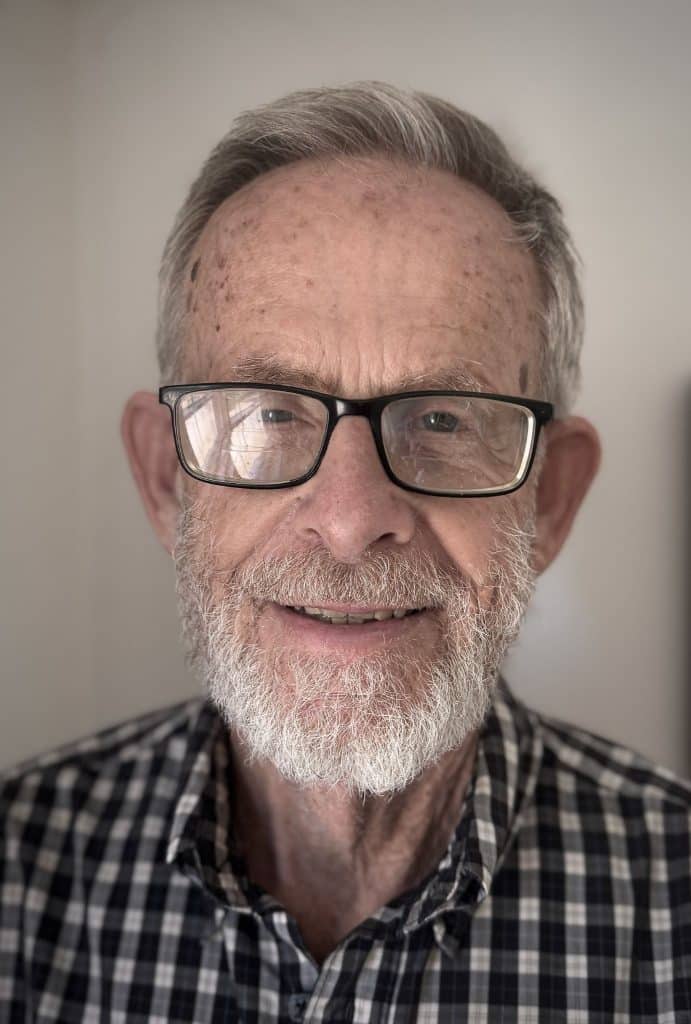
Ed Note: This Opinion piece is part of our Underground Good series, which focuses on providing a window into the mindsets of ordinary people doing good work in their community. It’s written by sociologist, coach and evaluation consultant Sharon Brisolara. You can find the rest of our Underground Good series here. Want to nominate someone? You can do that here.
Introduction: Steve Woodrum is a Shasta County resident who has found multiple ways to give back to his community. In this conversation, we talk about his reasons for serving as a poll worker and what he has learned as the result of his support for the elections process over many years. Steve also shares some of the procedures he has recently encountered as a worker. Please keep in mind that election procedures can change over time. You can learn more about 2026 California poll working training standards on California’s Secretary of State website.
As we begin, how would you like to introduce yourself to readers?
My name is Steve Woodrum. I have lived in the area a long time. I started kindergarten at Magnolia Street School, left for a bit, then returned and graduated from Enterprise High School in 1966. I’ve lived in Shasta County ever since.
The main reason we are here today is to talk about your experience as a poll worker. Do you remember when you started serving as a poll worker or the number of times you have served?
I served during George W. Bush’s presidency and both of Barack Obama’s terms. That’s a 16-year span that included midterms. We were also assigned to one or two other special elections. All total, maybe 10 to 11 elections. I took a break for a while, and I stopped. But this last summer, I signed up again and served half a day this last election.
What motivated you to serve as a poll worker?
Originally, my neighborhood polling place was the St. Joseph School Hall. My wife and I would go there to vote, and I would see these people doing the work of conducting the election. I remember thinking that this is a civic duty, something you could be happy about and proud of doing. I asked about becoming a poll worker, went to the next training and was assigned to a site in Enterprise. I served there first and then an opening came up at St. Joseph School, which was close to my house, and I served at St. Joseph School for the rest of the Bush and Obama terms. This last summer I was placed at Neighborhood Church off of Bechelli Lane.
What was it about the experience that led you to keep volunteering?
Here’s the strange thing about voting: As a poll worker, you can sit there for 10, 12, 14 hours doing the same thing, with people coming in during that time. You notice that many people, when they come through the doors, all of a sudden, they change. They become more dignified. You can see that they are getting ready to vote, and they rise to the occasion. Some people, you could even see their posture become straighter and aware that they were doing something beyond their normal routine. You might guess that they were probably going to vote for someone different than you, but they were rising to the occasion. I really responded to that. That’s one of the big reasons why I wanted to come back. It was obvious that something special was happening.
What was it like when first-time voters came in?
Sometimes parents would come in, and they’d bring in their 18-year-old and make a fuss about them voting. There were also times when parents would come in with a handicapped child; polling places are equipped with a handicapped parking area and a ramp for a wheelchair. There were facilities for people who couldn’t see or hear well, and if you’re shaky, help with handwriting. All those things were accommodated. The parents knew that their child had a legitimate right to vote like everybody else, and they would come in and help them vote.
Do you remember conversations either in your household or among friends about voting that shaped how you thought about the importance of voting?
My dad was in the service, and he had the idea that if you’re in the service, maybe you don’t want to be involved in politics too much, because what would happen if the person you don’t like politically becomes your commander-in-chief? Sometimes, when he was in the service, he was not as talkative about politics as you might think.
But he still voted?
He still voted. He just felt it was the kind of thing you keep close to your vest. He was an officer, and if he was talking about this or that candidate, that might be construed as telling his subordinates who to vote for or who not to vote for. There are a whole bunch of issues like that that come into play if you’re in the military. And he was aware of those things.
What’s important to you about supporting people in voting?
Well, let’s go back to the things that impressed me during the election. There was the reaction to the people that came in to vote, but there was also the way the other people on the team reacted. Most of the time at St. Joseph, it was the same core group of people working. You’d say, “I haven’t seen you in two years, but here we are again.”
The books were right there, so everyone knew under what political party we had signed up. Sometimes we were with the same and sometimes with different parties, but none of that counted. We didn’t really talk about politics. We were focused on the mechanism of voting, what we had to do to get it right. We were focused on the importance of the act of voting. That was the important thing. And all of a sudden, the fact that I’m from one party and they’re from another party didn’t really matter. It was nice to see all of that just disappear.
What surprised you about the training that you received?
I remember my first training in the downtown mall, and there was a room full of people. It must have lasted 2.5 hours. This summer, the training was about 2.5 hours again and it was in the board of supervisors chambers. They had AV equipment, a screen, handouts, stuff like this. If you want to volunteer, you’re going to get trained, and you’re going to receive printed materials that you can take home. There’s also a manual you can take home, so you didn’t have to learn everything in that 2.5-hour session.
What should people know about what procedures poll workers learn about and how votes are safeguarded?
One thing that struck me is that at the end of the day, when the polls have closed, there is still a fair amount of work you have to do. For example, at the start of the day, we were given a specific number of ballots, let’s say 600, and they were in stapled packets of about 50 each. At the end of the day, you have to account for all 600 — not by going into the ballot box because that is locked, and you’re not allowed to mess around with the ballots. However, you can and do count the number of signatures in the roster book that people sign when they have voted. You also count the number of ballots “surrendered” by a voter because they made a mistake. Poll workers mark those and voters surrender them; that is called a spoiled ballot, and they are given a new ballot to complete. At the end of the day, you count the number of spoiled ballots.
You also count the ballots of people who came in who didn’t have a chance to go to their own polling place due to work or care responsibilities or because they showed up at the wrong precinct. In these situations, people fill out a provisional ballot, and it is placed in a special envelope. So, you count the number of roster signatures, the number of spoiled ballots and the number of provisional ballots, and they should always equal the number of ballots that were used.
Most procedures require at least two trained poll workers to verify that the counting or other procedure is done correctly, right?
Yes, that’s an important safeguard. I mentioned earlier about voters rising to the occasion. You see that even more strongly with poll workers. The first thing I remember doing, when all the trainees arrived at the poll place on Election Day, was listening to the oath of allegiance to the United States Constitution. Everyone raises their hand and takes the oath. It’s a serious moment. You can see on people’s faces it means something. That is another nice thing about serving as a poll worker. How many times in your normal day-to-day life, unless you join the military, do you swear to uphold the Constitution?
Did being a poll worker give you more confidence in the election process?
Yes, I experienced the detailed procedures and processes. I saw the poll inspector and the care that she took talking to voters, explaining the procedures and what is meant if they had to vote a provisional ballot. Those kinds of conversations and that kind of assistance happened throughout the day. For me, it was testimony that poll workers knew what they’re doing and that they were doing the right thing.
How do you respond to people who say they might not bother to vote or who say that their vote doesn’t count or doesn’t matter?
There are, right here in Shasta County, a number of examples where just a few votes made a difference. For example, about two years ago, there was a recall election and the person in question retained his seat, but by only maybe 50 votes. That’s a pretty narrow margin. There was also another election where the person won with a simple majority, but only by less than 10 votes or so. So that candidate owed their success to just a few votes.
What would be your advice or invitation to people who feel overwhelmed by lengthy ballots or complicated propositions?
I just got our June voting materials. There is a lot of information there including arguments for and against measures. Sometimes propositions use complex sentences and big words, and the language of the arguments sometimes seem to assume that the voter knows quite a bit about a measure or proposition already. If you’re not sure of the propositions or the candidates, you could feel overwhelmed. But there are candidate forums like the ones that the League of Women Voters runs and presentations where someone presents background on what a proposition does and its potential impact. At those events, you can hear someone, not a politician, who has read the proposition or measure and translates all that gobbledygook into everyday language. The League is nonpartisan and doesn’t endorse candidates although sometimes they take a position on a proposition.
Are you involved in any other volunteer community efforts?
I am now a Whiskeytown Park volunteer and pick up trash on a regular basis when my health permits. I keep track of my hours for the Park Service because the more volunteer hours they can show, the more funding they can get. They make it easy to sign up and to record hours online.
For five years now, I have donated money to the library. Those funds are used to buy books and to help pay for two summer interns just graduating from local high schools. They get a lot of valuable experience and earn money, too.
Is there anything else I should have asked you or that you want to say with respect to poll working or voting?
In places like North Korea the same person always wins elections with 99.9% of the vote. I suppose if you lived there you wouldn’t have to vote or if you did you would know that it’s just a formality.
Here, no one really knows how our election will turn out. You can make predictions, but it’s not like some countries where you know who is going to win no matter what. So I would encourage everyone to vote.
Do you have a correction to share? Email us: editor@shastascout.org.
Author

Comments (3)
Comments are closed.
Related Articles
Underground Good: Sara Hoxie
‘Will had so much energy and love to give. He’d walk into a room, and his personality would drive everything there. He kicked up a lot of dust, and we’re just not going to let that dust settle.’
Underground Good: Enora Ilboudo
“Aside from clothes and food, sometimes we’ll hear from people who don’t feel connected to their families or need to talk to someone and don’t have anyone else they can go to. People are finding their community here at the center and that keeps me motivated when I’m working here.”
Underground Good: Terri and Gary Orwig
“I love to encourage people to become volunteers. There are so many opportunities out there that could match your interests. If they have time, it’s such a fulfilling thing for your spirit, for your heart. That’s important to me. I want to leave this earth knowing I did good work, that I helped people.”
Thank you, Steve, for your long hours and many days of service to our election proceedings. This citizen is very grateful.
Thank you Steve.
You demonstrate the best of Shasta County
Steve helps our community in so many ways/ not just through his philanthropy but through all the hours he donates to important projects. We are lucky we have him here