
Shasta’s new email retention policy passes, after intense board discussion
Supervisor Kevin Crye united with community members over how long to retain county emails. His fellow board members voted to pass an amended policy which allows for auto-deletion of county emails after two years, instead of one.
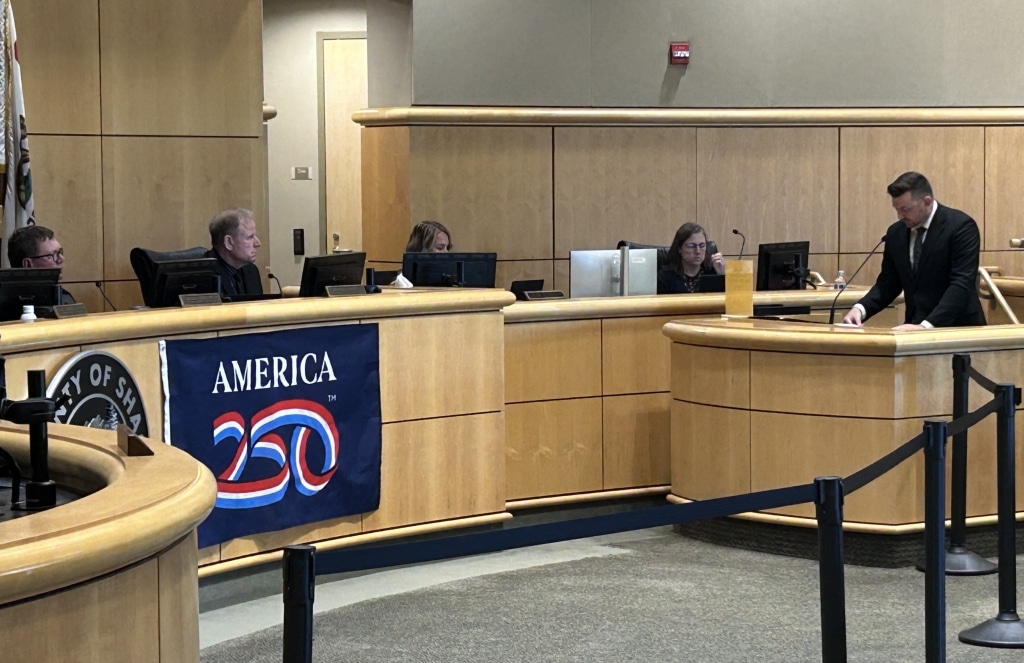
Shasta County’s attorney, Joseph Larmour, is hoping to avoid a rush of public records requests over the next month. That’s how long the county has before a new auto-deletion policy for email retention — passed by supervisors yesterday — will take effect.
Board members initially reviewed a draft policy that called for auto-deleting emails after only one year and other electronic messages after 90 days. Had that draft been passed, auto-deletion of emails more than a year old would have gone into effect today, July 1. Instead the board voted to retain emails for two years and make the policy effective Aug. 1 to allow staff more time to determine which emails should be retained.
The decision went against attorney Larmour’s wishes. He had hoped to move quickly to mass delete emails more than two years old. Supervisors listened to Larmour but still voted 3-1 for the amended policy, to address concerns about public access and the timeline of implementation. Supervisor Kevin Crye dissented from the vote and Supervisor Matt Plummer was absent.
The board’s discussion of email retention lasted for about an hour, with Crye and Supervisor Allen Long having the most to say. Both expressed concerns about how deleting old emails might impact public transparency.
Crye focused on how emails he’s dug up from past years of correspondence have supported his objectives for change, particularly in his work on the Shasta County Air Pollution Control Board and in response to lawsuits.
“If everything’s kept, nothing’s lost,” Crye said simply, noting his concern that under the new policy staff would have the authority to decide what’s important enough to save. “So if stuff is deemed not worthy be kept,” he added, “it’s gone.”
Community member Jenny O’Connell-Nowain — who’s often run afoul of Crye in public meetings over the past few years, agreed. Speaking to the board during public comment she noted that historical emails were significant in her husband’s successful fight to regain his county job after a wrongful termination.
“These are government documents,” O’Connell-Nowain emphasized. “And even if they don’t seem important now, they might be important later. So, oddly enough, I agree with Mr. Crye.”
But are these emails important? That’s the question Chair Chris Kelstrom asked of the county’s IT director, who issued a reminder that what’s viewed as important is a matter of opinion; which brought the discussion back to Crye and O’Connell-Nowain’s shared concern, that something dumped now could be valuable in the future.
Senior Administrative Analyst Bryce Ritchie, a county staffer presenting the proposed policy change, argued that a one-year deletion policy would increase county efficiency and reduce legal risk. He said there’s a cultural shift to be made in the county where important documentation from the county’s email server is moved into shared drives where it’s of greater use to the organization as a whole.
“I don’t have access to your inbox, you don’t have access to mine,” Ritchie explained. “So, if I have an email that’s helpful for a process or a project, and I save it in my Outlook, the rest of my team can’t access it. But if I save it on the shared drive, it is available to them.”
County attorney Larmour doubled down on the policy throughout board discussions where he took an active role, calling it “almost a mandatory requirement,” as he discussed the need to reduce the county’s stored email volume in response to increasing public records requests.
That’s where Larmour and Crye — who are often in lockstep during county meetings — divided sharply. As Larmour called for reducing the county’s cost and risk, Crye demanded public transparency — while simultaneously calling out some of the community members who seek it.
“As much as I think half these people are nuts, in the back,” Crye said, referencing community members sitting in the room, “it’s still their right to have access.” In response, one woman yelled out from the audience, accusing him of slander. “It’s not slander, you’re nuts,” Crye told her.
Addressing a related matter with impact beyond Shasta, supervisors also briefly discussed whether to support Assembly Bill 1821, which would amend the California Public Records Act.
As staff noted during the meeting, the controversial bill has been significantly scaled back in the last few days and would now only address the timelines by which agencies must reply to public records requests, giving ten business days, rather than ten calendar days, to issue a response. Supervisors voted 4-0 to support the neutered statewide bill which passed the senate judiciary yesterday, moving forward.
Do you have a correction to share? Email us: editor@shastascout.org.
Author

Comments (8)
Comments are closed.
Related Articles

Haven Humane opens disaster response center built with Zogg Fire funds
The animal welfare organization opened a new disaster response and humane education center today next to its existing facilities in Anderson. The center was built with funds from the Zogg Fire that were designated for animal care in honor of Karen King.
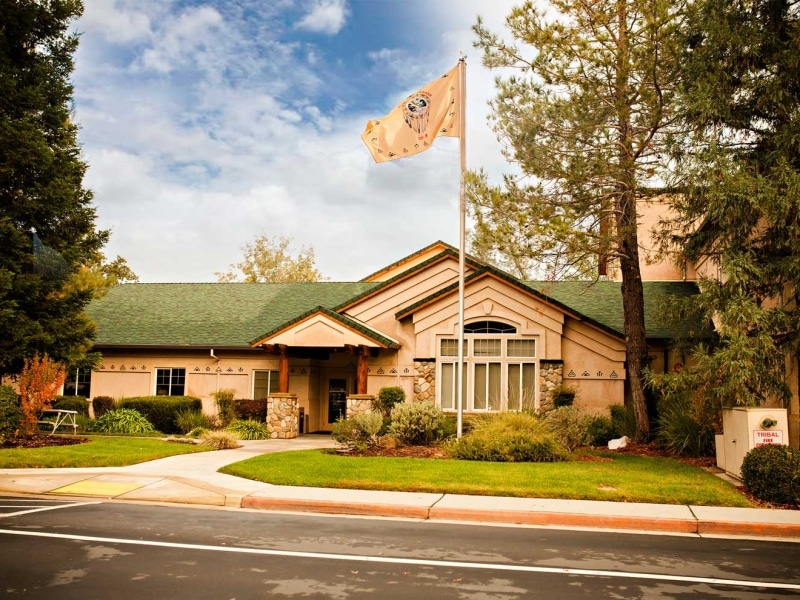
Redding Rancheria PAC spends $32,000 to support four city council candidates
The Tribe said it created a PAC, or political action committee, to support city council members who understand the relationship between the Tribe and the city. Those candidates haven’t received direct donations of funds; instead, the PAC has provided indirect support through media campaigns.
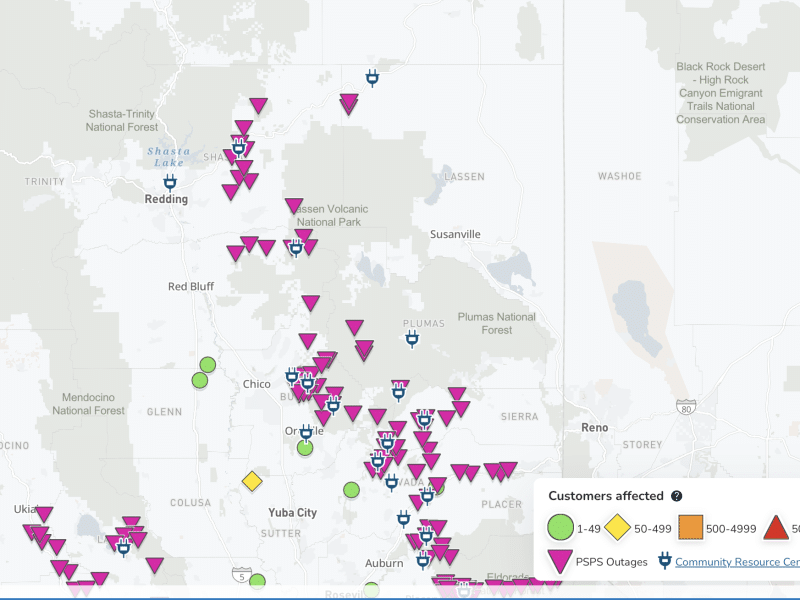
Power shutoffs impacting thousands of customers across Shasta County
PG&E shut off power for California residents earlier this week due to wind and dry conditions, which could lead to dangerous wildfires. Shutdowns are expected to continue until Saturday morning.
The County simply wants to save time/money by reducing the amount of emails they have to sort through to respond to a PRA. They haven’t hidden that agenda.
.
It is true that an email saved in a shared location can serve more people. And if that is the way leadership wants to go, they need to educate staff about the new expectation. They also need to educate staff about how to distinguish between a document that must be legally retained and one that can be discarded.
.
Some emails are confidential and should not be saved in a shared location where others without a need to know might later have access (of an unredacted version).
.
Emails can prove a decision made years ago was approved in writing – and that can save an audit finding, or save hours of work to re-hash an issue, or resolve a fight without litigation. How about an email from State allowing for a time extension to allow old invoices to be paid? Wouldn’t the State love for that to be lost?
.
It allows for following breadcrumbs to gems of information to explain “why they did that”.
.
It allows people to recreate a dataset to collect revenue (maybe FEMA dollars?) Etc., etc. etc.
.
Should we waste money saving 85% of emails that won’t matter a week from now or a year from now? Absolutely not.
.
But don’t throw the baby out with the bathwater. Take a year to retrain staff and give them time in their day to comb through documents to make informed decisions about what to delete. Modernize the way we do business.
.
Nobody takes file cabinets of folders and throws them away without looking through each file before going electronic. So the real question is: why throw away all of the emails?
.
Short sighted people don’t want to spend time reviewing records the public deserves to have available to them. At the expense of a much higher cost county-wide. I find this disrespectful to staff and to tax payers.
“As much as I think half these people are nuts, in the back,” – that’s not slander, he’s stating a personal opinion, and it’s not directed at any identifiable person.
“It’s not slander, you’re nuts,” – now he’s stating it as a fact, and directed at a single specific person, and it might actually be slander.
Dumb.
I never developed an appreciation for the phrase, “Stupid is as stupid does.” That’s in large part because I first became aware of the idiom through “Forrest Gump,” a movie I detested for its celebration of American ignorance.
.
That said, the phrase no doubt describes Crye. And there it is—slander aimed at a particular nitwitted, antagonistic, paranoic grifter. Lucky for me, the 1st amendment allows me to air my negative opinions of elected officials. You wanted the spotlight, Kevin… you got it.
Emails regarding litigation or important issues should be archived and saved.
Ordinary emails for non sensitive information can be deleted.
This requires the recipient or sender to be aware and properly backup their legal/sensitive records.
Was their any mention of the cost to retain the emails ? Is it exhorbitant or a matter of employee time to answer the PRAs ? The chair’s response to his own constituents was a hoot, as they’re ones that likely voted for him, internal fighting can be fun to watch at times. Not sure who won on this move. But, thanks to Sup. Long for asking critical questions.
I can’t believe I agree with Crye on a substantive issue.
.
:::drinks two fingers of bourbon:::
.
There’s a law against retaliatory SLAP lawsuits. Maybe state law needs to be amended to discourages CPRA requests clearly intended to just gum up the works. Or are those the portions of AB 1821 that have been thrown overboard in recent days?
.
::;drinks two more fingers of bourbon:::
What is cry trying to hide?
This stinks of a cover up
lol he is so butthurt he lost