
Shasta County could begin automatically deleting emails after a year
Supervisors will decide whether to implement the new document retention policy tomorrow, June 30. They’re also scheduled to support a bill that would update California public records law in ways that advocates say would reduce public access.
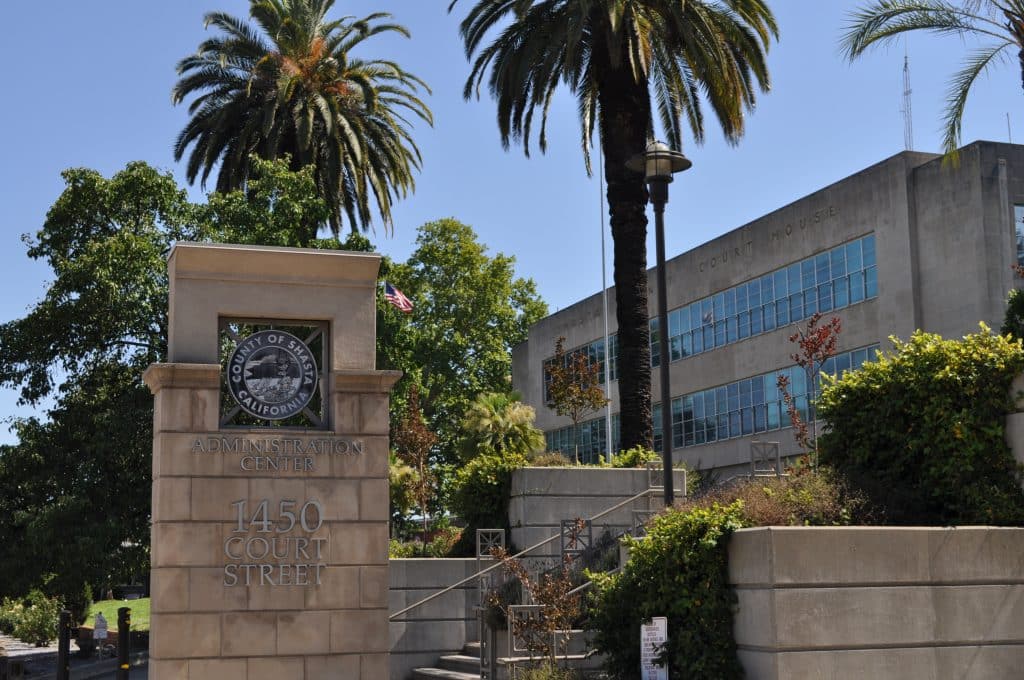
The Shasta County Board of Supervisors is set to approve a county policy which would institute the automatic deletion of emails after one year and of other electronic communications, including chat messages, after 90 days.
The newly drafted policy, which is on the agenda for supervisors tomorrow, June 30, requires county employees to individually differentiate “between record and non-record information,” making them responsible to retain any information that may classify as public record before auto-deletion occurs.
It defines public records as any writing with information “relating to the conduct of the public’s business prepared, owned, used or retained by the County.” Such information, if documented in email, “should be retained in designated recordkeeping systems and not solely within messaging or email platforms.”
The proposed policy is an update to current Shasta County policy, which does not specify retention dates for non-record messages or emails saying retention should be “determined by the content of the message, not the medium,” and calling on staff to “routinely discard” non-vital emails.
A variety of county documents do have specific retention standards under state laws, and the county’s new draft policy makes clear that those should be retained as required and that any documents subject to litigation holds, public records requests, audits, investigations must also be preserved.
Currently, California law sets no standard timeline for email retention, allowing local jurisdictions to set their own policies instead. A 2019 bill passed by legislators before being vetoed by Governor Gavin Newsom, would have set county email retention policies across the state at a minimum of two years. Newsom considered it too burdensome to counties.
Similarly, California Public Records Act law does not require emails to be retained for any specific amount of time and Shasta’s proposed policy specifically states that it should be implemented in compliance with the CPRA, noting that messaging platforms should not be used to avoid records retention requirements.
The county did not provide answers to questions about the policy sent late last week.
On a related topic, the board plans to issue a letter of support for AB 1821, a measure that would allow government agencies to delay responses to certain public records requests and make requested deemed “commercial,” more costly. The bill would also allow agencies to take requestors to court if their requests are believed to be of malicious intent.
While the bill’s proponent, Assembly Member Blanca Pacheco, calls the proposed changes “just minor amendments or minor tweaks” to CPRA law, advocates have argued that the bill would allow governments to evade transparency, making “California stand out as the most secretive state in the country,” as reported by CalMatters.
The Shasta board’s draft letter of support for AB 1821, which will be voted on tomorrow, reiterates ongoing concerns from Shasta County officials about an increasing number of public records requests, noting that such requests place excessive burdens on county resources.
Do you have a correction to share? Email us: editor@shastascout.org.
Authors


Related Articles

SCOE student board members prepare to launch countywide Shasta student council
The council is slated to bring together students from every high school in Shasta County to work on shared issues. Leaders Jacob Garcia and Deasle Delello hope to improve online safety, student engagement and opportunities for rural students.
State faces setback in challenge to Shasta’s Measure B
A California appeals court has declined to hear the merits of the case against Measure B, saying the state should refile in another venue. With the midterms only months away, the attorney general’s office said it plans to move quickly.

LaBarbera’s multiple Shasta school board roles are likely ‘incompatible,’ state says
The state attorney general’s office has given a local community member the green light to sue Jackie LaBarbera over her dual roles on school boards. California said LaBarbera could be breaking state law by holding her two school board seats at once, but a judge will make any final determination.
Comments (0)
There are no comments on this article.