
After nearly four decades, James ‘Little Man’ Wright returns home
James ‘Little Man’ Wright disappeared in 1988 at just 19 years old. This week, the Shasta County Sheriff’s Office identified his remains, allowing his family and Tribal community to arrange for a dignified burial.
One of the last times Florence Moran saw her son was the day before Thanksgiving in the late 1980s. It was a chance encounter. She came down to Redding to shop, and her son happened to zoom past her on his bike in a parking lot. James, known affectionately by his nickname “Little Man” joined her for dinner. He told her about his plan to work on a logging camp near Placerville, and after earning a certificate, his hope to begin a career as a sawyer.
That dream never came to fruition, when Wright never came home. According to the National Institute of Justice’s missing person database, Wright was last seen in 1988. Moran conjured this memory of her son today as she shared her story with a group of sheriff’s staff, media and Native community members who had gathered at the Shasta County Coroner’s Office, where her son’s remains were finally identified after 38 years.
As she spoke, what remains of his body sat in a cardboard box on a table, stamped with the word HOMICIDE and marked with the label John Doe and the date August 6, 2010.
Staff present at the Coroner’s Office today said they could not provide comment on the case. Timothy Mapes, the Sheriff’s Public Information Officer, did not respond to Shasta Scout’s inquiry into whether the county plans to publish a press release — as they have with other missing person cases the department has solved.
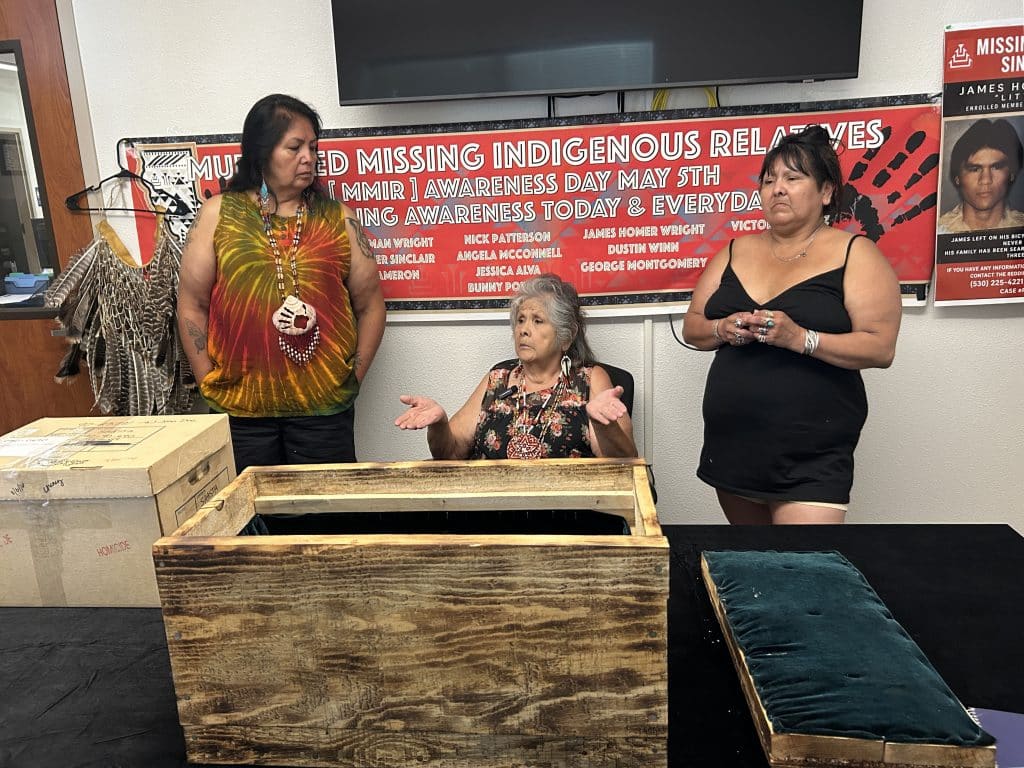
Wright, a member of the Pit River Tribe, is one of the faces that have appeared in various campaigns for the Missing and Murdered Indigenous Peoples advocacy movement over recent years. Shasta County is a stronghold of the MMIP movement and home to multiple Indigenous families whose loved ones have struggled to find answers after a relative has gone unaccounted for.
Recognized as a troubling pattern by both state and federal agencies, Indigenous people are disproportionately at risk of experiencing violence, being murdered, or going missing. Yet for decades, California’s Indigenous communities have cited local law enforcement’s inertia, missteps, or even wanton disregard, when pursuing missing persons cases involving Native victims.
Today, Moran said she hopes the warming of her son’s cold case is a sign of progress.
“It’s a foot in the door. You can’t close the door on us,” she said, describing a new kind of relationship between Indigenous communities and local police. “Start opening those doors because we’re coming in, and we are concerned as Native people. We want to start collaborating with one another.”
Wright’s family never gave up on him, and it was his 76-year-old mother who decided to get her DNA tested after learning about updates to the science on TV. She said his unidentified remains were found on an island in Sacramento River and sat on a shelf for years, until her DNA test was used to positively identify his bones. “That was what brought my son home,” Moran said.
Gabrielle Lira, a member of the group Indigenous Justice was also present, and said the organization assists Native families who are interested in getting their DNA tested to help locate a missing relative.
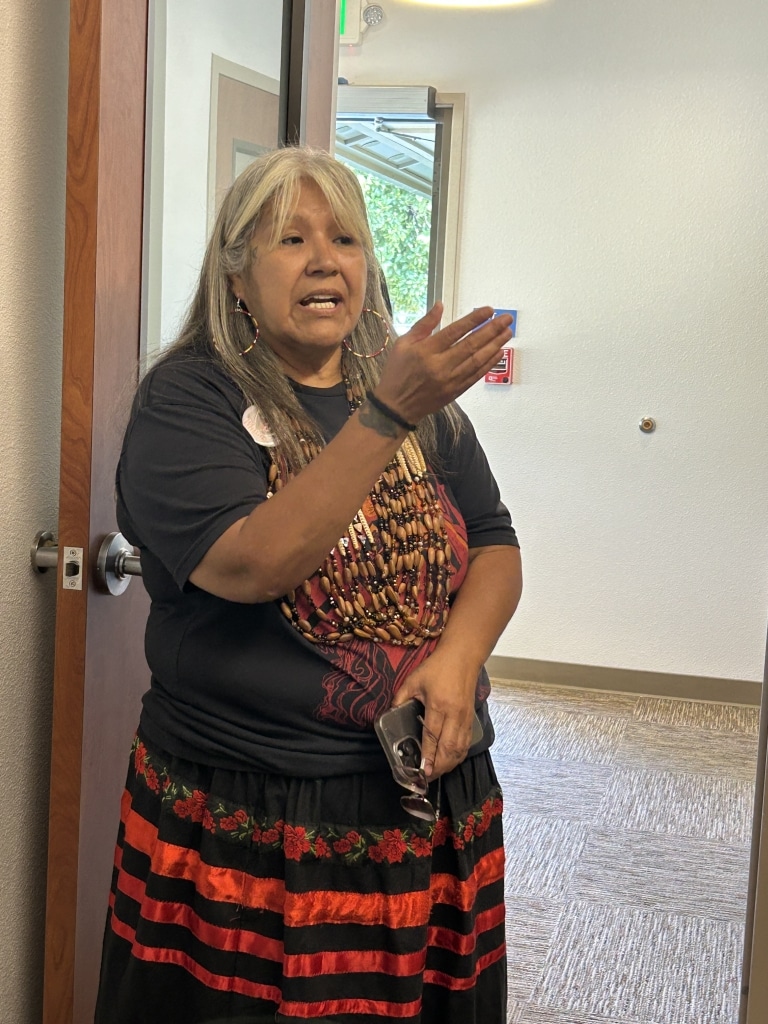
Danita Quinn, a member of the Redding Rancheria active in MMIP organizing, added that locals are forming a response team, which can serve as liaisons between members of the Native community and organizations like Indigenous Justice. In turn, these advocacy groups can assist the family as they work with law enforcement in the immediate aftermath of a disappearance, to increase the chances of a positive outcome.
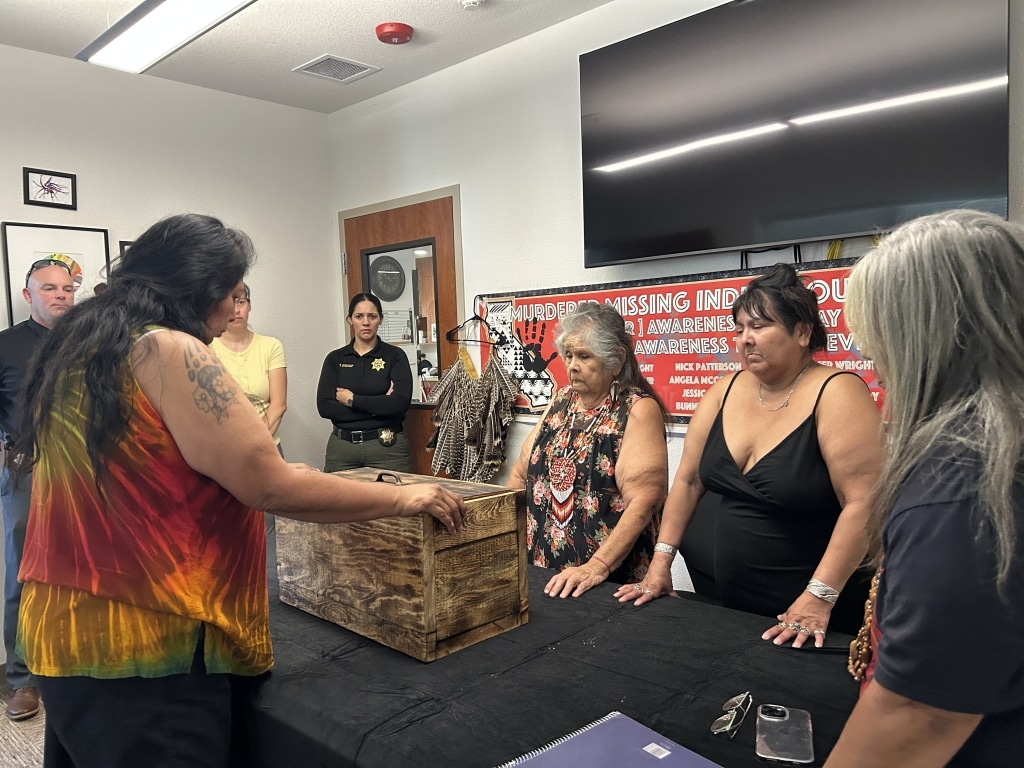
“Don’t give up. I know people get frustrated with what goes on with the counties and this and that,” said Wright’s aunt as she addressed the group, acknowledging that it can be hard for Native people to trust outsiders in light of the state violence they’ve survived generationally. She noted that she’s been quite involved in the repatriation of Indigenous human remains, referring to the federal law that mandates museums and research universities with Indigenous bones or funerary objects in their collections to return them to Tribal communities upon request.
“I’ve done a lot of bringing people home. The hardest one is to bring my own nephew home,” she said, tearing up as Wright’s mother and sister stood next to her.
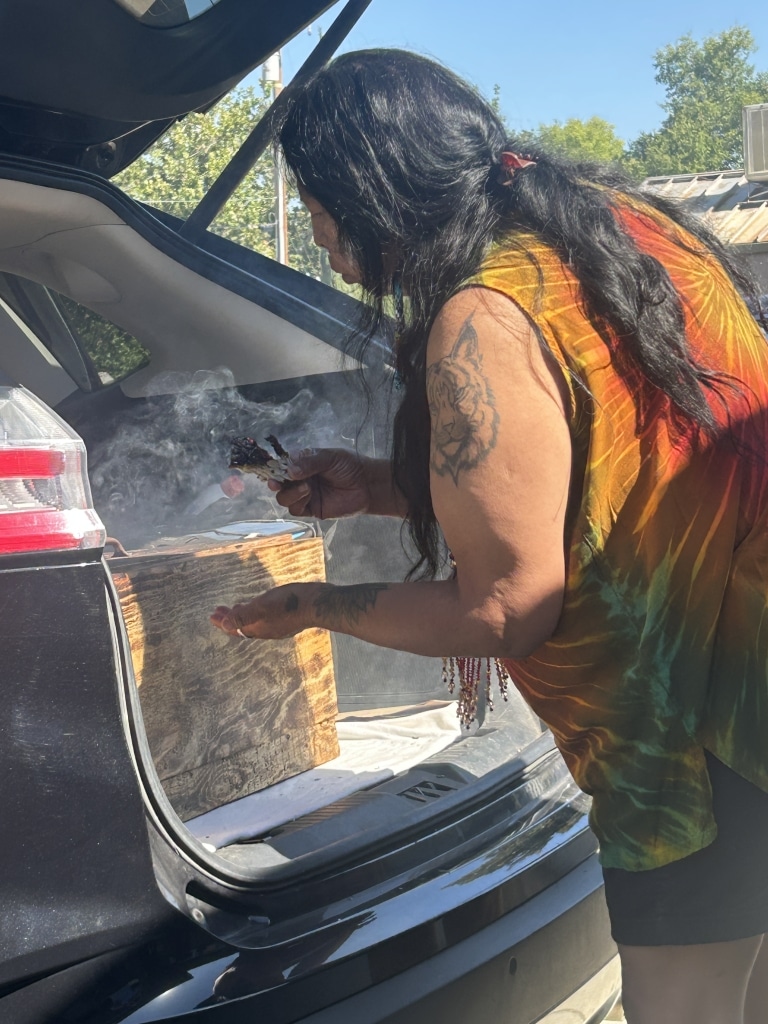
Then, she put on a pair of black surgical gloves. At this point, the investigators asked the crowd not to take pictures as she opened the box, and gingerly retrieved his bones — femurs and tibias, assorted vertebrae, and a bundle of ribs, cradled delicately in her hands. Piece by piece, she moved Wright into a small open coffin, transferring him from cardboard box to pine.
His mother watched placidly as his sister and some of the bystanders wept. Every time a bone was retrieved, his aunt recited an incantation, to which Tribal members responded “ho” in unison. A smudge of fragrant herbs smoldered in the background as Wright’s family carried him to the car to begin his traveling journey.
Moran said the worst thing in her life would have been dying without knowing the fate of her son’s body.
“Now I just need more healing in my spirit, my heart, soul,” she added. “All that weight’s gone.”
Annelise Pierce contributed reporting for this story.
Do you have information or a correction to share? Email us: editor@shastascout.org.
Comments (6)
Comments are closed.
Related Articles
Shasta County risks litigation after attempting to shield federal subpoena
The First Amendment Coalition has issued a legal demand on Shasta Scout’s behalf in an attempt to compel disclosure of a federal grand jury subpoena under public records law. A board meeting to discuss anticipated litigation is scheduled for Monday.
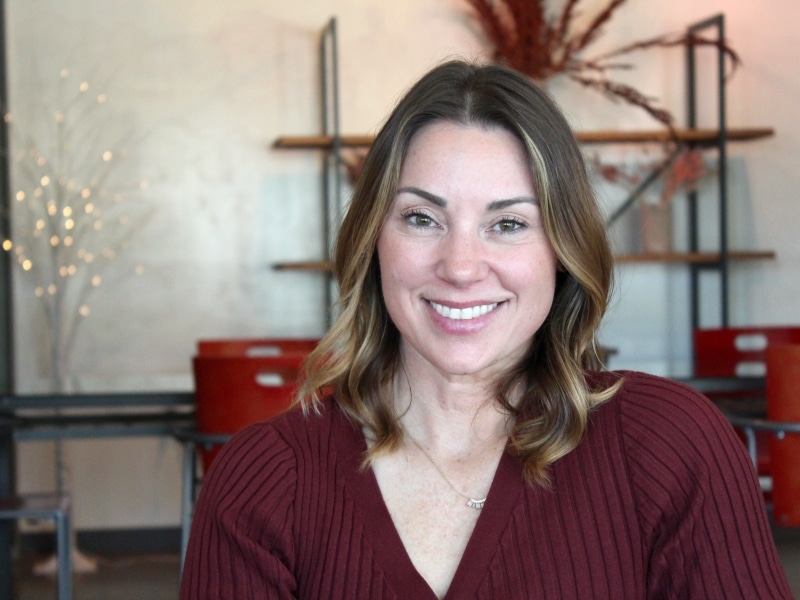
Meet Christina Prosperi for Redding City Council
There are nine candidates running for three seats on the council. Prosperi is a local business owner who wants to focus on the city’s budget, filling top leadership positions, collaboration within the council and staff morale.
California Supreme Court cancels outreach session in Redding due to ‘unforeseen circumstances’
The Oct. 7 session has been moved to San Francisco. It would’ve been the first time in more than 20 years that it was held in Redding, and it was intended to help the public better understand how the judicial system operates.
The original coroner screwed up big time by identifying the partial skeletal remains as female, based solely on the estimated ~5’3″ stature. He did appropriately peg the age between 18-23 and the death as occurring within the past 2 years which should otherwise have easily narrowed identification to the ~5’3″ 19 year old “little man” declared missing in 1988…
The case was big news back then, in part due to the visceral feeling when seeing the carefully weaved show lace pattern on the 1988 Nike Alpha Force high-top tennis shoes: https://www.namus.gov/api/CaseSets/NamUs/UnidentifiedPersons/Cases/80853/Images/81302/Original
The Shasta County Coroner’s office did not reclassify the remains as male until DNA testing was done in 2007.
A very touching article. So glad for the family.
We will miss your writing, Nevin.
IT WARMS MY HEART KNOWING THAT SHE FINALLY GOT TO BRING HER SON HOME . EVEN AFTER ALL THESE YEARS ,NOT KNOWING WHERE HE WAS WAS THE HARDEST ,BUT NOW SHE HAS HIM WHERE HE BELONGS !!!!!!!! NOW IT’S TIME TO GET JUSTICE ⚖️ FOR HIM !!!!!!! SOMEONE KNOWS SOMETHING, PLEASE COME FORWARD YOU CAN CALL IN A TIP AND BRING JUSTICE TO HIS FAMILY 🙏 😢. A’HO
All of those years, waiting in anguish. My heart goes out to the family.
This is a very moving article and I’m so glad for the family. The MMIP issue is one that deserves all the coverage it can possibly get.
Thank you for being there and sharing with us.
To the family of James, especially his mother, I’m very sorry for your loss.