
Analysis: Shasta County’s justice system struggles to keep up with community demand for proactive policing
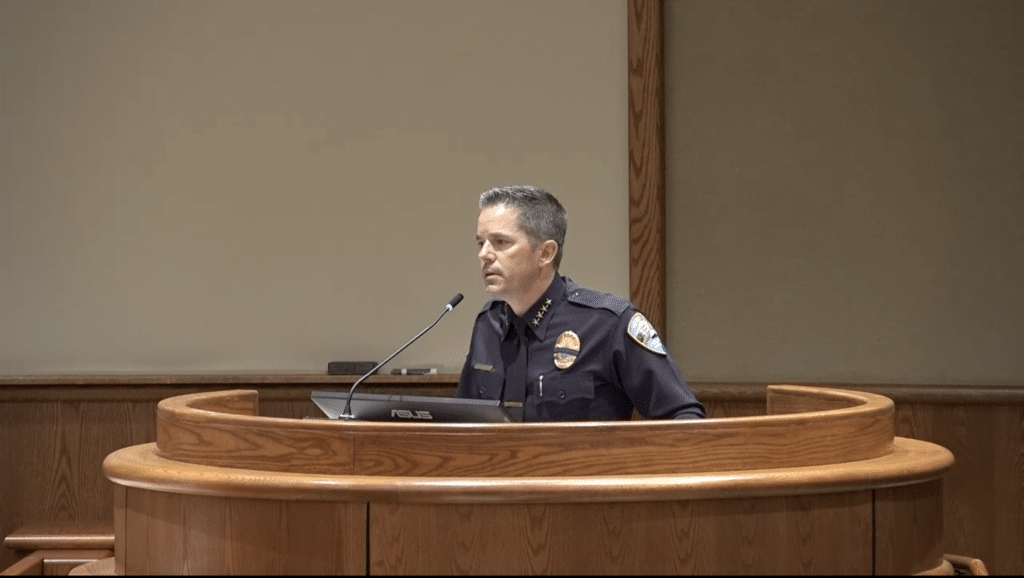
Redding Police Chief Brian Barner says the department’s “proactive policing” approach is a direct response to demand from Redding residents. But what happens when the County’s legal and courts systems are unable to keep up?
We use the term analysis to describe journalism that builds on straightforward news reporting with a closer examination of the facts and an interpretation of their impact. Analysis is separate from opinion. We clearly label both opinion and analysis to provide transparency and build media literacy.
The Redding Police Department recently re-committed to a proactive enforcement approach that’s helped bump low-level misdemeanor arrests in the city up by 32% since 2023. RPD Chief Brian Barner has acknowledged the approach is straining an already underresourced local justice system. But that’s not the police’s problem, RPD says.
“We don’t worry about things we can’t control,” a Redding police officer told a group of residents during their tour of the Blankenship Police Facility in April, referencing that the follow up that comes next is not the police’s respsonsibilty.
“We’re only focused on arrests”, the officer said.
Once cited or arrested, community members shuffle through the legal system, moving from city to county and, at times, up to state jurisdictions. The legal process can include nights spent in a cell awaiting bail, court trials protracted over the course of months or years, and eventual sentencing — if those enforced against by RPD make it that far through the system without being cut loose due to a lack of resources to prosecute.
The department’s effort to maximize arrests is framed as stopping crime before it happens. As opposed to more reactive policing tactics — such as responding to dispatch calls — RPD invests significant time and personnel into proactive approaches, dispatching officers into the field to ostensibly prevent larger crimes by citing or arresting individuals for misdemeanors such as sleeping outside and smoking on sidewalks.
The practice has led to a relatively high misdemeanor arrest rate in Redding, according to the FBI’s Crime Data Explorer, which shows that RPD arrested more than twice as many people in 2023 as police did in other non-coastal cities of comparable size, including Chico, Chino and Merced. The data from 2024 also shows a staggering uptick in misdemeanor arrests in Redding, which are up 32% in the last year.
According to Barner, proactive policing is a direct response to demands from community members who repeatedly ask both the police and their elected officials for more cops on the streets. In addition to preventing crime, Barner said, proactive policing also protects local businesses and clean up public spaces.

Enforcement focuses on “quality of life” crimes
As Barner gave his year-in-review presentation at an April 1 Redding City Council Meeting, he cited a number of data points aggregated over the course of RPD’s 2024: about 110,000 calls for service, approximately 31 arrests per day and nearly 4,000 bookings.
The increased arrests in 2024 were mostly for what RPD refers to as “quality of life” issues, Barner explained. The term is often utilized as a catch-all to describe loitering, trespassing, petty theft and other misdemeanors associated with homelessness, poverty and addiction.
Citing and arresting for qualify of life crimes is an expensive short-term effort that temporarily addresses a complex long-term problem: chronic homelessness. Most of those cited or arrested for camping, for example, will often end up back on the streets where they started, often within hours.
That’s in part because the state’s legal framework isn’t designed to promote enforcement against low-level crimes. And also because Shasta County’s public safety system lacks both the jail space and the prosecution power to keep up with the community’s appetite for quality of life citations and arrests.
As a result, amid concurrent staffing crises in the District Attorney’s and Public Defenders’ offices and an ongoing chronic overcrowding problem at the jail, RPD’s proactive policing approach is straining the county’s legal infrastructure.
Violations newly cited under a new state law known as Prop 36, are exacerbating the problem as there is an increased onus to ramp up police operations of retail theft and drug related offenses which may now qualify as felonies, despite a lack of resources to process more felony convictions.
A review of the latest approved county budget highlights some of the financial disparities that contribute to the problem. Out of a total budget of $600 million, about a third — or $234 million — goes to the sheriff’s office for services that include jail management. In contrast only $88 million goes to probation, $81 million toward the DA, $52 million to juvenile hall and $40 million to the public defender’s office.
While Barner acknowledged the limited capacity of the Shasta County Superior Court as well as DA and PD staffing, he remains steadfast in his commitment to high arrest numbers because, he said, it’s what the community wants from the police force.
“This is a new record for arrests — something that we don’t want to do — but it just shows that we have a very proactive police department that is out there doing what the community wants,” Barner said.
“We bring (the courts) too much business, and so they can’t keep up,” Barner continued. “But as the police chief and as the chief of this community, that is the expectation. I’m not going to tell my officers to slow down.”

Proactive policing strains the public safety system
“Having an attorney represent you in your criminal case, isn’t a privilege for the few, but it’s a right guaranteed to all”, Deputy Public Defender Annabelle Dolan told the county board of supervisors on April 7.
Dolan was one of several staff from both the Public Defenders’ and District Attorney’s offices to appear before the Board that day. Shasta County’s DAs and PDs may be adversaries in the courtroom, but they’re unified by a common demand: increasing wages. Doing so, they say, is needed to support the additional recruitment and retention required to address Shasta County’s immense caseloads.
It wasn’t the first time county officials have heard about the strain under which the the DA and PD’s departments operate. At a special meeting held by the Board earlier this year, Public Defender Ashley Jones insisted it’s the county’s ethical responsibility to ensure sound working conditions, in the name of justice.
Failing to provide proper and competent representation, Jones explained to the board, can have legal and financial repercussions. That’s because of a legal appeal process based on what’s known as “ineffective assistance of counsel,” which hinges on whether a convicted defendant’s defense attorney was objectively deficient, thus undermining their Constitutional rights.
“It can result in convictions being reversed, delaying justice for victims even longer, or creating uncertainty.” Jones told supervisors, and “result in great expense to the county, causing cases to come back to the trial court.”
Case Study: Sleeping on crime or the crime of sleeping?
Public Defender Jones’ words reference the human toll of a lopsided criminal justice system. It’s a cost that affects more than just overworked attorneys, beat cops, and the housed Redding residents who remain frustrated by the impacts of homelessness and substance use.
It’s aptly illustrated by the story of Alissa Johnson, an unhoused autistic cellist who detailed her account as a “criminal sleeper” for Shasta Scout in 2023. As explained by Johnson, providing a purely punitive solution to the thousands of annual misdemeanors “crimes” cited by RPD can only go so far.
When Johnson was cited by police for camping, she’d been living without permanent housing since 2017, unable to keep a stable lease due to the symptoms of her mental health diagnosis. She was initially ticketed for sleeping outside in 2021, and struggled to follow a multiyear bureaucratic process of appearing in court (or even knowing she had been summoned) with no permanent address, no transportation and nowhere to store her belongings, including her cello, in order to show up in court.
On the mornings of her hearings, nothing but a tarp separated Johnson from the frigid rain that drenches the County every winter. She was assigned a public defender who helped her navigate through several court dates and diverted her to a state-funded program with Hill Country Community Clinic. But her case manager was unable to permanently solve the persistent problem that’s kept Johnson on the streets, lack of access to housing that’s both supportive and affordable. Johnson’s willingness to meet with the Hill Country caseworker allowed her to complete the diversion program she had been assigned to, clearing her record from the misdemeanor charge after a total of three visits to court over several months. But her citation, which cost the city, the county and the state valuable justice resources, resolved nothing.
“It’s outrageous that I risk having a criminal record for the first time in my life because I was fulfilling a basic human physiological need: sleeping,” she wrote at the time.
Johnson may be just one person but she’s statistically representative of the downward spiral that entraps the unhoused, even when they are looking for a way out. Like many, Johnson faces untold police resources directed towards the continuing criminalization of homelessness while navigating a legal system that isn’t designed to accommodate those on the margins of society.
Meanwhile, she and others continue to struggle to access restrictive or poorly managed shelter spaces as they navigate a complex system in the search for largely non-existent affordable housing, especially for those who require ongoing support.
Do you have a correction to share? Email us: editor@shastascout.org.
Through December 31, NewsMatch is matching donations dollar-for-dollar up to $18,000, giving us the chance to double that amount for local journalism in Shasta County. Don't wait — the time to give is now!
Support Scout, and multiply your gift
Comments (13)
Comments are closed.
Related Articles
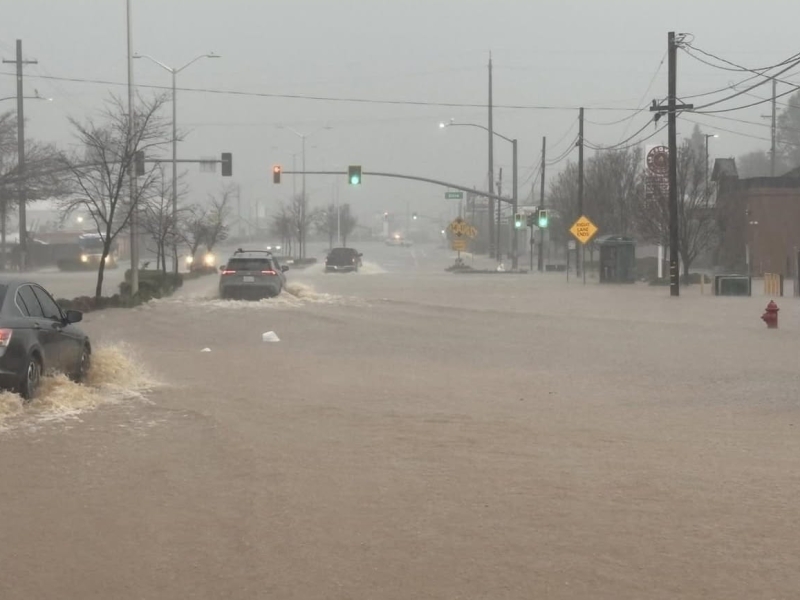
Shasta County issues severe weather and flood warning
Flooding has stranded motorists in Redding. Officials are asking people to stay off the road.
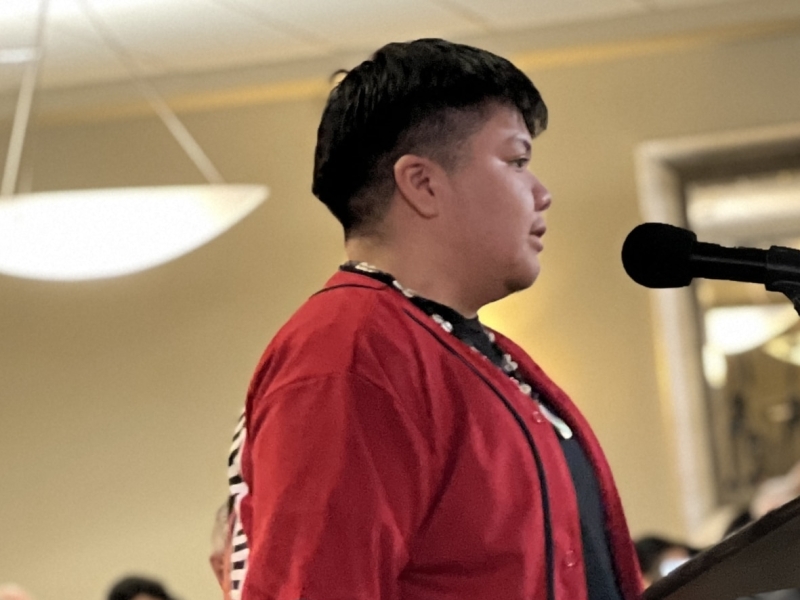
Pit River Tribe prevails as California Energy Commission definitively rejects Fountain Wind Project
The state agency denied energy giant Repsol the required certification to develop a wind energy project on Pit River holy lands. It’s the third time the project has been denied. The first two denials occurred locally, in Shasta County.
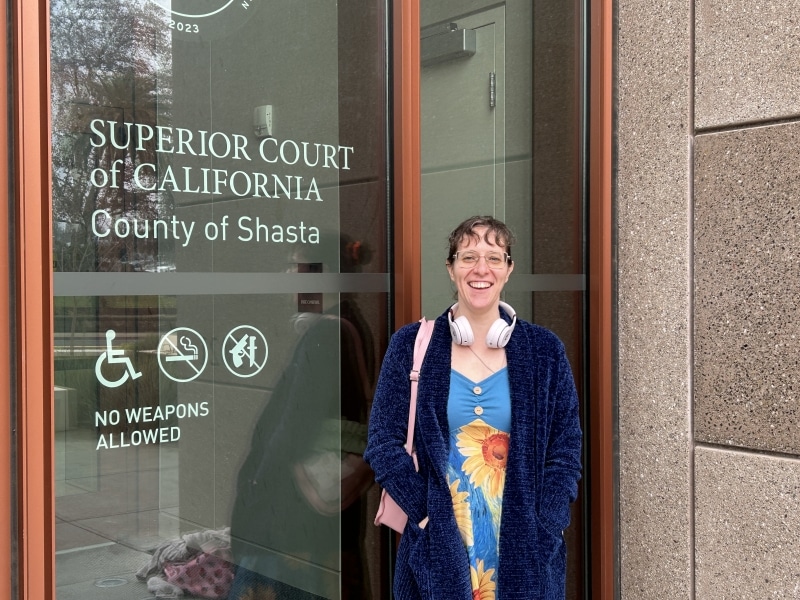
Jury convicts activist O’Connell-Nowain for disturbing Shasta County board meeting
Jenny O’Connell-Nowain has been found guilty of disturbing a public meeting after sitting on the floor during a November 2024 Shasta County board meeting.

If RPD could take the time to actually 5150 mentally ill people (they have a small mental health crisis team but only 4 days a week) and the County actually used the laws (like SB43) to commit people that desperately need it (especially as family very rarely can) the number of “nuisance” calls and things like public disturbances and shoplifting would drop instantly and noticeably! Law enforcement could then deal with REAL crimes. In the 40’s/50’s/60’s a beat cop walking the streets knew everyone and was truly part social worker. They can’t these days. There would be so much money saved by not wasting LEO resources and morale on an endless cycle that hurts everyone in the community in some way at some point!
Excellent reporting, thank you so much for this. Hill Country and Shasta Community Health do such good work filling gaps in county services. But they rely on Medí-Cal so with the federal budget cuts, will they have to drop services or maybe even close clinics? Another thought: County HHS still isn’t providing mandated drug diversion programs that would alleviate part of the DA’s burden with addicted offenders in the criminal justice system. Even though I think proposition 1 funded all that. Why isn’t the county administration paying more attention to this? Can you investigate that so we can all know what’s going on?
Da Chief just made a pretty good case for the sale-tax bump being floated for the umpteenth time. Unfortunately, it’ll get voted down again. Count on it. MAGA will then yowl and howl and look for somebody to blame when the real culprits are those looking back in the mirror at them.
Nevin, excellent work! But, are we having fun yet? Here’s one of the problems. The District Attorney and all the Deputy D.A.s are under attack by the Extreme MAGA Crye Kelstrom Jones Cartel, which includes their white nationalist neo-confederate, well-armed militia; after all, their far-right MAGA candidate lost BIGLY to D.A. Stephanie Bridgett, and the Cartel is mad as hell! While purposely creating chaos for local law enforcement, our Cartel demands Law and Order arrests for criminals, sure, we all do. Yet the Cartel’s leader, Mr. Trump, a convicted adjudicated rapist, and 34-count felon, has cut over $1 billion from police departments needed to reduce violent crime, hate crime, and crime against women. The Trump DOJ has drastically scaled back or cut anti-crime initiatives like substance use and mental health programs, terminating grants focused on addressing substance use and mental health disorders in the justice system, leaving law enforcement agencies scrambling to meet our demand to fill jails, let alone build them. Additionally, Trump’s ICE, which just received $45 billion to serve as his private militia for his pending dictatorship, is in L.A., rounding up brown citizens and non-citizens alike, costing us well over $40 million so far. This very well-done article exposes the full-blown hypocrisy and the purposeful creation by local and national MAGA, and we have just seen the start of it. Meanwhile, Jones will be pleased; gun sales are expected to double next year.
Checks out. And when things like hud, medicaid and snap get cut, and more climate chaos caused fires& disasters things will be worse. Not to be doom &gloom but there will be far more people out there with lives falling apart and NOTHING TO LOSE, not just the mentally ill/addicts and a good number of those people are already unstable and armed. What is being done with the Opiod settlement funds?
Would anybody care to guess some of the eye-opening correlation in crime and cities? Go ahead, I’ll wait for some real responses before I respond back.
lol… Um, what?
Well said. I feel obligated to point out the revenue generation this creates on the back end for everyone involved -except the person charged, of course.
Contrary to popular belief, this is policing for profit, to generate bigger numbers for bigger handouts from the state, this is not about ‘safety’.
Low level ‘code violations/ordinance violations’ are not crimes they are civil in nature and prosecuted as such. A turn-style revenue generation system.
Instead of spending $175 M
on a new courthouse that only added an additional 2 courtrooms, that I have a feeling none of the inhabitants of Shasta County voted in favor of, – except those spending our money! – a better option would have been a mental health facility, a new JAIL, a new annex, a new homeless shelter -since it’s now apparently a crime to be homeless after they force people into that position, now that is just pathetic, honestly. Oh I know! Maybe they could have used some of that $175M to hire the proper staff to accommodate the influx of new cases RPD is so eger to provide!
Just a thought…
It’s disheartening to see the callousness and insensitivity towards the people who literally pay their paycheck – from both sides, we pay taxes, criminals break the law! If not for criminals they’d be out of a job, you’d think they’d be a little more considerate! Lol.
Excellent needed article. I’m hoping for essential City reform.
Alissa is a very kind human being who’s had a difficult life. I wonder where she is now.
There are also plenty of street addicts who are suffering the consequences of their own bad decisions and ruin public spaces for everyone else. Should moms be able to take their kids to the park and feel safe? Should teenagers riding their bikes to the store and be forced to navigate a gantlet of pot-smoking ne’er-do-wells? Hell no.
People in need should get some help, and there’s lots of it if not quite enough to meet every need. Setting and enforcing basic standards of decent behavior is the only way you keep a city from turning into a garbage pile.
In other words: Go, RPD.
There is little effort in being a critic, Steve, but being a problem solver requires much more in-depth thought.
Tell me you’re a boomer, without saying you’re a boomer…
The RPD has increased low-level misdemeanor arrests by 32% in the past year under the justification that they’re responding to what “the community” wants. But no one can define who this community actually is. This vague claim seems to refer to a vocal, likely narrow segment of residents — such as business owners or politically active constituents — who are demanding visible homelessness and poverty be swept from public view. Meanwhile, the people most affected — unhoused, low-income, mentally ill, or addicted individuals — are also part of the community, yet their voices are ignored while their lives are criminalized. The policing strategy focuses on so-called “quality of life” crimes like loitering or sleeping outside, which are rooted in poverty, not criminal intent. Chief Barner admits the court system is overwhelmed and under-resourced but refuses to slow arrests, calling them a “new record” and a sign of success. But this metric is flawed. Arrests should not be the end goal — especially when the consequences are overburdened public defenders, wasted court resources, and people like Alissa Johnson, an autistic unhoused woman cited for simply sleeping, being run through a legal system that can’t meaningfully help her. The real result of this policy isn’t improved safety, but a growing divide: one community gets policing that reflects their fear of visible poverty; the other gets ticketed, jailed, and forgotten. Instead of responding to root causes like housing shortages or mental health needs, RPD is inflating arrest numbers to satisfy a narrow definition of public demand. Until we clearly identify who this “community” is — and start listening to the rest — these enforcement strategies will only continue to punish the most vulnerable while doing nothing to solve the real problems.