
Anderson Cottonwood Irrigation District May Sign a new Federal Drought Protection Agreement.
The Board of ACID, a local water District serving about 800 users, could sign on to a federal drought protection plan that would ostensibly increase protections for farmers during dry years while providing much-needed infrastructure funds. Details are complex.
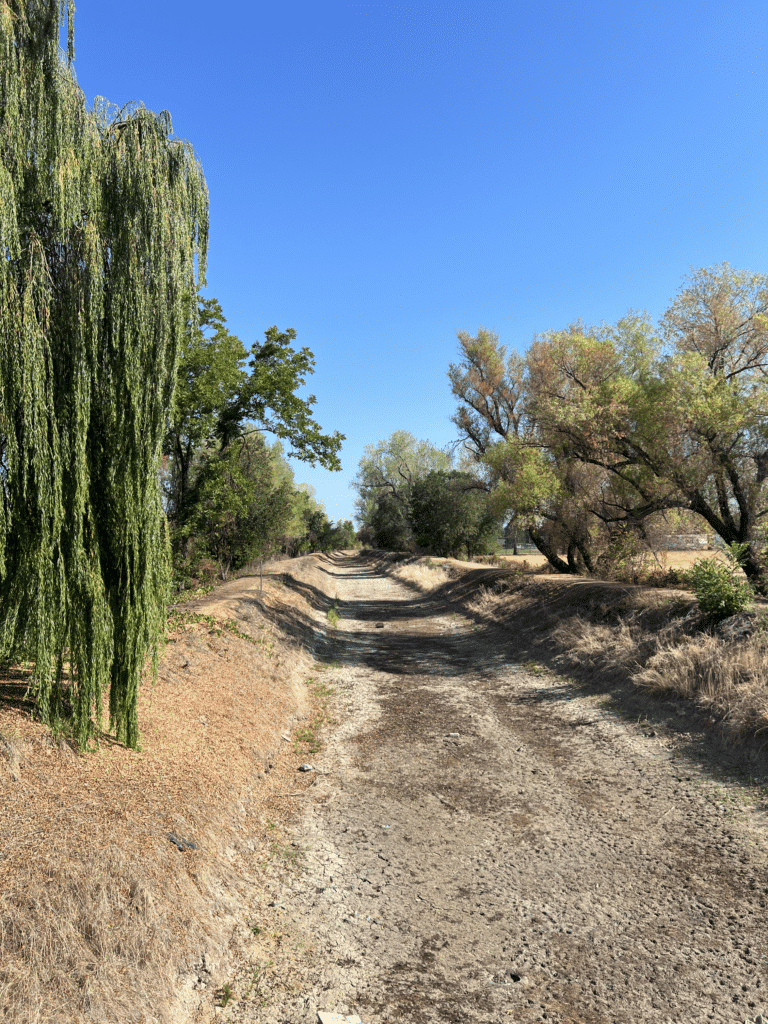
The traumatic memory of California’s devastating 2022 drought is back on the minds of Shasta County irrigators. Members of the Board of the Anderson-Cottonwood Irrigation District (ACID) told water users a few weeks ago that they’ll decide in January whether to sign a federal Drought Protection Program (DPP) agreement that would reduce ACID’s water rights in “critically dry” years while providing funds for infrastructure improvements.
On the evening of December 19, water users and ACID Board members filled a spacious veterans’ hall in Anderson to hear about the DPP from four professionals who work in different aspects of irrigation. Those experts included the Oroville–based water rights attorney who represents ACID, Dustin Cooper; the Executive Director of the Sacramento River Settlement Contractors (SRSC), Thaddeus Bettner; a drought operations engineer named Anne Williams; and the ACID’s current General Manager, Daniel Ruiz.
The DPP is the product of long-term negotiations between the federal Bureau of Reclamation (BOR) and the Sacramento River Settlement Contractors (SRSC), a group of Sacramento Valley water contractors that includes ACID. For the last year, Board members Ronnean Lund and Dan Woolery, along with approximately 30 other SRSC-connected engineering consultants, attorneys, and irrigation district managers have participated in an SRSC working group related to the DPP.
ACID has what are known as senior water rights, some of the strongest water rights in California. According to those rights, water users in the District are supposed to receive at least 75% of their usual water from the Sacramento River, even in California’s dry years. That changed in 2022, when the BOR negotiated with SRSC contractors to cut their water to 18% for environmental reasons. Despite then-Board President Brenda Hayes’ claim that these cutbacks were a breach of ACID users constituents senior water rights, ACID was among other SRSC contracts who agreed to the severe reductions to their normal water supply, but only, Haynes later said, because they felt they had no choice.
The result of the water cuts was one of the most costly droughts in American history. California’s economy took a 23.5 billion dollar hit as 370,000 acres of farmland fallowed in the Sacramento Valley. Despite the drastic cutbacks, very few Chinook salmon (a keystone species) survived.
A subsequent decision by the ACID Board to sell off the District’s remaining 18%, left water users across the ACID service area–which straddles 7,000 acres in parts of Shasta and Tehama counties–with no water at all. Within months, wells ran dry, fields fell fallow and star thistle took hold. Some residents of ACID resorted to using the YMCA for showers through that long, parched summer. Others sold off cattle they considered family in order to ensure they survived.
The fallout of the water cuts and sales soured an already contentious relationship between local water users and federal and state agencies. It also shook up the local ACID Board, prompting changes to four out of five Board seats, as users reacted to what was widely seen as a lack of transparency and communication by former Board members.
For this story, Shasta Scout spoke to three of the new ACID Board members including Woolery, Lund and James Rickert. They said they’re working hard to ensure they’re listening to local water users this time, as they make a decision on whether or not to sign on to the DPP. Board members have already discussed the DPP during two previous public meetings and are expected to do so again this Thursday, January 9. A vote on whether to sign onto the DPP is tentatively scheduled for January 16.
Board member Rickert told Shasta Scout he’ll probably support the plan, mostly because he’s concerned about the consequences of not doing so.
“We haven’t said how we’ll vote, but I’m leaning towards it,” he told Shasta Scout in a follow up interview after the workshop. “We’ve tracked negotiations for over a year now. I feel like the risk is too high not to… My biggest fear is a repeat of what happened in 2022 without any more protections.”
Woolery, the President of ACID’s Board, also spoke favorably of the DPP saying he believes its a less-than-ideal solution that provides some certainty against unmitigated disaster by formally laying out a contingency plan.
“Ideally, I would hope to be in a better place, but realistically, I think this is probably as good as we could have expected… I think it has some concessions in it that are helpful to ACID, both operationally and financially,” Woolery explained.
The contractual terms of the DPP became available to water users just this week, when the ACID Board uploaded a copy of the agreement to the agenda packet in preparation for Thursday’s meeting. Shasta Scout has not yet reviewed the 29-page document in detail but according to previous information provided by SRSC, the deal would allow the Bureau of Reclamation to restrict up to, but no more than, 50% of users’ water in years that meet a certain threshold of dryness for Phase One of the 20 year plan, from 2025–2035. During Phase Two from 2035–2045, their water would be restricted about 30%.
That’s a lot less than what ACID’s current agreement water rights contract grants users which is 75% of water rights, even in dry years. But ACID President Woolery says he feels the DPP is still a useful agreement, in part because, he says, it provides ACID users with more “certainty”.
Importantly, the DPP agreement itself does not appear to provide any more protection for users than the current senior water rights contract does. But SRSC Executive Director Bettner, and ACID’s Woolery, maintain that the strength of the DPP lies in the fact that it was negotiated between SRRC and a combination of federal, state and fishery partners making all parties more likely to stick to it, even when times get dry.
In her interview with Shasta Scout, ACID board member Lund, another SRSC DPP working group member, agreed with Woolery that mutual buy-in by central stakeholders appears to be the central strength of the plan’s ostensible protection.
“This new contract at least gives us a little more security, in that the language has been worked on to make it pretty iron-clad,” she said, explaining that while she doesn’t think most Board members necessarily support the agreement, they may vote to sign it anyway.
That’s because “we have to weigh the consequences of not signing it”, Lund said, “versus the consequences of signing.”
It’s important to remember, she explained, that ACID’s water users face much more significant challenges to survive under water restrictions than other districts represented by SRSC.
“We’re completely different from all the other irrigation districts because we have small farms and people without [federal] crop insurance,” she said. “Other irrigation districts have big commercial farms… so if they go through a year with no water and fallow their land, they can take their crop insurance.”
And there are other important benefits of the DPP, Woolery emphasized, that even if there is no absolute guarantee that no more than 50% of users’ water could be restricted under the protection plan.
For one, he said, ACID will be able to “front load” its reduced water to early months during a drought year, allowing the District to fill it’s central canal to 100% capacity even with restricted water in order to more adequately irrigate fields in the first few months of a growing season. Because ACID’s dirt-lined canal infrastructure is about a century old, Woolery said, more substantial filing is needed to ensure the movement of water from source to farm, in contrast to newer concrete-lined canals that can convey water even while partially filled.
The plan would also provide $14 million in funding to ACID, 50.1% of which must be used for capital improvements on infrastructure, something sorely needed within the 100-year-old water District and which could be used to make the ACID irrigation process more secure over time. DPP funding, Woolery said, could also be matched with other grants, including federal funds, maximizing the amount of incoming profits added to the ACID budget for infrastructure improvements.
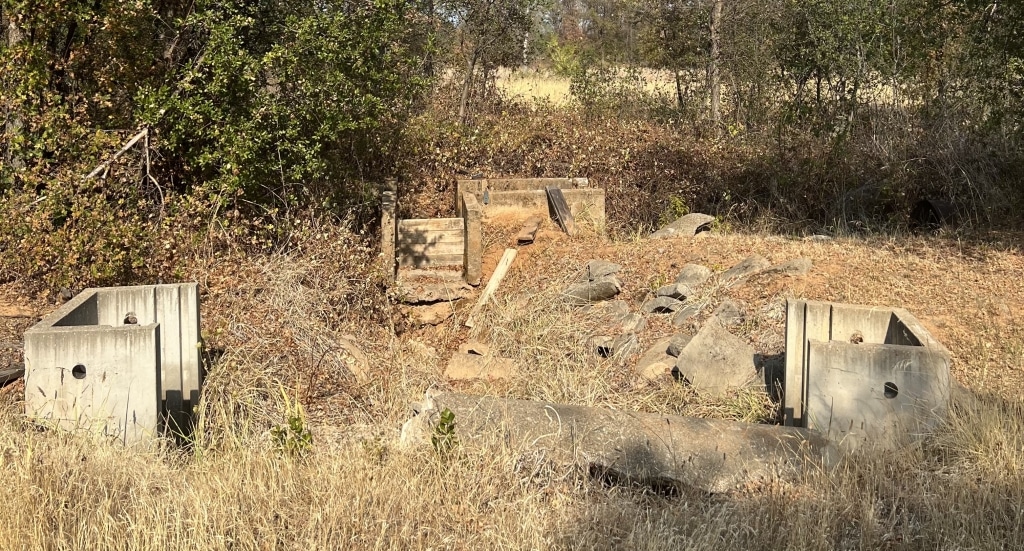
Lastly, some say the plan may provide ACID more protection from the legal risks of something known as “incidental take,” which can occur when threatened and endangered wildlife are unintentionally killed through use of the water diversion system. According to both ACID attorney Dustin Cooper and Board member Woolery, the District may be liable for incidental take–related penalties if they do not opt into this agreement. Shasta Scout has not confirmed this.
In public comments at the ACID workshop, and online, some ACID users have pushed the Board to delay a decision on the DPP which they’re concerned could be another way to reduce their access to water. They wonder why the DPP has to be signed now when 2025 is expected to be a good irrigation year.
Bettner told users he’s hoping SRSC members will sign the DPP before January 20, when President-elect Trump takes office. That’s not a matter of political ideology, Bettner says, but rather the reality that any incoming president’s administration is likely to review and stall agreements that are still pending when a new cabinet assumes control.
At the ACID workshop on December 19 Bettner told water users that they shouldn’t put too much weight in the expectation that President-elect Trump might grant SRSC members a more favorable water outcome.
“I think if you’re hoping that somehow a change in the administration will change things, I think that’s not right,” Bettner said.
Annelise Pierce contributed to this story.
View all of our ACID coverage here. Do you have a correction to share? Email us: editor@shastascout.org.
Comments (2)
Comments are closed.
Related Articles
Shasta supervisors will revisit discussion on election official’s behavior, this time with public comment
A discussion about an allegation that Shasta’s election official misused public resources took place earlier this month without any public comment. This week the item has been brought back to allow the public to weigh in.
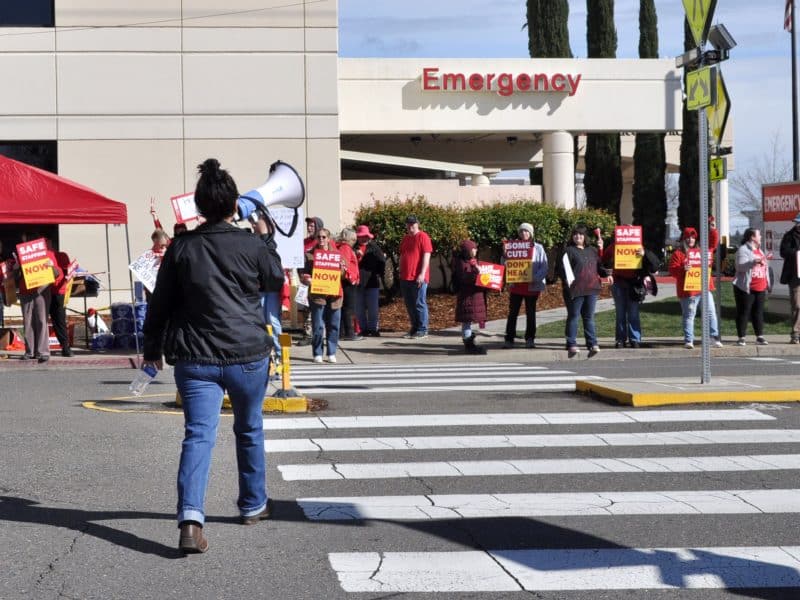
Nurses demonstrate outside Shasta Regional Medical Center, claiming poor working conditions
The California Nurses Association and the Caregivers and Healthcare Employees Union have organized a strike of nurses at Shasta Regional amid stalled contract negotiations with the hospital.
Supervisors will discuss legal petition filed over election ballot initiative
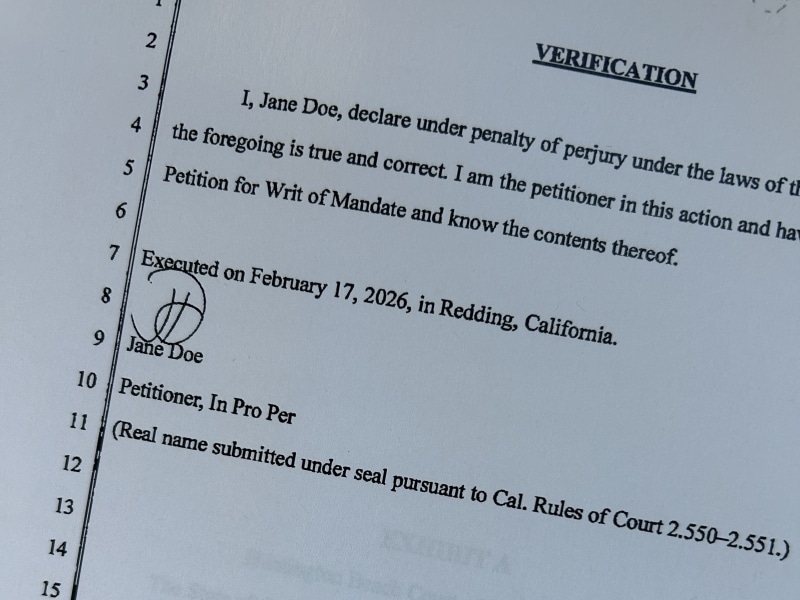
The petition seeks to stop a proposed ballot initiative that, if approved by voters in June, would amend Shasta’s charter to implement local election policies. Supervisors will discuss the petition in closed session on Feb. 20.
Why can’t Ms. Lund use this same logic as a member of the powerless Shasta County Election Commission ? As a Bd member of the ACID she has the same obligation to adhere to State and Federal laws as the Election Commission. Could it be she doesn’t have ideologic members on the ACID Bd. as she does on the Election Commission ? For the sake of the water users, she needs to support this offer.
Very nice report Nevis, thank you.
I was at the DPP meeting last month and thought the guests spoke well and explained the plan well. I am an ACID water customer and absolutely do not want a repeat of 2022 and zero water. This plan avoids that reality at very little cost to users. I will be at this weeks meeting to urge the board to sign ASAP.