
Could forced treatment for substance use help stabilize the chronically homeless? One Shasta mother says it’s her best hope
California legislation now allows mandated treatment for people with substance use disorder so severe that it impacts their ability to care for themselves. For one Shasta mother, the law provides hope for temporary safety for her adult daughter. But both she and some experts warn the approach does little to address current gaps in care.

Editor’s Note: The names Christine and Lisa are pseudonyms, used by request to protect anonymity.
Christine turned 30 just before Christmas last year. Her mother Lisa, a follower of astrology, said her daughter’s fire sign means that Christine is adventurous, has a sense of justice and is kind-hearted to a fault.
“I’m a Cancer, so I’ve always joked that water and fire make steam!” Lisa said.
Indeed, the close-knit relationship between mother and daughter has had its ups and downs over the past decade, as Christine bounced between different locales from the Bay Area up to Portland, usually living on the street. She’s battled co-occurring mental health and substance use challenges that her mother said threaten both her safety and that of others.
Shasta Scout was unable to reach Christine to speak to her for this story. Right now, her mother said, Christine’s concurrent mental health and substance use issues prevent any real conversation. She described her daughter as high or delusional during recent calls. An attempt by a reporter to reach Lisa on her mother’s phone was unsuccessful.
Christine is one of tens of thousands of unsheltered homeless people across the state who’ve been the focus of Gov. Gavin Newsom’s massive efforts to alleviate California’s intersecting crises of homelessness and a broken mental health system.
His policy initiatives have included establishing the CARE Court system in all 58 California counties, and allocating millions of dollars toward regions with particularly entrenched housing inequity. Part of this multipronged initiative was the 2023 passage of Senate Bill 43, which officially went into effect in Shasta County early this year. Under the new law, people with severe substance use disorder, like Christine, can now be forced into drug and psychiatric treatment against their wills.
Like many of the chronically homeless, Christine has significant mental health challenges. Speaking to a reporter, Lisa recalled the many different mental health diagnoses her daughter has received from doctors over the years, including ADHD, bipolar disorder and schizoaffective disorder.
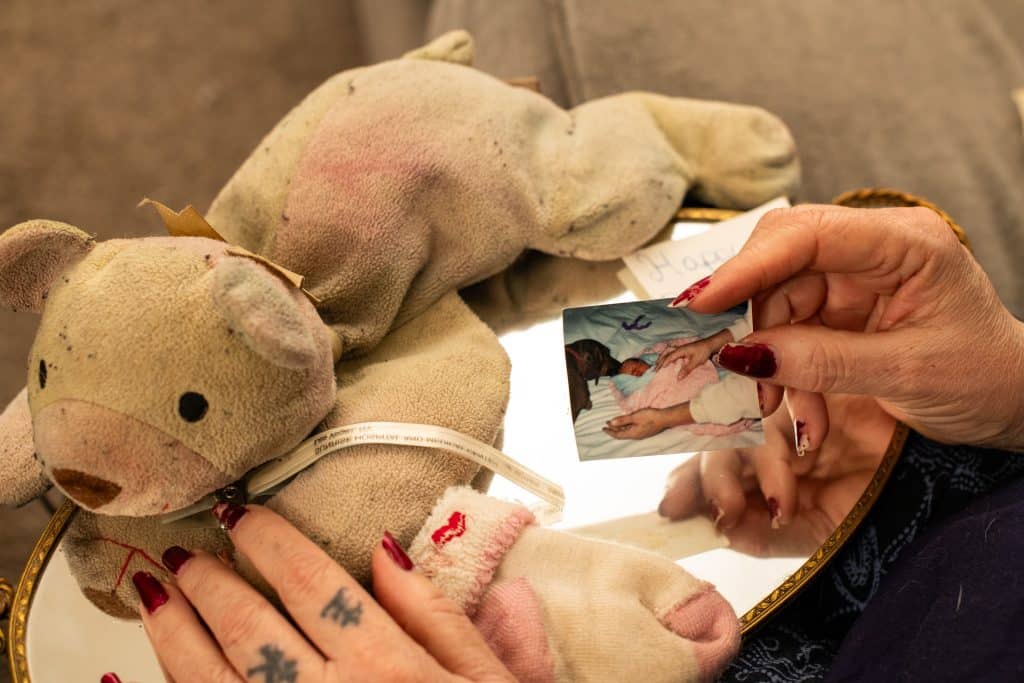
Christine has already been forced into institutionalization once, when she was 18, her mother said. The court ruling occurred under a long-standing conservatorship law that can be used to temporarily institutionalize those with severe mental health needs. Like some others, Christine stabilized in treatment but was unable to maintain that stability after her release, which occurred less than a year later.
Since then, Lisa’s efforts to have her daughter conserved again — in hopes of reducing her risk of harming herself or others — have failed. But SB 43’s expansion of the criteria for conservatorships, has given Lisa hope that her daughter could more easily be found eligible to be court ordered into treatment. While she acknowledges that conserving Christine may not solve the larger structural barriers to her well-being, including strong case management, supportive housing and complex behavioral health services, Lisa believes it is the only thing that will keep her daughter and others safe for the time being.
When it was passed in 2023, SB 43 was framed by the governor as a modernization of 60’s conservatorship law. It expanded the criteria by which people with psychiatric conditions can be forced into what’s called LPS conservatorship. It’s a legal arrangement that allows the county to institutionalize community members against their wills for up to a year, but only if a court finds them incapable of meeting their most basic needs independently.
Prior to SB 43, severe substance use disorder on its own was not enough to force someone into a conservatorship. But under SB 43, a substance use disorder severe enough to interfere with the ability to seek shelter, food, medical care and other basic necessities can be qualifying.
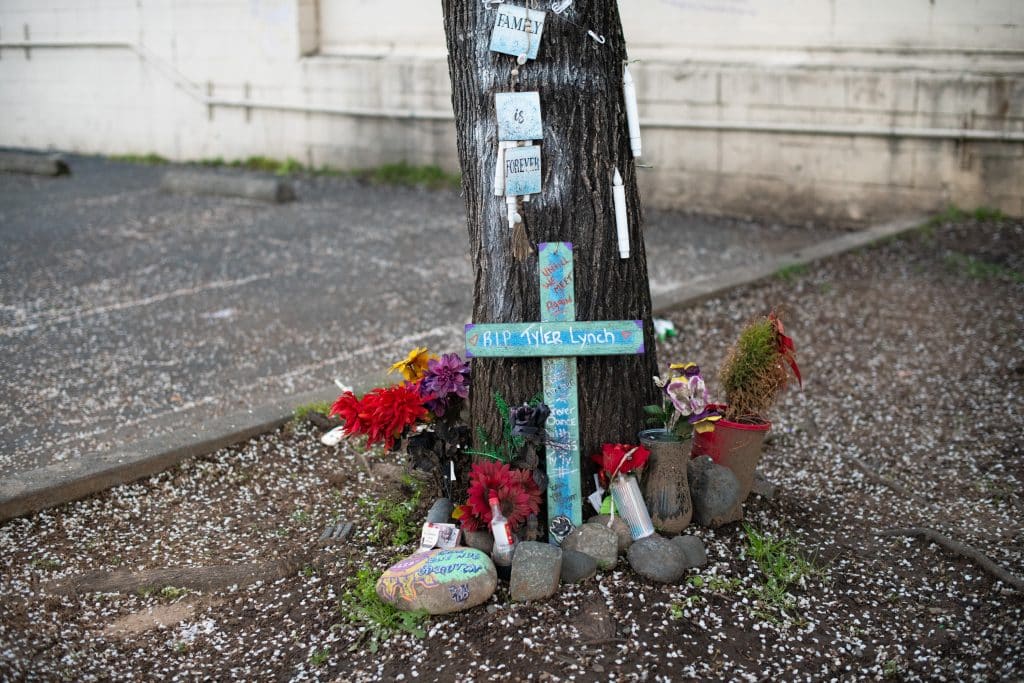
On a national level, SB 43 was divisive. It drew both support and opposition from a variety of hugely influential organizations and governmental bodies. Critics of the law believe the new policy will only exacerbate an already-strained mental health system, because it draws from a limited pool of resources to fund more short-term institutionalization. That’s money that could be used for supportive housing or other community-based treatment strategies to prevent chronic homelessness and address many of those already mired in it.
Clare Cortright, a policy advocate at the state level who was involuntarily committed in the past, spoke to state legislators about SB 43 in 2023. She said the trauma of being treated against her will caused her to distrust psychiatrists for years — making the path to stable well-being even more complex.
“Involuntary processes are flawed,” she said. “They’re time limited, and they fail to do the needful thing: to get people to accept treatment voluntarily. To be well for more than a hospitalization, to be well for a lifetime, I needed to self-bind to voluntary treatment.”
Proponents of SB 43 argue that those with serious psychiatric or substance use conditions may need the process of conservatorship to even consider self-binding to treatment. But many are also critical of the all or nothing approach of conservatorships, which mandates treatment for a set period of time before abruptly ending it, an approach that fails to provide the supportive tools people need to independently remain committed to treatment.
There’s also the matter of limited funding and facility availability. Prior to SB 43, counties were already strapped for both, and the law was put in place without providing additional funding to the counties that would have to carry it out. As of April 10, the Shasta County Health and Human Services Agency confirmed, there have been two client referrals under the new SB 43 criteria that could eventually lead to conservatorships. Shasta County’s public guardian team is in the early process of investigating and examining the referrals, so for now their status is undetermined.
But the cost, availability and inherent limitations of conservatorships are far from the only reasons to oppose conserving more people under the new law, some point out.
“It’s not just resources — it’s taking people’s rights away,” said Wendy Longwell, a disability rights advocate and a team member at Disability Action Center in Redding. While DAC did not take an official position on SB 43, Longwell spoke to Shasta Scout partially from her own experience working with homeless disabled people, some of whom have chronic substance use disorder along with psychiatric conditions. She is also intimately familiar with the conservatorship system as the mother of a conserved adult son, who was born with a disability that affects his cognitive function.
“The medical system is bad enough. Then you go into the mental health part of the system, and it’s worse,” she said with skepticism, pointing out that many of the unhoused people she’s worked with were unable to seek even basic psychiatric treatment in Shasta County — something they needed to be able to access long before the point at which a conservatorship would become necessary. Such access could prevent the kinds of disabling mental health and substance use challenges that can eventually lead to a court order for institutionalization, at a far lower cost in terms of both finances and human suffering.
“How is this really getting them off the streets?” Longwell asked, in response to a scenario in which the county mandates forced treatment without providing transitionary support after that treatment ends.
“It’s a Band-Aid with no structure, and without changing and building up the structure, that Band-Aid’s not going to keep back the blood flow,” she said. “I get why they’re trying to do this, but we need to look deeply into the system.”
A conservatorship expert, approaching the subject from a research perspective, agreed.
“Conservatorships are meaningless if the person can’t step down into a setting that meets their needs,” said New York University professor of sociology Alex V. Barnard, pointing out that forced short-term institutionalization — which is intensive, expensive and rights-restricting — doesn’t offer a clear path to long-term well-being upon release.
Barnard described some of the support services that could help vulnerable people in more sustainable ways, whether the services were provided instead of conservatorship, or even as part of the off-ramp between conservatorship and the difficult-to-attain goal of stable well-being. He said such supports could include independent supportive housing, structured board-and-care facilities for former chronicly-homeless people with serious impairments, and more compelling ways of engaging individuals in treatment — such as peer support groups and/or clubhouses that offer human connection.
One thing is clear, the NYU professor said: “The kind of humane, sustainable long-term settings some of these individuals need remains to be invented.”
‘It shouldn’t be either/or. There should be both’
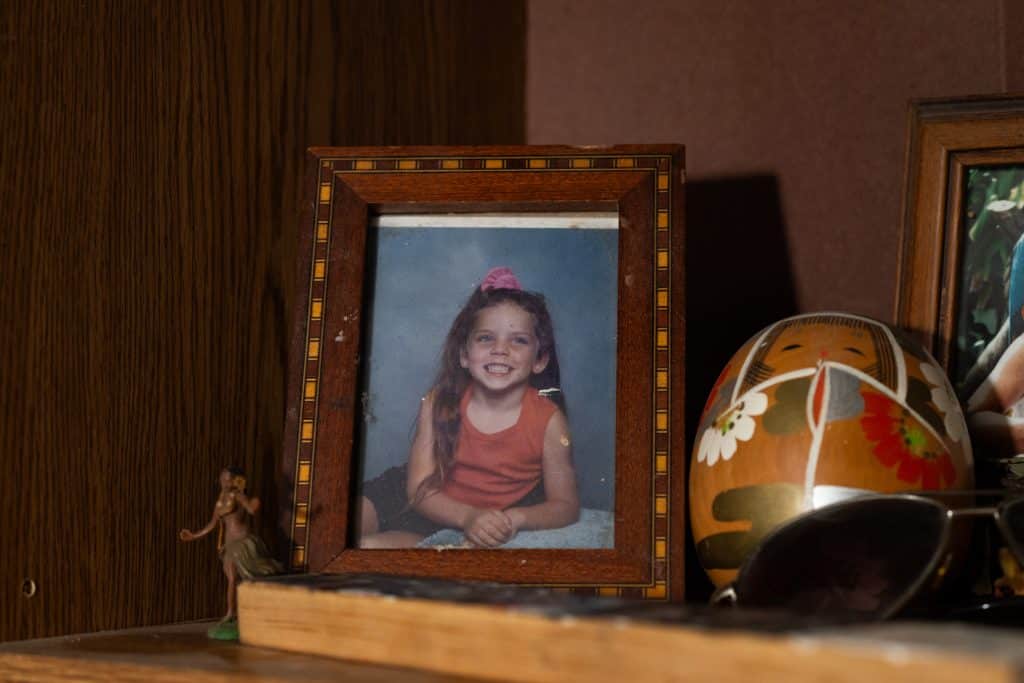
Lisa recalled one of the first times she realized her daughter was different from other kindergarteners, as she was walking Christine to school one day. “She looked at me and told me, ‘Mom, I don’t feel like me.’”
Christine was a talented student in the GATE program, determined to one day go to Stanford Law School, Lisa said. But her early childhood was marked by major adversities, including sexual abuse by an adult acquaintance and a bout of meningitis that led to an abscess in her brain. She was lucky to survive, but to this day, Lisa continues to wonder if the early psychological and neurological trauma contributed to her behavioral challenges, which started to emerge in middle school.
About a decade ago, court records show Christine was found guilty of a felony after attacking and threatening to kill multiple people in a local convenience store. Shortly before that arrest, Lisa said, Christine kicked her front door in, prompting her to call the police on her own daughter. She said she asked the officers to place Christine on a temporary 5150 hold, which they declined to do. In the months after the incident, Christine was admitted to, then released from, a state psychiatric hospital in Napa.
Lisa worries about both Christine and others’ safety, especially during law enforcement encounters — given that she’s been accused of assaulting police officers during past arrests.
“All I can think of is what happens so many times with mentally ill people,” Lisa said, referring to instances when people in psychiatric distress are shot by police officers. Research has shown that people with mental illnesses are 16 times more likely to be killed during such encounters.
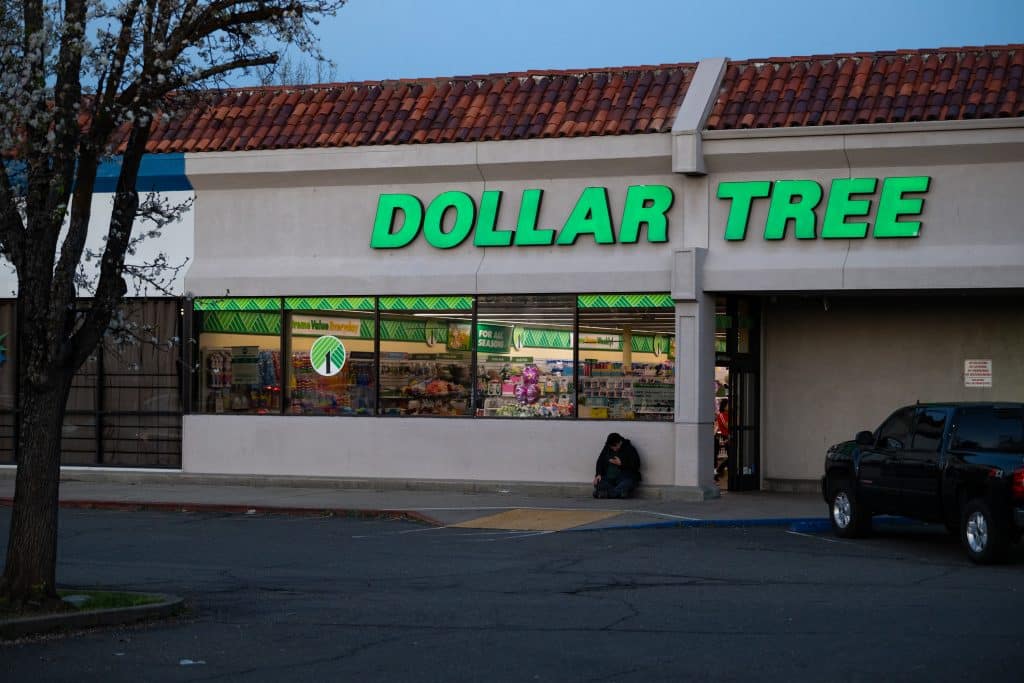
Christine started hopping trains in her teen years, Lisa said, and spent periods of time crashing with friends around the North State and Oregon. In her adulthood, during times when she stayed local, she lived with her mother at different apartments around Redding. Even when Christine opted for the streets, Lisa said, she was often nearby. Once, walking out to her car, she recalled finding her daughter asleep inside. Other times, Lisa found Christine in the parking lot of a nearby Dollar Tree, where this spring, white blossoms began to appear on the gnarled carcass of a tree.

Looking up at those flowers, Lisa remembered periods of time when her daughter used to camp out in the vicinity. When Lisa had the mental bandwidth, she said, she would bring Christine food, water or Tylenol. When she didn’t, she avoided her daughter’s gaze as she rushed into the store for her own supplies.
Lisa’s capacity to remain involved in Christine’s recovery has fluctuated alongside her own health. Her own journey hasn’t been easy as she has battled brain cancer multiple times, undergoing chemotherapy and surgical interventions.
Through the process, Lisa has imposed some boundaries but said people still advise to practice tougher love — by cutting off her daughter entirely. “If she didn’t have the mental illness or injury to her brain that exists,” she said, “I might find that easier.”
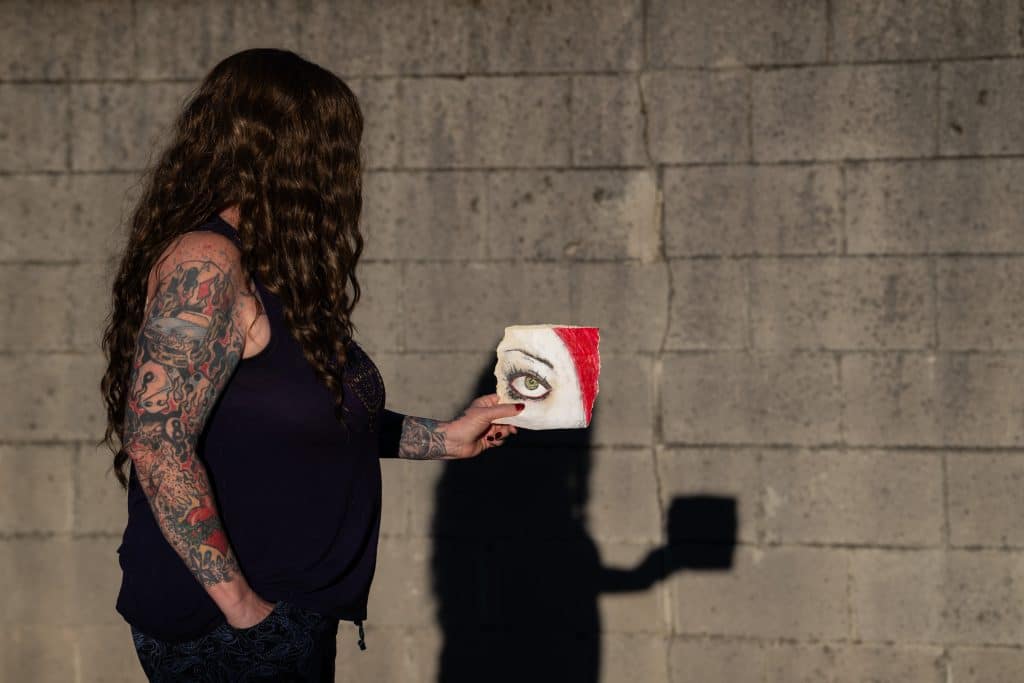
Lisa hopes Christine will be conserved again, this time for a year or more. It’s unclear how Christine would fare after discharge from a psychiatric facility, given that there are unlikely to be dependable off-ramps to stable independent living. But that’s a risk Lisa feels she has to take. She believes conservatorship is the next best step for Christine, even if it’s an imperfect one. But Lisa is also adamant that her family shouldn’t have to choose between the safety of short-term institutionalization and the safeguard of supportive structures afterwards.
“It shouldn’t be either/or. There should be both,” Lisa said. “All these people on the street … there should be options to help anybody, especially those coming out of mental health situations — or kids aging out of the foster care system, or just normal people who lost everything and need help.”
This story was produced in partnership with CatchLight as part of their three-year Mental Health Visual Reporting Initiative. It’s the second in our visual reporting series highlighting significant gaps in California’s mental health care coverage. Find the first story here.
Do you have a correction to share? Email us: editor@shastascout.org.
Comments (7)
Comments are closed.
Related Articles
Accountability vs. micromanagement: Shasta board debates its role during wide-ranging discussion
Supervisor Matt Plummer was accused of micromanagement for asking for data in response to an assessment of fire services. Meanwhile, Supervisor Kevin Crye spent nearly thirty minutes questioning a decision by the HHSA director with no such accusation sent his way.
For Shasta, collaboration needed to solve physician shortage
Political division is a barrier to improving healthcare access in Shasta County. Experts say solving the entrenched problem requires working together.
Meet Rebecca Anne Miller for Redding City Council
Three seats are up for grabs on the council this fall, and nine candidates are running. Miller is a substitute teacher with the Shasta County Office of Education and a caregiver with In-Home Supportive Services, or IHSS.
Anyone else see a correlation between bad life decisions and bad outcomes?
Being a child molestation victim isnt a life decision.
Not all people literally enjoy being high. Sometimes they are just barely getting by with the help of being high. Each individual is different in a lot of ways. It is easy to categorize people by a few similarities, but there are many different things that cause brain disorders, and many different areas in the brain can be affected. These new programs are helping a lot of people. There is so much medical research needed in this area, but for now we must work with what we have and come at this disease from every angle.
I think it’s a good idea unfortunately they are not thinking correctly, so can’t really make these decisions. They enjoy being high.
This is an excellent article on LPS conservatorships including the most recent change in the law. The law has been expanded to include a diagnosis of substance use disorder which has mixed reviews. Being in this field for 20 years and the Public Guardian of Tehama County for 13 years gives me the perspective of how these programs can succeed and, unfortunately sometimes do not have the desired outcome everyone hoped. It’s a complex legal system mixed with empathy, compassion and advocacy. The professionals that put their life’s work into helping this underserved population are the invisible strings that work tirelessly to get people back into the community successfully. I applaud the authors and wish there was more coverage on this important topic that affects so many in our communities.
This was a poignant article for mother’s day weekend.
.
If this little girl was sexually abused like her mom says then my heart breaks forever. I would give everything i own to go back in time and remove her abuser from the circle of life before he sent that little one into her spiral.
.
Imagine the improved services that could be created for her if we freed up money by deporting all of the illegal aliens and building less overpriced military weapons.
Working with some in this community for many years, my experience is right at 100% for sexual abuse being a factor in the early homelessness and substance use. So many people have sexual access to children in the home, and sometimes are opportunistic, or sometimes are even seeking out women with a kid – struggling moms often have difficult relationships with their daughters, and this dynamic makes it easy.
I didn’t know what social intervention we could offer to minimize this massive contributor to the addiction/mental illness/substance use vicious cycle, though. Offering more social supports to single parents won’t keep them from bringing friends into the home overnight. It’s a tough one.