
Elected Officials Across Shasta County Consider A Different Approach To Responding To Homelessness
This week the County and all three incorporated cities will each consider appointing two elected officials to serve on an ad hoc committee to plan responses to homelessness. The County already participates in collaborative planning to address homelessness as part of the NorCal Continuum of Care, but changes to how the CoC is organized and functions may also be on the way.
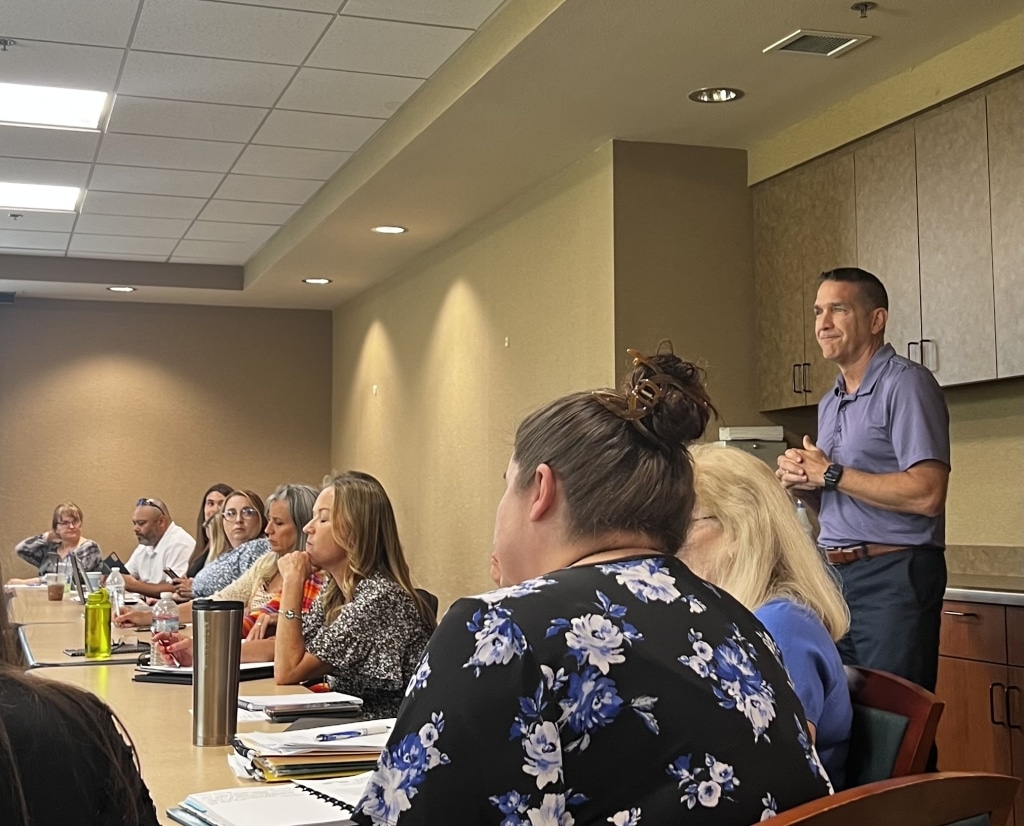
Indications of in-depth behind-the-scenes coordinated conversations appeared on the agendas of four public agencies within the County this week.
On Tuesday and Wednesday, the Shasta County Board of Supervisors, as well as Council members in Redding, Anderson and the City of Shasta Lake, will all consider the same proposal: choosing two elected officials to participate in forming an ad hoc steering committee on homelessness.
If it moves forward, the eight elected officials chosen would be joined on the steering committee by all three city managers, the County’s new CEO David Rickert or his designee, and the Director of the County’s Health and Human Services Agency (HHSA), Laura Burch.
Staff reports for all four public entities say the proposed steering committee would line up with a state-wide proposal by the nonprofit California State Association of Counties (CSAC). The plan, which is “still being refined at the state level,” according to local public documents, is known as AT HOME, an acronym which stands for Accountability, Transparency, Housing, Outreach, Mitigation and Economic Opportunity.
CSAC is a non-governmental agency that provides advocacy, education and financial services to California’s fifty-eight counties. As part of the AT HOME plan, CSAC has proposed changes to Section 50216 of California’s Health and Safety Code that would impact how state funding is distributed.
In April, the Shasta County Board of Supervisors endorsed a letter of support for the AT HOME plan, which, at the state level is still nothing more than a proposal. But the lack of any official changes to state policy so far doesn’t discourage Shasta County Supervisor Tim Garman, who told Shasta Scout by phone Monday, June 20, that he’s proud to be the one who spearheaded the push for the new steering committee of elected officials and public employees, focused on homelessness.
“What we’re trying to do with Shasta County is get ahead of it,” Garman said, referring to the state’s current lack of stated support for the AT HOME plan. “We’re not going to wait. Let’s see if we can make this better for our homeless. Whatever we can do today is better than waiting.”
Garman said after hearing a presentation on the AT HOME plan at a CSAC meeting earlier this year, he met with Shasta County’s HHSA Director Laura Burch and others at the county and its cities to encourage the formation of a local committee of elected public officials and employees.
He says being able to bring together a diverse group of policymakers over the controversial issue of how to respond to homelessness has already felt miraculous to him. “To get (Redding City Manager) Barry Tippin in the same room as the County people is amazing,” Garman said, “but really everyone wants this to work.”
Maybe not everyone. Shasta Scout was in the room last week when Tippin presented the idea to the members of the Shasta County Advisory Board of the NorCal Continuum of Care (CoC), a HUD-required coalition of seven North State counties that applies for and designates some state and federal homeless funds.
Some seemed concerned about Tippin’s announcement, asking how the proposed committee of elected and employed public officials would intersect with the current role of the NorCal CoC. Others wanted to know whether the experiences of NorCal CoC voting members, many of whom directly serve unhoused people, would be solicited by elected officials on the committee.
Tippin said much was still to be decided and that the first step was seeing whether elected officials would get on board with voting for the proposed committee during this week’s local meetings.
Staff reports regarding the proposed ad hoc committee indicate that it’s designed to be part of a collaborative effort “which recognizes that local officials understand local challenges and are best equipped to develop local solutions that work for their residents.” But unlike many elected officials who’ve begun learning about and responding to the issue of homelessness over the last year, many of the government and service organization leaders on the NorCal CoC have been working directly with affected people for many years.
Asked what the new plan would provide that isn’t already happening in the County, Garman said he believes there would be more collaborative data sharing and better defined roles and responsibilities. He said he’s tired of everyone pointing their finger at someone else when it comes to homelessness and wants to see local agencies work together on solutions.
Mark Mezzano, who sits on the Redding City Council, told Shasta Scout by phone yesterday, June 20, that he supports the new committee because he thinks it will facilitate faster and better decision making than what’s currently happening.
“My number one goal is to get the care to the people,” Mezzano said. “We keep moving them out of the canyons with no place to go,” he continued, referring to what are widely known as police “sweeps” of local encampments. “We just flat out don’t have enough housing in Shasta County.”
Mezzano also told Shasta Scout he doesn’t care who handles funding designated for homelessness as long as they make it available to the projects that help people. But who handles the money, and whether the local projects being invested in show evidence of actually helping people, are issues that matter a lot to the state and federal agencies that designate millions to help local jurisdictions respond to homelessness.
Those issues also matter to members of the local homeless community, including Alissa Johnson, who recently wrote an opinion piece for Shasta Scout emphasizing that no decisions about responding to homelessness should be made without the real inclusion of unhoused people themselves, something the County and cities’ proposed committee currently lacks.
“Only decision making that includes proper representation will change things for the better,” Johnson wrote on June 8, “And not just a consultation, but real listening, with follow-through for the population affected.”
It’s also not yet clear whether the steering committee will be formed in a way that requires compliance with California transparency law, known as the Brown Act, which would ensure the public’s access to how decisions around homelessness are being made.
HHSA Director Burch’s staff report indicates that she believes a more coordinated planning process between the county and cities would allow local entities to clearly define roles for setting up and supporting shelters, permanent supportive housing, and encampment outreach and clean-up. The plan would also allow for resources to be coordinated in a collaborative way towards the highest-priority homeless needs in the community, she says, and allocate funding in a way that allows maximum local flexibility towards established goals.
Much of that is already supposed to be happening under the guidance of the NorCal CoC. But many who are currently involved in homeless planning question how well the collaborative is working, in part because of the County’s lack of cooperation.
Shasta County serves as the “lead agency” for the local Continuum of Care, providing administrative services for the collaboration. As NorCal CoC lead agency, County staff involved should report to the CoC’s Executive Board, which is supposed to set policies around communication and other processes for the organization, according to the CoC’s governance charter.
Last week during a meeting of the NorCal CoC’s Shasta Advisory Board, members of that Board, including representatives from Shasta County’s Office of Education, Shasta Community Health Center, and Pathways To Housing, openly discussed how to compel County staff to provide the critical communication needed to move forward on policy and process issues related to funding sources. Three County staff members representing Shasta County at the meeting, including Shasta County’s Assistant HHSA Director Christy Coleman, did not respond.
Shasta County may be planning to move away from its role as “lead agency” for the NorCal CoC. At a different meeting last week, this time for the NorCal CoC Executive Board, County staff asked HUD officials who attended the meeting by Zoom what steps would need to be taken to allow the County to step back from its current role as lead agency, something that could occur, according to the County, with only a thirty-day notice. In response, HUD staff clarified that the NorCal CoC could designate another entity to be lead agency or use the CoC’s Executive Board to fulfill that role, which would allow Shasta and other counties represented by the the NorCal CoC to continue to access funding sources that require CoC involvement.

Shasta Scout is reaching out to staff for more information on whether the County may be considering leaving the CoC as lead agency, or altogether. Asked what he knew about this topic, Garman said he’s aware that the County’s role as lead agency is causing both financial loss and increased liability.
“I will tell you the County is losing a lot of money on the CoC and we’re also at risk for liability,” Garman said. “There’s a lawsuit in another county (in the NorCal CoC) because money wasn’t spent how it should have been and we’ll probably be involved in that lawsuit.”
Supervisor Kevin Crye said by phone yesterday that he’s also heard that Shasta County may choose to pull out as lead agency for the NorCal CoC, but declined to comment further, saying he wants to see a full staff presentation and look at the related documentation before saying more.
If you have a correction to this story you can submit it here. Have information to share? Email us: editor@shastascout.org
Author

Related Articles
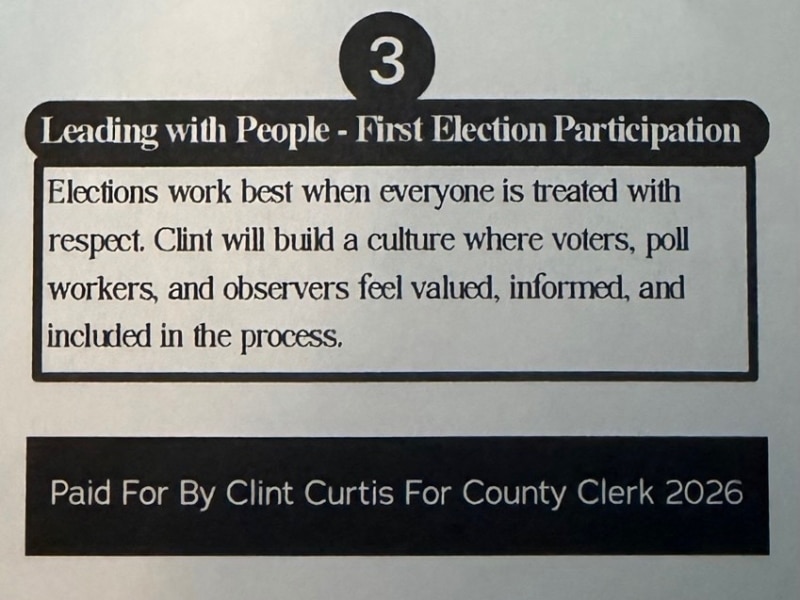
Volunteer dismissed from poll training after pushing back on political commentary by Shasta election official Clint Curtis
Two women say they were told to leave a poll worker training session Thursday after expressing discontent with political commentary made by Shasta’s chief election official. A third poll worker made it through her training earlier in the week but was left with significant concerns.
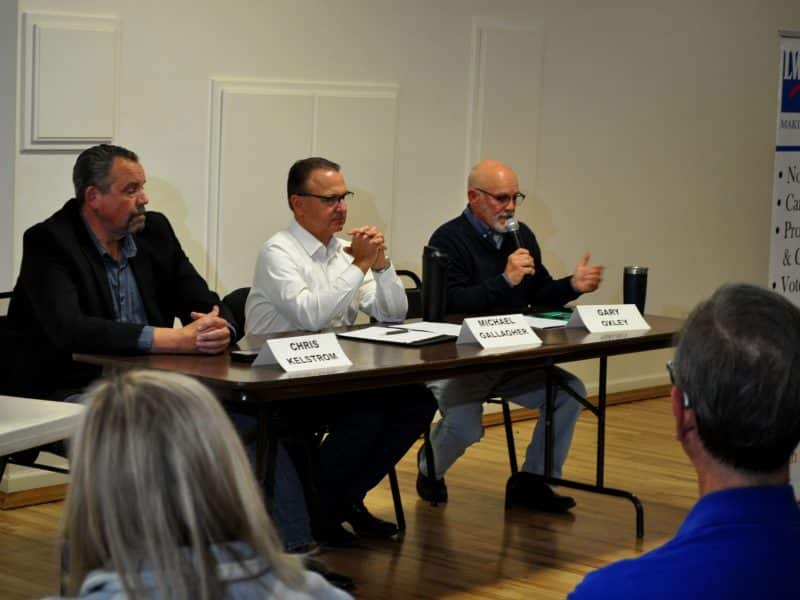
In Anderson, Shasta’s District 5 candidates debated mental health facilities, Measure B, and county jail operations
Retired nurse and business owner Gary Oxley, Anderson City Council member Mike Gallagher, and incumbent Supervisor Chris Kelstrom duked it out over pressing issues important to voters in the rural south county.
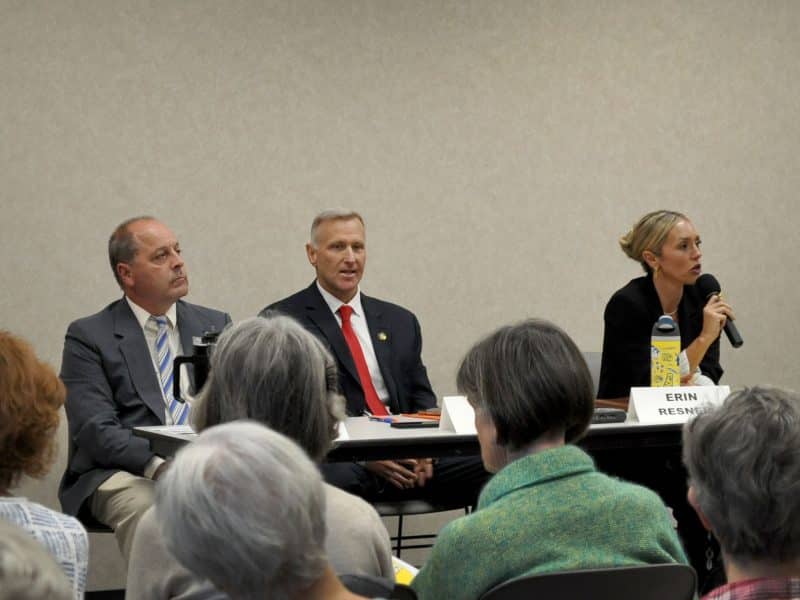
Electoral candidates for Shasta’s District 1 discuss elections, mental health, and the conduct of the county board
Richard Gallardo, Erin Resner, and Kevin Crye answered questions from the public on hot-button issues, outlining their campaign promises ahead of the June primary.