
Hawes Vote, Plans for Old Courthouse, and Appointment Decisions Dominate Marathon County Board Meeting
Supervisors reached unity on several difficult land use decisions but polarized again over two appointees for local boards and commissions.

Shasta County Supervisors have decided to send zoning applications submitted by Greg and Nikola Hawes of Hawes Farm back to the Planning Commission for adjustments.
The Board wants changes to some of the most controversial aspects of an application that if approved would allow expansion of commercial activities at the Hawes Farm to more than 100 acres. Specific changes were suggested by Supervisor Matt Plummer and eventually agreed upon by a united Board. They include no rides over 45 feet, no RV camping, no stadium lighting, and restrictions on land use near the river.
In remarks made after more than two hours of public comment, Board Chair Kevin Crye first looked to zoning applicant Greg Hawes and then to members of the public for assurance that the Board’s vote on the matter would reasonably satisfy both sides. He said he doesn’t want additional public debate when this issue returns to the Board for yet another public hearing before it can be finalized, likely in late March.
“So just for the community’s sake” Crye said sternly, sounding fatigued, “when this vote is taken, we have five Supervisors that agree on what we’re giving direction to the Planning Commission to do. So when this comes back, just keep that in mind that this has already been decided.”
Supervisor Corkey Harmon, who lives in Palo Cedro where the possible Hawes expansion would occur, went one step further. He told the public not just to remember that the decision has essentially already been made but to spread the news –so he will get fewer emails at the next public hearing.
Community members responded with a light ripple of laughter. After tense hours spent waiting for the Board to discuss the land planning issue, many appeared relieved at the outcome, which included concessions from both Hawes and his neighbors.

John Puffer, who lives near Hawes Farm, told Shasta Scout after the meeting that he “felt okay” about the process.
“I’m happy about some of the concessions,” Puffer said. “We had none prior to this. That’s a good start.”
Several community members who did not have a stake in the Hawes Farm decision used public comment time to share their astonishment at the Board’s cooperative process when it came to the zoning applications, saying it was good to see strong discussion and collaborative decision-making from supervisors usually divided on issues.
Plans for the Old Courthouse and Jail Annex
Supervisors don’t yet agree on how to move forward on use of the old Courthouse and Jail Annex buildings, but voted together to pend on the issue. Now that the new Shasta County Courthouse has been built, the old Courthouse, and associated buildings known as the Jail Annex, present both possibilities and problems.
Laced with lead and asbestos, the buildings are highly inefficient when it comes to energy use. Simply maintaining them, unused, already costs the County $15,000-20,000 a month, County Public Works Director Troy Bartolomei said.
Bartolomei presented the Board with three options for how to proceed. The first involved demolishing all three buildings and building a three-story parking garage in their place. At $7 million, that option is the cheapest. It was supported by both Crye and Supervisor Allen Long, who felt the idea represented the best lost-cost option to address the problematic buildings while also meeting a significant need for County employee parking.
Supervisors Harmon and Chris Kelstrom disagreed, pushing for Bartolomei’s second option at a cost of $17.5 million: demolishing the Jail Annex buildings for parking while maintaining the classic old Courthouse structure intact to provide the County some kind of usable office space.
Supervisor Matt Plummer said he found neither of those options compelling. He, like other supervisors, also rejected a third choice from Bartolomei, which involved construction of a new building and parking at the site for a cost of about $78 million.
Instead of moving forward immediately on any of the options, Plummer suggested the Board wait and gather momentum, and cash, to accomplish something more significant for County constituents. Saying he wants to “move the dial” on issues like homelessness, mental health and public safety, he encouraged the Board to think big about what could be accomplished if care is taken with spending.
After a series of votes on both option 1 and 2 failed, the Board agreed to move on and revisit the discussion in the months ahead.
In comments to Shasta Scout after the meeting, Bartolomei confirmed that simply moving towards demolishing the current buildings without yet having a plan for what to rebuild on the site would also work. Beginning the process to demolish the buildings, Bartolomei said, would start the timeline on the environmental reviews that must be completed before more definitive action can be taken.
As to whether the site could house a facility funded by mental health or opioid settlement funds, Bartolomei said the important thing to remember is that building any kind of residential facility would almost double the cost of new construction at the site, due to state building requirements. If the facility could provide day use rather than residential, Bartolomei explained, new construction at the site would prove more cost effective.
Routine Appointments Politicized
Supervisors also considered a number of appointments to fill positions on various County Boards and Commissions, including the Mental Health, Alcohol and Drug Advisory Board (MHADAB) where community member Dawn Duckett faced strong opposition.
In comments to the Board, Duckett shared her lived experience as the mother of a former substance user and explained her background as a former County mental health worker.
Plummer strongly advocated for Duckett’s inclusion on MHADAB, saying she’s qualified and takes the time needed to prepare for public meetings. But Supervisor Kelstrom pushed back, questioning Duckett’s decision to resign a year ago from the Shasta County Elections Commission, which he, Crye and Harmon support. Duckett stepped down after a controversial radio ad, out of concerns for the integrity and usefulness of the newly-formed Commission.
Crye agreed with Kelstrom, saying Duckett’s decision to resign from the Elections Commission shows that she isn’t the type of “absolute fighter” that’s needed to support vulnerable populations like those with mental health issues. He, Kelstrom and Harmon then voted Duckett’s appointment down.
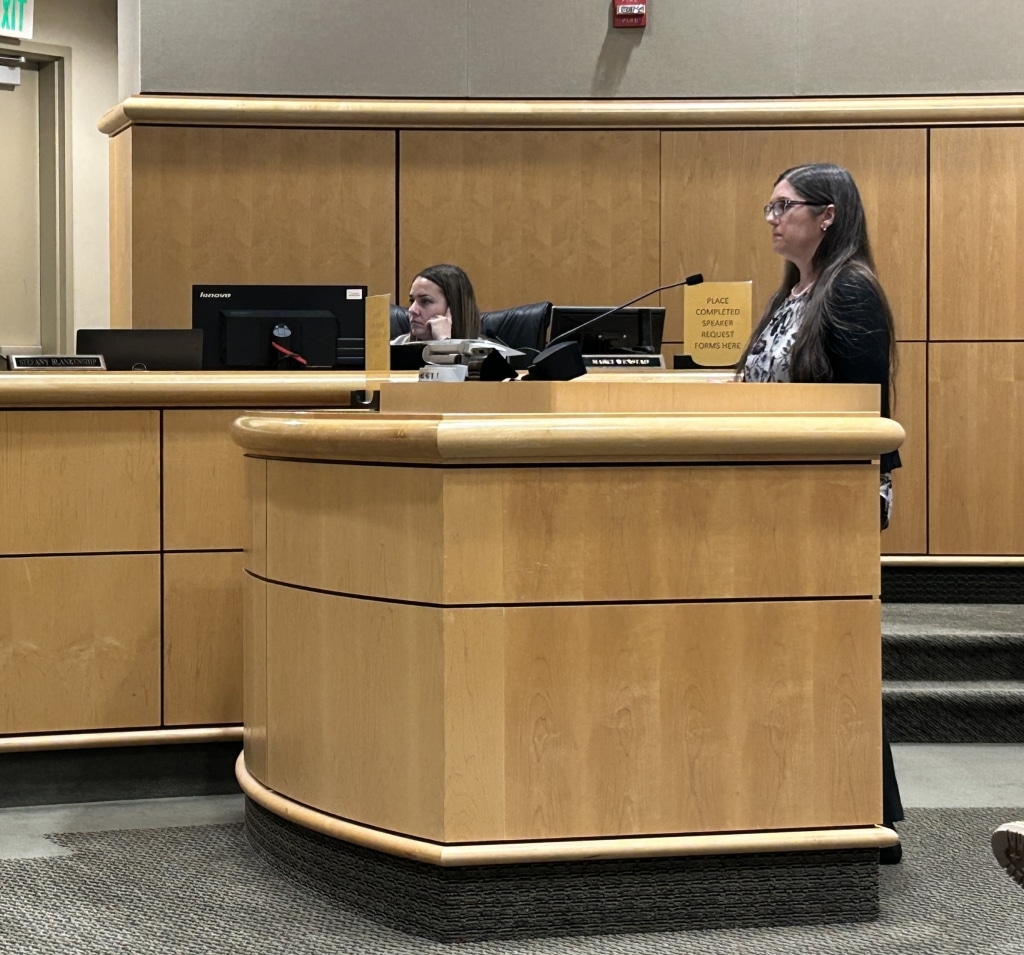
Around 10 pm, supervisors considered yet another appointment – whether to place former County Public Health Director Robin Schurig on the Board of First Five Shasta, an independent commission which works to improve the early health, development and learning of children 0-5. Schurig, who has a masters in public health, also faced strong opposition from a united front of Crye, Kelstrom and Harmon.
Crye accused Schurig, without evidence, of “severely mismanaging” a department under her supervision at the County and for “not standing up for children” during COVID.
Schurig contested both allegations, agreeing to disagree on her management history and explaining to Crye that Shasta County’s approach to schools during COVID was far less restrictive than any other County in California in large part because of the advocacy of public health officials.
Both Long and Plummer supported Schurig’s appointment, with Plummer explaining that her public health background is deeply needed on the Commission while emphasizing why he felt Crye’s criticisms weren’t relevant or fair. Nevertheless a united coalition of Crye, Kelstrom and Harmon voted Schurig’s appointment down.
As the roll call vote against Schurig’s appointment came in, a few in the public cheered while self-identified “citizen journalist” Lori Bridgeford yelled out the non sequitur, “stop suffocating babies!”
Schurig, who resigned as Shasta County’s Public Health Director in early 2024 to become the Executive Director of the Healthcare Association of Northern California (HANC), also participates in the Shasta Health and Redesign Collaborative (SHARC) which is working to solve Shasta County’s entrenched lack of healthcare providers. Her over twenty years of public health experience includes a focus in maternal and child healthcare.
2.27.25 9:58 pm: We have updated this story to correct a professional affiliation.
Do you have a correction to share? Email us: editor@shastascout.org.
Author

Related Articles

Could forced treatment for substance use help stabilize the chronically homeless? One Shasta mother says it’s her best hope
California legislation now allows mandated treatment for people with substance use disorder so severe that it impacts their ability to care for themselves. For one Shasta mother, the law provides hope for temporary safety for her adult daughter. But both she and some experts warn the approach does little to address current gaps in care.

Nearly a year after being targeted by a violent hate crime, one far Northern California family remains displaced, with little support
Former Igo resident Timothy Ray Thompson was recently sentenced to 11 years in prison after opening fire on the Reyes family, including their children, last July. While no one was physically harmed, the family continues to be impacted. They said their efforts to apply for a U visa were an uphill battle due to delays by county law enforcement.

Anderson City Council advances censure effort against council member Susie Baugh
The allegations against Baugh stem from concerns raised by multiple council members about her participation in a project that solicited state and county funds for a youth behavioral health facility. Baugh pushed back, saying she’s innocent of any wrongdoing.