
In a Soledad prison, a Shasta man facilitates discussion on the power of forgiveness
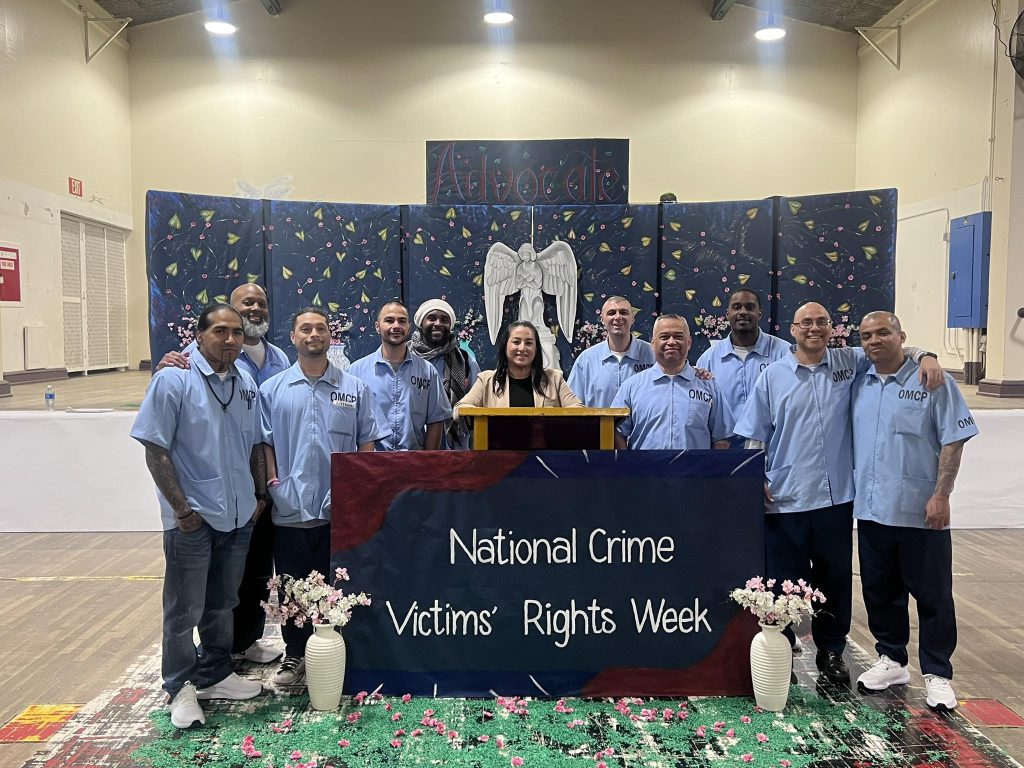
A Shasta County man currently incarcerated at a state prison in Soledad recently organized a speaking event in which survivors talked to inmates about how violence has impacted their lives. The event was held as part of National Crime Victims’ Rights Week.
The drive south to Soledad is marked by a series of smells: eucalyptus groves, garlic farms, manure and in spring, rain. Nestled in a fertile valley in Monterey County is the storied Correctional Training Facility, once known as the Soledad State Prison. The massive complex holds prisoners from all over California, including Shasta County.
CTF, as the facility is known, is a major hub in California’s carceral infrastructure. It is one of the largest prisons in the state, according to the latest in-custody numbers, with a current population of 4,342 which is 155% of its intended capacity.
The structure is flanked on all sides by fields of fruits and vegetables. Its main prison hall resembles a public high school, if public high schools locked people in. There are painted murals on the walls, classrooms, a prayer hall, a large cafeteria and an old gym with a vaulted ceiling. In one section of the prison, the halls are named after iconic mountains along the West Coast: Shasta, Rainier, Whitney and Lassen.
One of the thousands of men behind bars at CTF is Robert Pasillas, a Shasta County local and member of the Redding Rancheria, who was found guilty of a 2016 murder at the age of 26. Now an alcohol and drug counselor for his peers, he recently helped organize a series of programs at CTF for National Crime Victims’ Rights Week. Danita Quinn, Pasillas’ mother and an activist involved with the Missing and Murdered Indigenous People movement, handled outreach to surviving family members across Northern California who participated as speakers.
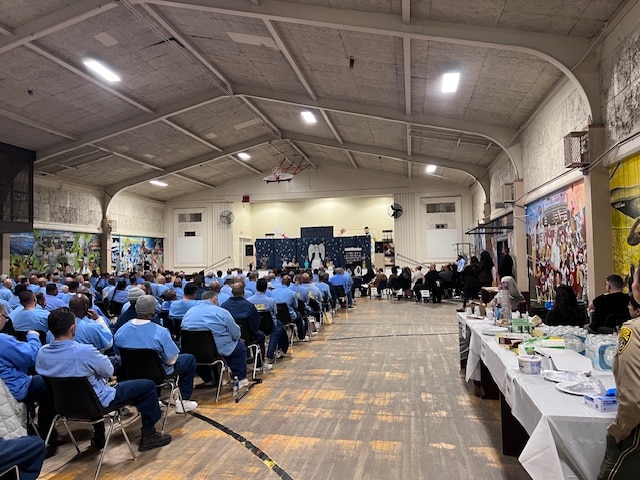
CTF hosted the three-day event the week of April 19-25, focusing on the concept of restorative justice, an approach to examining repair for the cycle of violence with a more holistic lens — often through dialogue between incarcerated individuals and victims of crime. On April 21, a group of victims and victimized families spoke at CTF — both about the lasting impact violent crime has had on their lives and their commitment to rehabilitation. The audience was made up of men incarcerated at the prison — about 200 in total — who elected to take part in the program.
Pasillas, with his hair pulled back in a neatly woven braid, greeted event speakers as incarcerated men in baby blue uniforms filed into the gym where the talks took place last Tuesday. He told Shasta Scout that the event was focused on creating a platform for survivors. The family of Pasillas’ victim did not participate, but his mother, Quinn, attended.
The women who provided their testimonies throughout the day shared common themes: describing how the trial process re-victimizes families over years, frustrations with law enforcement during homicide investigations and the psychic eternal intertwining of murderers and those they’ve harmed. But multiple speakers also described empathy as a bridge across what they indicated is the porous boundary between victim and victimizer, “no matter what side of the fence you’re on” in a prison, as one speaker put it.
During those few hours with this select group of incarcerated men, the physical and psychological barriers that separate the victim and the perpetrator, the imprisoned and the free, were ever so slightly lifted.
Particularly for mothers who spoke, forgiving their children’s killers was a years-long process, focused on one day being able to relinquish the weighty anger in their hearts. Some encouraged their incarcerated audience to do the same, to take accountability while looking forward rather than backward, and to make a difference in the lives of their communities — even if they’ll remain behind bars for the rest of their lives.
Words from a survivor and mother
On an indoor basketball court, a sea of placid faces in CTF uniforms sat attentively in plastic chairs. Before them stood an older woman at a podium. Previously christened “the girl in the box” by the media, her real name is Colleen Stan. Nearly 50 years ago she was kidnapped in Red Bluff by a man who, for seven years, systematically raped, tortured and contained her in a coffin-like box that he had built. After she escaped, her captor was sentenced to 104 years in prison. A half century later, Stan elected to come to the different kind of box that is CTF to share a message of compassion.
She believes her own captor is undeserving of parole — assured he will go on to hurt someone again if he was ever released — but told her audience, “I pray you all get to have freedom and go home one day.”
“Don’t look back,” she continued. “Get your hearts right; God didn’t put you on Earth to commit crime. Figure out what he wanted for you.”
Stan then recited Hebrews 13:3: “Remember those who are in prison, as if you were together with them in prison.” It’s a biblical verse that has personal resonance for Stan, whose own daughter spent 12 and a half years behind bars.
While Stan described the horrors of what she survived in captivity unflinchingly, her voice broke when she described how violent crime shatters not only the families of victims, but those of the perpetrators, as well. “Everyone is hurt by this,” she said.
‘He as a young man who went ahead’
All of the other speakers were mothers of murder victims, whose testimonies ranged from well over an hour to just under five minutes: Angie Ortega, whose 23-year-old daughter Lorraine was killed by her ex-boyfriend Jose; Margarita Maya, who lost her son, Brian, to murder at 18; Angie Morfin, an “angel mom” whose 13-year-old Ruben was shot in the head as part of a gang initiation in the 90s; and Cynthia Jefferson, a mother whose 14-year-old son, Mitchell, was beaten, stabbed and suffocated by two of his peers in Clearlake, California, both of whom were 16 years old at the time.
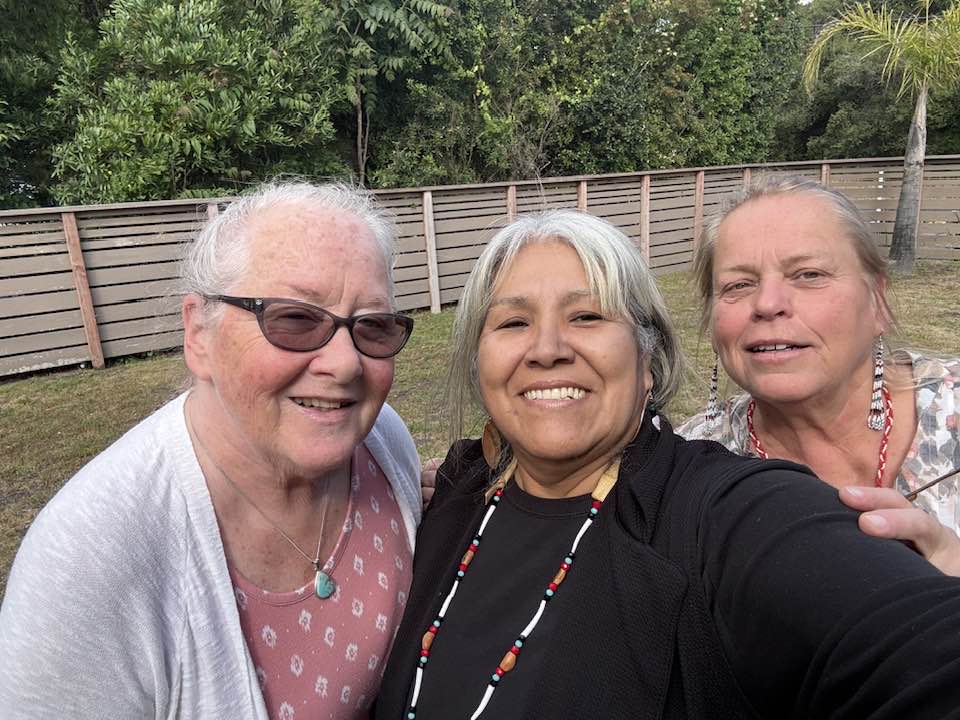
Before Jefferson spoke, she passed around a portrait of her son, providing some biographical information about her family. She is originally of the Choctaw Nation in what is now Oklahoma, but eventually moved west where she became a social worker and court advocate for California Tribal members — including the incarcerated.
“For me, forgiveness is a daily choice,” Jefferson told the audience. She said there are still days that she feels resentment after being subjected to a kind of pain “that can’t be measured.”
In 1995, after Mitchell went missing, local law enforcement did not initially investigate his disappearance, surmising he was likely a runaway. So she set about finding him herself. With the help of friends and family, she located Mitchell’s corpse, which his killers, along with two teenage girls, had hidden. In the time since, Jefferson said she has been able to “get to the other side of pain and vengefulness,” but has had to subdue the kind violent rage that, for others, has ended in a conviction.
A catalytic moment for Jefferson was when she engaged in a Victim Offender Dialogue with one of her son’s killers, Richie. When he was in 40s and incarcerated in Folsom, Jefferson spent hours speaking with Richie. She said it took a great deal of bravery on both of their parts, encouraging audience members to take the opportunity. “It is a gift,” Jefferson said, and one that is mutually beneficial.
She recalled how during one of Richie’s parole hearings that she attended, he expressed that he “had never been seen.” Jefferson agreed, reflecting that during Mitchell’s childhood, she often saw Richie wandering alone and had wondered about his family life. Jefferson explained that she has forgiven Richie and genuinely believes he can be a positive force when freed, noting that he had essentially grown up in the system.
“This is sacred space,” she declared about the gym in Soledad, and more generally, about reconciliatory dialogue. Close to her always, she said, is Mitchell’s spirit. Her son’s tombstone reads “hatok himmita yatok hotipa,” or “he as a young man who went ahead” in the Choctaw language. After both Mitchell and her father’s deaths, Jefferson performed final rites in her people’s ancestral homeland in Mississippi, making the reverse journey of the Trail of Tears death march that displaced her ancestors in the 19th century.
Empathy as a bridge
After the speakers shared, they joined different breakout groups, assembling in circles throughout the space. The conversations were facilitated by the incarcerated participants themselves, allowing audience members to discuss what resonated with them. Consistent with the larger crowd, almost all of the participants were middle-aged or even elderly. When introducing themselves, most listed the number of years they had been locked up, some with multiple decades of time. Many may have had murder convictions, but Jefferson reiterated how safe she felt in their presence while acknowledging that she could not imagine what it would be like to live in a prison.
The men discussed how they see themselves as products of their circumstances, with some having been raised in gangs, or witnessed siblings, cousins and friends being gunned down — and many impacted by the long legacy of the crack epidemic on their communities. They unpacked how hard it is to fathom the pain of a grieving mother, while imagining what it would mean to lose their own child — which one person had. With a wry smile, an older participant encouraged his younger peer to think about what he would say to the mother of the person he murdered, if ever given the opportunity. Emphatically tapping his cane, another said that having kids is what helped him realize that “life is fucking precious, homie!”
Do you have information or a correction to share? Email us: editor@shastascout.org.
Comments (9)
Comments are closed.
Related Articles
For Shasta, collaboration needed to solve physician shortage
Political division is a barrier to improving healthcare access in Shasta County. Experts say solving the entrenched problem requires working together.
Meet Rebecca Anne Miller for Redding City Council
Three seats are up for grabs on the council this fall, and nine candidates are running. Miller is a substitute teacher with the Shasta County Office of Education and a caregiver with In-Home Supportive Services, or IHSS.

Gallery: Downtown Redding hosts fourth annual Hispanic Heritage Month celebration
Red Bluff-based entrepreneur Araceli Gutierrez collaborated with Viva Downtown to bring the celebration of Hispanic Heritage Month to Redding.
It’s important to note a few items in this excellent article.
1. The state located CTF in the middle of nowhere. Far from the residential community.
2. CTF now accommodates 150% of the criminals it was designed to hold.
The same exact thing happened with the Susanville prison. Sort of a “Field of Dreams” for felons. “Build it and they will come!”
Add to that the families of the criminals who move to the community to be near their beloved jailbirds. And, as unkind as it is to say, often those families are cut from the same criminal cloth.
Don’t let it happen here!
Many of the victim’s families would prefer that these murderers met the same fate and allow us to complete the healing process.
Thank you for such superb coverage. I wish the local jail system could put on these events while the prisoners are still young and just starting out on the road to prison.
A moving journal of courage and forgiveness. Thank you Danita for facilitating this dialogue, the effect will be felt for generations to come.
Wow, what a wonderfully written account of a very powerful and moving healing event! I’m glad to have read this.
Nevin, moving article and powerful writing! Good stuff happens. Thanks 🙏
Speaking about Missing and Murdered Indigenous People movement, has all tips and information on missing Heather Cameron Haller been explored?
I think not…
“Another Redding Shasta County Murder Confession With No Investigation?”
https://reddinghomeless.blogspot.com/2026/04/another-redding-shasta-county-murder.html
Thanks for this article. I have volunteered at Soledad and found these programs very appreciated by the prison population!!
This event was a three day event. The purpose of it is to create a platform for victims and survivors to be heard. This years theme is Listen, Act, Advocate. Another intent we had in having the event is to spark a conversation about how we as perpetrators of crime have more rights than survivors. A conversation that needs to be had that is important to myself and the team who helped make this event possible. Where is the funding, support and opportunities to heal for survivors? The purpose of the small groups was to have those conversations about how the incarcerated men can begin to take accountability and give their voice to advocating for victims and survivors.