
In rural northern California, Second Amendment rights reign supreme. Public health advocates hope slowing access to guns in a crisis will reduce suicides
In Shasta County, suicide rates are among the highest in California. So are gun ownership rates — and most local suicides involve the use of a firearm. Widespread availability of gun locks and gun safes, experts say, could prevent deaths.
Editor’s note: If you or someone you know is in crisis, help is available. The National Suicide Prevention Lifeline is available by calling or texting 988. You can also chat online at 988lifeline.org or text HOME to 741741 to connect with a crisis counselor.
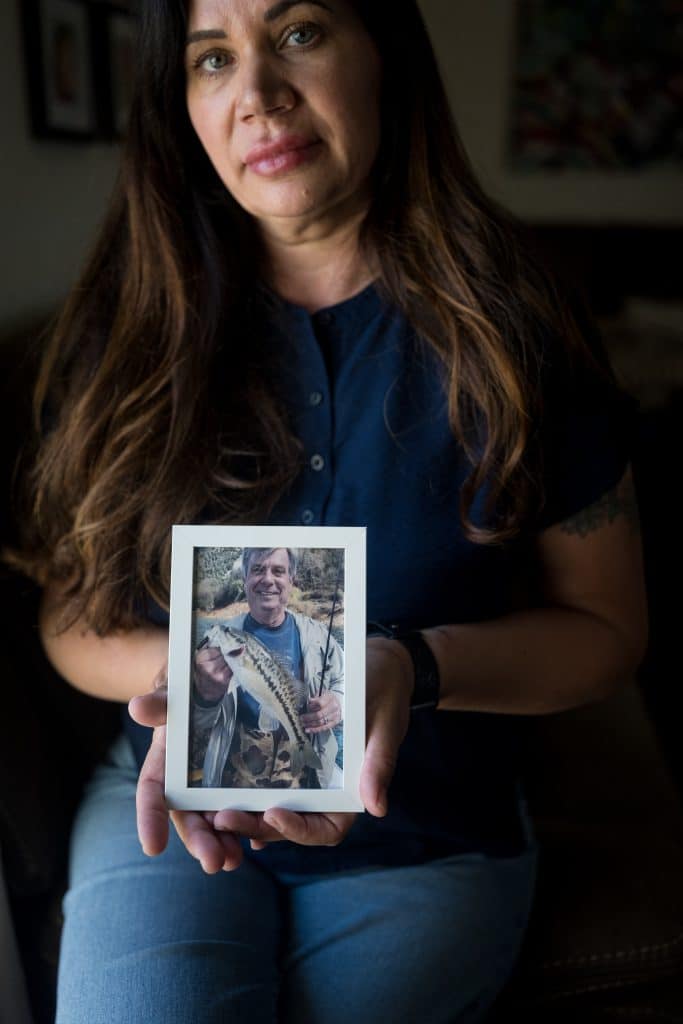
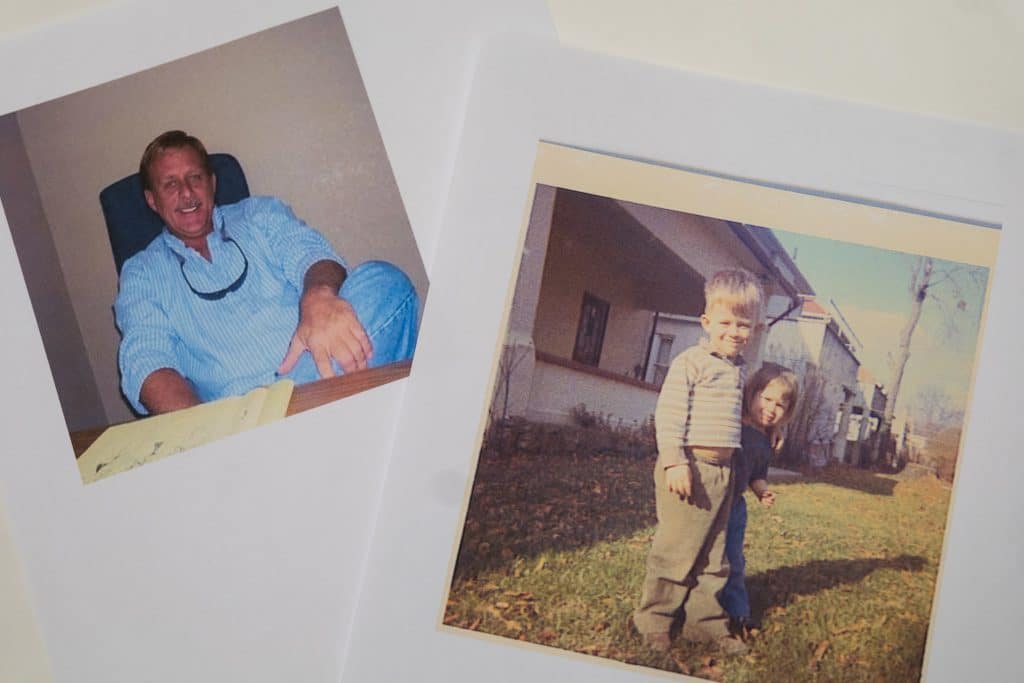
Like many men in the mountainous California county of Shasta, about 200 miles north of San Francisco, Bill Rocha loved to hunt and fish, spending the infernal summers out on the lake in his boat. For decades he made his living as a contractor, working hard with his hands every day. And like many men in rural parts of the state, Bill was a gun owner. He had several hunting rifles, some of which he kept locked in a safe, and another firearm that he kept — unlocked — in his car.
His daughter, Kelly Rocha, described him as extremely sociable, but in private, things were starting to fray. She didn’t know the extent of what her father was struggling with until she got a call one night in 2019. She had slept through two voicemails from her father’s wife, but finally picked up when her own mother called.
“It was after midnight,” recalled Kelly, who was then 43. “She told me that my dad went out to his truck and killed himself.”
At the time, Kelly couldn’t believe what she was hearing. But she said that looking back, the signs were there. Anxiety, depression and alcoholism run in the family; her father was the third man in the Rocha line to die by suicide. And he was a gun owner.
His death is emblematic of an endemic problem in rural Northern California, which has both the state’s highest rates of suicide and highest rates of gun ownership. In Shasta County, three-quarters of people who died by suicide in 2024 were men, and nearly every one of them used a firearm. It’s something that clinicians, local politicians, county workers, and most of all, bereaved families are attempting to grapple with, and work toward preventing.
“I know my kids are gonna have a tendency to become alcoholics. From here on out, my goal is to stop that. Suicide should stop with my dad.” Kelly said. “I think we need to talk about it more.”

The California counties north and inland of the San Francisco Bay Area have the highest rates of gun ownership per household in the state.
According to the University of California, Davis Bulletpoints Project, in 2024, 41% of households along the northern coast owned firearms; 35% in and around the upper Sierra mountain range; and 44% in the north San Joaquin Valley, a major agricultural epicenter that feeds the entire nation. By comparison, just 22% of households in urban areas like Los Angeles and the Bay Area had firearms that year.
Regions with high gun ownership also have higher rates of suicide and other health disparities than the rest of the state.
In 2022, Shasta’s suicides reached an all-time high of 33.3 per 100,000 — triple California’s average. Guns were the most common method. That number has since decreased, but the county’s rate has remained significantly higher than the statewide average.
In the past two years, more than half of Shasta’s suicides have been due to gunshot wounds. The numbers for 2025 are still provisional, but the 43 suicides in 2024 represent an increase of about 33% from the previous year.
Based on these numbers, it’s tempting to conclude that if California further restricted firearms, the suicide rate would dip. Public health data has shown that interventions like extreme risk protect orders, or gun violence restraining orders — which allow family and law enforcement to petition for a temporary restriction on someone’s ability to buy or possess a gun if they pose a danger to themselves or others — have been successful at preventing suicides.
But in Shasta, gun ownership is so deeply ingrained into local political and cultural identity that public health officials worry that simply discouraging gun ownership is unlikely to be effective, and would only deter people from seeking help.
Instead, Shasta’s public health team has been focusing on a different kind of strategy. Called “means safety,” the idea is to distance a potentially suicidal person from “lethal means,” such as large amounts of medication that can lead to an overdose or easy access to a loaded and unlocked gun.
One way the Shasta Health and Human Services Agency has done this is through free lockbox giveaways and an awareness campaign that includes ads on city buses around Redding encouraging people to safely store firearms and medication as a means of stopping suicide.
Means safety is meant to fit the realities of living in Shasta that can’t be easily mitigated: geographic isolation, a lack of mental health infrastructure, disproportionate levels of poverty and poorly funded social services — along with a high rate of gun ownership. It also fits local values of self-sufficiency, an attitude often at odds with calling a suicide hotline or going to counseling.
“That white American self-reliant, rural firearm owner persona is also going to have a self-reliant attitude towards their mental health problems and end of life choices,” said Amy Barnhorst, associate director of the Centers for Violence Prevention at UC Davis. As a psychiatrist and researcher, Barnhorst has treated and studied people affected by gun violence across California. Her work in many different communities has taught her that cultural sensitivity matters, especially in places like Shasta.
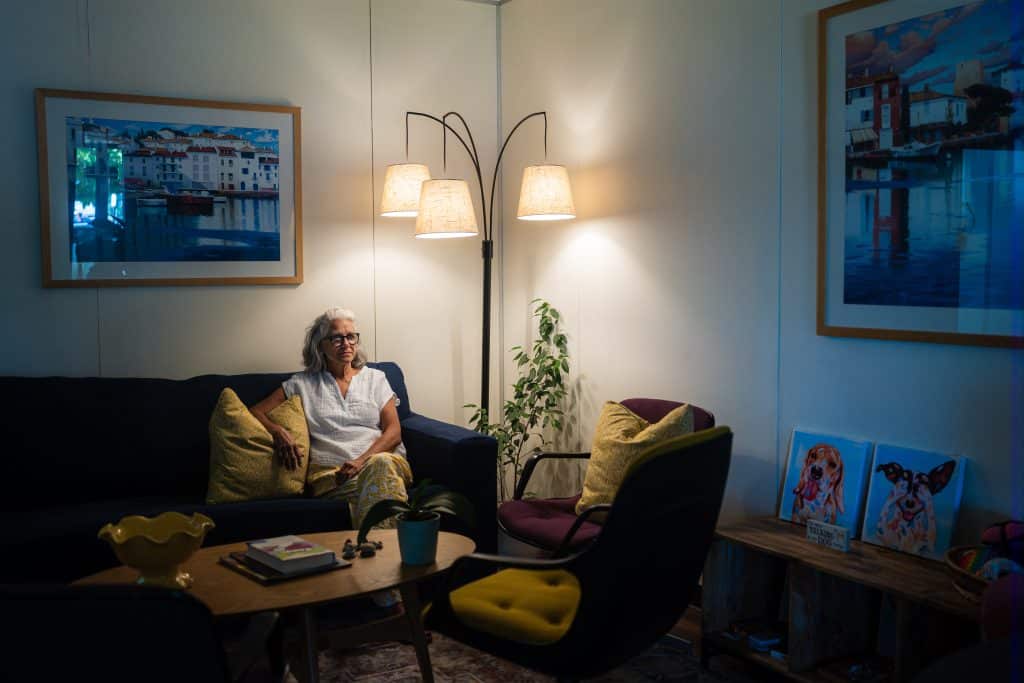
Since her father’s death, Rocha said she learned she’s far from alone in Shasta County: Two of her co-workers also had fathers who died by firearm suicide.
In the aftermath of his death, she did what many others have done: reach out to Marcia Ramstrom, a local suicide crisis counselor who also supports surviving family members, something she refers to as “suicide postvention.”
Ramstrom took up this work after her own family’s tragedy. One night in 2013, her older brother, who she now knows was struggling with untreated bipolar disorder, called 911. He pleaded with the dispatcher to send the police to kill him. When officers responded to the scene to help, he drew a loaded firearm, and the police responded with gunfire. Ramstrom said that her brother, who was raised Catholic, believed suicide was a sin, so he figured out a way to take his own life without pulling the trigger himself.
“Most of the time when you get to that place when you’re convinced suicide is the answer, you’ve got tunnel vision,” Ramstrom said. Seeing the perspective of someone in this heightened state, she said, is critical for prevention efforts.
During this temporary window of heightened despair, a person may feel a particularly strong impulse to act. According to research by the Harvard School of Public Health, many suicide suvivors said they spent less than 20 minutes deliberating before trying to take their own lives. This short timeline is why reducing accessibility to the means of suicide is key for those at risk, and why Shasta’s public health team has focused on teaching the importance of safely storing firearms, and increasing access to safety equipment.
You Matter Shasta, the county’s suicide prevention initiative, has organized free gun safe and gun lock giveaways at gun ranges over the past several years and has also coordinated a similar event among the county’s Spanish and Mien-speaking communities.
But progress is slow. According to staff, the county has only distributed about 200 safes. Meanwhile, Shasta approved about 4,688 active concealed carry permits over the past two years.
Lindsay Heuer, an education specialist with the county’s public health team, said the discrepancy reflects broader structural challenges, not a lack of need or effort.
“Access can be uneven, especially in a rural county like ours,” she said, “where not everyone attends community events or knows where to get a safety device.”
HHSA is working on future events, Heuer added, saying the department has been hampered by state cuts to funding and staffing.
Another part of the puzzle, she said, is that people often have misguided understandings of safety, like the idea that being able to reach a firearm quickly to protect their family against an intruder is more important than reducing suicide risk by storing it in a lockbox. This belief contradicts studies that have suggested that Californians who live in homes with a firearm were significantly more likely to be the victims of homicide in their homes.
Heuer said when people bring up this scenario to her, she suggests a compromise: They should lock up a firearm or ammunition if they know that someone in the household is experiencing acute depression.
“Safe storage conversations are most effective when they come from trusted sources and are framed around safety and care,” she said, ”not judgment or regulation.”
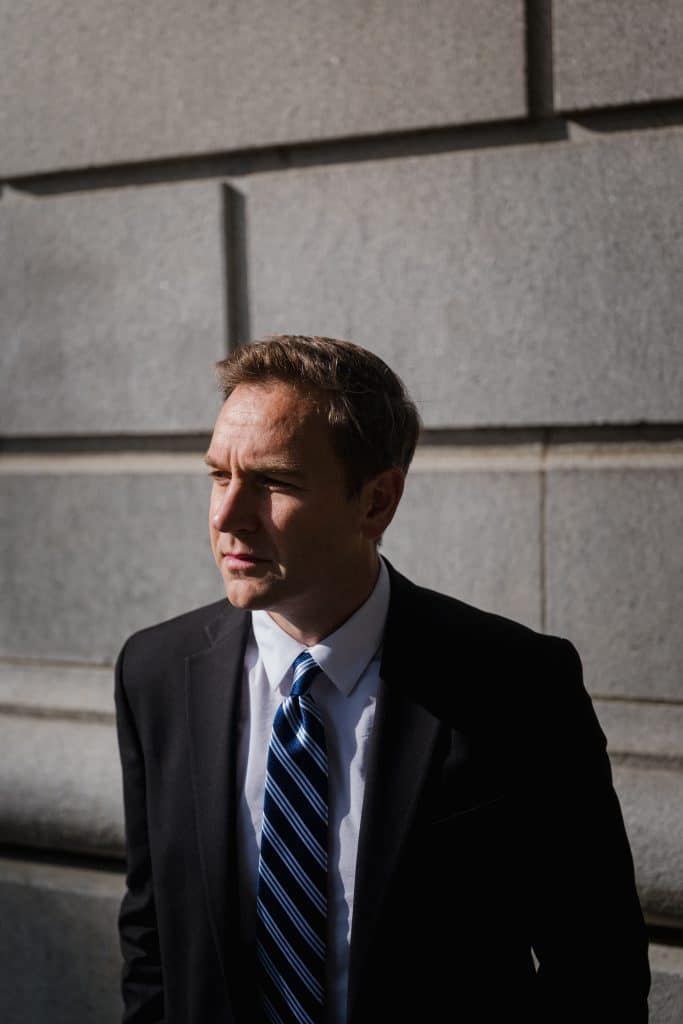
When 39-year-old Matt Plummer began his political career as a county supervisor last year, he quickly became known for his data-driven approach to voting on agenda items at weekly public meetings. When the board deliberates over the county’s infrastructure, public safety or housing problems, he often couches his decisions in financial and logistical analysis, rather than framing issues in ideological terms, as some of his colleagues do.
After Plummer was elected, he studied the metrics that made Shasta an outlier in the state as a way to determine what his priorities would be. What stood out to him most was Shasta’s suicide rate, which has been about double or more than the California average over recent years.
Since then, he’s committed to cutting the suicide rate in half. “I would like to see us bring our suicide rate into line with the state average,” Plummer said.
To do this, Plummer came up with a three-phase vision, parts of which he’s already started to implement: connecting with high risk patients, continuing safety measures like distributing gunlocks and safes that disrupt the means of access, then starting to tackle some of the bigger, more structural factors, like social isolation.
More data is needed. Establishing patterns of behaviors between people who have died by suicide has recentely begun as part of Shasta County’s newly formed Suicide Fatality Review Team. Other California counties, including nearby Glenn, have set up similar teams. They’re made up of law enforcement officers, public health officials, coroners and medical examiners who work together to perform an interdisciplinary postmortem examination of suicides with the family’s permission. The team hopes doing so will help the county understand the gaps in suicide prevention policies and resources.
“[Suicide] is the last sign that things upstream are probably not working quite right,” Plummer said. “I see it as, like, this blaring, flashing red light that things are broken.”
In April, Plummer and the county’s public health director were selected to participate in an initiative with the National Association of Counties to strategize on how to prevent suicide in Shasta County.
Kelly Rocha agrees that things are broken.
She’s happy that the county is discussing different types of interventions, including trying to break through cultural barriers that prevent Shasta County residents from seeking mental health services. But she’s not sure any of them could have saved her father.
As a nurse, she said she asks all her patients if they’ve felt suicidal. “Easily, somebody can deny it and say no,” she said. Kelly described her father, Bill, as one of those people, who likely would have never asked for help or admitted his feelings of despair.
Tackling this mental health stigma is the first step.
“Somebody like my dad, he was tough and didn’t talk about feelings or emotions,” she said. “He had all these guy friends, and the last thing I would ever imagine he would do is admit he was depressed, or seek help.”
A version of this story was published in The Guardian.
Do you have a correction to share? Email us: editor@shastascout.org.
Comments (20)
Comments are closed.
Related Articles
Meet Jack Munns for Redding City Council
There are three council seats on the ballot this November, and nine candidates are running. Munns is a current council member and former police officer.
Meet Lisa Barry for Shasta County Office of Education Trustee
Lisa Barry is running for one of seven seats on SCOE. She has a background of service in the Intermountain area including as a community organizer with Burney Friends and Neighbors.

Meet Joana Rebollar for Redding City Council
There are three open seats on the council, and nine candidates are in the running. Rebollar is a tax preparer and accountant who has a primary focus on the city’s finances.
I’m convinced that having a gun for safety increases danger. This is my story. When I was in my 20’s, I considered getting a handgun. I came across an article about a NY City police woman [unusual for the time]. She became a plainclothes decoy for a robber. When he attacked her, she drew her gun–and he wrested it from her. Of course she had back-up, and he was captured, BUT suppose I was in that situation. I was reasonably fit, but not up to police standards. She was expecting trouble in a way I would not be. The decision was not hard.
Gun safety and marksmanship should be taught in schools. These would be useful skills to benefit us our whole life. We could drop ethic studies.
I have known a few people who have taken the permanent route to deal with a temporary problem. Horrible situations. I have also known a few people who, with great care and deliberation, chose suicide to end their suffering on their own terms. I respect that thinking and choice. Not all suicides are a tragedy.
Gun owners, and those in certain professions, know the very real dangers they face if they ever openly talk about suicidal feelings or thoughts. They have heard about mandatory reporting laws, holds, and how that can take away your gun rights on a 5 year basis, and maybe your career. I know three very competent people who were licensed therapists and who in semi-retirement let their licenses lapse and now see clients in those types of situations on a cash basis with very limited notes. And I know some friends who use that type of more private therapy service. These are people with good insurance which does cover therapy. But they need higher degree of privacy to protect their rights and their careers.
If you are trying to reach the average gun owner, you won’t find them at the gun range! True. The ‘average’ gun owner in this county does not spend much time actually shooting. And most of those who do, do not go to a formal range unless they are taking their mandatory CCW renewal class. I know a lot of gun owners in this county who have not shot in years.
Over the years I have heard of authorities trying to, or actually confiscating, firearms from veterans who did need help managing their money and estate. Under the theory that if they can’t handle money, they can’t handle a gun. I know a lot of people who can’t handle money, but I would trust them to handle a loaded gun around my family. Most of my friends are very skeptical of the government and the control that they wish to impose.
CA Gun laws are so incredibly complex and fast changing that: Police, firearms instructors, gun store owners, and lawyers have a difficult time staying current. It is not only the law, but the court decisions. I know a gun owner who was going through a difficult time. His family asked him about securing his guns. He has a good friend who is a recently retired police officer in California. He asked him for advice. His friend advised him to avoid the recent possibilities that have been created under California law due to many problems that exist in getting the guns back. He told him to send the guns out of state beyond the reach of California. I have also heard this recommendation from attorneys and a retired Deputy DA.
This person ended up locking up his guns with ‘free’ gun locks that come with new gun purchases and high quality locking rigid gun cases with padlocks and giving the keys to family to store. He felt much better about that than giving up his actual guns to an authority and then having to try to qualify to get them back. His family was satisfied. It worked out well for everyone.
Here is a thought… I see the free vending machines that dispense Narcan and other health supplies at certain places. Maybe place those gun locks in these vending machines to improve access. Recently I saw that Cal Fire had used old fire hose to make covers for trailer chains to reduce fire hazard. They provided those covers to hardware stores for free distribution. Maybe see if hardware stores would keep these locks available for the asking? (Yeah, potential conflict of interest in selling some locks)
Article complete with all the buzz words, white male guns! There are many excellent articles showing nationally that crime rates go lower considerably where concealed carry is growing! I can tell you one thing for sure, they’re trying to price out of the market, the ability to get a concealed carry. And every two years! This is stupid! Soon there will be a national Carry law! Sadly, news organizations like this will never post the truth about things that don’t fit their agenda. Neven is the first rate liberal and has a very biased approach to his so-called investigative reporting.
The United States has the most lax gun laws in the developed world. We have more guns than people. We have highest gun violence and gun murder rates in the developed world by orders of magnitude. (I’m confident you don’t know what “orders of magnitude” means.) Adding guns doesn’t make anyone safer—the opposite is true.
.
I realized decades ago that it’s not about demonstrating effects on risk with data for you gun-humpers. It’s about putting your fears and your fetish first, regardless of the carnage that results.
When you are considering the relative mortality risk of widespread civilian gun ownership, are you factoring in how many genocides have happened to armed civilians?
How long would it take 15,000 firearm homicides a year to equal
Gaza genocide 100,000+ killed
Darfur genocide 250,000+
Rwandan genocide 500,000+
Isaaq genocide 100,000+
Anfal genocide 100,000+
Cambodian genocide 2,000,000+
East Timor genocide 100,000+
Bangladesh genocide 1,500,000+
Biafran genocide 1,000,000+
Maya genocide 150,000+
Tamil genocide 200,000+
Siberian genocide 1,000,000+
Holocaust 6,000,000+
Polish genocide 2,000,000+
Romani genocide 1,000,000+
Holodomor 4,000,000+
…and that’s just some of the larger genocides in the last 100 years
Mahmoud — You’re arguing that guns are a hedge against genocide. It’s not a crazy supposition.
.
I’ve already stated my rebuttal. In the USA, most of the guns are owned by the people who would be committing the genocide: White nationalist evangelical Christian authoritarian proto-fascist Republicans. The density of guns will only make it easier. Some of them even say that’s why they can’t wait for The Purge.
6 years of Trump’s fascism and the fact guns are disproportionately held by white Christian nationalists ought to convince rational liberals and independents of the 2nd amendment’s utility.
Incidentally, the 2nd amendment is not just about guns but all “arms.” It & the 14th amendment ensure citizens have the constitutional right to own anything legally possessed by the US government (which means nuclear weapons until the US decommissions theirs and bans their possession – some unlikely to happen until every tom dick and harry starts building nukes in their backyards).
ET – Spot. On.
There are two reasons to own a gun: hunting and personal safety. Locking up hunting guns makes sense; locking up guns used for personal protection does not, particularly in an environment that seems to tolerate violence.
Criminals don’t spend much time in jail these days. Sentences are light, time served is usually cut after the fact due to prison overcrowding.
In an emergency, who has extra seconds or minutes to fumble with a lock?
There once was a day when hunters displayed their rifles in the rear windows of their pick up trucks. No body got shot, crime was unheard of and suicide was rare.
What changed?
There has never been a time in American history “nobody got shot.” In the Old West, when most men carried guns for “personal safety,” gun homicide rates were astronomical. People like you who fantasize about getting to shoot bad guys are delusional. For every story about someone defending themselves with a gun, there are scores of stories about people being shot to death in their homes—purposefully or accidentally—by family members or acquaintances.
.
The #1 predictor of being a victim of gun violence is having guns in your home.
We should have a program to offer free gun safes and gun locks. Also free gun range time to practice safe shooting. This will help with problem.
Victor: The county does have such a program, as we reported in the story.
And let’s not forget that Nothing is free!
Why are suicide rates higher in Nunavut and Alberta than British Columbia or Ontario?
Catalonia higher than Spain?
New Caledonia higher than France?
It’s almost like being colonized and forcefully subjected to the will of a distant, culturally different populace has a negative effect on mental health, regardless of access to firearms.
Regardless of access to firearms? Your logic fails you.
.
Status as a colonized population and availability of firearms are not mutually exclusive factors. They possibly have additive effects. It’s a demonstrated fact that availability of firearms correlates positively with firearm violence across cultures. If you’re arguing that suicide rates in nations with colonized populations are highest in the members of the colonized *because they were colonized*, I think you have all your work ahead of you.
Thank you for bringing light to this subject. This cause is near and dear to me.
Shasta County is even more neck-deep in guns than modal America. Those gun owners are going to own the gun locks and gun safes. So experts who say the more widespread availability of locks and safes will prevent suicides……just how does that work?
.
As gun owners like to argue: It’s not the guns, it’s the people who pull the triggers. Okay, so suicide by gun is strictly a mental health issue. Let’s figure out why Shasta County males are twice as despairing as the state average, and work on that.
Well, Esteban, it seems to me that you’ve got a better grasp on the issue than the “know-it-alls” who want to tell us they have all the solutions. I’ve spoken to several potential victims, and they all seem to want to check out for the same reason.
You said: “I’ve spoken to several potential victims, and they all seem to want to check out for the same reason.”
All for the same reason? Any reason why you don’t want to share what that is?