
As Shasta jail surpasses 10 months of paused visitations, experts warn of mental health fallout
In-person visitations at the death-ridden jail have reportedly been suspended due to a construction project. Visits have been shown to reduce recidivism rates, increase safety for incarcerated individuals and correctional officers and safeguard the mental health of those behind bars and their families.
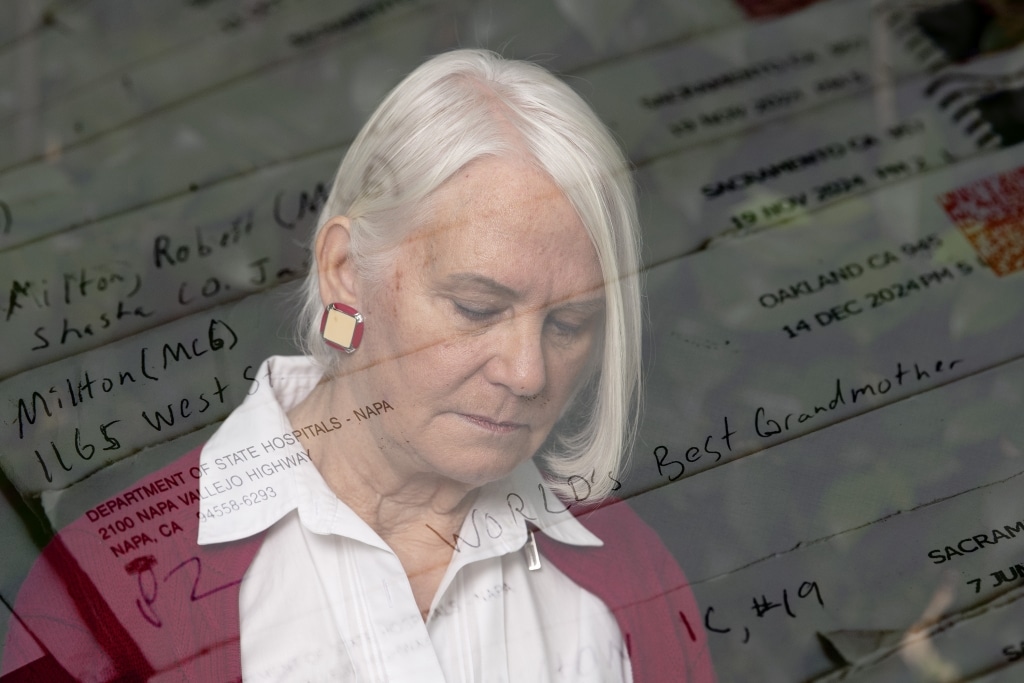
Staring from the gallery of a Shasta County courtroom, Missy McArthur watched as defense attorney Michael Borges dressed her son for another day in court. Her expression reflected the numbness she carried with her into the courtroom almost every day this year.
Her son, Robert Milton, was on trial for murder. His face was equally as expressionless, possibly a result of antipsychotics he was likely placed on after he was booked. Observers in the courtroom watched as Borges got on his knees to fix the cuffs of Milton’s pants.
Court hearings were the closest McArthur, a former Redding mayor, could get to her accused son — and the only time she could see him in person. It was the middle of March of this year, about six months after the Shasta County Jail suspended in-person visitations, reportedly due to construction.
“I realized that it was another [kind of] grief,” McArthur said of that morning in court, referring to the pain of watching a lawyer care for her son in ways she couldn’t.
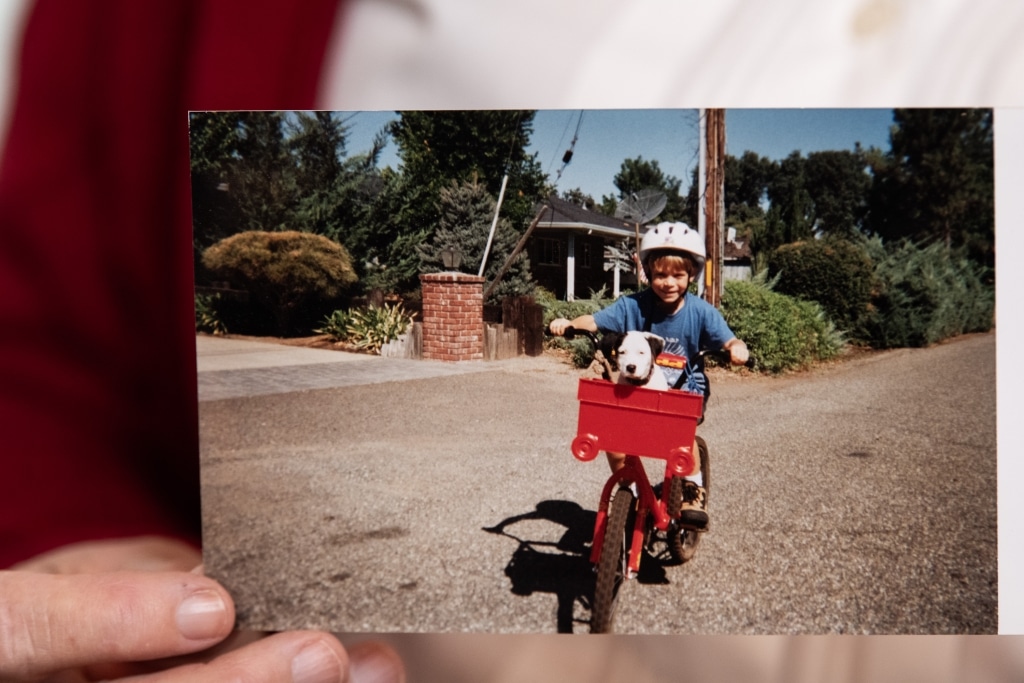
Now, four months later, in-person visitations at the Shasta jail are still suspended with no answer as to when they will restart. Like other families in the county, McArthur still lacks access to visit her son in person, something that’s been documented to provide benefits to not only the incarcerated and their loved ones, but also to correctional staff and the broader community.
In-person jail visitation has been proven to have significant positive impacts, including reduced recidivism rates and a drop in misconduct within incarceration facilities. Research also shows that the absence of in-person visitations can harm incarcerated individuals’ mental health, as well as that of their families.
“Strong visitation programs are one of the strongest tools we have in our toolbox to ensure that people are rehabilitated and likely to land on their feet when they are released from jail and into our communities,” said Rio Scharf, a staff attorney at the University of California, Berkeley Law’s Criminal Law and Justice Center.
The extended pause in Shasta’s jail visitations comes as the county faces an unusually high rate of in-custody deaths — two dozen deaths have taken place in the jail in recent years, a third of which have been ruled suicides.
There’s also a risk that the 10-month visitation suspension could spark new legal action against the county, which has grappled with lawsuits and settlements related to the death-ridden jail in recent years. The Shasta County Sheriff’s Office did not respond to repeated requests for comment for this story, including questions about when visits will resume and whether more details about the construction project that’s impeding visits could be shared.
This past April, Milton was found guilty of first-degree murder for killing a 71-year-old father and grandfather, a crime he committed in August of 2024. The jury found him legally sane at the time of the killing, despite defense experts testifying that he suffered from schizophrenia and paranoid delusions at that time.
McArthur said she detests what her son did and understands that there are consequences to his actions. But she still misses him and is concerned about his well-being, especially in the wake of frequent deaths at the jail.
“I’m a mom,” she said. “I’m pretty upset that I haven’t seen my son for all these months.”
Shasta jail initially suspends in-person visitations for four months, offers video substitute
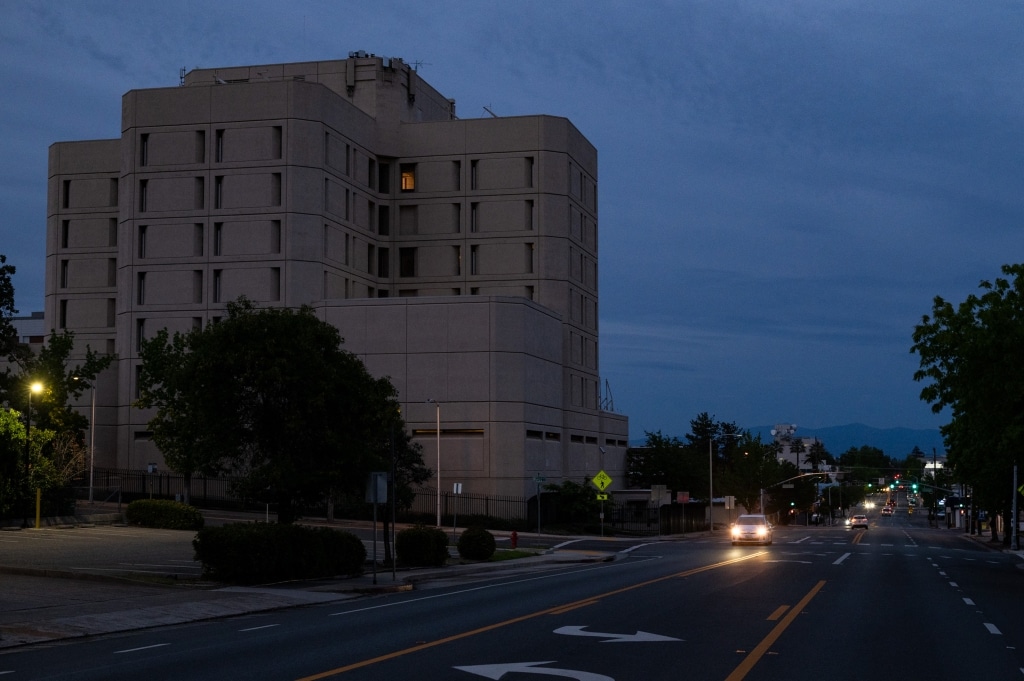
On Sept. 25, 2025, McArthur was looking forward to seeing her son in jail in a few days for their scheduled visitation. But that morning, she received an email from the county explaining that all in-person visitations at the Shasta County Jail would be temporarily suspended due to an “extensive construction project.” Crews were beginning work on the elevator used to bring visitors to the visitation area.
“The elevator is expected to be out of service for approximately four months,” the email read. It also said all previously scheduled visits would be canceled.
McArthur said she remembered being taken aback by how long visitations were supposed to be suspended when she initially read the email. She said she was also confused about why the jail couldn’t use a visitation room on the first floor, which she had used before. Efforts to get more answers from the jail and sheriff’s office were unsuccessful, she explained.
In light of the in-person visitation suspension, the jail coordinated with the vendor that supplies incarcerated individuals with tablets to facilitate one free hour a week of video calls, according to information shared on the sheriff’s office’s website.
It’s a similar process to what’s been used in other incarceration facilities across the country where video calls have substituted in-person visits, a process that has frequently been derailed by technical difficulties. McArthur said she and Milton only video called once before he said his tablet stopped being able to administer video calls. He told her by phone that efforts to get it fixed were also unsuccessful.
Several other sources who spoke with Shasta Scout about jail conditions over recent weeks have also complained about technical difficulties with jail tablets, which are used partly for communication with the outside world — usually at a cost.
A lifeline: How visitations improve not just mental health, but also recidivism rates and incarceration environments
In-person visitations have proven benefits to the well-being of those incarcerated. Research shows that they can both reduce depressive symptoms and improve mental health in the first year after reentry.
Those impacts expand beyond just the well-being of the incarcerated individual while they’re behind bars. A study showed that in-person visitation leads to a 26% reduction in recidivism, or the act of reoffending after incarceration.
Visitations have also been shown to improve the environment within incarceration facilities themselves. Research points out that access to in-person visits cause a drop in misconduct by incarcerated individuals while they’re in jail or prison, oftentimes because visitations are seen as an incentive that people don’t want revoked. Better behavior among incarcerated individuals has also been found to have a positive effect on correctional officers and jail operations.
“If they have that connection to their loved one on the outside, if they’re able to see them and connect with them, it reduces some of those adverse mental health issues that can then rise up and lead to violence and those disciplinary infractions,” said Dr. Breanna Boppre, a senior research associate at nonprofit research organization Urban Institute.
Boppre’s research has focused on the impacts of incarceration on families, placing an emphasis on the benefits of in-person visitation and the implications of virtual visits, like video calls. In her research, she’s found that in-person visits are seen as a lifeline for incarcerated individuals and their families.
Her research has also pointed out that video calls shouldn’t replace in-person visits because the technology can be unreliable and doesn’t allow for nuances like nonverbal communication and physical touch, important aspects of connection for families, especially between parents and their children.
Boppre explained that when in-person visitation is suspended for long periods of time, it’s not only the incarcerated but also the families who are punished, even though they’re not the ones who might have committed a crime.
“Imagine if it was your brother, your sister, your father, your mother or your own child who is incarcerated, and you’re not allowed to see them in person, even though you live in the same community right up the street,” she said. “That punishes the families on the outside.”
She also gave a reminder that many people in jail haven’t yet been convicted of a crime, and some may be innocent — on average, nearly 70% of those being held in city and county jails are being held pretrial, or before they’ve been convicted. Shasta County’s current dual prosecutor and public defender vacancy crisis could exacerbate this issue, causing people to sit in jail for even longer while they wait for trial.
Recent reporting by Shasta Scout documented that the conditions of incarceration, including confinement, isolation from social connections and the uncertainty of what lies ahead, can cause people to lose hope, especially during waiting periods before or between visits with social workers, attorneys or family. That’s why safeguards to mental health are important when it comes to preventing deaths and other serious harms to those incarcerated, according to mental health advocates.
“There’s a huge nexus between the incarceration system and mental health and how our current system just exacerbates underlying conditions,” said Esteban Núñez, a mental health advocate who spent six years in prison. He’s currently a board member and the public policy committee chair of Mental Health America of California.
Núñez explained that in-person visitations for incarcerated people are crucial to their well-being, and taking such access away puts people in a “horrible mental position.”
“As somebody who was impacted and somebody who was a huge beneficiary of visitations, for me, it was my place of solace,” he said. “It was my place of normalcy in a place of just complete chaos and of complete powerlessness.”
He said visits with family kept him motivated toward recovery, healing and a life outside of incarceration. “It was a constant reminder of what brought me there and how I needed to change and how I needed to make it right for my family,” he said.
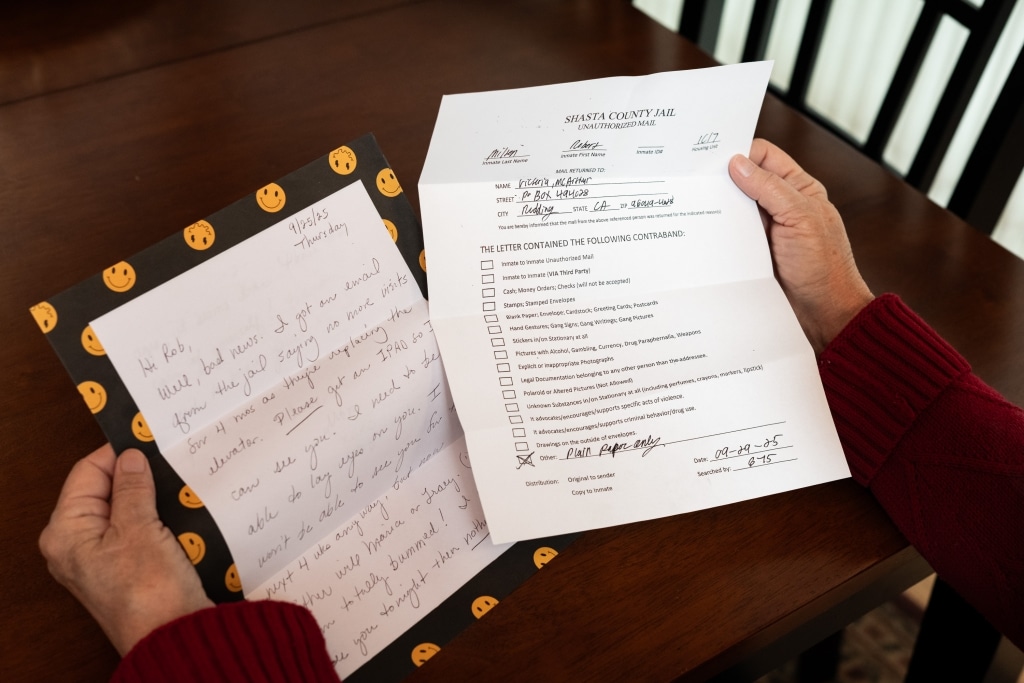
The suspension of in-person visitations isn’t the only way that communication has been impeded for families at the Shasta jail. Since Milton was booked two years ago, McArthur has sent him dozens of letters, many of which have been sent back to her by the jail with vague reasons as to why they didn’t pass inspection.
When she wrote a letter to her son last year to tell him that visitations were being paused, the letter was returned because it wasn’t written on plain paper. She’s still able to communicate with Milton by phone, but it costs several cents a minute to do so.
Laws around visitation hold complexities but may see changes soon
McArthur said she often wondered whether the Shasta jail’s suspension of in-person visitations is even legal. The answer is complicated.
There aren’t currently any laws that directly give all incarcerated people in California the right to in-person visitations. Legislators and policy advocates have attempted to pass laws requiring in-person visits at incarceration facilities in recent years, but efforts have been unsuccessful.
But California county jails like Shasta’s are required to continue to offer in-person visitations if they were offering them as of Jan. 1, 2017. And a state regulation requires jails with visiting programs to provide as many in-person visits as facility schedules, space and number of personnel will allow.

There’s been a trend across the country to eliminate in-person visits in favor of video calls, said Scharf, the staff attorney at UC Berkeley. He’s currently representing plaintiffs in a lawsuit against Solano County, which has replaced almost all in-person visits in its jails with video calls.
In the lawsuit, he’s arguing that not only does the visitation ban violate state regulations, but it also violates the right to family integrity under the California Constitution, a safeguard to preserve family relationships from unjustified state interference. If successful, Scharf said the lawsuit would place new restrictions on when and how county jails can limit contact visits among family members.
“In terms of Shasta County, what you see is that a county may be able to eliminate in-person visits without saying it’s doing so,” he said. “Our regulations could be made much more clear about the fact that you cannot simply suspend in-person visits for months on end … based on vague concerns about construction and renovation.”
Scharf said he couldn’t speak directly to whether the Shasta jail was violating state laws, but he noted that the county may face legal challenges if it continues to suspend in-person visitations. He also reiterated that visitations have a broader benefit on communities as a whole.
“Many of them [in jail] haven’t been convicted of committing a crime yet,” he said, “and even those who have, the goal we all have is that when they are released from jail, they do not recommit a new crime.”
‘A future when he’s not here’
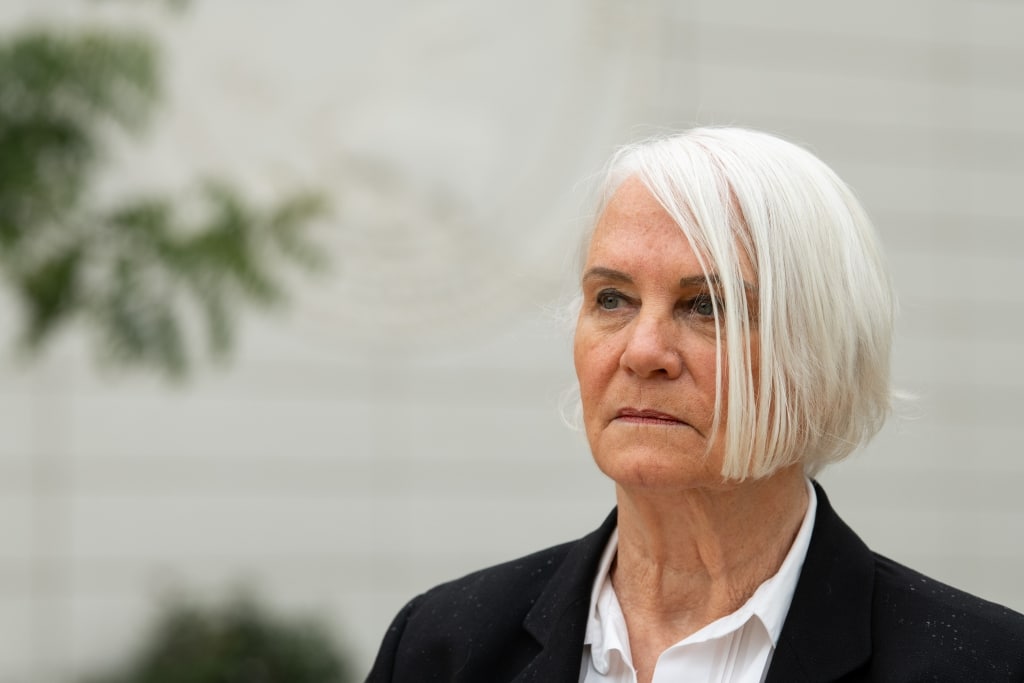
This spring, several months after she last visited her son at the jail, McArthur sat in court as another day of Milton’s jury trial came to an end. Court had become the only time she could see him in person. As he was being taken away, she yelled out to him.
“I love you, Rob,” she exclaimed.
It’s against the law to communicate with an incarcerated individual while they’re in court, something McArthur knew. The next day at court, the bailiff reprimanded her, warning her that she may get removed from the courtroom if she does it again.
Milton’s sentencing is scheduled for later this month, and McArthur is worried that her decision to speak out against the jail over visitation access for this story could affect where her son is sent for what is expected to be a prolonged sentence. But she said her concern for people like her who haven’t been able to see their loved ones in the Shasta jail for months outweighed her fear.
During a recent interview, McArthur expressed sympathy for the daughter of the man her son killed, who will have to live without any communication with her father at all.
It’s the reality McArthur is left with after Milton’s actions, which she believes were driven by mental illness. Now, she’s relearning this new version of her life, one where her only child is still alive, but behind bars.
“It is what it is,” she said, “trying to look to a future when he’s not here.”
This story was produced in partnership with CatchLight as part of its three-year Mental Health Visual Reporting Initiative.
Do you have a correction to share? Email us: editor@shastascout.org.
Comments (26)
Comments are closed.
Related Articles
After chaotic last month, some concerns as Shasta elections official opens early voting
The Market Street elections office was busy with staff as early voting opened for the November election. Curtis said he’s ahead of the game, but observation indicates some steps remain to be completed.
Meet Paul Saulsbury for Redding City Council
There are nine candidates running for three seats on the council. Saulsbury is a mobile crisis clinician who’s focused on public safety, balancing the budget, homelessness and implementing safeguards for REU ratepayers.

Special board meeting called to address ballot shredding, not subpoena, Kelstrom says
A special county board meeting scheduled for today was cancelled this morning. The meeting was intended to address next steps related to ballot shredding, Board Chair Chris Kelstrom said. Since the 2024 ballots were shredded on Saturday, no special meeting was needed.
I knew someone who was wrongfully arrested. A disabled veteran who was a well known and respected member and business owner within Shasta County. They were a victim and were treated like a horrible criminal while the true criminals were free to commit more crimes. They called their cell “The torture chamber” and they were often put in solitary confinement and held in a cement cell for 23 hours a day and not provided with a way to speak to their family. The person started studying the law while incarcerated, purchasing their own law books which most cost them $300-500+, and after they were called by medical staff to report to the medical department the guards took their legal paperwork as well as their legal law books they bought. This was not only wrong I believe its illegal. The officers often referred to the disabled inmates “The animals”. The officer’s would make jokes about inmates and bet on how certain inmates would commit suicide. There has been inmates who have told their families that officers have subjected inmates to abuse and some severe enough to cause injuries and even death. The county doesn’t want the public to know what goes on behind those walls because that would harm their “hero” reputation they’ve portrayed and made people believe in for so many years. The person I knew spent over 8 years fighting their case because in Shasta County you are guilty until proven innocent. During the time they were incarcerated they were subjected to a inhumane and torturous environment and if they filed a grievance they were ignored or punished for speaking up. They were transferred by officers to a cell that a mentally ill inmate was housed in that was covered in that inmates feces from top to bottom and even the door and officers told them to “clean it” but provided no cleaning supplies to do so. This is but only disturbing and disgusting but extremely inhumane. The jail had a class action lawsuit against it and they were ordered to make the jail more accessible for disabled inmates and install more cameras which whether they did or not remains unknown.
Sheriff Johnson needs to take a bit of time he’s dedicating to the rehabilitation campus to spend on a matter essential to the rehabilitation of prisoners currently in the jail.
Excellent job Madison has done in researching and reporting on this issue. Since Analese has been on a few grand juries I suggest that the Scout attach a cover page to this article and request consideration for the grand jury to take on this issue for further
investigation and recommendations to the County Board of Supervisors.
It’s likely that the behaviors and transgressions in the jail by administration and staff will translate in a written documentation by the “health and wellbeing” corporation mandated by the insurance company to safeguard inmate welfare any minute.
Some people never learn and I am not referring to inmates.
It’s way way past time to sincerely consider a RECALL on the Constitutional Sheriff.
Service with Pride
Pride:
The root of all Seven Deadly Sins
Where you find Pride you find Envy, Gluttony, Sloth, Lust, Greed and Wrath
Christian Nationals my ass.
Surely there is a way to allow visits to inmates. Missy talked about first floor meetings..let’s see those restart. Mental health experts all confirm the importance of family contact. I hope Sheriff Johnson will get this situation corrected immediately. A mother should not have to bear this pain too.
Unfortunately, the United States is one of the last developed nations to emphasize Biblical retribution over rehabilitation and reintegration. We have by far the highest per-capita incarceration rate of any developed country, and the highest recidivism rates (the highest re-arrest rate, the highest re-conviction rate, and the highest reimprisonment rate). We emphasize punishment over rehabilitation not because it’s more effective, but because it feels better to exert harsh punishment.
.
There is absolutely no upside to preventing the incarcerated from receiving visits from loved ones and friends. But for the MAGA half of our population, being cruel is satisfying. It’s how they get their jollies.,, until the other shoe drops and it’s them facing jail time.
Thank you for covering this important story. it is an important reminder of the multiple impacts of incarceration on families and communities. It called to mind a KKRN interview with Lauren Kennedy on this issue, some of the organizations like Prison Families Alliance that have worked for reform, and the work of the Prison Policy Initiative. https://kkrn.org/broadcasts/4779
Thank you for this article, so clearly written and informative. The situation in our county is well known to me, as a family member who suffers from mental illness was also incarcerated for far too long and I was unable to see him or access either video or phone to communicate with him. I sent letters, which were also returned, seemingly at random. I was finally able to bail him out in April and we’re dealing with the aftermath of some terrible, terrible months. I am glad to have our community begin to become aware of this ungodly situation.
Thank you Shasta Scout and Ms. Holcomb for shining a bright light on the inhumane treatment of those incarcerated in our county jail. I assume stairs exist to allow access to the visitation area from upper floors, why can’t they be used? Denying in-person visitation amounts to cruel and unusual punishment. My support for Sheriff Johnson has notched downward.
It costs several cents a minute to talk on the phone with a murderer at the Redding jail? That’s outrageous.
NC, tell us how you know about the jail phone and XXactly how many cents a minute.
Thank you for bringing awareness for what us with incarcerated loved ones are feeling and going through. Everyone needs contact, we want rehabilitation, not callous zombies even more disconnected, traumatized when they reach the streets. As mental health is stripped and even now people lose access to benefits your going to see more so called”criminals” who are suffering from mental health episodes, how much more of a detriment will this be to their psyche or more trauma to their already fragile state. I do not have the all of the answers, but from someone who did not do their due diligence moving from the East Coast from a progressive city to The Licker Jefferson’s/Fraudulent Bible thumpers in the 530, it truly has been an eye opening experience to how really different this country operates in certain areas. Again, thank you for this article!!
Smells like karma has arrived in Shasta. Cause and effect.
Thank you for this important article. It is well known that humans are hardwired for connection and that removing in-person contact from supportive loved ones has only detrimental effects. Withholding human contact simply loads trauma on trauma. There is nothing positive that happens other than the perceived value of controlling others by minimizing their sense of being human. The resulting moral trauma to correctional officers can also be painfully real. We should look to humane practices supported by trauma informed research, and create consequences without losing our collective humanity. Thank you, Missy, for your courage to speak up, and thank you, Shasta Scout for taking on the issue.
The Nazis were infamous for cruel and unusual punishment. Thank you Shasta Scout for a thorough overview. State Attorney Rob Bonita’s office may just step in any minute not to mention more lawsuits that the county cannot afford. I smell change in the direction of the wind in the very immediate future.
Someone should do a story on warrantless surveillance by dirty cops… it’s also illegal in California.
I was shocked and appalled when I read this well-written and substantive article. I cannot imagine the thinking that believes keeping families from visiting their incarcerated loved ones is a good idea. Surely accommodations could be arranged for visitations somewhere in the jail. My heart goes out to Missy and the other families who are having to suffer through this. Thank you Madison for bringing this callous situation to light.
Yes, what a great article.
A horrible situation for the jail residents and their families, the guards and the staff. Our society can’t seem to take in the message that a person is not just as bad as the worst thing they have ever done. There is good and bad in all of us.
Visitation was limited enough by glass partitions, time limits and rules. Now it’s not happening at all! What an injustice!
What an incredibly depressing situation and well-written article.
.
As Shasta County seems to reveal in making the news, this cruel and unusual situation, like the illegal Measure B, seems like it could be headed to a court near us very soon; keeping Joe Larmour busy and costing us $$$$ if not quickly mitigated. In this case, 4 months has turned into 10? Hello Grand Jury?
.
In the meantime, thank our 3 alt-right supervisors who seem to have many millions for pimping lies and propaganda about COVID, medications, chemtrails, elections, Trump University medical schools, a trip to Mr. Pillow and God knows where and what else, millions in sweetheart deals to businesses that give them campaign cash, millions in legal setelments to ex L.E. that like to dress up like Nazis, but no money or mandate to at least build a simple temporary visiting room at the jail?
.
What’s next?
What a great article!!!!! So true!! Finally, something is said about the visitation situation with the Shasta County Jail! Even if the visitation is limited to the first floor, something needs to be done and families and friends accommodated right away.
It seems as if these jail restrictions have become their new standard operating procedure, rather than a temporary inconvenience.
It seems inhumane and callous, and perhaps another form of punishment to the inmates.
Madison,
Well written article. You made a lot of sense.
I’m still in awe of Missy, how she’s holding it together. To deal with such pain for so very long, must be utterly exhausting.
And on top of that, not to be able to see your child for months, unbearable.
My heart goes out to you, Missy.
Shasta Scout continues to raise the bar of reporting integrity for our community. The research and expert opinions expressed in this article about the delicate topic of in-person visits for incarcerated people is outstanding. Subscribers are the beneficiaries of quality interviews and in depth investigation. Thank you Shasta Scout!
I can’t imagine how hard this is for all parties concerned. Well, actually I can because my mother was brutally killed by a mentally ill man with a knife. If visitation helps the inmates behave better inside the jail, I think it should be continued. I wouldn’t have wanted visitation denied to the man who ended my mom’s life.
Thank you for sharing Missy. I had heard about visitation denial in the Shasta County Jail, but I didn’t know it had been going on for this long! This article is a service to the community. We all need to be made aware of what is going on.