
Public Lands in Shasta County Not at Risk of Being Sold in ‘Big Beautiful Bill’ — For Now
A proposal to sell public land, including millions of acres in California, was ruled out of the Senate’s megabill — but some say a revised version could still pose risks to northern California.
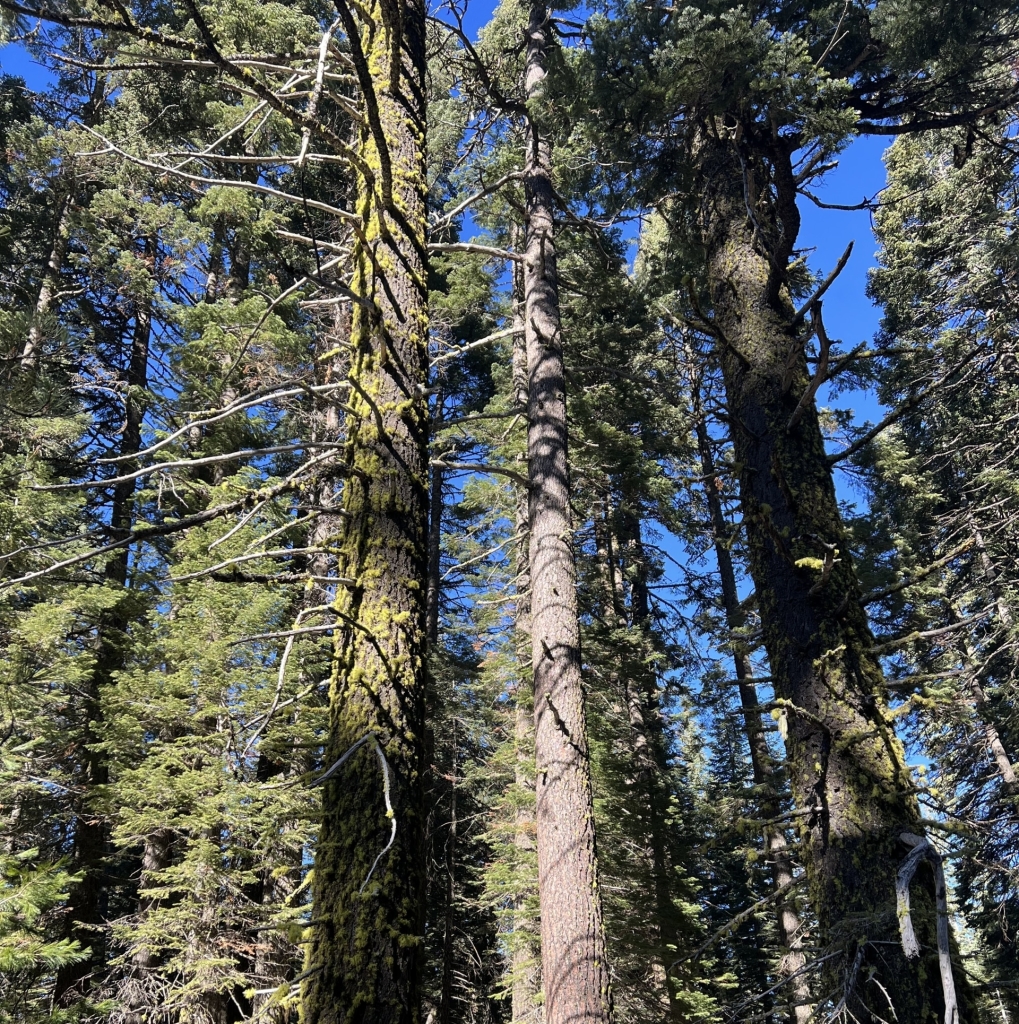
A controversial federal plan to sell up to 3.3 million acres of public land in the West — including in northern California — has been removed from the so-called “Big Beautiful Bill” making its way through Congress. But Senator Mike Lee (R–Utah), the one who proposed the land sell-off, has already announced plans to revive the effort.
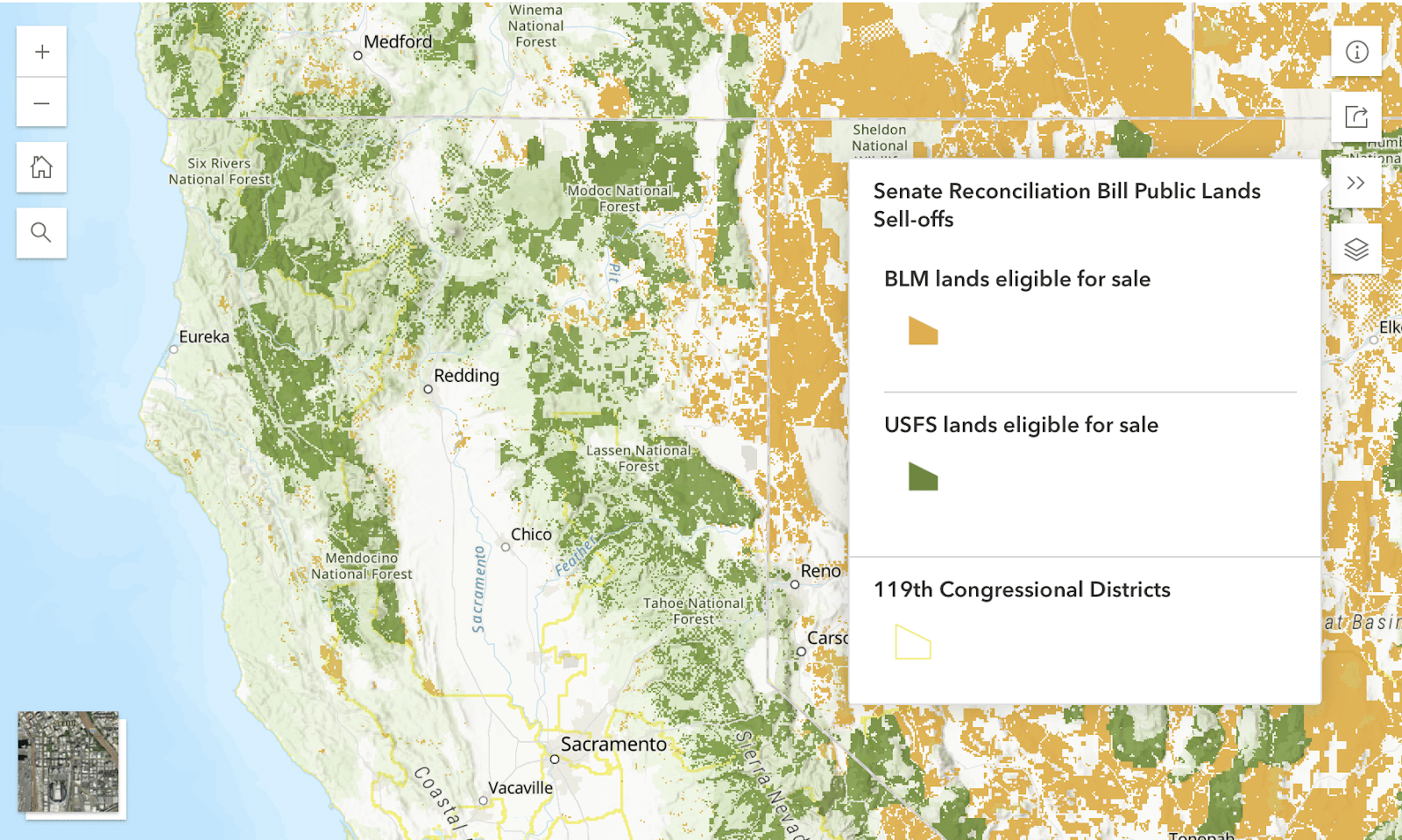
The original provision, a source of bipartisan disagreement, called for the U.S. Forest Service (USFS) and Bureau of Land Management (BLM) to sell millions of acres of public land in 11 U.S. states in the West. It didn’t specify exactly which lands would be sold, but made more than 250 million acres eligible for sale.
In California, more than 16 million acres of land could’ve been put up for sale, including major portions of the North State, such as land surrounding Mount Shasta, Lassen Volcanic National Park, Modoc National Forest and Whiskeytown National Recreation Area.
The “Big Beautiful Bill” is currently in the Senate, where Republicans have a self-imposed deadline to send a final version to President Donald Trump by July 4. The public lands provision was removed on June 23, after Senate Parliamentarian Elizabeth MacDonough ruled that aspect of the bill couldn’t move forward because it violated the Byrd Rule, which prevents extraneous provisions in budget reconciliation bills.
In response, Senator Lee posted on the social media platform X that he is planning to make changes to the provision to allow it to be included under chamber rules, including removing all Forest Service land that would’ve been eligible for sale and significantly reducing the amount of BLM land included. He also hopes to propose limiting the scope of eligible land to only include public land within five miles of population centers. So far his statements are informal only.
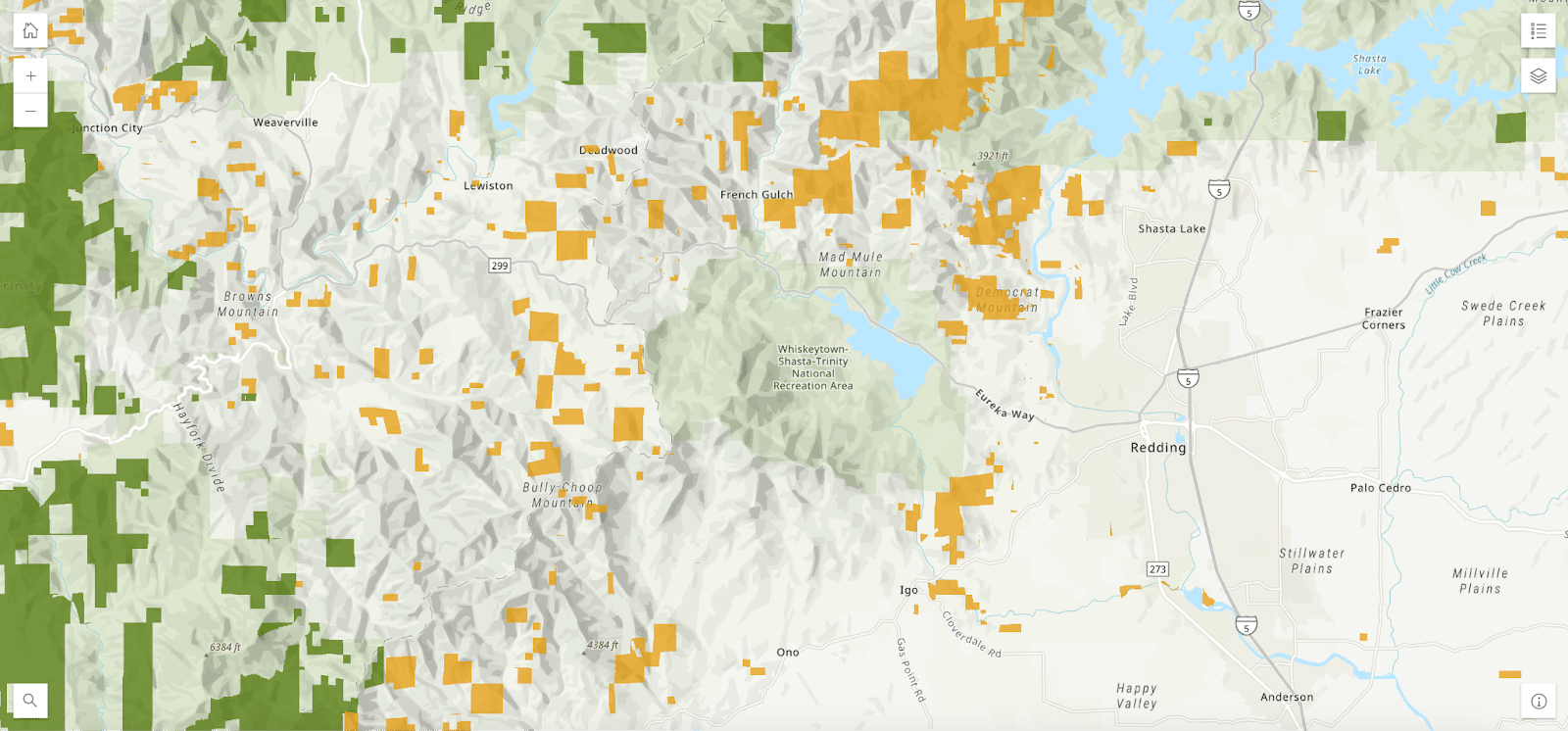
While this would spare much of the California land that would’ve been eligible for sale, it still puts at risk portions of land near Whiskeytown National Recreation Area which are BLM-owned.
The back and forth over the proposed public lands sale has increased uncertainty for regional environmental organizations, including the Mount Shasta Bioregional Ecology Center. The group, which helped propel North State land known as Sáttítla towards monument status over the last year, was one of several to sign a letter to the Senate announcing opposition to the public lands provision.
While the land surrounding Mount Shasta is not currently under threat, the local ecology center is still concerned about what new proposals might occur going forward. Nick Joslin, the center’s policy and advocacy director, said even though the land surrounding Mount Shasta will likely be safe if Lee’s proposed updates are incorporated, he’s still worried about the threat of any public lands going on sale.
“Ultimately, public lands are there for the public to use, and the idea that they would somehow be privatized and sold off to fill budget gaps that are related to tax cuts for the wealthy should be concerning for anybody who enjoys using public lands,” Joslin said.
Not only are these lands important for the public to enjoy, he emphasized, they’re also significant to the wildlife and ecosystems that depend on them. Joslin said intact landscapes are important for biodiversity, meaning that if the lands are privatized and major sections of trees are cleared out, then biodiversity would be threatened among animal and plant species. The increased threat of logging if the lands are sold off would also prevent trees from being able to sequester carbon dioxide from the atmosphere, he said.
Joslin noted that concern has been voiced from both sides of the political spectrum, saying public lands are a “chance to see that we actually do agree on a lot of things.”
“What’s alarming is seeing these decisions get put forth by an administration that seems clearly detached from what the public actually values in these lands,” he said.
Among those who support the sale of the North State’s public land is Rep. Doug LaMalfa, a Republican whose district includes much of far northern California, including Shasta County. Speaking on the House floor on June 23 about the public lands provision, LaMalfa said the land that would’ve been sold in the original provision, which is only about half a percent of the total amount of land the federal government owns, is a very small portion, and that much of it is mismanaged.
“Northern California, my area, we’re tired of the lands not being managed, going up in smoke, burning out the wildlife, burning out the watersheds,” LaMalfa said, “which means all that ash, and then later on erosion, ends up in our waterways, in our water supply.”
He said it’s important for conversations to be had about what to do with the land owned by the government, adding that “people on the left” have been telling lies about the provision in the “Big Beautiful Bill” in hopes of deliberately misleading people into thinking that entire national forests and mountain ranges are at risk of being sold.
According to a map created by the Wilderness Society showing which lands were eligible for sale under the original provision, entire national forests and mountain ranges weren’t included, but major sections of them in some areas were. The map has since been taken down until “legislative language is clarified.”
A revised version of the public lands provision has not yet been announced, but the Republicans’ self-imposed deadline to pass the bill is fast approaching.
Madison Holcomb is a recent graduate of the University of Illinois Ubana-Champaign. She’s reporting for Shasta Scout as a 2025 summer intern with support from the Nonprofit Newsroom Internship Program created by The Scripps Howard Fund and the Institute for Nonprofit News.
Do you have a correction to share? Email us: editor@shastascout.org.
Comments (3)
Comments are closed.
Related Articles

After branding a man guilty on social media, three RPD officers have been named in $12 million defamation suit
When Phetakhom Tu Manivong was arrested in 2022, Redding Police officers posted on the department’s Facebook page, claiming he had committed a heinous crime. After being found not guilty by a jury of his peers, Manivong has filed a lawsuit against the city alleging that RPD’s false statement followed him for years, ruining his career and his reputation.
Neighborhood association files legal challenge over land lease for Shasta custody expansion project
In a legal filing in February, the River Ranch Neighborhood Association said Redding inappropriately bypassed state environmental law when it leased property to Shasta to build an alternative custody facility.

Redding council approves city-wide efficiency study at request of new city manager
The study is intended to “increase efficiency and accountability while reducing waste,” according to the staff report. The council allocated up to $300,000 to hire a consulting firm — chosen by the new city manager — that will conduct the study.
30 years ago President Clinton promised forest communities he would protect jobs and forests. He did neither. What you see here are people tired of seeing the federal government burn up the places where we live. The Clinton administration untied the money we used to get from the forest. Money promised to counties when the national forests were started. Now our schools suffer and and our communities burn up, yes we want to save our forests and our communities. If anyone from Shasta Scout would to get out of the Shasta County bubble and see what has happened, I would be glad to give a tour.
We need wilderness trees to sequester the carbon dioxide.
We need wilderness tree management to sequester wildfire pollution, carbon monoxide structures, and erosion.
The question is do we trust government owned land or private land owners?
I believe we need both. Perhaps hundred year leases for the private sector with government rules of law.
The government does not know how to manage efficiently.
Only the private sector and capitalism can accomplish management efficiently.
But there’s got to be a financial incentive and level playing field for the private sector to exercise freedom of capitalism.
So the government must have limited insane laws for capitalism to work.
I love our national parks and I want to keep our national parks.
Let me get this straight. Because the Feds can’t prevent forest fires, they will sell the land off. Makes sense?