
Shasta board punts on planning commissioner change, hears update on H.R. 1 impacts
As part of a busy agenda Tuesday, supervisors deferred a decision about a change in planning commissioners and heard a presentation on how H.R. 1 might impact county finances.
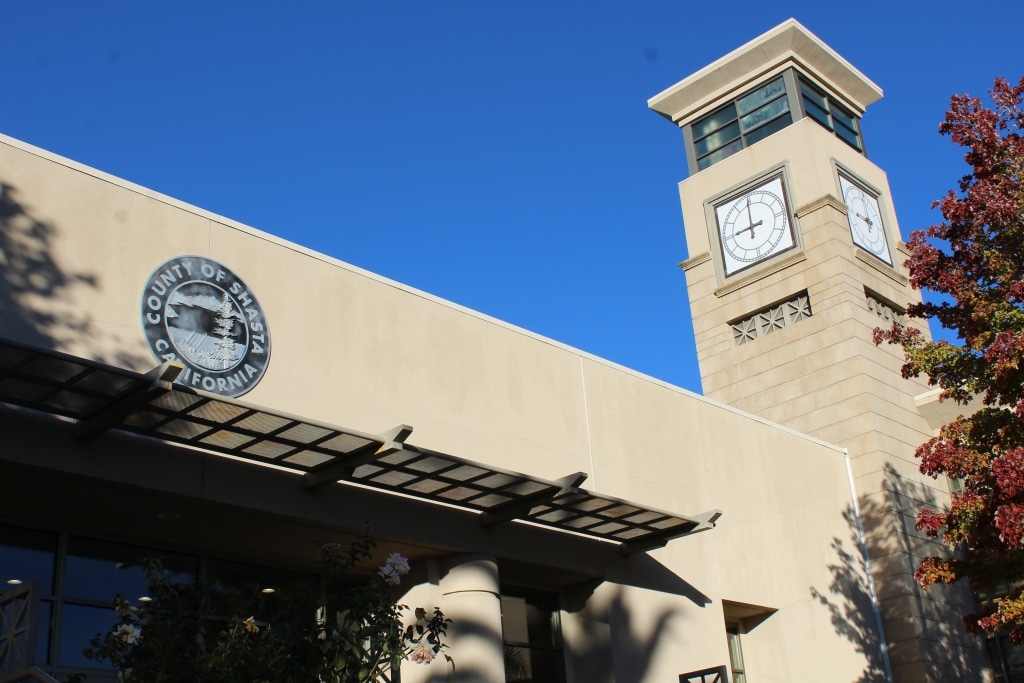
Shasta County supervisors made no decision on changing planning commission members this week due to uncertainty about whether a sitting planning commissioner, Steve Kerns, had been appropriately notified that he was being replaced.
Supervisor Corkey Harmon had hoped to replace Kerns with civil engineer Kevin Butler. In statements to Shasta Scout before the meeting Harmon said he had no issue with Kerns but thought from a conversation he had more than a year ago with the commissioner that he wanted to leave his role at some point.
In an email to a reporter before the meeting, Kerns denied that claim saying if he wanted to step down he would. Nevertheless, Harmon reiterated on Tuesday that he hopes to appoint Butler to take his place.
Supervisors Matt Plummer, Allen Long and Board Chair Chris Kelstrom all said they’d support Harmon’s desire to appoint a planning commissioner of his choice. But Plummer and Long expressed concern about the fact that Kerns did not appear to have been notified before he appeared on the board’s agenda. That was what prompted board members to push the item back to the next meeting to allow for those conversations to occur.
Supervisors did not take issue with Butler’s prior work as an engineer for a controversial proposed gun range in Millville, noting that Kerns had similar connections due to having consulted on an environmental report for the project. As Kelstrom emphasized, any commissioner with a conflict over any project that comes before the planning commission in future would have to recuse themselves.
H.R. 1 to have major impacts on Shasta’s residents, county finances
Also on Tuesday’s agenda, Shasta Health and Human Services Agency Director Christy Coleman gave a presentation about the incoming impacts of H.R. 1, also known as President Donald Trump’s “Big Beautiful Bill.”
The federal budget bill, which was passed last year, made major cuts to areas including health care and food assistance. Coleman said HHSA has been having regular conversations about the bill’s impacts on the county and its residents, which are expected to hit as early as next month.
She specifically pointed out the ways the federal bill will impact CalFresh, Medi-Cal and indigent health care, outlining how requirements to confirm client eligibility are changing and explaining what the effects on the county in terms of staffing and cost to facilitate those requirements will be.
After her presentation, Supervisor Matt Plummer asked questions regarding what the financial costs to the county will be, with HHSA officials giving a rough estimate of $6 million. Included in those costs is the potential hiring of 12 new eligibility workers who would assist with the administration of CalFresh and Medi-Cal.
Another major portion of the increased expense would come from the county’s responsibility to help pay health care costs for those who don’t have insurance and meet other qualifications. It’s an especially prevalent issue given that thousands of Shasta’s residents are expected to lose Medi-Cal coverage due to cuts to Medicaid by H.R. 1.
Do you have a correction to share? Email us: editor@shastascout.org.
Authors

Comments (28)
Comments are closed.
Related Articles

Meet Jack Munns for Redding City Council
There are three council seats on the ballot this November, and nine candidates are running. Munns is a current council member and former police officer.
Meet Lisa Barry for Shasta County Office of Education Trustee
Lisa Barry is running for one of seven seats on SCOE. She has a background of service in the Intermountain area including as a community organizer with Burney Friends and Neighbors.

Meet Joana Rebollar for Redding City Council
There are three open seats on the council, and nine candidates are in the running. Rebollar is a tax preparer and accountant who has a primary focus on the city’s finances.
Mary lost her election to the guy from Life Goes On because she didnt campaign as hard as she had in the past. Facts. You adapt in the political environment or you get replaced. This is coming from someone who likes her a lot. However, just like the superintendent at Millville Elementary, if you get cast in with the moderate covid masking group your days were numbered. It will take 5-10 years to erase that guilt by association.
.
To the the guy who points to Corky’s education as a reason to dislike him: please. There are other reasons to dislike him (take the whole Mangas tragedy) but this is a blue collar county. Being in construction or the fire dept is better than college if you want to stay here after high school. If you dont understand that then you never will. This is why we dont like transplants.
.
Dont call it Shatanistsan and expect any sympathy. I would love an accurate read on how many transplants are the regular posters here. For the male commenters I’d say it’s 90% boomer retirees from other places. The local women, as usual, are the free thinkers, so I’d place that native participation rate much higher.
I call it Shastanistan and don’t ask for or expect sympathy—I’m not even sure what that’s supposed to mean. To me it’s just a name that expresses annoyance at our local prevailing Christian nationalism and general conservative ass-backwardness. I don’t like having religious fanatics in control. I think the “7 Mountains Mandate” is seven piles of steaming bullshit—absolutely contrary to the intent of the nation’s Founders. The authoritarianism baked into the Abrahamic religions (e.g., “Jesus is King”) predisposes the religious to embrace authoritarianism (e.g., MAGA). It’s no accident that MAGA is built on a foundation of Christo-fascism.
.
I’m not native-born to this place, but I’ve lived here for 30 years—far longer than I’ve lived anywhere else—and I’m not retired. I’m just one data point, but I think your 90% demographic hypothesis is bent localism and unearned elitism. If you think classism is a solid reason to dislike transplants, I suggest you get your medical care in the future from a local faith healer. There are plenty of those available thanks to our local mega-church. Alas, most of them are going to be transplants.
.
I agree with you that hostility toward those in the trades for the sake of hostility toward those in the trades is stupid, but that type of stupidity is bi-directional. Local hostility by the lesser educated toward the higher educated (and education in general) is much more heated than the reverse direction. I have long argued that people in the trades have just as much knowledge as I possess with my formal education, just in different fields and with different skills. I’m often amazed and humbled by those skills. But I’m often told by locals who are hostile toward higher education that my college education indoctrinated me, warped my personality, turned me into a libtard, provided me with zero practical skills, and doomed me to eternity in hell.
.
Honestly, I don’t dislike Corky because he came up through the trades, didn’t go to college, and is poorly spoken. (I came up through the trades, went to college, and am poorly spoken—I’m every bit the rural rube as Corky, except for going off to college.) I dislike him because he’s so obviously incapable of independent thought and action. He’s clearly told what to think and how to vote by his handlers, Crye and Jones. He represents my district (D3), and he’s pathetically inept. He doesn’t show any signs of doing his homework, thinking issues through, or voting with anything approximating a conscience or clear understanding of the issues. I have a rubber stamp for a County Supervisor. It sucks out loud.
Insane is more like it. When there aren’t any facts involved and they rant and rave like lunatics… there you go.
Corkey is a transplant, so is he an uneducated non-thinker? I may not have been born here, but I have lived here longer than he has. So I guess he and I will never meet your native free-thinker pigeon hole classification?
Mary Rickert lost because she was way too liberal for her district. Being woke and being an LGBTQ ally does not play well in rural Shasta County.
I thought she lost for being an independent thinker, listening to the concerns of her constituents instead of rubber-stamping whatever the Tres Pendejos wanted. I’m she wasn’t a go along to get along representative.
Brad = Funny how the Democrat’s are the ones coming to Rickert’s defense. I think that tells everyone exactly where she stands.
Democrats (you presume) coming to her defense only suggests where Mary stands relative to Corky. It says nothing about *exactly* where she stands.
.
A MAGA dude making reckless, wild inferences. Imagine our shock.
Sorry, never been registered as a Democrat. I’m independent. But I hope you can forgive me, I was a registered Republican for 35 years!
Mary is a traditional conservative Republican. Those conservative values center on fiscal restraint and “leave me alone and I’ll leave you alone” restrained government.
.
In the MAGA era, those traditional Western libertarian values are considered liberal and woke. MAGAs—following the lead of their deranged and narcissistic orange demigod—demand the returns of incivility, bigotry, sexism, religious and social intolerance, rejections of science and education, election denialism, White nationalism, and absolute fealty to Der Pumpkinführer. Yeah, Mary was out of step with the prevailing insanity of her party during peak MAGA, and unlike many traditional Republicans, she’s too honest to fake it.
.
Lastly, I think you and NC forget that Mary and her husband were dealing with health issues when she was running against Corky. That’s why she didn’t campaign as hard during the last election, not out of disinterest.
Mary Rickert here a pro tip for your next election; don’t send women with face tattoo’s, purple hair and septum rings door knocking for you in Burney. I won’t even mention what they were wearing. It cost you 3 votes on my block and probably numerous other votes in town.
For better or worse, Frank is correct w his assessment. If we are talking human quality, Mary is the best, far better than most in her district.
.
It is quite pathetic that the transplant posters will bristle at being labeled second class citizens by folks born in Shasta County and yet eagerly embue origin-story authority to the Wintu or xyz population. City slicker, magical realism by the white-guilt transplant crowd who cant figure out why theyre always going to be the philisophical minority. You’re here because of real estate prices.
Mary lost because of Anselmo’s cash. Full Stop!
Corky Harmon is exactly the same person that he was when he was elected by a wide majority of D3 voters. Elected over a candidate who had served honorably and well for many years. Unfortunatly the voters got exactly what they voted for. Given these facts the people have no one blame but themselves. I would love to be able to understand it but it is beyond me.
Christy Coleman, thanks for the presentation about the incoming impacts to Shasta County of H.R. 1, also known as President Donald Trump’s and the Republican Party-backed “Big Beautiful Bill.”
.
Yes, we need to keep arranging the deck chairs. But as the 2028 political season begins, we are about to swing into turbulent political, social, and economic times, and Shasta County voters deserve to understand a few things.
.
As of August 30, 2026, Shasta County households are estimated to have borne at least $85.5 million to pay for Trump’s Republican Backed War on Iran and have paid around $90 million for Trump tariffs and other Trump – Republican Party attributable inflationary economic costs, or approximately $2,465 per household.
.
If things don’t change, the H.R. 1-related health-care and safety-net costs to the county could reach approximately $100 million through January 20, 2029, the end of Trump’s term.
.
Together, the current and projected economic exposure is approximately $275.5 million, equivalent to about $3,870 per household.
.
Sources:
.
Trump’s Iran war
1. Center for American Progress / Mark Zandi — broad household cost of ≥$1,200.
2. Brown University Costs of War — independent tracking of the war’s energy/fuel costs.
3. Associated Press — reporting on continuing oil, transportation and consumer effects.
4. U.S. Energy Information Administration — official gasoline, diesel and petroleum-price data.
.
Trump tariffs/inflation
1. Tax Foundation — current Trump tariff tracker and household burden.
2. Federal Reserve — observed tariff pass-through into consumer prices.
3. Yale Budget Lab — tariff effects on prices and household purchasing power.
4. Bureau of Labor Statistics — official CPI data for measuring actual inflation.
.
H.R. 1
1. California State Association of Counties (CSAC) — $9.5B/year statewide county estimate.
2. Rural County Representatives of California (RCRC) — rural-county analysis of H.R. 1.
3. County Health Executives Association of California (CHEAC) — health-care impacts.
4. California Association of Public Hospitals and Health Systems (CAPH) — public-hospital impacts.
.
Shasta Denominator
.
U.S. Census Bureau — 71,232 households
Haseth anyone considered that Patty Jones could be pulling strings per the gun range planning commission?
Does anyone know if Corkey graduated from grade school? D3 voters can do better next time.
You mean the extreme far-right politician funded and endorsed by the Shasta County Republican Party and people associated with local militias?
.
Corkey told Shasta Scout in 2024, ” I never got a degree, but my son got a degree in construction management, and now he’s my manager…” Does that include at least a high school degree? This is an important and more than reasonable question for a person (not his son…) who oversees the socio-economic foundation and future of Shasta County, and government spending over $600 million a year doing so.
.
Did Harmon attend high school? Yes, based on his own account
.
Did he graduate high school? Could be based on his statement that his family lived in Montana from 8th grade until “just out of high school.”
.
Which high school and year graduated? Not established so far.
.
Attended Shasta College? Yes — No evidence found that he graduated.
.
Attended Oklahoma Baptist University? Yes — No evidence found that he graduated.
.
Kind of explains a few things…?
.
Yes, there’s lots of evidence of that.
The “error” was not significant as to the big picture. Improving the inferences that would be draw by the readers is accomplished with the additional information that was referenced as a correction above the article and that would be in the updated article.
So Corky Harmon was caught in a lie and wants to replace the person he lied about with one of his friends? Oh hell no! That Corky Harmon who doesn’t know a damn thing about his job wants to appoint anyone is a total red flag! 🚩 He collects money from the county and doesn’t return emails, phone messages, or correspondence. He is an absolute failure. Another county employee making decisions about who is leaving! First Clint Curtis telling everyone that his assistant is leaving, which was news to him and now Corky Harmon doing the same! Total unprofessional behavior on both their parts!
” well, to the best of my recollection, we had a conversation a year ago that I can’t rightly remember, but I think he said he wanted to resign.”
.
He says he doesn’t want to resign and he never expressed that interest.
.
” Oh, I’ve got nothing against him, but I thought he said that even though I can’t remember, and Mr. Butler had some experience and he’s helped me on some other projects before. Oh wait, I didn’t say that did I??”
.
You said that Kerns has done a good job and that he doesn’t want to resign, so why are you pushing Mr. Butler so badly?
.
” Ah, well… he’s qualified.”
.
But I thought you said that Mr. Kerns was qualified too and he had done a good job.
.
” Well…….. You know I’m not sure… But you know what, with that voting election integrity stuff, I’ll buy a machine to verify those ballots. Yeah, that’s what I’ll do. And I’ll take a lie detector. Yes Sir-ree, those detectors of lies will prove me right. And I know Patty plum, she’s an upstanding righteous citizen. I don’t know why she called you all Philistines but bless her heart.”
…
…
This is the cowboy way, huh? Well in that case, certainly count me as blessed to in his district.
.
Thank you for your discernment. Mr. Corky Harmon. Oh, and bless your heart. Bless your heart *1000.
.
Even though I wish this was a fairy tale, you can’t make this stuff up.
Corruption and recklessness at their best:
Public employee compensation in Shasta County is a stark contrast between top-tier government salaries and the economic reality of the local population.
While the county’s poverty rate stands at roughly 19.7% to 20.6% and the median household income is about $62,136, executive-level public officials and department heads pull in total compensation packages that exceed multiple times the local average.
Oh, hey there!
.
Hey buddy!
.
Long time no see when yesterday you posted under a different name.
.
Do you know that you post the exact same stuff verbatim, under different names??
.
I almost feel bad, but you really do think that you are fooling people into thinking that you’re more than one person to try and amplify your voice.
.
Hey buddy, I’m going to speak truth to power, which means I’m going to speak truth to you.
.
Lol
.
Please stop with the propaganda
I don’t like ’em takin the water.
Shasta County has to compete with other government entities in California for capable administrators. You’ve repeatedly pointed out the “sumptuous salaries” that result. That’s how it works, at least ideally, in our meritocracy. It’s not corruption (except to the extent that *who you know* often trumps *what you know*). It’s the American way. Way it’s always been. Way it’s always gonna be.
.
It’s easy to conclude from your bitterness that nobody is competing very hard for the likes of you.
.
Maybe you should focus your discontent on why poverty and economic struggle are so prevalent in Shasta County under the very conservative leadership that prevails here.
Dear Steven Towers,
You are a professional environmental consultant, specializing in natural resources management working in the PRIVATE SECTOR, meaning if your company performs superb this year, most likely your paycheck + benefits will be juicy and that’s perfectly acceptable!
Yet, PUBLIC OFFICIALS at Shasta County DO NOT produce anything to the local economy and their LAVISH salaries definitively qualify as a GENUINE INSULT TO POVERTY.
In Shasta County, the Greater Redding Chamber of Commerce and economic dashboards note that the labor force participation rate is remarkably low, at roughly 56.9%. This means about 43% of all working-age adults in the county are entirely outside the labor force.
Shasta County has the 48th lowest workforce participation rate out of California’s 58 counties, a massive portion of the local population is unaccounted for in standard monthly job metrics.
When factoring in retirees, those on disability, discouraged workers, and the working poor who are underemployed, the total percentage of adults without functional, family-sustaining employment aligns much closer to those higher, localized estimations.
Let’s see if Shasta Scout is able to produce an unbiased article pointing out these painful and DISGUSTING realities, next time they praise or condemn a newly elected or appointed official in this county.
You don’t even live in Shasta county. And it’s ridiculous to talk about people’s salaries when you’re pulling in a hefty salary and you don’t even show up to work.
Dear Peter Pumpkineater,
So you fancy yourself a doxxer, huh? What a lofty aspiration!
.
What’s funny is that we mostly agree. The salaries of Shasta County and City of Redding employees are WAY out of line with the local private sector. That’s not to say that our public employees are making bank compared with other public employees in California. It’s that our local ass-backward moribund conservative economy is sucking left hind teat.
.
The problem isn’t high local government salaries. It’s our shitty local red economy.
.
As for local government administrators producing nothing for locals—thanks for displaying your incredible naivety. Shasta County is a revenue suck—we take in far more in revenue from CA and the feds than we pay in. Local government employees are responsible for procuring millions of $$ of funding that pay local salaries.