
Shasta County’s McConnell Foundation Leverages Real Estate for Philanthropy: Here’s How Much Local Land They Own
The McConnell Foundation owns more than 4,000 acres within or adjacent to Redding city limits. Shasta Scout spoke with COO Shannon Phillips to ask what policies guide the Foundation’s land acquisition and how buying and developing property fits with their overall philanthropic mission. McConnell’s goal, Phillips said, is to promote the “best and highest use” of land for the majority of local residents.
An interactive Google map of properties owned by the McConnell Foundation.
The McConnell Foundation already owns hundreds of acres of prime riverfront land around Redding’s Sundial bridge, much of which is leased to the nonprofit Turtle Bay Exploration Park. Last year, when the Foundation wanted to buy and develop more land at the riverfront, they collaborated with Turtle Bay and others, and submitted a proposal to buy and redevelop the Redding Civic Auditorium grounds and Redding Rodeo grounds.
That offer was rescinded in April, after the Redding City Council decided not to surplus those publicly-owned properties to allow for their purchase and redevelopment. Just before that decision, Shasta Scout spoke with McConnell’s Chief Operating Officer, Shannon Phillips, about the Foundation’s reasons for wanting to purchase the riverfront parcels and what guides their land acquisition and development. Phillips also confirmed Scout’s independent assessment of McConnell’s land holdings, including what they own in partnership with others, as well as their land holdings filed under other corporate names.
What’s clear is that the McConnell Foundation already plays a significant and complex role in local real estate and development. Begun by long-term Shasta County resident and real estate investor Leah McConnell, and governed by a board of five, the Foundation holds financial assets valued at about $500 million. Those assets include more than 4,000 acres, or the equivalent of approximately 10 percent of Redding’s land area, most of which is either located within city limits or closely adjacent.
A Brief Overview of McConnell’s Local Land Holdings
Lit up on a parcel mapping service, the Foundation’s land holdings are significant. They include several large properties consisting of hundreds of acres each, which were inherited from the organization’s founder. Those properties are Ross Ranch north of Shasta College, Lema Ranch off Shasta View Drive, Gore Ranch south of Redding, and the Redding School of the Arts campus and surrounding land, which the Foundation refers to as “Condiotti.” But those properties comprise only four of more than 140 Shasta County parcels owned by the McConnell Foundation.
Acquiring and Developing Real Estate, As Philanthropy
McConnell’s work in the community has been transformative for the North State by any reckoning, and has included funding for libraries and schools, health clinics, and parks and trails. But in addition to those more traditional philanthropic activities, they’ve also been acquiring key land parcels as an investment, to facilitate a specific community project, or both.
Asked about how the Foundation chooses what land to buy, Phillips said there aren’t any firm policies in place, but all real estate transactions are vetted through the Foundation’s Board and made with input from the Foundation’s real estate committee, which includes Janice Cunningham of Cox Real Estate, who provides an annual update to the Board on challenges, opportunities, and management issues related to currently held properties.
In general, Phillips indicated, the Foundation looks to acquire property that it feels holds particular value for development. Over time, she said, the McConnell board may reduce or exchange real estate inventory if parcels no longer seem to provide an appropriate short- or long-term use consistent with the Foundation’s current goals.
She said the Foundation’s reliance on real estate investments and development as part of their philanthropic model may not be well known locally, but is not unique. The organization leaned into this approach about fifteen years ago, she said, after attending a Councils and Foundations meeting in Pittsburgh that focused on how three local foundations, including the Heinz Foundation, had transformed the Pittsburgh waterfront. Phillips says the Foundation has looked to Heinz as a model for years, because of the organization’s work in public-private partnerships, capacity building for the non-profit sector, and improving education.
McConnell Is Focused on the “Best and Highest Use” of Land for the “Majority of Residents”
A video shared on the Foundation site, emphasizes that McConnell’s investments in the community begin with wanting to know the genuine history of a place, and include a commitment to building a stronger future.
That’s what the riverfront land proposal was all about, Phillips told Shasta Scout in April: finding a “recipe” for development that would increase the health and vitality of the Redding community. “From our standpoint the recipe (we’re proposing) is really strong,” Phillips said, referring to that 72-page proposal, “We have the flour, the butter, the sugar and the eggs. How can we go wrong if we all work together?”
Their offer on the riverfront land, Phillips said was guided by the same overarching goal they use for other real estate acquisitions and development projects, a focus on ensuring what the Foundation believes is “the best and highest use (of land) for the majority of residents.”
But it’s clear from the sustained community opposition to McConnell’s riverfront proposal that not everyone agrees on how to define the “best and highest use” of land. Among others, Native American residents, including the Wintu people, whose lifeways have been deeply connected to the river and surrounding land for millennia, repeatedly expressed significant opposition to the project, asking the Council to consider returning the riverfront land back to Native peoples instead.
Phillips said McConnell respects and honors Indigenous interests in the property, and the Foundation’s plans for the riverfront were intended to benefit, not take away from, those. But the Foundation’s proposal, Phillips said, was designed to serve the needs of the greater community, explaining: “Our goal is to fund places that reach many rather than a few and increase the quality of life in a whole person.”
She didn’t offer a definition for how the Foundation defines “quality of life,” but with more than 140 local properties already in hand and an interest in buying more, it’s clear that the organization’s development goals will continue to have a big impact on Redding’s future.
This is the first in a short series of stories on the McConnell Foundation’s land holdings. Our next article in the series will focus on the Foundation’s riverfront land. We welcome your questions, comments, and tips which may provide new avenues for investigation or reporting. Email us at editor@shastascout.org
Author

Related Articles
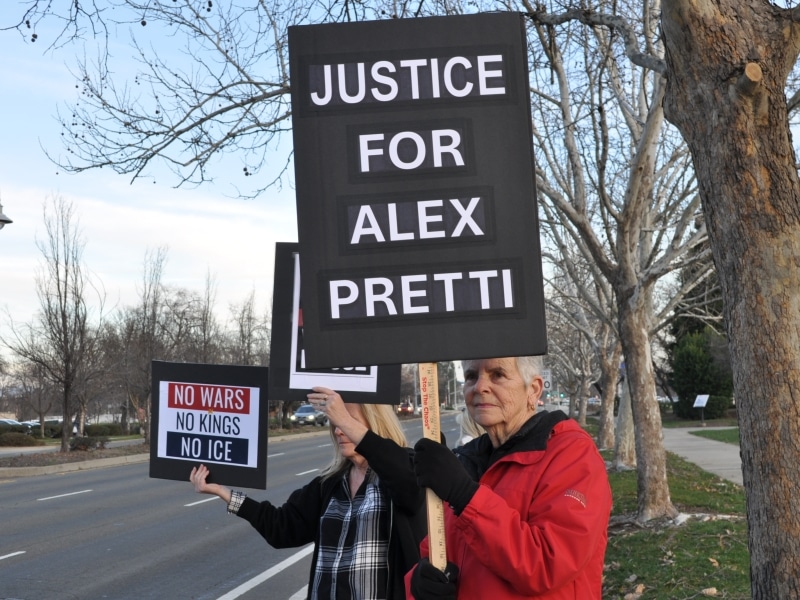
Anti-ICE protest in response to killing of Alex Pretti draws hundreds in Redding
The protest was organized by a group called Redding Resistance. Hundreds showed up to hold signs, listen to speeches and sing as they called for an end to ICE action in Minnesota and across the United States. Speakers included conservative candidate for Shasta supervisor, Tim Garman.
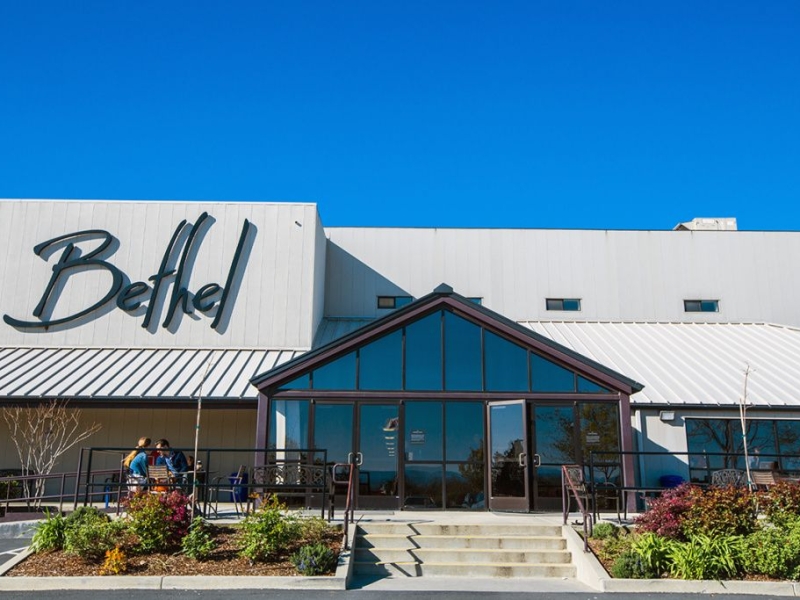
Bethel apologizes for failing to take appropriate action after alleged sexual misconduct by Christian ministry leader Shawn Bolz
In a statement this week, Bethel senior leaders Bill Johnson and Kris Vallotton acknowledged they didn’t do enough when one or more alleged victims confided in them.

Local flight school says espionage claims by Anderson City Council member undermine community safety
Anderson Councilmember Darin Hale has made claims on social media that IASCO Flight Training is a security risk to America due to its training of Chinese students. The school said such unfounded claims, made amid national tension over immigration enforcement, put its students at risk.