
She drove a hundred miles to give birth. New California laws are bringing maternity care closer to home
Three years after closing its maternity ward, a new state law will help a rural Northern California hospital bring birth services back to the community.
This story was originally published by CalMatters. You can sign up for their newsletter here.
At 3:30 on a July morning, Emily Meyers’ water broke. Her son was coming five weeks early. Meyers and her husband jumped in the car and raced from their home in Greenville, population 387, to Reno, Nev. where they had planned to deliver. It was a two-hour drive along mostly narrow, two-lane highways shared with logging trucks.
They didn’t make it in time. Their son, Grant, was born in the car 13 minutes from the hospital to two stunned parents.
Along the way they had passed two other hospitals — Plumas District Hospital in Quincy and Eastern Plumas Health Care in Portola — neither of which have maternity wards. Meyers’ husband had asked if she wanted to stop at either one, but she told him to keep driving.
“At that point I didn’t know how intense things were going to be,” Meyers said. “I didn’t feel like I could stop in the little towns if something was wrong.”
Meyers’ frantic experience exemplifies the challenges that have become commonplace for pregnant patients in rural California: Dozens of hospitals have stopped delivering babies across the state, leaving many families with no option other than to drive for hours and hope for the best.
But in the remote Sierra Nevada community where Meyers lives, hospital executives have a plan to change things.
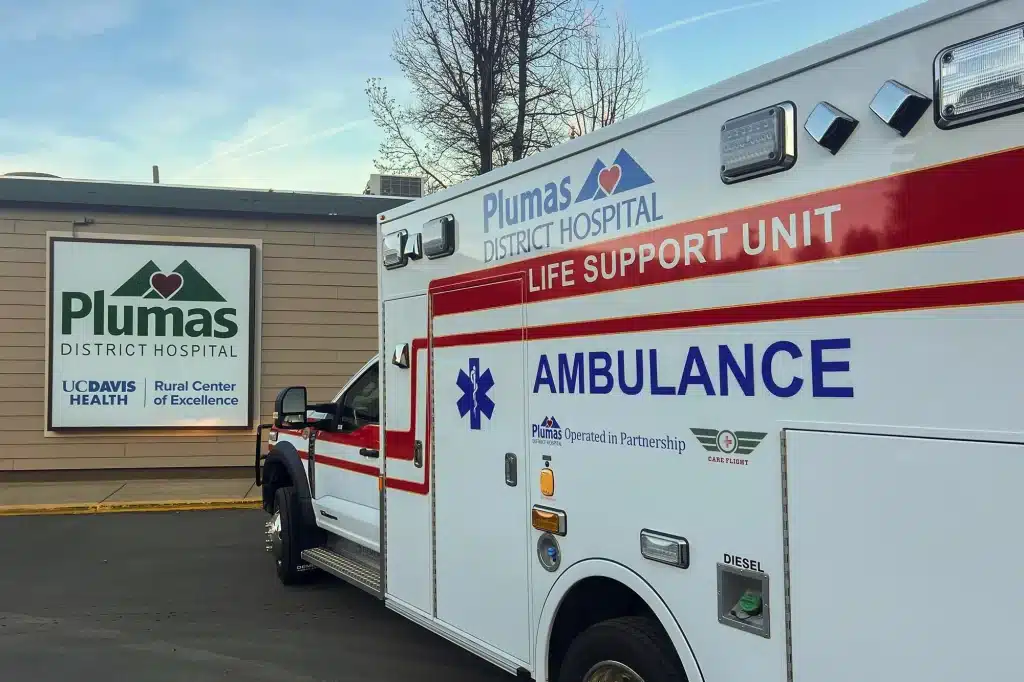
Plumas District Hospital, one of the hospitals Meyers sped past during labor, closed its maternity ward in 2022 after costs grew and birth rates declined. This year, it helped pass two state laws that give rural hospitals the ability to reimagine birth services.
One of the laws, authored by Senate President Pro Tem Mike McGuire, creates a 10-year pilot program allowing hospitals such as Plumas District Hospital to create “standby” maternity units that operate only when needed, rather than offering standard 24/7 service.
The unit must have the ability to do surgical deliveries, blood transfusions, resuscitation and life-support measures. The California Department of Public Health will monitor and evaluate safety outcomes with the new model.
A related law relaxes some of the licensing requirements for birth centers, which are typically run by midwives and accept low-risk pregnancies.
“Expecting moms and their families in rural California deserve better,” said McGuire, a Democrat from Santa Rosa whose district stretches north to the Oregon border, in a statement to CalMatters.
Dr. Robert Moore, chief medical officer for Partnership HealthPlan, a health insurer that covers the state’s northernmost counties, said it’s not realistic for some rural hospitals to offer maternity care 24 hours a day. The numerous closures prove that. Emergency maternity services are better than none at all, he added.
“It’s not acceptable for someone to travel two hours to the nearest hospital. The outcomes are not worth it,” Moore said. “We owe it to the rural areas of the state to fix it.”
A new birth center for Plumas County
Next year, as a result of the legislation, Plumas District Hospital plans to open a birth center and standby maternity ward. Women who qualify and do not want an epidural will be able to give birth locally. The hospital’s on-call obstetrics team will be available to take transfers from the birth center should any complications arise that require a doctor.
Darren Beatty, chief operating and government affairs officer for the hospital, said maternity care is part of what makes a rural community vibrant, and it’s why facility leadership pushed hard to change state law over the past few years.
“We’re experiencing multiple threats in and outside of health care to maintain(ing) a rural lifestyle,” Beatty said. “We need to do our part so that Quincy can be an outlier and not continue to shrink and go away like many rural communities have.”
Nearly 60 hospitals have stopped labor and delivery services since 2012 in rural and urban areas alike, according to a CalMatters database. But in rural areas, when a hospital stops delivering babies, it is often the last option left to a community. The closest hospitals to Plumas with maternity wards are a 70-mile drive north to Susanville or south to Truckee through winding mountain roads. Many families, like the Meyers family, choose to go east to Nevada where the hospitals are farther but larger.
The Plumas District Hospital chose to open a birth center because families in the county want something different: Home births have trended upward since 2020.
A community midwife delivered more babies at people’s homes in 2022 than the hospital did in its labor and delivery ward, said Tiffany Leonhardt, director of business development.
“That was just really a huge eye opener to us,” Leonhardt said. “There’s so many women in our community who, number one, they want it, and number two, they actually qualify for it — it’s safe for them.”
Emily Meyers said if those resources had been in place three months ago, she would have elected to give birth locally at the birth center. She and her husband likely also would have stopped at the Plumas District Hospital emergency room in Quincy.
“A birthing center that’s 30 minutes from my house — that would be a huge relief,” Meyers said. “It was very miserable to be in labor in the car for an hour and a half. It would be nice if there were a few more options for people, and it would give me more peace of mind knowing there was more care available.”
Rural hospitals struggle to maintain labor and delivery
In 2022, the last year that Plumas District Hospital operated a maternity ward, it delivered 64 babies, barely more than one per week. When the number of births drops below 200, that’s usually a sign of trouble, Moore, with Partnership Health Plan, said.
Low volume is a common problem in rural California and one that comes with a hefty price tag. Maternity wards are often the second most expensive hospital units to run after the emergency room because they require around-the-clock staffing, and without enough births there’s no revenue to cover the service.
Plumas’ hospital also struggled with staffing issues. As a rural hospital, it needed nurses who could work in multiple areas of the hospital when women weren’t in labor; modern training has encouraged most medical professionals to specialize in a single area.
Open nursing positions with sign-on and housing bonuses would go months without applicants, hospital leaders said. Temporary traveling nurses hired to fill on the maternity ward were unwilling to work in other areas of the hospital.
“We couldn’t throw enough money at it,” Beatty said. “We were willing to spend whatever it took to get the staffing we needed, but that wasn’t the problem.”
Still, hospital leaders vowed to bring some birth services back to the area after closing the maternity ward.
Plumas District Hospital kept its 24-hour operating room open and retained anesthesiologists, obstetricians and respiratory therapists on staff. Typically, when a rural hospital ends labor and delivery, it stops related services; but doctors and midwives have continued prenatal care and follow-up with moms who deliver in other cities.
“Obstetrics really forces an organization to be very, very excellent across the board,” Beatty said.
Birth centers gain popularity
Emily Meyers’ sister-in-law, Mary Ann Meyers, remembers when Plumas District Hospital closed its maternity ward. She had been planning on delivering her first child there in 2021 when the Dixie Fire swept through the region, burning nearly 1 million acres. The hospital was spared, but she transferred her care to a hospital in Nevada instead because of the smoke. Months later, Plumas District Hospital shut the doors to its maternity ward.
That loss complicated the birth of her second child. Mary Ann drove five hours round trip between Greenville and Reno for those prenatal appointments.
Then, the same July day that Emily gave birth, Mary Ann found herself in labor with her third child, speeding to the same hospital. Her water broke at 2:30 a.m. She and her husband drove to Reno and had just checked into a hotel when they got a call saying Emily had delivered in the car and was also in Reno – in the Sierra Medical Center emergency room.
Mary Ann started feeling stronger contractions herself, so she and her husband rushed over to Sierra Medical too. By the time she made it up four flights of stairs to the maternity ward, Mary Ann was 9 centimeters dilated and nearly ready to push.
“We made it but I am definitely worried about next time,” Mary Ann Meyers said. “It went from zero to 100 in 40 minutes.”
Moms in the area will be excited about the new birth center, Mary Ann said. Many of her friends want natural births. Though she delivered in a hospital, she did it without an epidural.
Planned out-of-hospital births in California increased by 30% over the past decade even as birth rates overall declined, according to data from the Medical Board of California.
“If there is an emergency it’s still a little risky, but it’s good to know that there are people who are capable and knowledgeable if you need help,” Mary Ann Myers said.
Lori Link, a certified nurse midwife with Plumas District Hospital, said the plan is for obstetrics staff to routinely spend time at larger institutions, to keep up their skills.
Link, too, is optimistic about the future of maternity care in Plumas. Many of her current patients ask about the birth center and when it will open. The plan wouldn’t be sustainable if the community didn’t want it, she said.
“I think this is a testimony to the power of listening to women,” Link said.
Supported by the California Health Care Foundation (CHCF), which works to ensure that people have access to the care they need, when they need it, at a price they can afford. Visit www.chcf.org to learn more.
This article was originally published on CalMatters and was republished under the Creative Commons Attribution-NonCommercial-NoDerivatives license.
Do you have a correction to share? Email us: editor@shastascout.org.
Author

Related Articles
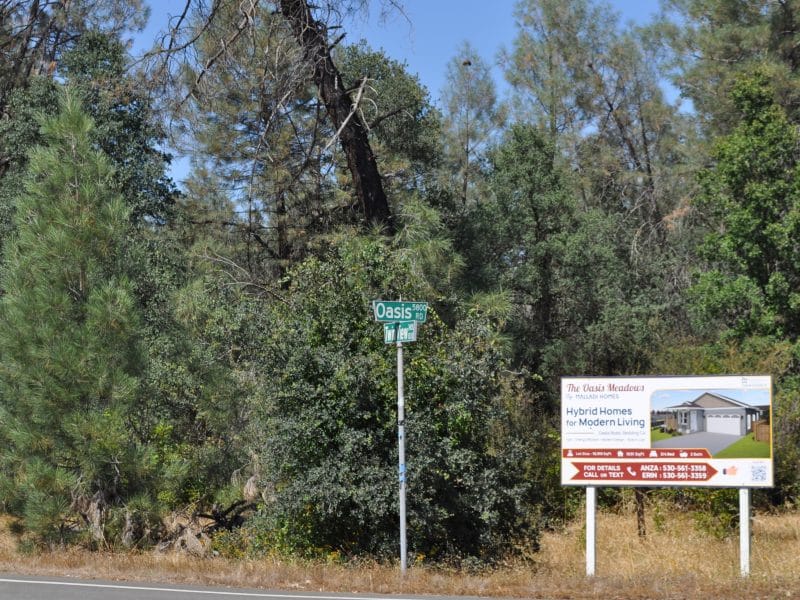
No decisions yet on proposed Oasis Road shopping center project
The Redding Planning Commission has delayed again on approval of a new shopping center near Oasis Road. Commissioners and legal counsel have expressed concern that the project application relies on a 20-year old environmental study for a much different project, a Costco that never materialized.
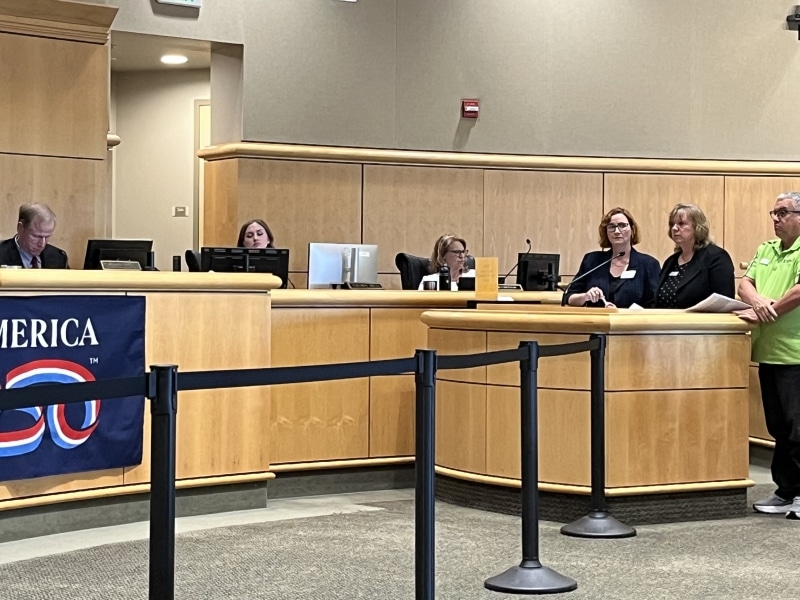
Shasta College reports early success with use of county opioid settlement funds
College officials say Shasta County’s $889,000 investment is helping students stay enrolled, complete degrees and enter the behavioral health workforce. The presentation follows public scrutiny over how the county’s using millions in opioid litigation funds.
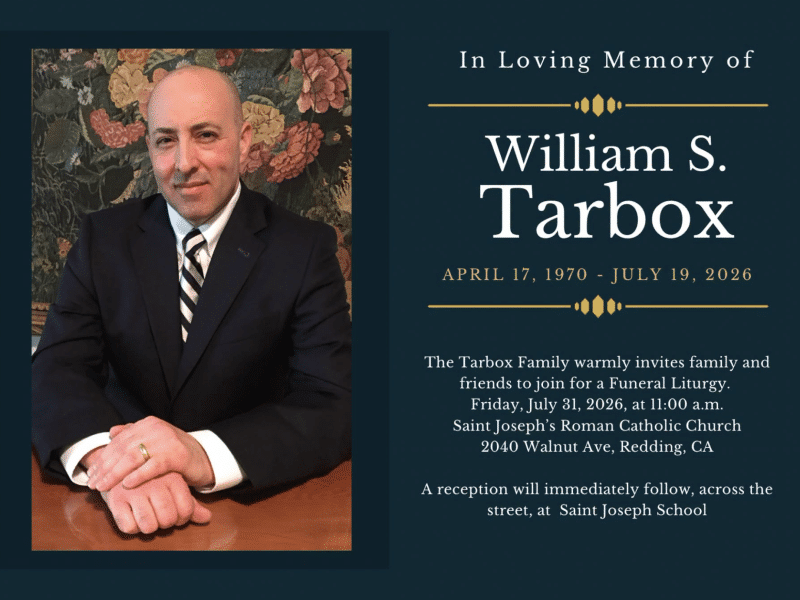
Late City Manager William Tarbox died of cardiac arrest, City of Redding says
Tarbox died unexpectedly on July 19, just months after beginning his role as Redding’s city manager. A funeral is planned for this Friday, July 31. Members of the public are welcome.