
U.S. Forest Service announces fall 2025 schedule for “prescribed burns” within the Shasta-Trinity forest
Throughout this fall, winter, and spring, teams of fire experts will be starting and maintaining controlled burns in areas of forest across Shasta County. The burns are part of land management practices that have long been known to nourish the forest and ease the severity of future wildfires.
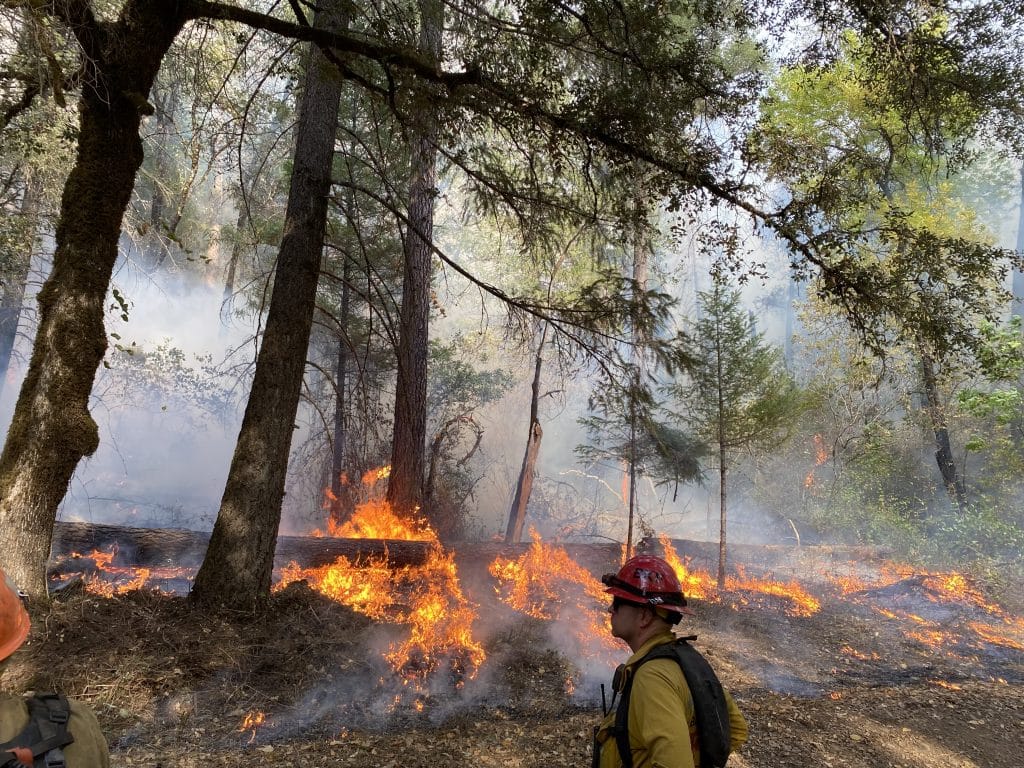
As fire season transitions into the rainy season, residents near the Shasta-Trinity Forest may still encounter smoke in the air and on the roads as the Forest Service begins conducting prescribed burns that will continue through the autumn, winter, and spring.
With the changing weather conditions, the Forest Service has also just lifted fire restrictions on federal forest land, though the agency still cautions the public to exercise caution when tending to campfires.
Prescribed burns are controlled fires, started and managed by a team of fire experts who strategically employ the use of fire to rid the forest of excess dry and dead woodland material. During a prescribed burn, the Forest Service may close public access to nearby areas for several days. Warning signs will be posted along roads leading up to a prescribed burn area.
The ecology of Northern California’s forests has always been fire-dependent. But for much of the state’s history, California suppressed the natural cycle of wildfires, preventing the flourishing of fire-dependent flora and fauna, and allowing kindling to accumulate, accelerating California’s woodland blazes.
For millennia, indigenous people have intentionally set controlled fires, something research shows has been an extremely effective means to nourishing the Klamath Mountains’ biomass. But as settlers — from Spanish conquistadors to American prospectors — encroached on Native land across the west, tribes were displaced and their burning practices outlawed. Only since the 1960s has the Indigenous tradition of land management through regular controlled burning begun to be embraced by North American ecologists. Today, the Forest Service has begun to collaborate with Yurok and Karuk people to explore how to better utilize prescribed burns.
In Shasta and the adjacent counties, the Forest Service has developed a schedule for the geographic areas that will be undergoing controlled burns over the next several months. Organized by ranger districts, the burns are categorized into “broadcast burns” and “pile burns.” A broadcast burn is a fire that is allowed to intentionally spread through a specified area, while a pile burn involves setting fire to piles of dead vegetation.
The first burn in the Shasta Lake Ranger District will begin in autumn, west of Lakehead, south of O’Brien Mountain, and in multiple sites along 1-5. Residents are encouraged to stay updated on prescribed burn schedules by utilizing the Forest Service’s website and social media, as well as InciWeb, a federal fire tracking website.
Do you have information or a correction to share? Email us: editor@shastascout.org.
Comments (1)
Comments are closed.
Related Articles
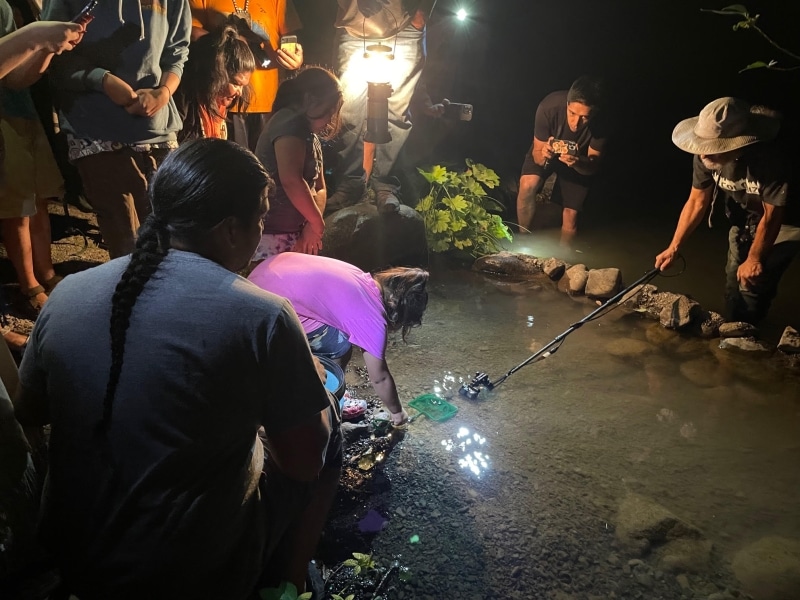
Wintu people say proposed reforms to a state list of tribes is erasure, threatens their homelands
A state commission’s proposal to remove Wintu and other federally non-recognized tribes from a consultation contact list would leave cultural sites vulnerable to destruction, tribal members say, and represents a form of unconstitutional discrimination.
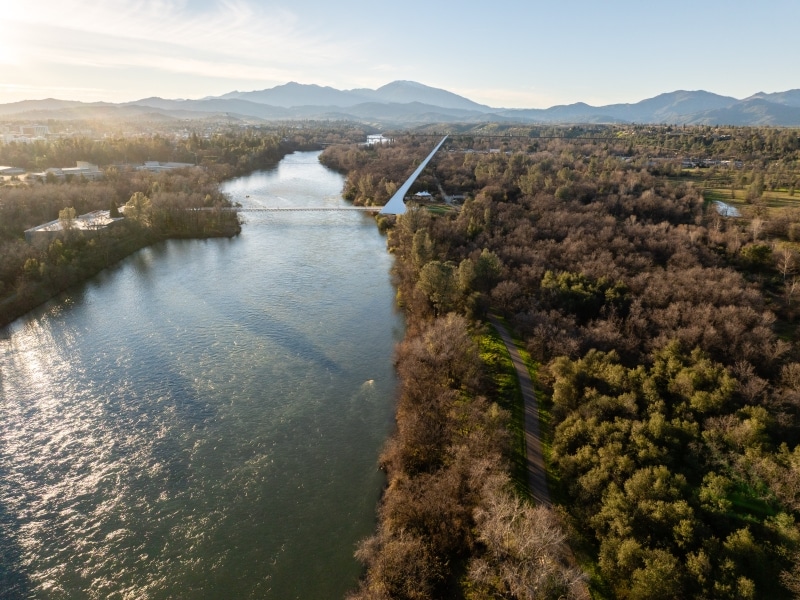
Decision on city financing for the Ironman competition tabled by Redding City Council
The council’s decision followed a tense discussion on financial spending. The item will be brought back into discussion on Feb. 17. An Ironman official says he’s not concerned about the delay.

Shasta man had illicit marijuana grow and underground bunker in addition to illegal weapons, CHP says
A press release from the California Highway Patrol alleges that Michael Kamfort was operating an illegal grow when he was arrested on weapons charges, including manufacturing a “ghost gun,” on Tuesday in Anderson.
Mecca.MtB thanks you USDA!!!