
Underground Good: Enora Ilboudo
“Aside from clothes and food, sometimes we’ll hear from people who don’t feel connected to their families or need to talk to someone and don’t have anyone else they can go to. People are finding their community here at the center and that keeps me motivated when I’m working here.”
Editor’s Note: This Opinion piece is part of our Underground Good series, which focuses on providing a window into the mindsets of ordinary people doing good work in their community. It’s written by sociologist, coach and evaluation consultant Sharon Brisolara. You can find the rest of our Underground Good series here. Want to nominate someone? You can do that here.
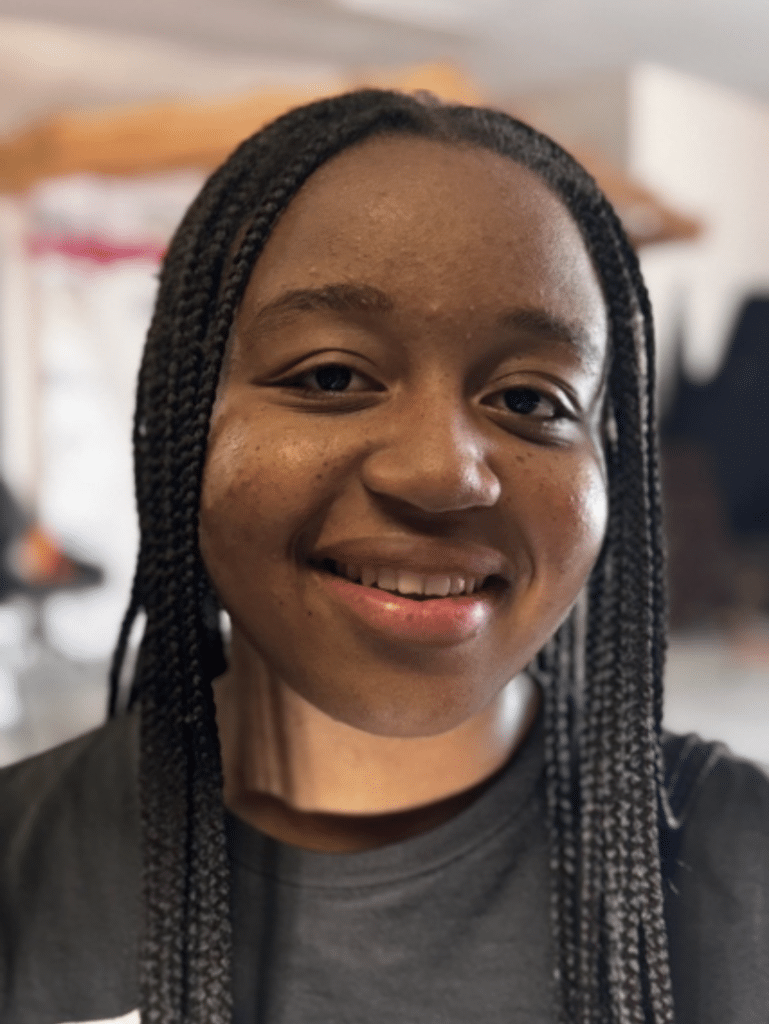
Enora Ilboudo is a junior at Shasta High School and a volunteer for Reciproka, an international organization dedicated to promoting cultural reciprocity, respect, and understanding. Reciproka recently opened a community center in Redding at 550 Cypress Avenue and the organization has been hosting events, renting space to groups, and serving the community from this location ever since. Enora’s mother, Renee Myriam Kalmogho, is the organization’s director and founder. Enora and her sister Shiloh have played important supportive roles in establishing the center and engaging community members connected to, and served by, Reciproka.
Hello, Enora. How would you like to introduce yourself to readers?
Hi. I’m Enora Ilboudo and I’m a volunteer at Reciproka, the Reciprocity Center, and I’m a junior at Shasta High School.
What is Reciproka? Can you tell us a little about the center?
Reciproka is a place where people come together and exchange things with each other, learn about different cultures, or just receive aid or the help that they need. Sometimes people come to get their feelings out. This really is a connecting place in culture, a space to get things you need like clothes, and sometimes food. The center is also a space for anyone to experience community or learn more about other cultures and reciprocity.
How do you define cultural reciprocity?
I would say it is an exchange of cultures, from small, simple things, like how somebody might eat dinner, to bigger things, such as how they might dress or speak. That’s how I see it: you’re exchanging things that one culture does, that another culture might do differently, and you’re learning about each other. Cultural reciprocity means learning new things — and you might even pick up some ideas or skills — and in that way you’re spreading cultural knowledge. You might discover that you like learning about other people’s cultures. That’s how I see cultural reciprocity.
Reciproka is focused on sharing cultures. We have culture here in Redding, but it’s nice to introduce people to other cultures that they may have no idea about. That is why my mom really likes her annual Taste of Africa event. She’s really dedicated to that and what it can bring to our community. There are actually many more Africans than you might think in Redding, and it’s nice to learn about their cultures. The way I see it, that helps people see different perspectives on all kinds of things.
In what ways do you volunteer at Reciproka?
I do a lot of little things that are needed, like setting up chairs and tables for whatever event is going on, or cleaning up after an event. Often our events are back-to-back, so I help get things ready and my mom may need someone to get something from the store or clean up.
Many people hold their events here. When Reciproka hosts its own events, the outside area also needs to be cleaned up and there are sometimes porta-potties that need to be locked and unlocked and kept operational by refilling paper towels and things like that.
Was there a lot of work to be done when the center was first established?
Yes! Before we opened this was a New Life Discovery thrift store, and they left so many things that the center could have still operated a thrift store. There were clothes hangers and a lot of clothes, shoes, random trinkets, jewelry, cups, clothes racks, and pieces of furniture. We donated some of the furniture and clothes and then started a community closet, which is still here. Anyone from the community can come to the community closet and get clothes for free. People can make a donation, but that’s not necessary. We moved a lot of clothes and furniture to a storage room we have at the center. And we have used the chairs that New Discovery left and have bought more for events.
We had a lot of cleaning and decluttering to do at first, and there were other changes my mom wanted to see in the building. For example, we took out the carpet and painted the walls and some of the ceilings. We covered the windows with blackout shades, because there are so many windows and it gets really bright in here
Reciproka hosted its most recent Taste of Africa event in May. Can you explain, for people who don’t know, what the Taste of Africa event is?
It’s like what the name suggests: you’re getting a taste of what Africa is like. You get to try different foods, for one thing. At this most recent event, we had more African countries represented than ever. We had special cultural tea and coffee from Ethiopia, fish and other food from Burkina Faso, Nigerian fufu, and Senegalese and Caribbean foods too. Musicians come and play so you get to hear different music, experience dancing from other countries, and see different instruments that people use to make music. It’s really cool.
There are a lot of instruments you wouldn’t expect. In Burkina Faso, where my mom is from, they use a calabash. It’s a gourd which is used both for drinking water and also to make music, when beads are strung around it. You also get to experience the way people dress. I really like dressing in my African clothes. That can feel kind of weird to do in certain settings, so I find it refreshing to be able to express my culture during Taste of Africa and to see other people’s cultures. There are also vendors that sell beautiful clothes, jewelry, and instruments. At the event, you get to meet people from all over Africa, learn about their cultures, try their food, and see how they dress. People share the languages of their homelands, too. Overall, it’s a nice display of what Africa is. The event has grown and become bigger every year. This year we hosted Burkina Faso’s ambassador to the United States at the event. I was so honored to have him here for a Taste of Africa. My mom has worked really hard to make this event a success and it’s great to see the impact she’s making in Redding and all the people who want to support her and the center.
What other kinds of events has Reciproka put on and hosted?
We have been hosting a United Way group that teaches youth how to choose curiosity over judgment. We have had youth nights with movies or games. We’ve had dance classes and recently we had a Native American film festival focused on helping save the salmon and learning about the role of the salmon in Winnemum culture. We’ve even hosted birthday parties, celebrations of life, cultural events, health fairs, and organizational meetings here.
Does the center feel like a family enterprise to you, or like something you support?
I definitely feel like it is a family enterprise. My mom has led Reciproka for many years now, but since it has established a center, my sister and I have been very involved and that has been really great. I know some people might not like to do as much as we do here, but I really enjoy helping my mom and being part of the way she helps the community.
There’s so much I’m learning from events, hearing what youth have to say, and experiencing other cultures. My sister and I do so much here, and we’re part of every event, whether we are involved in organizing or participating. It has definitely become a family enterprise.
I didn’t know before how many people actually need a community center, and that a center can be so many things for so many different people. There are things that I might take for granted that people need. Aside from clothes and food, sometimes we’ll hear from people who don’t feel connected to their families or who need to talk to someone and don’t have anyone else they can go. People are finding their community here at the center and that keeps me motivated when I’m working here.
You’re getting close to graduating from high school and you’ve told me you are considering becoming an orthopedic surgeon. Is what you are learning through your work here shaping what you want to do after you get your degree?
I definitely think that I am learning a lot about communicating and interacting with people that I don’t know. That is something I struggled with at first because I am usually very quiet and reserved and don’t really talk to people I don’t know. Obviously, at a community center you’re meeting people you’ve never met before, who want and need different things and come from so many different backgrounds. I’m learning how to interact with them and learn more about each individual. That is definitely important in the healthcare field; you may not know this person, but you have to take care of them.
What have you learned about yourself?
I really like to try to find a better way to do things. Often, we will have several people working on a problem and they come up with a decision, but usually there is a better or easier way to solve the problem. That could be a way of setting up the tables, for example. I think that I’ve gotten really good at finding better ways to do things to make it easier for everyone in the long run.
Between your studies, the center and being on the soccer team, you’re pretty busy! Are you volunteering elsewhere?
This is my main activity, but I also help lead the youth group at St. Joseph’s. It’s pretty fun and we only meet twice a month, so it’s not very taxing.
What makes a volunteer opportunity meaningful?
I appreciate that volunteering can help. There are so many different ways you can volunteer to reach a goal and so many different things that you can do, big or small. I like seeing the results of volunteering, how things turn out in the end. That’s what I appreciate most.
Volunteering is most meaningful for me when I get to directly impact someone in a positive way. At the center, you might be able to help someone find a piece of clothing that they’re looking for in the community closet and they may be really excited that they found a certain pair of pants or shirt. It’s great when I get to see that directly.
There have also been a few times when somebody came into the center when it was cold. One time during the the winter, when we were watching a movie, a man came in and got some coffee to warm himself and charged his phone. A lot of people don’t have places where they can charge their phones and phones are really important in everyday life — for everything! He stayed for a while and watched the movie with us. I remember him talking about his life. He was really young. He was really into the movie, and seemed really happy while he was here.
Is there anything you would share with people who haven’t volunteered yet, or haven’t been to the center?
For people who haven’t volunteered, I’d say I think you should volunteer because it helps a lot of people. Even the smallest thing you do, like refilling the papers in the bathroom, helps a lot. It can give the person who runs the organization more time to do things and help a place like the center run smoothly. There’s always something that you can do that can have a positive impact.
As for the center, anyone can come by and visit. What we do here is pretty cool. If you stop by even quickly, you can see what we have to offer here and learn about upcoming events or see if you would like to have an event here or volunteer some time. Volunteering is pretty simple, and, like I said, small efforts help a lot.
Do you have a correction to share? Email us: editor@shastascout.org.
Author

Comments (5)
Comments are closed.
Related Articles
Underground Good: Sara Hoxie
‘Will had so much energy and love to give. He’d walk into a room, and his personality would drive everything there. He kicked up a lot of dust, and we’re just not going to let that dust settle.’
Underground Good: Steve Woodrum
“As a poll worker … you notice that many people, when they come through the doors, all of a sudden, they change. They become more dignified. You can see that they are getting ready to vote, and they rise to the occasion.”
Underground Good: Terri and Gary Orwig
“I love to encourage people to become volunteers. There are so many opportunities out there that could match your interests. If they have time, it’s such a fulfilling thing for your spirit, for your heart. That’s important to me. I want to leave this earth knowing I did good work, that I helped people.”
Reciproka sponsored a meeting with the Superintendent of schools, teachers and retired teachers and African American students on the topic of school safety and harassment. I learned of the widespread use of the N word and the honest brave truth told by young students and their parents must be addressed. I see positive work coming from this conversation with the professionals to address this and look forward to be part of the solution. Every student should be called by their name and their name only! Great learning and conversations happen in safe spaces free of bullying and harassment. Students trained to command respect for all is key.
Enora Ilbouda, poised, interested, kind represents Reciproka’s well working with people throughout Redding’s community. Reciproka is an important center which is safe and welcoming. I have attended Taste of Africa and experienced wonderful conversation and learned about this continent in deep ways from professors, philosophers, musical instruments, poetry, wonderful art, food, music. Enora multi tasked through the three day festival. The Welcome of the Run4Salmon a prayer run to bring back the wild Chinook Runs back to the McCloud River was an exciting sharing full of information from traditional science from Chief Caleen Sisk, Winnemem Wintu and music and rap from Desi Hatp and Stewie G who will return on September. Enora introduced the presentations and acts with her sister. Reciproka is the most exciting place in Redding and Enora is in the thick of it
Wow! Sounds like a fantastic organization. Impressive that the Burkina Faso Ambassador visited Redding.
I hadn’t known this organization existed before today; and in Redding!
Enora, wow, impressive! I love this family’s kindness and knowledge that a sense of shared community is worth working for, nurturing and beneficial to all involved. Good works, good food, good people. What a win for Shasta County.
Reciproka sounds like an amazing organization, with an amazing family at the helm here in Redding. I see from the website that its African office is in Burinka Faso. That’s got to be a challenging place to engage in philanthropic work, with the Islamic insurgency and the military-led government’s response. Both sides have committed atrocities.
.|
I’m sorry I missed out on Taste of Africa. There has been a West African food vendor at Redding Farmers’ Market off and on, and their food and juices are delicious. I’ve yet to try the new Ethiopian restaurant on Eureka, but it’s in the queue.