
What’s A Living Wage? And Do Shasta County’s General Unit Staff Make One?
Almost half of Shasta County’s employees have been striking since May 1. They’re asking for a living wage. Here’s what that means. And how the County’s wages measure up.
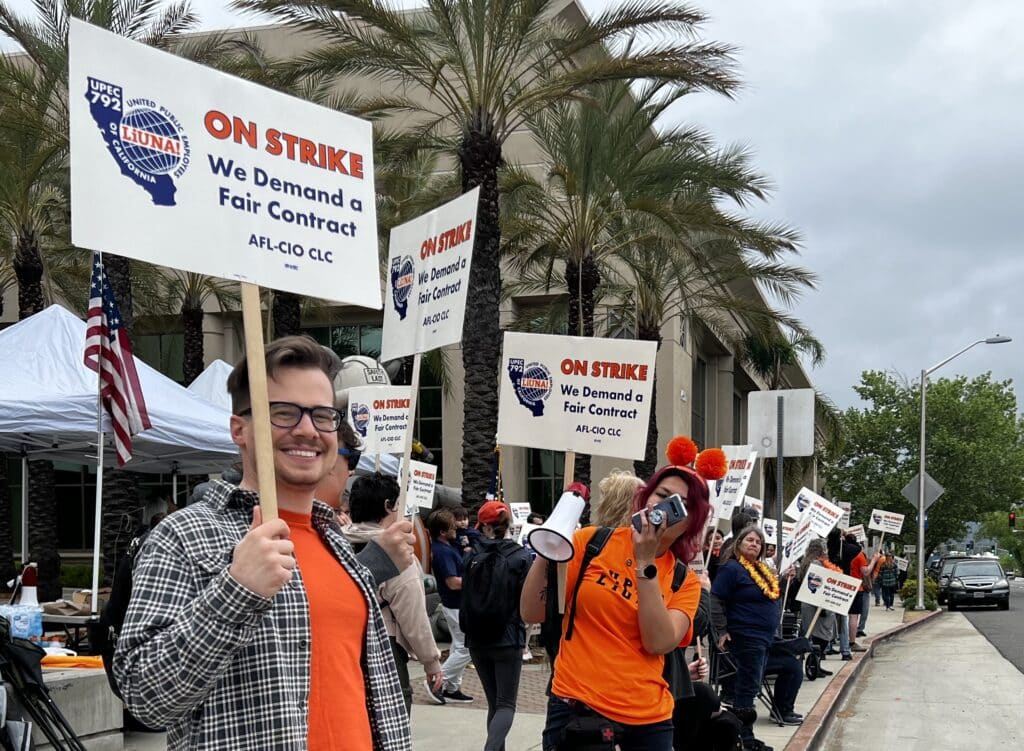
As the bargaining unit representing nearly half of Shasta County’s staff enters its third week of striking, some community members are asking whether they’re demanding too much.
General Unit staff, who are represented by United Public Employees of California Local 792, have asked for a 15% wage increase this year. They say the raise is needed to compensate for last year’s inflation of around 8.5% and similarly steep hikes in their insurance premiums.
In public comments during County Board of Supervisors meetings, some UPEC GEN staff members have said that their current wages leave them needing the same public assistance — including food stamps — they hand out to others in the course of their daily work.
Minimum Wages and Federal Poverty Guidelines
The legal minimum wage, which is $7.25/hour nationally and $15.50/hour in California, loosely correlates with what are known as the federal poverty guidelines.
The idea of a poverty formula was developed in the 1960’s by economist Mollie Orshansky, who noticed a flaw in her formula years before the government adopted it as a federal standard in 1969.
Orshansky’s formula used the cost of food to determine the minimum salary needed to keep an individual or a family out of poverty in their specific geographical area.
According to reporting by the New York Times, her formula was based on a survey in the 1950’s that indicated that the cost of food made up about a third of a family’s annual income, after taxes.
That federal guideline, which has not been updated other than to account for the changing cost of food, is still used by the U.S. Census Bureau to determine poverty statistics.
In 2022, under that standard, about 14% of Shasta County was living in poverty.
But many more are poor. That’s because the the federal poverty guideline is only a very rough estimate of the total cost of living calculated from food costs alone, and therefore doesn’t accurately reflect the costs for other important and expensive necessities such as housing, transportation, health insurance, and child care.
The MIT Living Wage Calculator
In 2004, economic geographer Dr. Amy K. Glasmeier developed the MIT Living Wage Calculator to address the deficits in the federal poverty formula.
The Living Wage Calculator uses not only the cost of food, but also costs for child care, health care, housing, and transportation to determine the salary levels needed to cover basic life necessities, breaking this information down by region, all the way to the County level.
The Living Wage Calculator also clarifies the differences in wage levels needed to support individuals with and without partners and children.

So what’s a living wage in Shasta County?
For an individual, working full time, without a domestic partner or children, the MIT Living Wage calculator places Shasta County’s living wage at $17.19 an hour.
That’s nearly a dollar higher than the lowest salary step for Shasta County’s lowest-paid employees, including assessor-recorder specialists, assistant housing program specialists, community mental health workers, medical billers, business office clerks, claims specialists, and others.
If any of those individuals without a partner are also supporting a child, the salary needed to provide a living wage, according to the Living Wage Calculator, more than doubles, to $36.45.
That’s significantly more than many of Shasta County’s UPEC GEN staff, including accounting clerks, staff analysts, eligibility workers, or elections technicians will ever make, even at the highest possible salary step, according to data provided by Shasta County.
On May 9, the Shasta County Board of Supervisors voted to impose a wage increase of 2.5% on Shasta County’s UPEC GEN staff. That wage increase means Shasta County’s lowest-paid employees, working at the lowest salary step, will see their salaries rise to $16.72 an hour, before taxes and insurance costs.
UPEC Gen continued striking after the wage increase was imposed. They’re still asking for a 15% salary increase, which would bring the hourly wage of the County’s lowest-paid employees to $18.76.
Shasta County’s Board of Supervisors will meet again tonight, Tuesday, May 16 at 5:30 pm. The Board’s open session agenda includes considering considering whether to establish an ad hoc committee that might involve supervisors more directly in bargaining unit negotiations. Supervisors also plan to discuss UPEC GEN negotiations during the Board’s closed session.
Today is also the last scheduled day of the UPEC GEN strike, which was extended last week. Staff absences during the strike have caused the closure of a number of Shasta County’s Health and Human Services Agency offices over the last two weeks.
If you have a correction to this story you can submit it here. Have information to share? Email us: editor@shastascout.org
Author

Related Articles
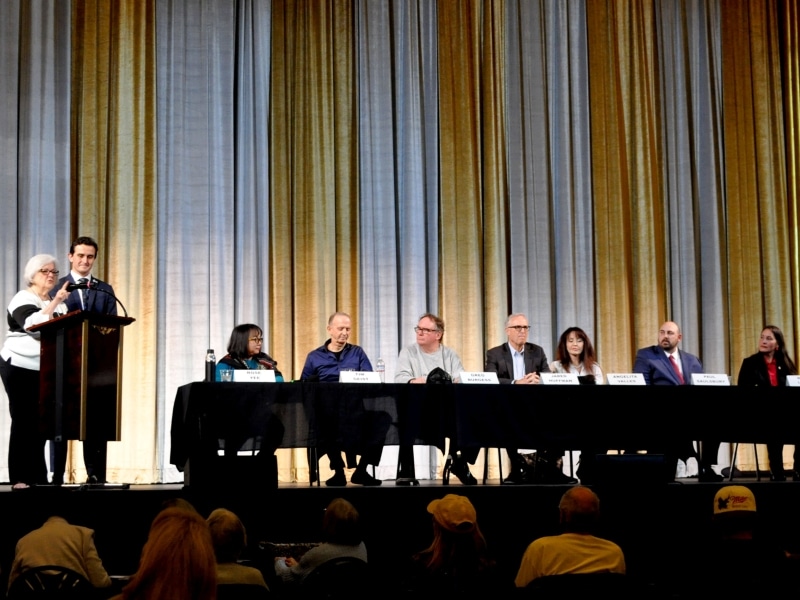
Congressional District 2 hopefuls court Shasta voters ahead of June primary
Candidates for California’s District 2 congressional seat — which will represent Shasta under newly-drawn Prop. 50 lines — appeared in Redding for a forum last night. The audience questioned candidates about immigration, voting rights, the environment and how much time they’d spend in Shasta.
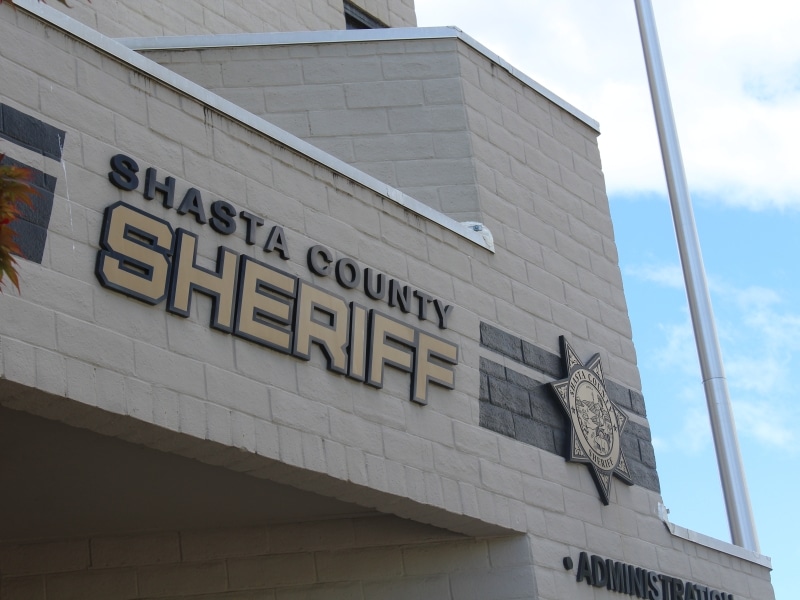
Documents show the Shasta Sheriff’s Office attempted to enter an agreement with ICE last year. Doing so would have violated state law
The sheriff’s office took actions to enter what’s known as a 287(g) agreement with ICE last May, but the process appears to have been halted. ICE’s 287(g) program, which gives local and state officers immigration enforcement authority, has been making national headlines.

After the resignations of three board members, Cascade Union Elementary School District gains a new one: Jackie LaBarbera
Following a dispute with the superintendent, the majority of CUESD board members resigned over the last week. Shasta County Office of Education Board President Michael Orlicky has appointed SCOE Board Vice President Jackie LaBarbera to fill one of the empty seats, ensuring a quorum.