
Local Activism Highlights Missing and Murdered Indigenous People in what is now known as Shasta County
This week, local Tribal members led a prayer walk to demand justice for missing and murdered Native people, particularly those local to the North State.

“James Wright,” Danita Quinn (Pit River, Wintu, Yana) called out to a group of demonstrators as she held up a poster with a yearbook photo of a little boy’s face. In 1986, when Wright was only 17, he disappeared without a trace. Today, the Pit River community continues to keep James’ memory alive, referring to him as “Little Man.”
Recently, when his mother Florence contacted the Shasta County Sheriff’s Office to inquire about his investigation, Quinn told Shasta Scout, officers said there was no longer a case. The Sheriff’s Office did not respond to a request for comment.

“He’s a cold case, if anyone wants to hold him.” Quinn said, as she distributed Wright’s portrait and others amongst a group of about 50 demonstrators behind Redding City Hall on May 5, a day designated for bringing awareness to missing and murdered Indigenous people (MMIP).
In conjunction with the national MMIP movement, local Indigenous people took action this week to call attention to a systemic crisis on dual fronts. Data shows both that Native people are disproportionately affected by homicidal and sexual violence, and that law enforcement often mishandles or neglects investigations involving Native victims.
During Tuesday’s MMIP event, several of those present at Redding City Hall were direct family members of the missing or murdered featured on posters, many of whom were locals to Shasta and the surrounding counties before they disappeared.
Quinn was the organizer of a five mile prayer walk from Redding City Hall to the Redding Rancheria. She was joined in her efforts by Jack Potter of the Rancheria’s Tribal Council and Morning Star Gali (Pit River, Ajumawi Band) who is the founder of Indigenous Justice. After reaching their destination Tribal members engaged in a sacred fire ceremony and traditional dance and congregated over dinner.
Tuesday’s MMIP walk in Redding was one of three events held locally this week. On May 4, community members also organized a candlelight vigil for the missing at the Sundial Bridge. And on the morning of May 5, before the Redding walk, a similar event was held in Burney. The area now known as Shasta County includes the ancestral lands of the Pit River Tribe, the Nor-El-Muk Wintu Nation, the Wintu Tribe of Northern California, the Winnemem Wintu Tribe and the Redding Rancheria.
The MMIP Legacy in Shasta County
“Jessica Alva was a friend of ours who was killed in 2019,” Gali told Shasta Scout. According to Alva’s autopsy report, her death was suicide by hanging. Her community maintains that she was strangled by her physically abusive partner. Gali also named other local missing indigenous women including Melody Turner, Heather Cameron-Haller, and Angela McConnell.
Explaining that local law enforcement can be slow to act, Gali said it often falls on the members of a local tribe to search for answers on their own.
“In the case of our loved one Nick Patterson, when he went missing… Shasta County unfortunately provided lots of roadblocks and really impeded the search efforts,” she said. “It really came down to the families and the local tribal community that had to coordinate search efforts to look for Nick in the snow.”
Patterson’s remains were only recently recovered, four years after he was last seen alive.
“It doesn’t seem that there was a willingness to do more in terms of a young Native American man that went missing under very suspicious circumstances”, Gali continued. “But when non-Native American people have gone missing, especially here in Redding, we’ve seen those resources activated in a way that our community just doesn’t experience.”
In a May 7 statement from the Sheriff’s Office, Public Information Officer Timothy Mapes pushed back on that perspective, telling Shasta Scout that the Department treats all missing persons reports “with the utmost seriousness” and conducts missing persons investigations “without bias or discrimination.”
“Every report is evaluated and acted upon with the same urgency and commitment to public safety,” Mapes emphasized.
Despite the fact that California is home to the largest Native population in the United States, it wasn’t until 2018 that James Ramos, the first Native lawmaker, was elected to the California State Assembly. Ramos, who’s now the chair of the California Legislative Native American Caucus, was the author of AB 1863. That bill implemented Feather Alerts, a specific tool through which Indigenous communities can alert the public when a Native person goes missing.
Until recently, law enforcement were given broad leeway in determining if a missing Indigenous person met the criteria of a Feather Alert. This meant that local law enforcement and California Highway Patrol Officers had the power to deny a family’s request for a Feather Alert for any reason, including the officer’s assessment of their social or behavioral history. A 2024 amendment to the Feather Alert process now explicitly ensures that Tribal members with mental health or addiction issues will be included in Feather Alerts.
Gali is concerned that bias amongst North State law enforcement is also exacerbating the MMIP crisis. Shasta Scout’s reporting on the initial disappearance of Patterson (Pit River, Atwamsini Band) documented his family’s fears that the Shasta County Sheriff was not taking the investigation into his disappearance seriously. According to his aunt, officers suggested that Patterson could have voluntarily taken off on his own, despite the fact that his loved ones felt it was unlike him to go totally incommunicado.
Five years later, Patterson will soon finally be laid to rest, but Gali feels that “there’s definitely many more questions than answers.”
Historical Context
It’s now been more than a hundred years since a concerted effort by the State of California to forcibly exterminate Indigenous populations. Still, generations of Native people have continued to experience harm at the hands of law enforcement.
California Attorney General Rob Bonta says that the Department of Justice is committed to prioritizing the families of Native people who disappear or are murdered.
“Trust is earned, and we’re doing our best to earn it by showing our respect, by listening, by learning, by being the best advocate and ally that we can be,” Bonta said on a podcast in 2023, “by standing up for the rights and dignities of all people, including certainly our Indigenous people.”
On May 7, the California Assembly Democrats addressed the crisis and proposed solutions on May 7. A recording of the livestream is available here.


5.09.25 4:59 pm: We have updated this story to correct when Nick Patterson’s remains were recovered.
Do you have a correction to share? Email us: editor@shastascout.org.
Related Articles
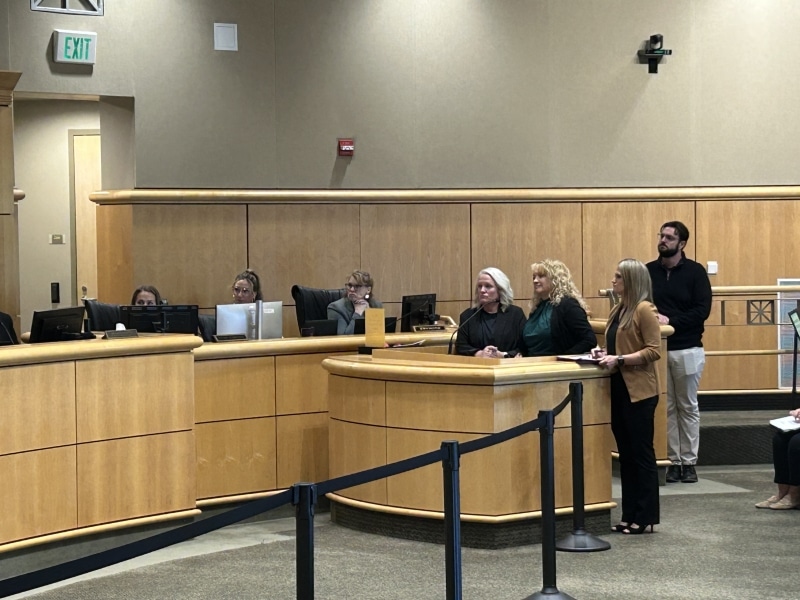
Accountability vs. micromanagement: Shasta board debates its role during wide-ranging discussion
Supervisor Matt Plummer was accused of micromanagement for asking for data in response to an assessment of fire services. Meanwhile, Supervisor Kevin Crye spent nearly thirty minutes questioning a decision by the HHSA director with no such accusation sent his way.
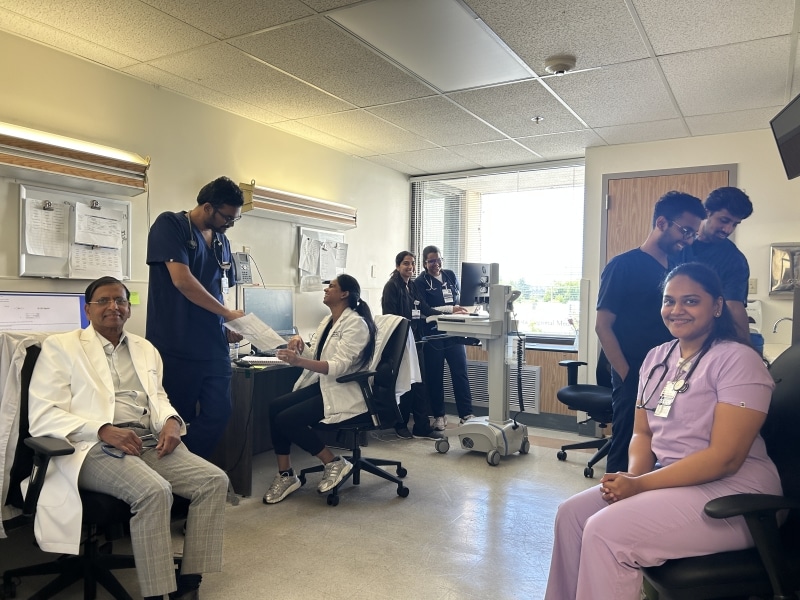
For Shasta, collaboration needed to solve physician shortage
Political division is a barrier to improving healthcare access in Shasta County. Experts say solving the entrenched problem requires working together.
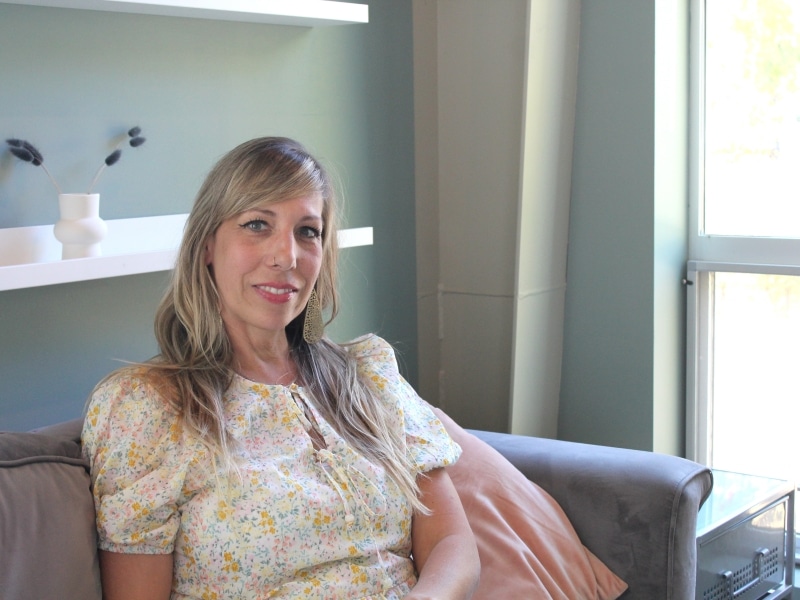
Meet Rebecca Anne Miller for Redding City Council
Three seats are up for grabs on the council this fall, and nine candidates are running. Miller is a substitute teacher with the Shasta County Office of Education and a caregiver with In-Home Supportive Services, or IHSS.