
Nearly a year after being targeted by a violent hate crime, one far Northern California family remains displaced, with little support
Former Igo resident Timothy Ray Thompson was recently sentenced to 11 years in prison after opening fire on the Reyes family, including their children, last July. While no one was physically harmed, the family continues to be impacted. They said their efforts to apply for a U visa were an uphill battle due to delays by county law enforcement.

Editor’s note: We have used pseudonyms for the victims at their request to protect their identities amid ongoing concerns for safety.
Para leer el artículo en español, haz clic aquí.
“The courtroom was packed, and when Mr. Thompson was brought out, I wish there could have been more of an option to face him directly,” said volunteer victim advocate Mayra Monarch.
She was one of the members of the public who attended the sentencing hearing of Timothy Ray Thompson at the Shasta County Superior Court on April 20. Last summer, Thompson opened fire on a mother, father and their three children in front of their home in the small rural town of Igo. His gunfire was accompanied by yells about them about “being Mexican.”
Last month, Thompson was sentenced to 11 years in prison, pleading no contest to five felony criminal threats and admitted to multiple special enhancements, including hate crime enhancements, one for each person he shot at — the youngest of whom was four at the time. He was originally charged with a slew of much more serious allegations, including assault with a firearm and felony child endangerment. The sentencing came after a plea deal that allowed both Thompson and his victims to avoid the harrowing process of a trial.
While the legal system has moved on, the Reyeses continue to live in the shadow of the shooting, which they say has forever changed the trajectory of their family’s life in the community. The Reyes family did not attend the sentencing of Thompson, Monarch told Shasta Scout, because “they fear retaliation from the community. They don’t actually even feel safe in public.”
“I will never forget the look on my children’s faces as we all ran for cover, while you yelled and shot at us,” Monarch read aloud in court, voicing words written by Pilar Reyes, the mother who shepherded her children to a tentative safety inside their home amid gunfire. Explaining to Thompson and the public why the family decided to settle rather than going to trial, Monarch continued: “We cannot bear to think how difficult it would have been for our children to testify against you. But this does not mean we have moved on.”
Nearly a year after the violent hate crime, the Reyes family is still too afraid to return to the land they own in Igo, a tiny unincorporated town of about 700 in Shasta County. According to their mother, the kids are particularly paralyzed by a lingering fear that they’ll be targeted because of the color of their skin. For months, the Reyeses have been displaced to a town some 40 miles away. Pilar’s husband makes the daily drive back to Igo to feed their dogs.
“Prior to all this, my children didn’t even think of any of this,” Pilar said to a reporter during an in-person interview a few days after Thompson’s sentencing. Her eyes were glassy with tears. “And now they constantly ask, ‘Why? Is it bad to be Mexican?’ We are just very hyper-alert to this fact.”
The hate crime itself was horrific, but what came next only added salt to the open wounds, the family said. From beginning to end of the ordeal, Pilar described feeling unsupported by county services, including the Shasta County Sheriff’s Office and to a lesser extent, the Shasta County District Attorney’s Office. The resources that have come to her aid, she said, came “not from law enforcement, not from anyone except a volunteer who decided to guide me through everything.”
When the shooting first took place in 2025, the sheriff responded by publicly decrying the incident in a statement that included the words, “hate has no home in Shasta County.” Many community members responded to the public announcement by saying that California’s specialized category of hate crimes should not even exist. The sheriff’s post was also released after the department had already publicly disclosed the cross streets of her family’s address in a press release, a decision that left Pilar feeling extremely exposed and vulnerable, she said.
In the months following, Pilar recalled how a neighbor near her Igo home had posted information about the case on Facebook as it unfolded, after which the family started to receive threatening messages from friends of Thompson.
“None of us feel safe going back to that property,” she said.
It was only because of Monarch’s help, informed by news reporting, that they were able to find temporary shelter at One Safe Place — for a term of 45 days. When the time was up, Monarch said she “tried everything” to ensure an extension, worried about both safety and finances.
Adrienne Cushman, the chief program officer for One Safe Place, said by law the organization can not affirm nor deny whether any specific individual or family, such as the Reyeses, had received services at the emergency shelter. But drawing on a One Safe Place policy, she clarified that 45 days is the standard time period for families facing an imminent threat, and that extensions are not routine.
Cushman added that One Safe Place’s policy is to approach the transition out of the 45-day period thoughtfully, “particularly given the realities of the housing landscape and the unique needs of each family.”
Asked about the difficulty in seeking services that Pilar described and what services are offered to victims more generally, district attorney spokesperson Briona Sisneros referred back to a statement the agency provided to Shasta Scout last year after the shooting.
“The Shasta County District Attorney’s Office – Crime Victims Assistance Center (CVAC) attempts to reach out to victims in multiple ways,” she wrote by email, stating that a victim advocate was assigned to the Reyeses after the DA received the case in July.
She added that one such resource offered to victims is financial support from the California Victims Compensation Board.
“There is an application and verification process so access to the benefits of the program may be slightly delayed due to the constraints of a Statewide program,” Sisneros said.
As victims trying to mitigate the sustained trauma of a hate crime, the Reyeses are not alone. The need for a continuum of services and more comprehensive guidance on what government resources should be made available in the aftermath of such a tragedy is something that the California Civil Rights Department has been actively tracking.
Just last month, the Commission on the State of Hate hosted mental health clinician Pardeep Singh Kaleka, whose father and six others were murdered by a white supremacist during a mass shooting at a gurdwara in Wisconsin in 2012.
His account of the impact of that event illustrated his fear of returning to the scene of the crime. His remarks indicated the need for communities to make more proactive efforts to uproot animus from their communities through education, rather than just addressing discrimination after somebody has been targeted, hurt or killed.
“One of the scariest moments of my life was the first time that I walked back into the Sikh temple for the first time after the shooting happened,” Kaleka said. Reflecting on the incident, he advised people to “[challenge] the underlying narratives, not just reacting to incidents. Anti-hate efforts can better disrupt the cycle that turns bias into violence.”
For the Reyeses, the bureaucratic ripple effects have continued. The family is in the process of obtaining a U nonimmigrant status visa, or U visa, a specialized visa allocated to immigrants who have been the victims of serious crimes such as felonious assault, extortion or trafficking. According to Charles Kuck, an Atlanta-based immigration lawyer and adjunct professor at Emory Law School, a U visa lasts four years and has been a “wildly successful” stepping stone toward eventually getting a green card.
That is, if it’s ever approved. The federal government only allocates 10,000 U visas per year, and the waiting list is massive, Kuck said, adding that he’s gone through the process with hundreds of clients. The application requires a police report and sign off from a law enforcement agency — something that Monarch says the sheriff was totally unresponsive to when the Reyeses and their advocates began the process last year shortly after the hate crime occurred.
Emails shared with Shasta Scout by Monarch show that the DA provided the family with a letter of support for the U visa in September, and by February, a county prosecutor had coordinated with the sheriff’s office to complete their parts of the application — about seven months after the shooting. The Shasta Sheriff’s Office did not respond to a request for comment about how officers communicated with the Reyeses during their visa application process.
Pilar said that her family is slowly working towards recovering from the life-changing event. She said she now feels brave enough to go to the grocery store, something she feared for months after the incident. And she noted how accommodating her children’s teachers have been in ensuring they feel safe in the classroom — though they continue to be haunted by night terrors.
Reflecting on the past 10 months, Pilar reiterated what sources close to the family told reporters last summer.
“In a nutshell, there’s a big lack of community resources for these types of cases,” at least in Shasta.
Do you have a correction to share? Email us: editor@shastascout.org.
Comments (8)
Comments are closed.
Related Articles
Haven Humane opens disaster response center built with Zogg Fire funds
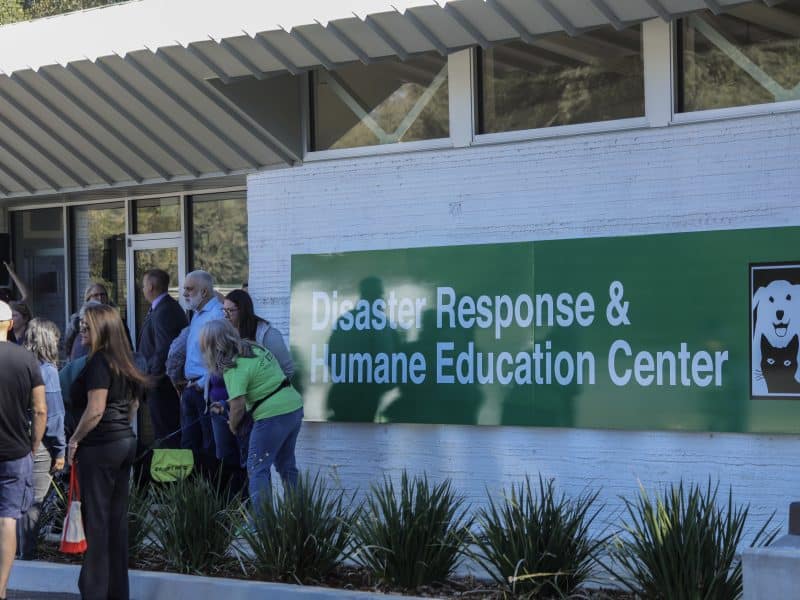
The animal welfare organization opened a new disaster response and humane education center today next to its existing facilities in Anderson. The center was built with funds from the Zogg Fire that were designated for animal care in honor of Karen King.
Redding Rancheria PAC spends $32,000 to support four city council candidates
The Tribe said it created a PAC, or political action committee, to support city council members who understand the relationship between the Tribe and the city. Those candidates haven’t received direct donations of funds; instead, the PAC has provided indirect support through media campaigns.
Power shutoffs impacting thousands of customers across Shasta County
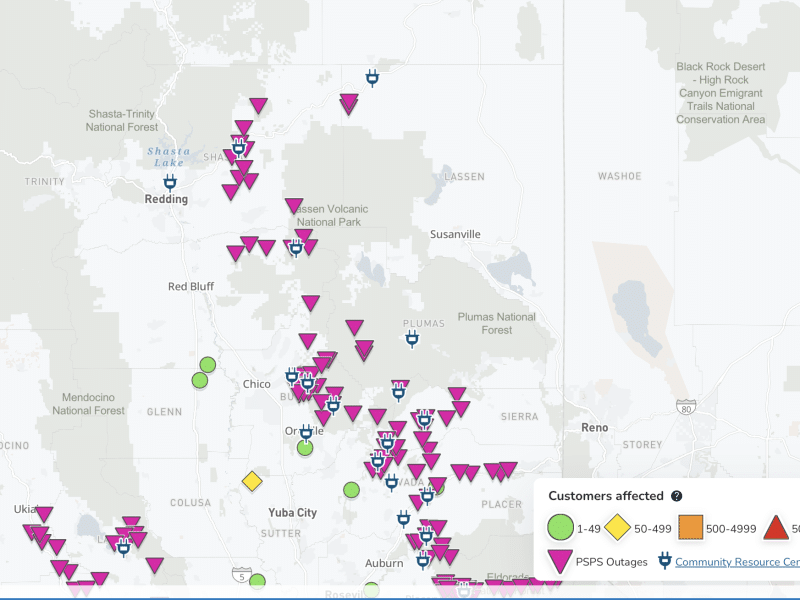
PG&E shut off power for California residents earlier this week due to wind and dry conditions, which could lead to dangerous wildfires. Shutdowns are expected to continue until Saturday morning.
For some reason this story reminds me of the quote “those who cannot remember the past are condemned to repeat it”.
.
This has already happened several times in the past where fear and ignorance led to the justification for committing atrocities against other people.
.
Look, you want to get criminals off the street, fine let’s get criminals off the street.
.
But it needs to be based on facts, and not based on fear or other feelings, so that the innocent don’t get caught up with the wicked.
.
Want things to get better than all this crazy stuff that we all are currently going through? Start demanding facts before taking a course of action. Demand real, hard, concrete facts, and accept nothing less.
.
It might kind of sound like I’m preaching. But before you just dismiss what I say, genuinely ask yourself if what I say is true.
To clarify, when I say make it based on facts, I mean make it based on whether someone has actually broken a criminal law and thus a criminal.
.
Don’t make it based on labeling a whole group of people indiscriminately.
It’s concerning to hear that the sheriff’s office continues to show true colors. Wanting an ICE agreement against state law. Then boldly stating “no hate crimes “ but when push comes to shove it’s the DA and victims advocate that must push the matter with a resulting “no comment”. This behavior sounds systemic.
Can you please investigate what people can do to help this family?
I’m absolutely with you on this idea! I remember being horrified when this happened and I still am, and that they are still in limbo after such a traumatic, dangerous experience, when they should be somewhere feeling safe and healing is just really saddening, (any crime victim actually but especially involving vulnerable people) I hope there is a way to help, even just a little!
This is a 100% true personal story:
.
I have a wonderful employee who was undocumented and working in construction (MX). One day he was beat up and now he has been in a 5 year process to obtain his his victim visa. Permission to work granted immediately, and then join the cue for rhe long process of receiving a green card. It been very expensive legal process for him, but there is a goal that will make it worthwhile. I compare it to the “fiance visa” where a beautiful person has to marry someone, uh, not on their level to get a greencard. Is my worker really traumatized? Debateable. He told me he’d be more traumatized if he had to stay illegal forever. He is pragmatic and a survivor and a real dude. Respect. He has a job with me forever if he wants it. Is it a wink wink situation? For sure. You got beat up so now you’re a citizen. Good for you sort of, but we know what’s going on here. My best to the family. That pos redneck gave them a golden ticket.
.
My philosophical argument is that hate crime designation devalues all life. We saw this with BLM. We see this with the native american reservation system. We see this with gay bashing laws, and domestic abuse. The reason behind the crime may helps us identify shortcomings in the organization of our social services, but the penalty cant be based on the social motivation of the criminal. We have come so far from clean, pure, law and order and equal rights.
Pure law & order, huh?
.
You do realize that there was a bipartisan Senate border security bill back in 2024? It would have provided some legal pathways while at the same time tightening current asylum laws. It would have also increased enforcement.
.
This bi-partisan bill was given up on in 2024 after Donald Trump urged Republicans to oppose it.
.
Why?
.
Because he wanted to run on the damn issue.
.
If it had passed, it would make most people happy: tighter laws and enforcement, and at the same time making updated legal pathways for immigrants who actually wanted to become legal citizens.
.
It’s what most people would have called a win-win situation. But instead of that, we are stuck with this current mess where people are labeled all the same, no matter their circumstances.
.
And before people accuse me of being for open borders, I am not. But I do think our current immigration system is broken I needs to be fixed.
It really takes a coward to pick on innocent people.