
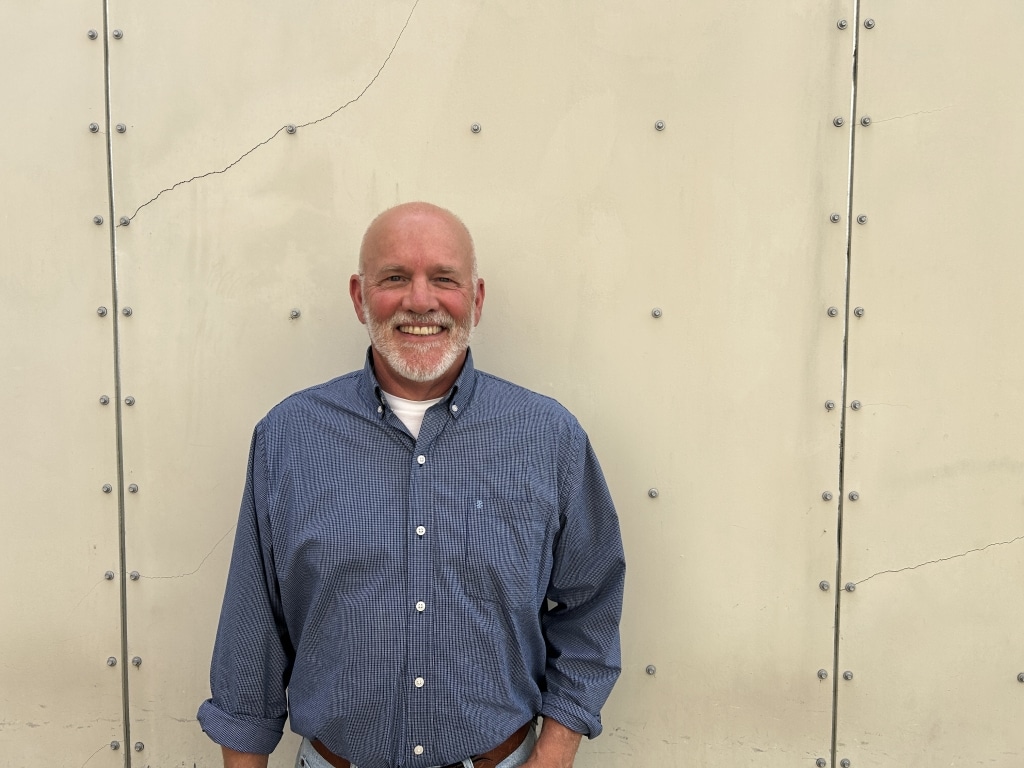
Meet Gary Oxley for Shasta’s District 5 Supervisor
There are three candidates running for Shasta County’s District 5 board seat. Gary Oxley says he’s running to ensure that families who have been separated from their children are offered appropriate reunification services by Shasta’s Health and Human Services Agency.
Editorial Note: This story is part of Shasta Scout’s citizen-powered election coverage. Our election reporting flips the script by asking candidates to answer questions from the community. We’re conducting long-form, in-person interviews that last about an hour each and utilize questions drawn from a reader survey. Candidate responses have been curated and paraphrased for this format.
Tell us briefly about yourself. What’s your current role? What background experiences or concerns led you to run for supervisor?
I moved up here in 1995 with my three sons and met my wife, Wendy. We’ve been married since 2022 and are raising her two kids and have a couple of grandkids.
I am retired now, but I’ve been a registered nurse for 32 years. We also owned our own business, Rejuvenate Pools and Spas, until the economy tanked and the tariffs hit and we sold it. I’ve been an Army Reserve medic for eight years. I was chairman of the California Rifle and Pistol Association, and I helped co-author the Second Amendment resolution in Shasta County. I was also the track coach for Bishop Quinn High School where my sons went to school.
Around Christmas, several people came to me and asked me to run for supervisor. I decided to run because of what’s happening with Child Protective Services, decisions that are being made by the Health and Human Services Agency here in Shasta. Evidence has come to us that reunification services are not being offered to families, even when they take all the required steps. I hope I can make a difference with that.
I don’t have political experience, but I have a lot of relevant leadership experience. I was a regional director for Vibra Hospital of Northern California, in a role connected to 13 hospitals. I know how to lead people. I know how to assess problems, make and implement plans and evaluate those plans for effectiveness. Those are crucial skills in government, too.
I actually began leading programs when I was a senior at Chico State, where I worked with another student to put together an AIDS education week. We hired a theatrical group from San Francisco to come up and perform. And we went to the schools throughout the county teaching students about safe sex and how to prevent HIV. This was in 1994 when AIDS education was still new. We were given the Outstanding Contribution Award from Chico State.
The role of supervisor involves a public decision-making process that begins with agenda packets followed by a public discussion and vote. How would you increase transparency and accountability in that process? How would you reduce conflict on the board and with the public?
There’s one key word here, and that’s communication. The board has to receive adequate information, and then they need to be able to give that information to the public. The public needs to access that information and give their feedback. And only then can there be real discussion about how we move forward.
One of the first things that I would like to do is to update our policies to ensure we have the board’s agenda packet out five days before the meeting. I also think the agenda needs to be reduced to fewer items so the board can have a reasonable discussion on those items. Then we should add more meetings, which should be equally distributed between morning meetings and evening meetings so that everyone can participate.
As far as respect, respect starts at the top and moves down. So first of all, as a supervisor, there needs to be respect in our tone to each other. Our backgrounds are different, but open communication skills are important. Eye contact is important. And education is important. Education for board members and for the public.
We’ve lost the art of leadership and the skills of kindness and respect. When I was younger, you knew that you never walked on somebody’s grass. You walked on the sidewalk, or the little walkway that goes up to the front door. We’ve lost those skills, those courtesies to each other, and I would love to see those come back.
We also need to do something about the anger in the room. I really don’t know where that’s coming from. But what if the board sat down with the biggest agitators and asked how we could fix their feelings of hurt and violation? They have a conflict with the board. You’re only going to fix that by addressing it head on. You might need to have people leave the room at the moment, but then you need to bring them back and come back to the issue and talk it through. You can’t just kick people out without seeking some kind of conflict resolution. Maybe it will take us six months to resolve the issues they have. But how much more efficient will we be as a board when we do?
I would also like to give the people who speak on a given topic the opportunity to speak a second time after board discussion. Those people who had the courage to get up there, give them a second chance to say more. So now you’re furthering the dialog and we can make a better decision. This is not rocket science. It’s about learning how to communicate and not being afraid to go outside the box.
What is a supervisor’s role in implementing solutions to reduce homelessness, and how will you work to do so?
There are ordinances in Shasta County against homeless camping, they’re just not being enforced. Sheriff Michael Johnson should be enforcing them because if we create ordinances but we don’t enforce them, the problems will never get fixed. I would also like to pass an ordinance that says that you can’t panhandle within 50 feet of any driveway or any intersection. That’s a safety issue to me. But enforcement, for either camping or panhandling, is a complicated situation, too. Where do you put everybody you arrest?
Also, enforcement won’t stop the problem of homelessness. When I was in college, I was homeless for just shy of two months. It was the most scary, awkward, horrible time in my life. I think I was making $600 a month between working at McDonald’s and what I was making in the reserves. My car broke down, and I had to either pay my rent or fix my car, and I relied on the car for my work. Being homeless was degrading, embarrassing and super scary.
But the situation I was in was different than those in the homeless community who just don’t want to be a part of society. Some just want to do drugs and alcohol and be left alone.
How about when it comes to solutions for mental health care needs in Shasta. How would you summarize those needs, and how would you use your position as a county board member to address them?
I think the mental health issue is critical. If you look at all of our county’s scores related to mental health, such as our suicide rate, our scores are really poor compared to the rest of the state.
As supervisors we have the purse strings to distribute funding to different nonprofit and governmental organizations. There needs to be some financial accountability for these agencies, and there needs to be transparency. We can provide lots of services, but we have to have a measurable outcome. For the amount of money that we’re giving to these nonprofits, we should be having better outcomes. We should fund small to start and require outcomes before we fund more.
I personally know eight people in Redding that have committed suicide. One of them was my own brother, who was a veteran. I don’t think he and the others got the mental health services they needed. Some people don’t show any obvious signs of a cry for help. I would really love to see some education and teaching on that issue, how we reach people who haven’t told anyone that they need help.
My brother and I grew up as one of seven kids. We lived in extreme poverty. We had plastic sheeting in the window sills, instead of glass. We had nine people living in a two bedroom house. I understand what contributes to mental health and substance use. Fortunately, I did not have to deal with either, but I have siblings who did. Those issues killed one of my brothers, and another still has them today.
I would also like to see a lot more mentoring. Someone did that for me. He became aware of our family’s living conditions, and he came and hired me to work for him. It made a significant impact in my life. We survived for four years making oatmeal cookies and selling them door to door. So when he came along and offered me a job, it was a gateway out of where we were. Oftentimes people who have broken homes, there’s little leadership. So I would love to be able to connect business leaders with those who need mentoring.
I’d also like to see the board have more conversations about mental health. Because of the Brown Act, we have to talk about everything in public. So maybe we have a mental health day where we sit for three hours and talk about mental health and ask the public for their ideas. We can’t solve problems without conversation.
Can you explain the county’s current financial state? How would you work to stabilize county finances? Where would you choose to invest the limited capital funds that are available for projects?
In order to have a good, solid budget, we need to know where money is being spent. I think we don’t have any other option than to get a forensic audit on the Health and Human Services Agency and other departments. Supervisor Chris Kelstrom says we’re in the black. But are we truly in the black? Or are we just shuffling money around?
I’d like to implement a tax credit for small businesses. That’s something the state of California allows, at the discretion of the board of supervisors, a $10,000 small business exemption. It might mean our county doesn’t have as much money. We may even have to let some county employees go. That’s very uncomfortable to even consider. But I think businesses have to come before the county.
As far as the use of funds … I would not support the alternative custody project because we need to address drugs in our jail before we add custody. And I would not support giving county money to the medical school project because we’d be adding strain to an already broken system.
I would give the money to strengthen families and create jobs. The families are the pillars of our society. If we don’t strengthen families, we can’t have strong businesses. If we don’t support strong businesses, we can’t have a strong county.
We need to come up with programs for families that teach them how to deal with issues that they may not have learned about from their parents. I am anti-big government, but I think we can be a very efficient government in helping to provide real resources to families. There’s no reason why we can’t start something like Franklin D. Roosevelt started with the Civilian Conservation Corps, specific to Shasta County. Problems like drugs and alcohol often revolve around not having a job, so let’s get people jobs.
What would you say to community members expressing concerns about how current board members have impacted Shasta County finances? Specific questions we’ve heard relate to the lawsuit over the Redding Rancheria contract, getting rid of impact fees and providing themselves with raises.
Let’s just start with the pay raise. If I was elected, I would encourage the board to go back to their previous wages. They declined to give a 40-cent an hour pay raise to In Home Support Service workers. And to me, that hurt families. It was unacceptable.
As far as the impact fees go, people are still struggling. I’ve met some recently that are struggling with fees as they try to open a short-term rental. I’d push for the small business tax credit. But I’m not against cutting the impact fees. My responsibility at the end of the day is to make sure that the county thrives financially, spiritually and emotionally. If that results in having to reduce positions in the government, then that’s what we have to do. It’s very uncomfortable to even have to say that. But streamlining the government should start with the county board putting their pay back to where it was.
What do you see as the most pressing issue for Shasta County right now?
There are three things. I want to see our motto placed in our chambers as a reminder of what our founding fathers believed in and of the need to put God first in our lives. That’s not telling people how to believe. It’s just acknowledging God. We also really need to look at HHSA and child reunification services. And we should pass a $10,000 small business tax exemption.
Do you have a correction to share? Email us: editor@shastascout.org.
Author

Comments (4)
Comments are closed.
Related Articles
Redding has eliminated more than a dozen vacant police and fire positions and will close Fire Station 3
The changes were made to increase city savings amidst a struggling budget. Council members were united on fire department changes, but two were opposed to some of the police department cuts.
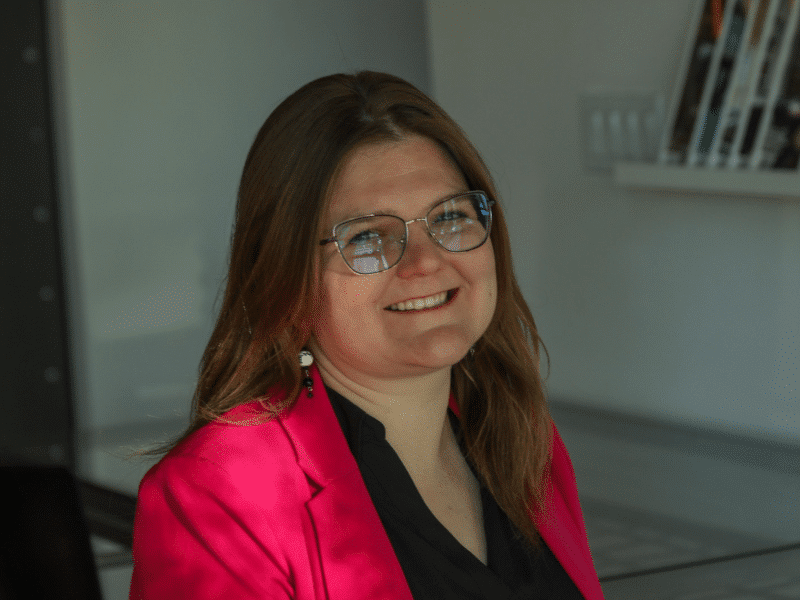
Meet Madison Zimmerman for Shasta County Office of Education Trustee
Madison Zimmerman is running for one of seven seats on SCOE. She refers to herself as a proud product of Shasta County Schools and plans to bring her skills developed both inside and outside of the county to expand opportunities for students to thrive here in Shasta.
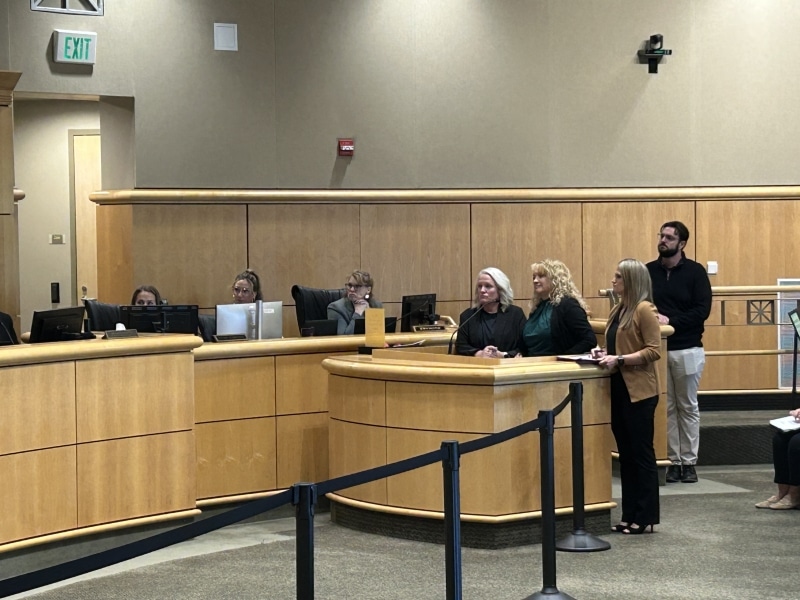
Accountability vs. micromanagement: Shasta board debates its role during wide-ranging discussion
Supervisor Matt Plummer was accused of micromanagement for asking for data in response to an assessment of fire services. Meanwhile, Supervisor Kevin Crye spent nearly thirty minutes questioning a decision by the HHSA director with no such accusation sent his way.
Esteban says, “To cite the need for a Christian motto as one of Shasta County’s three most pressing issues is wildly unhinged.”
It’s not only unhinged, it’s a promise of yet another hair-on-fire “God and Gov’mt!” taking up a seat on our SCBOS. The Board of Supervisors’ chambers are nobodies church; there are CHURCHES for that.
This is the second piece that I have read about candidate Gary Oxley candidacy for a seat on the Shasta County Board of Supervisors (hereafter, Board). After reading the first piece, I could not form an opinion other than he was patently not competent to be a member of the Board.
After reading the article to which I am now commenting, my opinion about his lack of competency to be a member of the Board was dramatically reaffirmed. (He is obviously a good and caring person; he truly wants to help people, but he has woefully inadequate knowledge about governance in general and the ways and means of the Board in particular: His goals are out of priority.)
Oxley sez: “But what if the board sat down with the biggest agitators and asked how we could fix their feelings of hurt and violation? They have a conflict with the board. You’re only going to fix that by addressing it head on.”
.
You’re not going to fix it. These are people who get high on the attention that being a pain in the ass provides, and they’re going to keep doing it no matter what you do to try to placate them. Self-righteous incivility is their drug of choice. If you gave them everything they ask for, they’d find new sources of outrage and new demands.
.
Oxley sez: “I want to see our motto placed in our chambers as a reminder of what our founding fathers believed in and of the need to put God first in our lives. That’s not telling people how to believe. It’s just acknowledging God.”
.
As every schoolboy knows, the leading minds among the founders were products of the Enlightenment and were deists. They believed in something akin to an Unmoved Mover—the Aristotelian concept of a First Cause of the Universe that put everything into motion but does not intervene. Some of them regarded religion as a useful tool for manipulating the uneducated. Jefferson famously created a version of the New Testament that stripped all of the supernatural elements from the text of the Gospels, which he regarded as perversions of Jesus’s message. He and Adams regarded salvation by vicarious redemption through the torture and murder of another person as absurd—mere scapegoating. These views are made absolutely clear in their private correspondence.
.
I could go on, but Oxley’s plan to inflict his religion on the rest of us is disqualifying. To cite the need for a Christian motto as one of Shasta County’s three most pressing issues is wildly unhinged.
I completely agree with all of the comment by Esteban Torres.