
Underground Good: Carol Arnett
“Reach out to each other. That’s the best thing we can do, whether it’s through volunteering, which brings joy and happiness into your life, or by knocking on a neighbor’s door. Put yourself out there. Be of service.”
Editorial Note: There is a reference to research on suicide in this article. If you or someone you know is experiencing a crisis or needs emotional support, reach out by phone to 988 (or by text/chat at 988lifeline.org) for confidential, judgement-free help and support. If you are looking for services or resources for older adults, you can reach out to your local Area Agency on Aging. Area 2 serves Lassen, Modoc, Shasta, Siskiyou and Trinity Counties and can be reached online or by calling 800-510-2020.
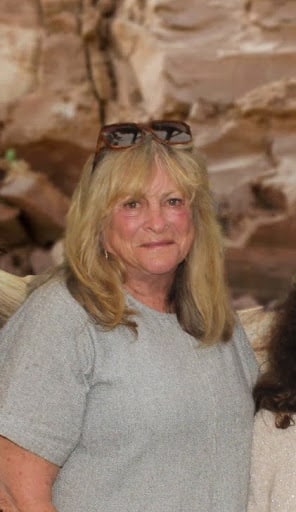
Carol Arnett and I initially met during an activity designed to bring older adults together for meaningful conversations. She has a long history of working with and for older adults, and I had recently begun consulting with the Northern California Rural Multisector Plan for Aging, a regional effort seeking to improve the liveability of North State communities for older adults and people living with disabilities.
Carol is an enthusiastic proponent of volunteering as a form of engagement and a source of joy. In this interview, she shares insights that come from years of service, a deep understanding of what it means to navigate life as an older adult and a belief that we are at our best when we connect and make ourselves available to each other.
How would you like to introduce yourself to readers, Carol?
My name is Carol Arnett. I’m 76 years old. What’s most important to me is family. I have a fabulous husband of 30 years by the name of Shelly; he is an amazing life partner. We have a daughter I adopted from China when I was 48 years old who is the light of our lives. I can’t even explain how happy she makes me. She’s such a fighter and adventurer! For the last 10 years she’s lived or studied in more countries than I have fingers and toes. She just finished getting her second master’s while living in Shanghai, and recently moved to New Zealand to be with her fiancé who is the nicest man in the whole world.
My husband and I are both from Southern California and grew up probably no more than two miles apart, but we didn’t know each other because we went to different schools. We’ve lived together in different places and most recently moved from Florida to Redding because my husband has family here. We have been in Redding for almost three years now.
When it comes to career, most of my life I have worked two, if not three, jobs. I’ve done everything from owning and running restaurants, serving as a chef on yachts, to working in the movie business. I also worked in a battered women’s shelter before being hired by the board of supervisors to head up the Los Angeles County Domestic Violence Council, an agency that coordinated nearly 20 shelters. With the council, I engaged with the courts, police departments, probation, public health and all the advocacy programs.
How did you become interested in projects focused on older adults?
I’m retired now, but when I come into a new community, I always want to get involved. I’m not drawn to join a social club. I’m going to get involved in volunteering and in local politics. That’s how I sink my roots into a community.
Working for the domestic violence council was where my interest in the aging process began. The programs and support groups were designed for women in their 20s and 30s with children, and they didn’t work as well for women who were older. As a result, some older women didn’t come to the shelters, and those who did found that they were often relied upon to do the cooking or housekeeping or even provide childcare. It’s not that they didn’t want to do some of those things some of the time, but they didn’t necessarily want that to be what was expected of them.
We worked with the housing department and adult protective services to take services to older women in their homes. Older women often have lost so many options. They are less likely to be able to start a new career. They may have health issues that they need support for or may be the caretaker of the person who is abusing them, which can make them feel obligated to stay.
What other challenges did you observe working with and for older adults?
Finding resources can be tough for older adults. As I mentioned before, there are many resources that are designed for and prioritize women with children. Once you don’t have young children, there are fewer resources available to you. Also, many organizations want you to sign up online, and many older adults don’t have computer skills or access to the internet.. That’s the digital divide you hear about, and it has become a real problem.
For the last year and a half, I have been doing research, looking at suicide rates in seniors. I’ve found that almost all the suicide prevention information available is largely online. The older adult population living in rural communities are often isolated and won’t or can’t access services online, so they are among the most at risk.
Of course, the population we tend to refer to as “seniors,” anybody over 65 years old, contains different populations within it. You need to look at the differences, maybe decade by decade. There is not a one-size-fits-all solution to their needs. What is their life experience, and how does that impact their world view? How do they view their options and opportunities? It sometimes feels that our society treats anyone 65 or over as being one generation: old. And there are significant differences.
In what other ways have you volunteered since moving here?
One of the first places I volunteered was Western Service Workers Association. I just love them. For a while, I took over their food distribution program. I have a systems analyst kind of mind: I like systems and organization. I loved doing that, and it brought me into the homes of seniors and families with older adults and people living with disabilities.
I also find local government interesting, so I started going to board meetings, and that’s how I came into contact with the supervisor for my district, Matt Plummer. He was the one who asked me to look into the suicide rate of seniors in Shasta County. That’s when I began working on suicide prevention for seniors, looking into what was happening here, what was happening elsewhere in California, what kinds of effective programs existed, anywhere.
Later, I was appointed to the Commission on Aging and from there became a representative on the Older Adults Policy Council. I have found that I can actually go to committee meetings without feeling frustrated by them. I like the challenges! I just need to feel like I’m contributing and have something to add to an organization for me to continue volunteering.
I also help with special events at Turtle Bay and, when I have free time, I volunteer with the toddlers there. We set up little projects for them to learn about science and animals; we read books and sing. It reminds me of when I was working in hospice in Colorado. I was the volunteer coordinator, and at night I would take care of kids who were in foster care. I like that balance in my life, between young and old.
In the past, I also served as volunteer coordinator for a program in Boulder that provided services to seniors through a number of different organizations, services like medical transportation, home repairs and food delivery. There’s still so much more that needs to happen that has to be picked up in the private and nonprofit sectors, even when the government is doing its role well. That almost always takes volunteers because there’s often little money in the nonprofit sector.
For people who don’t know, what is the purview of the Commission on Aging?
Shasta County’s Commission on Aging is supposed to be the eyes and ears of the board of supervisors when it comes to the aging population. It’s our role to provide policy advice on matters that affect seniors. We are an unfunded commission, so we have no money to do outreach or provide services. Instead, we’re here to focus on what’s happening with the senior population and provide insight to the board. This year, at the behest of Supervisor Plummer, the board voted to have the Commission on Aging come back to them in December with two reports: one on homelessness among seniors in Redding and one on senior suicide.
There was a recent report out of San Diego documenting that people experiencing homelessness over the age of 65 stay homeless longer than those in younger age groups, not because they want to be on the streets but because their needs aren’t always accommodated by shelters. At that age people are more likely to have significant medical needs and mental health issues, including dementia, or to need assistive devices. Their needs may not be accommodated by shelters, and that may mean they are not eligible to stay. Again, you can’t just throw everybody into one basket when it comes to serving people.
A report on suicide was commissioned by supervisors because our county has the highest rate of senior suicides in the state of California. Death by suicide is especially prevalent among older men.
In the past, that data has shown a correlation between rates of gun ownership or the availability of gun and suicide fatalities, right?
It does have to do, we think, with the rate of gun ownership, but also the fact that people get isolated here, and we don’t have the same number of resources for our seniors as some communities do, including parks and other places that people can go to and feel safe and build community. And, as I mentioned, the digital divide impacts these rates combined with the fact that many prevention programs in Shasta are primarily online. Residents in our county also lack access to healthcare, which can make it difficult for people to be able to live a life with the quality they desire. All of those things can weigh heavily on someone who is struggling.
What does the Older Adult Policy Council do?
I love the Older Adult Policy Council. What an amazing group of people, service providers and community members who really care about this population. We spend a lot of time educating ourselves about the resources that are available to older adults in Redding and having discussions about how we can work together to bring more resources to the table.
They are also connected to another program I love, Power to Seniors. What a really smart idea! Power to Seniors recently became a nonprofit, so we can actually do some more fundraising on our own. As you can imagine, one of the huge issues facing the older population is the rising cost of electricity. Seniors are often on a very limited income, and as power rates increase they can experience having their power turned off, leaving them living unimaginable realities.
I think people forget the health dangers of the heat that we’re experiencing, especially if you’re in a house that’s poorly adapted to the heat, and you don’t have air conditioning. What’s more is you have all your devices, medical and otherwise, that you need — and some rely on power. I feel so fortunate that my husband and I purchased for the first time a brand-new house, one with solar. If not for that, we would not be able to keep ourselves comfortable in a house with this kind of heat and still pay those monthly utility bills.
Health insurance has gone up, the cost of gas, the cost of food, the cost of everything in your life has gone up. And some of these things aren’t optional if you are going to stay healthy and not give up hope. It is all connected: why people of a certain age start to feel like they can’t keep up, why they can start to feel hopeless, why they feel alone.
There are many people who are still working into their 70s and 80s because they have to. But if you suddenly lose a job and get a few months behind on your power bills, it can absolutely take the rug out from under you. I have worked with homeless populations since the 1970s. Things can spiral so quickly. And once someone has been homeless for a very short period of time, it becomes very hard to get out of that. If you are an older person, it is even harder.
Everybody should donate to Power to Seniors. It’s really for people experiencing challenging circumstances like a health crisis that takes extra money or losing a spouse.
Editorial Note: REU also provides Residential Energy Discount Programs for income-qualified households, and PG&E offers various assistance programs, including discounts to income-eligible households through the CARE, FERA and LIHEAP programs.
You have spoken about stigma and how older adults in rural areas often don’t want to seek services.
One of the barriers is that the onus of getting support falls on the person who may be least able to do that: the senior. When they fail, seeking help becomes the responsibility of local governments or the community as a whole — including family, friends, neighbors and volunteers — to bring support to the people who need it. We have to create friendlier communities where peoples’ needs are noticed and taken care of proactively.
That has to happen at every level, paying attention to how seniors are doing, whether it’s the person next door, a family member or someone you know from church. There are certain places that seniors will go — libraries, churches, medical offices — and those have to become places that have open doors and where seniors feel welcomed. They also have to become places that connect people to community resources. There’s a philosophy that there’s no wrong door. All doors lead to the right door. That’s the approach we have to take.
We also have to reverse the expectation that people should reach out or need certain kinds of help. People should have the right and dignity to make their own choices about how they want to live their lives, including their final years.
What about volunteering or service makes it a great way to engage in a community?
It is the best. I think it was Mahatma Gandhi who said the best way to find yourself is to lose yourself in the service of others.
My mother started me on volunteering when I was knee high to a grasshopper. I would go door-to-door and collect money for the March of Dimes or other organizations. It has always been part of my life. It’s also how I fill myself up and keep myself from getting isolated.
Once you are retired, you no longer have work connections or the same social group. When your kids are grown, you’re no longer associating with all the other parents in school, the sports teams and all of that. Your life can get smaller and smaller. Volunteering is a great way to keep connected. As a volunteer coordinator I used to tell the men who came in to explore volunteering, “this is going to save your marriage.” That’s because when some men stop working, they come home and start to try to manage their wives, and that’s not going to be good for their marriages!
Is there anything else I should have asked you or anything else you would like to say?
I want to say to seniors in particular: Please take advantage of what’s here for you. Reach out to one of us on the Commission on Aging. We’re here to listen to what you have to say.
And to everyone, reach out to each other. That’s the best thing we can do, whether it’s through volunteering, which brings joy and happiness into your life, or by knocking on a neighbor’s door. Put yourself out there. Be of service.
Do you have a correction to share? Email us: editor@shastascout.org.
Author

Related Articles

Opinion: I ran Shasta County’s elections for 20 years. I know Trump’s playbook
“To my fellow registrars and election officials across the country: I know what it feels like when the pressure arrives … Remember, your oath is to the law and to every voter, not to a president, a party or a mob.”
Underground Good: Sara Hoxie
‘Will had so much energy and love to give. He’d walk into a room, and his personality would drive everything there. He kicked up a lot of dust, and we’re just not going to let that dust settle.’
Underground Good: Enora Ilboudo
“Aside from clothes and food, sometimes we’ll hear from people who don’t feel connected to their families or need to talk to someone and don’t have anyone else they can go to. People are finding their community here at the center and that keeps me motivated when I’m working here.”

Comments (0)
There are no comments on this article.