Underground Good: Sara Hoxie
‘Will had so much energy and love to give. He’d walk into a room, and his personality would drive everything there. He kicked up a lot of dust, and we’re just not going to let that dust settle.’
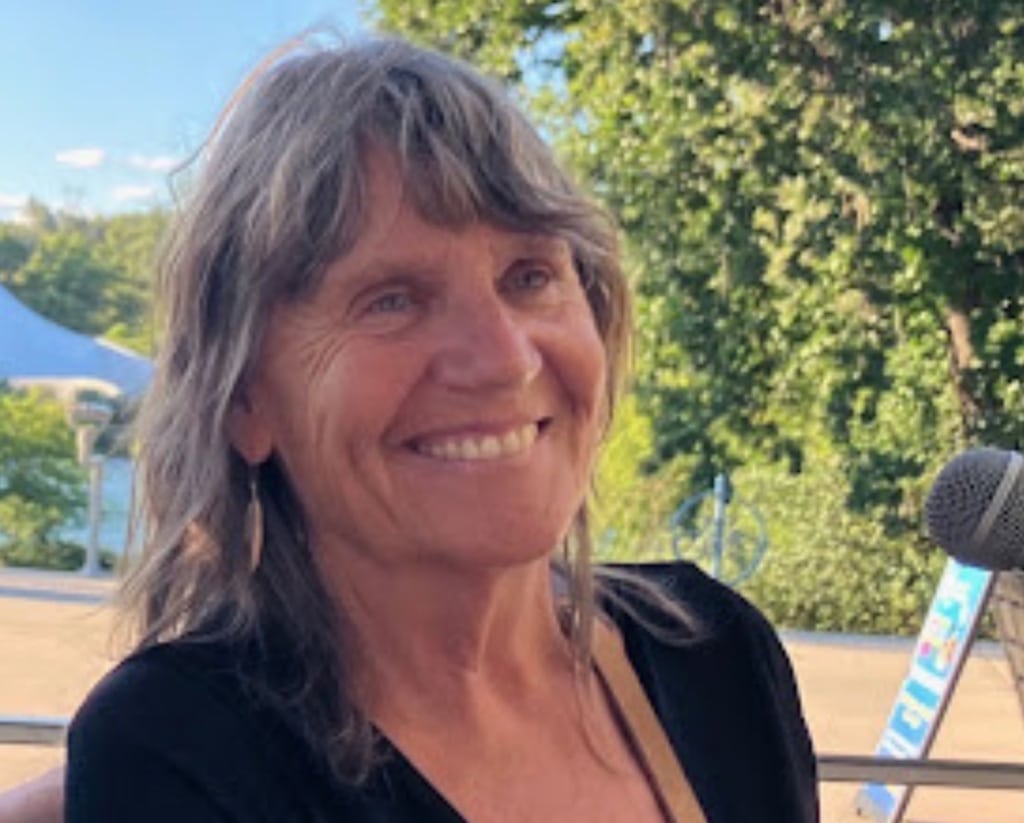
Ed Note: This opinion piece is part of our Underground Good series, which focuses on providing a window into the mindsets of ordinary people doing good work in their community. It’s written by sociologist, coach and evaluation consultant Sharon Brisolara. You can find the rest of our Underground Good series here. Want to nominate someone? You can do that here.
Sara Hoxie is a multi-talent creative who has recently brought her energy and attention to the launching of Big Flat Jamboree, as well as a vibrant singer-songwriter series. While the jamboree emerged from a desire to honor her son, Will, both the event and the series create community, support organizations and provide beautiful opportunities for people to connect while enjoying local places and music.
How would you like to introduce yourself to readers?
Well, I’m a retired teacher, a naturalist by trade. I’m a poet, a songwriter and painter. I’m also a river geek who likes to ski and hike. I have lived in Shasta County for 27 years at Roadrunner Farm. My husband, Glenn Hoxie, and I raised three great kids. Glenn is also a retired teacher.
Where were you before?
Before we came up here, we were in Martinez — a real river town. Before that, we were on the San Mateo coast, doing outdoor education and before that, we were up in Laytonville. My grandparents lived in Hayfork. I also lived in Weaverville for a while and was a river guide, and so I spent a lot of time in and near Redding.
You are involved in a number of what we might call acts of service. In recent years you have been involved in hosting The Big Flat Jamboree. Can you tell us about the jamboree and how it started?
I raised three kids and lost one of them, my youngest son, William, in a kayaking accident in 2023. My family, especially my kids, are really well known in the whitewater community. My boys are both class five whitewater kayakers and river guides and my daughter is an accomplished kayaker, as well. They know the whole Big Flat community.
Will was attending Feather River College to study outdoor recreational leadership. He would call me up and say things like, “Well, I have to go practice my telemark skiing at Boreal Ridge, over at Sugar Bowl.” One of the classes that he took focused on planning events, and he decided he wanted to be an events manager and create something he called the Big Flat Jamboree. He said, “I’m gonna put Big Flat on the map with a river festival.” He had started the permit process but didn’t survive to put the festival on.
After his accident, his friends and our family decided we would put the festival on in his name. We decided to host it at Bigfoot Rafting, which is a beautiful, beautiful facility. It has a huge waterfront right on the river, and a big green lawn.
On the Friday night of the jamboree, there’s an open mic, and then we launch into the weekend. On Saturday, we have kayak and rafting races on the Trinity River on the Pigeon Point Run. That night, we host a band and a dance party afterwards. We have had some really great bands and a number of vendors who come and a huge raffle. People have a lot of fun.
The thing that I love about the raffle is that it is quite extensive. So many different companies kick in goods and services like gear, kayaks, personal flotation devices, paddles, river sandals, hats, sunscreen and lip gloss. You can bid on a basket full of chocolate or tickets to see a haunted mansion in Calistoga. You might even win a tattoo. People are so generous with the merchandise and services they donate. That’s where we raise a lot of our money.
We had our first jamboree in 2024, and in 2026 we became a nonprofit: the Will Hoxie Legacy Corporation. We have been growing steadily every year. This year on Saturday morning, we had a Wintu elder offer a blessing in Wintu and a land acknowledgement right by the side of the river. It was so beautiful, I cried.
What do you do with the proceeds of the event?
My jam now is raising money. We try to reserve enough to do the jamboree the next year so that we can rent the outhouses, get a band and buy the insurance. The rest of it we give away to organizations like Feather River College Foundation, WES Camp (where Will was a naturalist), Dream Quest (a tiny nonprofit in Willow Creek that teaches river safety to kids), the North Fork Grange in Junction City, the animal rescue and search and rescue in Trinity County, NorCal Clean and Sober Whitewater, and several others. Some of the smaller organizations operate on shoestring budgets, and if we can help them, we will. We choose organizations whose work would be in Will’s wheelhouse, something that was either part of his life or he would be all in for.
The jamboree itself is not just for boaters. It’s for the locals. It’s for anybody that wants to come and have a good day by the water, be with your friends, play some music and watch the river go by. We hold it the weekend after Mother’s Day, when the water’s running high and it’s fast and cold. So if you are boating, you are navigating some big water and holes.
One thing I noticed attending the jamboree is both the community that forms to create the event and the community that stays and interacts for the weekend.
The kayakers, many of whom are young kids, have been so generous with their time, buying raffle tickets, coming to the dance and just generally helping out. It is a big-hearted community.
For example, the night before our first jamboree, I heard sirens and helicopters and saw emergency vehicles go ripping by — a fire truck, the cops, an ambulance. A semi-truck full of garbage had gone into the river just below where we were going to put in. The kids came over to me and took me by the hand and said, “Sit down. Let us tell you what just happened.” They had to airlift the driver; I think he survived, but the garbage. … I thought, “Are they going to close the river? Are they going to tell us we can’t have our competition tomorrow? What’s going to happen?” In the end, they secured the area, and the kayakers just paddled around the trash. A bunch of people stayed behind after the event and spent a couple days cleaning up the river.
How did you prepare to take on a project this large?
It just happened. I wasn’t thinking about doing anything big. I was just thinking about honoring my son and trying to make his dream a reality. The jamboree is growing on its own and has doubled in size every year. This year, we put about 132 people on the water. Next year it will be even bigger because we’ve got a good reputation.
We do a couple of fundraisers to help support the event. We’re planning to do one in Chico in October to reach all the Feather River kids that are part of this community. Believe it or not, this was something that Will did. He opened up a conduit between Big Flat and Feather River — that had never been a thing before. There were people who didn’t even know where Qunicy was or that it is a great community full of outdoor-minded people.
The jamboree is not your only service opportunity. Tell me what else you’re focused on?
I like to host events for Pilgrim Congregational Church, too.
It’s really interesting to call it service, because I don’t think of it that way. It feels fully selfish on my part because this is what feeds me. I don’t think about serving. I think about what I can do to get my endorphins going. I put on events like the Big Flat Jamboree or something at Pilgrim because that makes me happy.
Pilgrim Congregational Church is a 70-year-old building, the last church designed by Frank Lloyd Wright before he died. It is an official Frank Lloyd Wright building, registered by Taliesin West, and one of the few Wright buildings left that hasn’t been significantly altered.
A giant church was supposed to be built here, but because we are such a solid social justice organization, our philosophy is that we can build the rest of the building once all the kids are fed and everybody has a place to live in Redding and we’ve got a little extra money left to do that. This building is already a lot to manage on its own. For example, our HVAC was quite old and gave out. Here in Redding you need HVAC and have to keep a building cool, but we are also a green church and stand behind protecting the planet any way we can. So along with raising money for the HVAC, there’s also a big push to get solar to help offset our energy use. In order for the solar to work, we need a good roof; all of these things build on each other. To make all this happen, we’re working on a capital campaign.
I’m a songwriter, so I thought about the many songwriters in this town. They need to be heard, and Pilgrim is a great venue for listening to music. So I decided to contribute to the capital campaign by having songwriters come in, maybe three musicians at a time, to perform.
We charge $15 or $20 and put on raffles. I think it is important to pay musicians, so I usually give them half the door, split between the two or three people who play, and the other half goes to the church. It has been pretty successful, and we’ve gotten exposure for many great musicians who have the opportunity to play to a listening room, which is a very rare thing to find, especially here. You can go to restaurants in town where local singer-songwriters play, but you can’t really hear them. They’re providing background music. But singer-songwriters have something that they want to share with the world. Being able to put all these people up on stage has been great and really fun for me to do.
It strikes me that there’s a big community aspect to those offerings.
Yes. Some people come here and they’ve never been to Pilgrim. And maybe they haven’t heard these musicians yet. That’s the beauty of bringing in local people.
Recently, we had an amazing group of millennial artists. They are busy with work and life. It’s really great to acknowledge the fact that there are wonderfully creative people of all ages in this town, and they’re all worth hearing. Every one of them has really good things to say. It’s my happy place, being able to find those people and bring them here. We hope to have more shows in October and November. In December, we share the church with the Madrigals.
You said earlier that you don’t think of the things you do as service. How do you think about these ways of engaging with the world?
Will had so much energy and had so much love to give. He had so many people that loved him. He’d walk into a room, and his personality would drive everything there. He had that kind of energy and the potential to do amazing things with his life, and he only lived to be 25. The way I see it is, we, as a community, are working to keep his energy going, and I’m trying to be the one that kind of facilitates that.
He kicked up a lot of dust, and we’re just not going to let the dust settle. He did too many things in his 25 years to let that drift away. We’re really still making sure that he’s consequential, that we can help continue to do the kinds of things that he would be doing if he were here, to make sure that he has a legacy.
As for Pilgrim, I have to do something. The social justice mission of this organization is so important. We’ve got to make sure that this building stays strong and that this community can thrive here. What better way to do it than bring in the greater community?
Note: Learn more about the Big Flat Jamboree by checking out its website; there, you’ll find links to the jamboree’s social media. You can keep informed about Pilgrim’s singer-songwriter events by navigating to https://www.pilgrimchurchredding.org/creative-sparks and clicking on the events calendar.
Author

Comments (8)
Comments are closed.
Related Articles
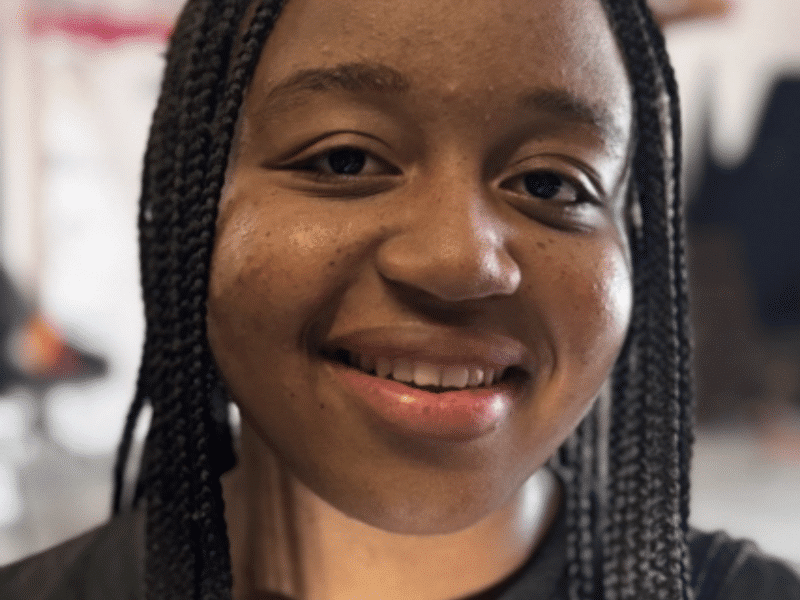
Underground Good: Enora Ilboudo
“Aside from clothes and food, sometimes we’ll hear from people who don’t feel connected to their families or need to talk to someone and don’t have anyone else they can go to. People are finding their community here at the center and that keeps me motivated when I’m working here.”
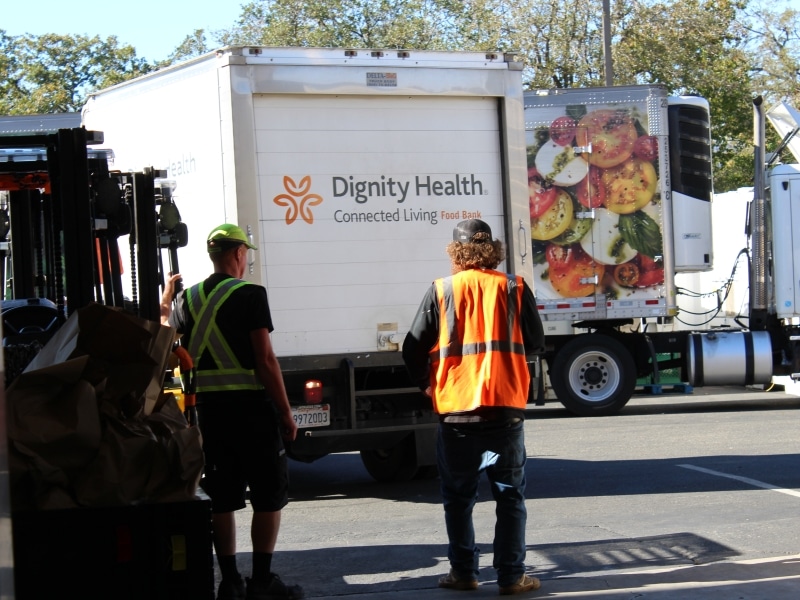
Opinion: Healthcare and Food Benefits are at Risk in Rural California. Will the Governor and Legislature Act?
The need for health care, behavioral health treatment, and food assistance will not disappear because federal funding drops. The burden simply shifts downstream to counties — forcing cuts to emergency rooms, food banks, sheriff’s deputies and already-overwhelmed local systems.
Underground Good: Steve Woodrum
“As a poll worker … you notice that many people, when they come through the doors, all of a sudden, they change. They become more dignified. You can see that they are getting ready to vote, and they rise to the occasion.”
What a wonderful article on a very special person, and heartfelt community events! I’m honored to know Sara & Glenn, and Sharon. I’m grateful for their positive energy and this uplifting story!
Your friend, Kit 🥰
Reading this inspirational feature made my heart so happy. Redding is so lucky to have people like Sara who are always thinking of ways to promote growth, health, and resilience in our community and our world!
Amazing resilience. I’m fairly certain that I wouldn’t respond to the death of a child or grandchild with that kind of bravery and positivity. I’d probably wallow in my despair for years.
Brava Sharon Brava Sara
My heart is busting it’s little wire box (think Grinch)
I feel like a fly on the wall listening to local matriarchs quietly describe their journey.
The best kindof service is the kind that doesn’t know it is service, just love
The Hoxie family! What a gift they are to this community. Thank you, Shasta Scout, for honoring William by featuring the Big Flat Jamboree here.
It’s wonderful that the article also featured Sara (and others) important fundraising efforts at Pilgrim Congregational Church. Thank you for the story.
I have heard Sara perform previously and she is such a talented song-writer and singer. Sara is so big-hearted that when I asked her to perform live music for the Quilters’ Sew-Ciety of Redding 2026 quilt show this year, she not only agreed, but found 3 other musicians to help share the time slot and provided wonderful music for the attendees. It made the experience so much richer by listening to music while admiring the handiwork of our many quilters. It was truly a combination of talents shared by many.
Sara is a gift to our community. Thank you, Sharon, for this wonderful profile.
Such a lovely interview of a beautiful and wonderfully talented community member and friend. Thank you Sharon for this.