
California requires law enforcement to track reasons behind use of Flock cameras. It’s not clear if that’s happening in Shasta
Flock camera audit logs released by the sheriff’s office do not include documentation of the reasons for why the system is being accessed, something that’s required under state law. A staff analyst claimed reasons are being logged but weren’t disclosed.
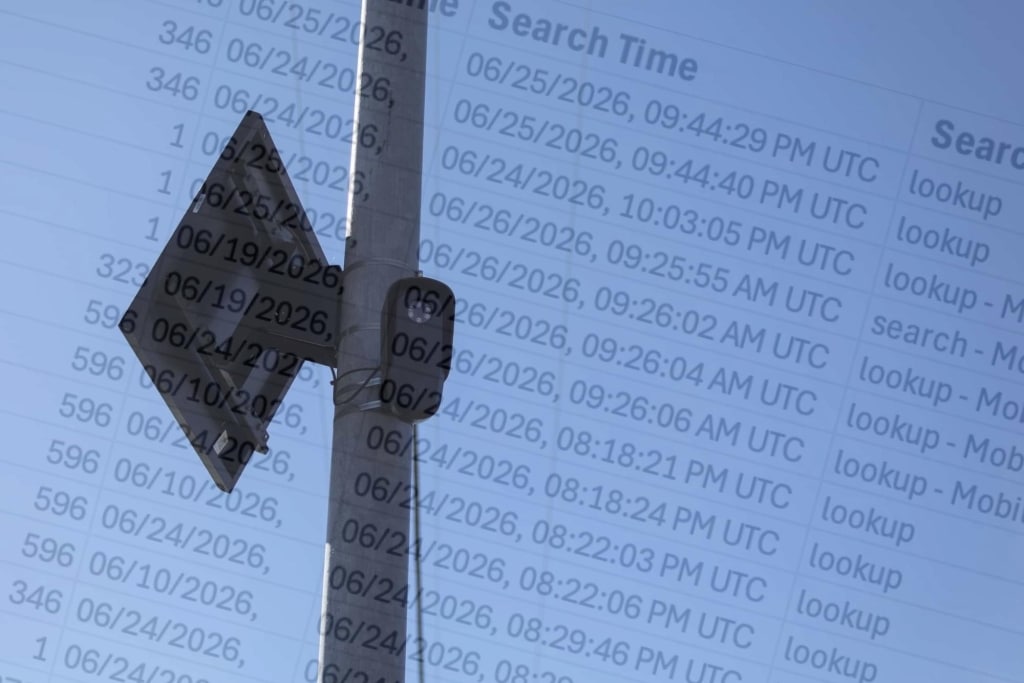
The Shasta County Sheriff’s Office may or may not have been logging the reasons Flock data is being accessed by law enforcement, a requirement under state law.
Sheriff Michael Johnson has not responded to multiple requests for comment over the last four days seeking to understand why audit logs released over the summer in response to a public records request do not include reason codes — or the reason that Flock camera data was accessed each time it was used.
It’s not clear whether the county is failing to document the reasons the data is being accessed, something that would violate California law, or failed to disclose that information on a public records response, something the state also requires.
Shasta has deployed 24 Flock cameras across the county, beginning in 2025. According to the county, the cameras are intended to assist “staff with the investigation of crimes, missing persons incidents, or other law enforcement related business.”
Since then, there’s been relatively little public debate over the cameras until a few months ago, when two local officials — Shasta County Supervisor Kevin Crye and Anderson Council member Darin Hale — began raising concerns.
Now, a protest against Shasta County’s Flock cameras is scheduled for Tuesday morning. It will take place just before the county board meeting where Johnson is scheduled to present on the controversial technology.
Some community members want to rid the county of the cameras, which are also known as automated license plate readers, or ALPRs. Concerns focus in part on the potential for privacy violations.
Nationwide, cases have been documented where Flock cameras have been used by law enforcement to stalk or harass community members. There haven’t been claims of such harassment in Shasta, but records obtained by Shasta Scout this summer indicate that the sheriff’s current policies and practices may leave community members vulnerable and violate California law SB 34.
While Johnson has not responded to requests for comment, a staff analyst from his office wrote back today, initially saying that the county tracks the reasons for searches but doesn’t record them in audit logs. The staffer then responded a second time, stating that search reasons were recorded in audit logs but that the information wasn’t released to Shasta Scout under a government code exemption.
The only exemption cited in a response to Shasta’s records request this summer was Government Code 7922, with a note that “personal identifiable and contact information” can be withheld if “the redacted information clearly outweighs the public interest served by disclosure.”
The county did not specifically state whether such information was withheld or redacted in Flock audit records from the county. It’s also unclear how the reason for a Flock camera search query, such as “narcotics,” “larceny” or “stolen auto” would constitute personally identifiable information that would qualify for such an exemption.
Here’s what isn’t showing up on the sheriff’s Flock camera logs
California Senate Bill 34 requires law enforcement agencies to maintain “a record of access” that includes numerous pieces of information, including the “purpose for accessing the information.”
This summer, Shasta Scout submitted a Public Records Act request to the sheriff’s office, asking for information related to Flock cameras. The request asked the sheriff’s office to include “the reason for each ALPR search, if logged.”
The sheriff’s office responded with audit logs documenting the use of Flock cameras in a spreadsheet, but the logs lacked any documented reason for Flock searches. There was no mention of any information being withheld or redacted from the logs.
The information on Shasta’s logs contrast with that included on the city of Anderson’s audit logs, which cite the reason for each search query, along with the name of the individual searching the system and other key pieces of information missing from Shasta’s released documentation.
This morning, a staff services analyst from the sheriff’s office responded to a request for comment sent over the weekend, saying the sheriff’s office has “access to the underlying search reasons” but that search reasons are “not generated in the logs.”
Later, the analyst responded again saying that the information was logged in the Flock system but was not included in the released log due to being exempt from disclosure under Government Code § 7928.300.
Sheriff’s policies require logging reasons for Flock data searches
Other documents received in response to Shasta Scout’s records request this summer include both the sheriff’s policy on ALPR camera use and a November 2025 sheriff’s office training bulletin related to the use of the technology.
The training bulletin included mention of California’s legal requirement that search reasons be documented “to protect and maintain the privacy rights of the public” and said that the Flock system automatically records date, time, user, license plate searched and the reason for the search.
“You are required to properly document a case number, or sufficient information that validates your use of the system for a legitimate law enforcement purpose,” the training bulletin stated. It explained that law enforcement officers should document the nature of the crime and whether the vehicle being searched is connected to the crime or to the victim along with documenting a case number.
The bulletin also explained the reasoning behind the policy.
“While ALPR’s are an amazing investigative tool, there is a growing concern among some citizen-led groups on the privacy of citizens,” it said. “It’s important as a professional agency we properly document our ALPR use and ensure it’s being used for law enforcement purposes only.”
On Oct. 27 during the last county board discussion on Flock cameras, Supervisor Allen Long asked Johnson whether each search of the Flock camera system requires a case number be used.
“Yes,” the sheriff responded, but “we don’t actually enter that case number into the tracking system because we don’t want to make that discoverable by anybody else. But the reason is listed on there: the agency, the officer … who accessed that camera and for what reason.”
California law, personal privacy and what’s at stake
Authored in 2015 by former California State Senator Jerry Hill, SB 34 was the first of its kind to encourage local regulations of ALPR data outside of agencies like the California Highway Patrol.
Before SB 34, limited oversight for ALPRs existed, retention of data was capped at 60 days, and CHP only had baseline restrictions on data sharing. The new law filled in an accountability gap that required local law enforcement to uphold internal regulations and allow public input in order to better protect community members’ privacy.
The law outlines specific guidelines for access, including that “ALPR information only be used for the authorized purposes described in [each agency’s] ALPR privacy policy,” according to an information bulletin from the California Attorney General’s Office. According to Shasta County’s policy, neither reasonable suspicion nor probable cause is required to access database records.
Local community members posting online have expressed that the sheriff should document how he’s protecting personal privacy in order to reassure those with concerns.
“If the Sheriff’s Office maintains that the system cannot be used to improperly monitor individuals, the public deserves documentation demonstrating that appropriate safeguards are actually functioning,” said a Shasta resident in an open letter posted to Facebook two days ago.
Speaking to a reporter today, Supervisor Matt Plummer said he plans to ask the sheriff about audit logs during the board’s meeting tomorrow, both to understand what’s currently being documented and how the county can ensure that there’s sufficient oversight to abide by state law and ensure all policies are being followed.
“I don’t think that any policy should be written on the basis of trusting an individual who works in the government,” Plummer said. “I think it should be written in such a way that it provides the proper accountability and oversight to minimize the chances of being abused. And if it is abused, there’s a high likelihood that there will be the opportunity to discover it and address it appropriately.
“One thing that I am going to be recommending,” he continued, “is doing an independent, third-party audit of the logs that would potentially, to the extent necessary, go beyond what is publicly available.”
Have a correction to share? Email us: editor@shastascout.org
Authors


Related Articles

Redding City Council to hold public hearing on Redding Electric Utility rate increase
REU is proposing a 6% increase for two years. The public is invited to share their thoughts during Tuesday’s public hearing.
Sarah Peery will lead One Safe Place, Shasta’s domestic violence shelter.
The former communications director says she’s honored to take on One Safe Place’s top role and will work to strengthen services and deepen partnerships.
Homeless youth will be the next focus of collaborative regional housing efforts in Shasta
In 2024, the NorCal Continuum of Care spearheaded an effort focusing on homeless veterans. Two years later, they say they’ve seen enough progress that they’re adding a second focus group — homeless youth.

Comments (0)
There are no comments on this article.