
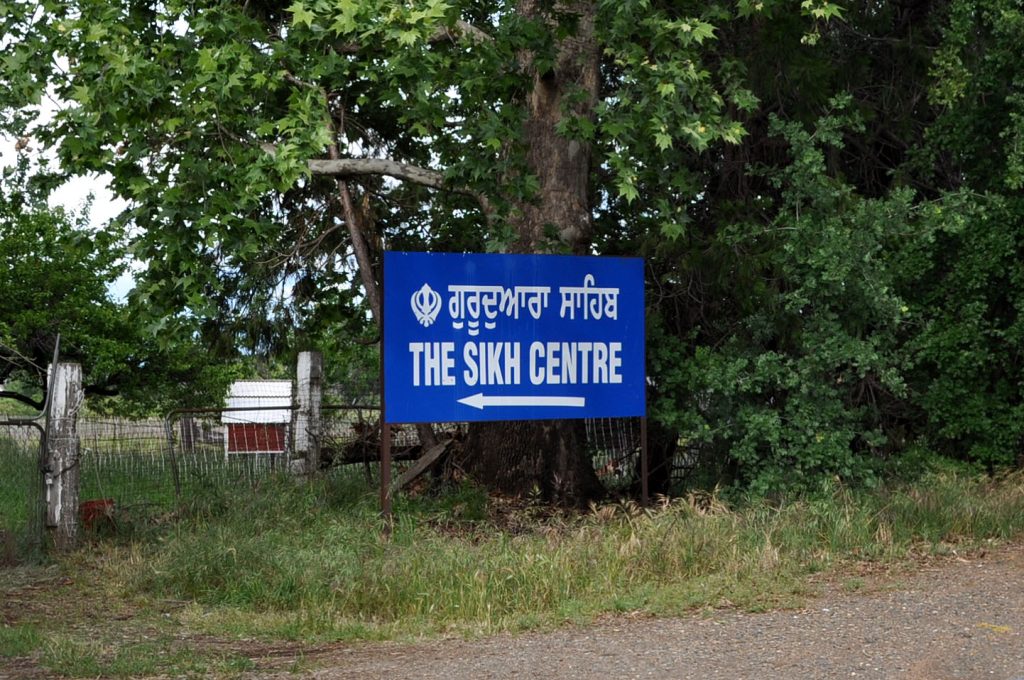
Commemorating a pivotal moment in history, the Sikh Centre in Anderson plans celebrations for Vaisakhi on May 3
Vaisakhi is an annual festival celebrated by both Hindus and Sikhs in Punjab, a region that straddles the border of India and Pakistan. On May 3, Shasta’s Sikh community is inviting everyone to enjoy devotional music, the reading of holy scripture and a community meal.
The festival of Vaisakhi has multiple meanings, depending on religion. In the region of Punjab, home to Punjabi people of multiple faiths, it’s been historically celebrated as a spring harvest festival for centuries.
“In ancient times, Hindus and even Muslims and other communities living in Punjab celebrated Vaisakhi as per their own cultural belief or practice,” said Armarjit Singh, the Director of the Sikh Centre in Anderson.
This Sunday, May 3, beginning at 9:30 a.m., the Sikh Centre will welcome any member of the public to celebrate Vaisakhi alongside the local community.
For Punjabi Hindus, the festival has long marked the beginning of the new year. But it was also an important day during the early history of Sikhism. In 1699 on Vaisakhi day in the city of Anandpur, Guru Gobind Singh, a Sikh religious leader, first baptized five Sikhs.
As the story goes, during the harvest festival in 1699, the guru came out of a large tent wielding a sword. He addressed a crowd of revelers and demanded to know what men among them would be willing to sacrifice their lives in service of the Sikh faith. One by one, five men volunteered.
They each entered the tent, and the sound of a sword against flesh was heard among the people. The guru came out with a bloodstained blade. But then to the crowd’s surprise, all five men emerged alive, now wearing turbans. As it turned out, the guru had sacrificed five goats inside the tent, and the gesture served as a test of the men’s resolve.
Thus was born the Khalsa, or “pure,” the name of casteless initiated Sikhs who undergo a baptism ceremony still performed today. Baptized Sikhs adhere to the required “5 Ks,” which includes a commitment to carrying a small dagger or kirpan and wearing a karha or steel bangle along with kacchera, a military style undergarment. They must keep their hair long and uncut beneath a turban, a practice known as kes, and tuck a kangha, or small wooden comb, into their top knot. Baptized men change their last name to Singh, which means lion, and women to Kaur, which means princess.
The baptism of the first Sikhs gave Vaisakhi a new religious meaning for observant Sikhs around the world. This weekend in Shasta, the Sikh community will celebrate from Friday through Sunday with 48 hours of uninterrupted reading of the Sikh holy text, Guru Granth Sahib.
On Sunday morning, the Panj Pyare, a counsel of a “beloved five” baptized Sikhs from the community, will change the dressing of the nishan sahib, a flagpole that’s wrapped from bottom to top in fabric. Customary to every gurdwara, or Sikh temple, the nishan sahib flies the Sikh flag. When the dressing is changed, the pole itself is levied forward and rewrapped with a fresh garment.
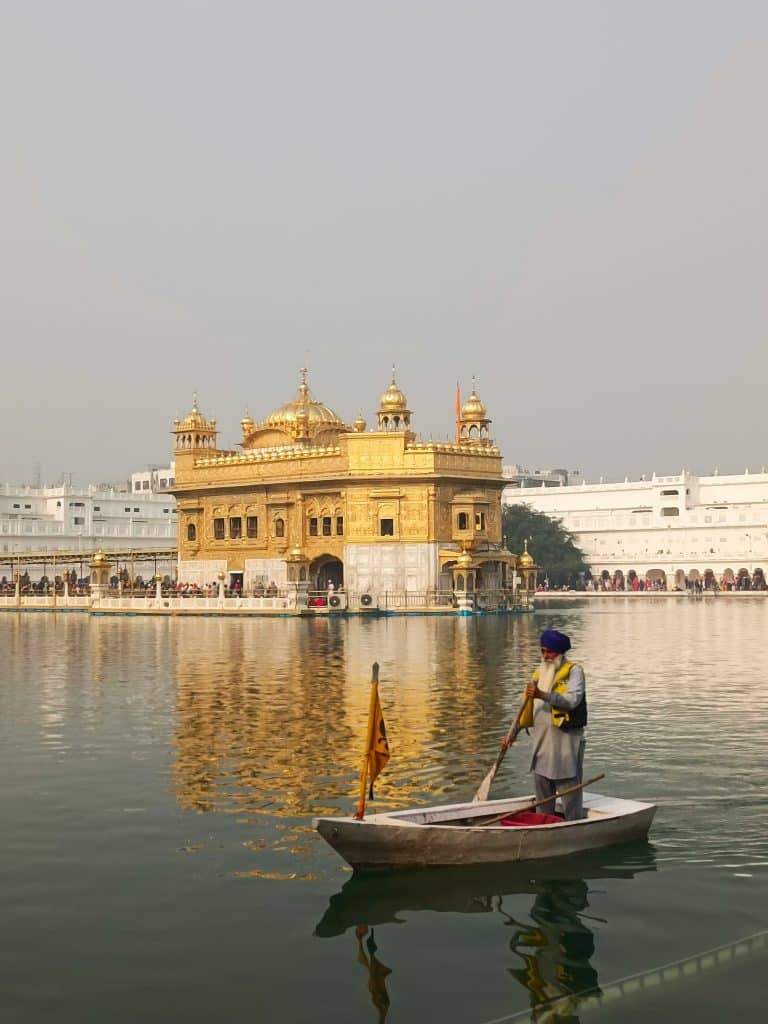
After the nishan sahib ceremony, visitors and the general congregation are invited to observe the completion of the reading around 10:30 a.m. This will be followed by a kirtan, or a set of devotional hymns in the gurdwara’s prayer hall. A troupe from Amritsar, the spiritual epicenter of the Sikh faith and home to the Golden Temple, will be leading prayer.
Anyone is permitted to observe the ceremony so long as they adhere to the rules of every Sikh temple. Dress modestly in a way that covers your knees, and remove your shoes. Both men and women must cover their hair. While Sikh men typically wear a turban, for non-Sikh men a bandana will do, and women can wear a head scarf. All intoxicants — alcohol, drugs, controlled substances and tobacco — are prohibited on the grounds of a temple.
Around 1:00 p.m. will come the festival meal, made by congregants themselves in the community kitchen called the langar. Visitors can expect spiced milk tea, vegetarian curries, flat breads, rice, fried potato dumplings and other vegetable fritters, and sweets, all provided — as always, in Sikh temples — for free.
4.28.26 9:45 pm: We have updated this story with the correct date of the event.
Do you have a correction to share? Email us: editor@shastascout.org.
Comments (1)
Comments are closed.
Related Articles

Across the state, communities are taking down Flock Safety cameras. Could Shasta be next?
Just months after the sheriff’s office expanded the county’s network of ALPR cameras, two local elected officials are calling for them to be removed. The change of heart comes amid growing statewide scrutiny of the company’s data-sharing practices and local community concern over privacy and surveillance.
Shasta Public Health to “scale back” on services after $2 million in new budget cuts
The Shasta County Health and Human Services Agency has cut another $2 million from its Public Health budget since June. The cuts come partly in response to federal funding changes, and will reduce both staffing and services.
Arch Collaborative pivots to help lead new California-funded regional behavioral health initiative
The local nonprofit has just secured a $5 million state grant in collaboration with Rural County Representatives of California to pilot a model inter-county program in hopes of improving behavioral health services across the region.
This is an informative and an important article about a component of the Community of Shasta County.