
‘I don’t like to limit me’: How North State Senator Megan Dahle continues to use her voice after a life-changing stroke
Megan Dahle, a California senator representing parts of northern California, is living with speech difficulties after having suffered a stroke in late 2023. Her principles, and style of representation, she said, haven’t changed.
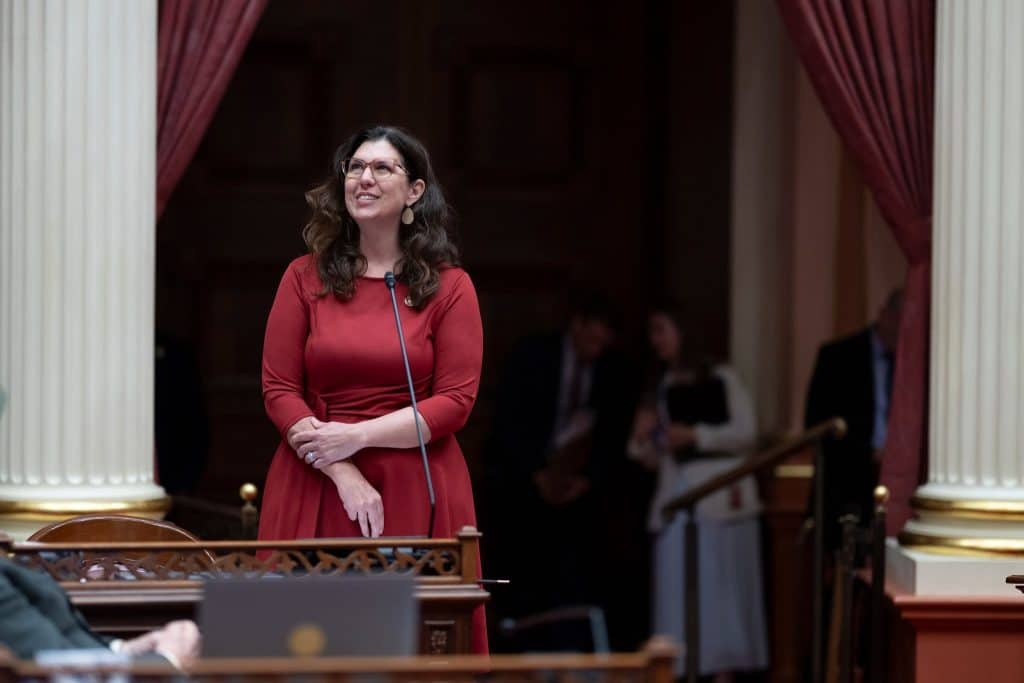
“Speaking is hard, but I’m doing it,” Senator Megan Dahle said in August 2024, tearing up in a California Assembly floor speech while she was still an assemblymember.
Since suffering a stroke in December 2023, Dahle has dealt with both aphasia and apraxia, neurological disorders that affect speech and language ability. While the disabilities impact communication, creating new challenges to verbal expression of ideas and insights, neither impacts intelligence.
As a senator for California’s 1st Senate District, Dahle represents much of California’s North State, including Shasta County.
Dahle, a small business owner and family farmer, began her political career in 2019 by running for assemblymember, a role her husband and former governor candidate Brian Dahle had occupied until he won a special election for a state senate seat. In an interview with Shasta Scout this month, Dahle recalled how her husband had suggested she run for his position, something she decided to do out of a love for policy.
“My husband is fiery, and I’m not,” she said, noting that her husband is more comfortable with public performances and arguments. “I love policy, I don’t love politics.”
After her husband left the assembly, Dahle won the 2019 special election with around 58% of the vote, and was reelected for the assembly seat twice, in 2020 and 2022.
In contrast to her husband’s more public approach, Dahle described her own style of politics as heavily focused on one-on-one communication and building relationships. She was the third-quietest member of the state legislature during its 2023-2024 session, but had the highest bill success among Republicans.
“People don’t know [how much occurs behind the scenes], some members and senators run around events or take pictures, and put it on Facebook every time, I’m not like that,” she said, noting that she had strong relationships with the speaker of the assembly as well as assemblymembers across the board. “I love one-on-one, sitting down, talking about it, and coming up with ideas.”
Throughout her political career, Dahle has been known as an advocate for North State issues such as rural healthcare and education. As an assemblymember, she was appointed as chair of the California State Legislature Rural Caucus, and continues to refer to her guiding principle as “Raising Rural Voices.”
Speaking to a reporter, Dahle recalled an instance in 2023 where she brought Assemblymember Al Muratsuchi from southern California to witness the devastation from the 2021 Dixie fire, as well as engage with local educators to discuss how state legislation impacts the North State.
One of her proudest accomplishments as an assemblymember, she said, was AB 1402, a bill providing victims of child physical abuse or neglect with free access to sexual assault examinations. She also noted the $10 million in state funds she secured for the Tulelake Irrigation District, to combat drought.
Her work was going smoothly, until the year before her second term as assemblymember expired, when Dahle faced an unthinkable medical emergency.
“Three things happened. I had a heart failure, I had a pacemaker, and a stroke,” she recalled.
In November 2023, Dahle said she felt so unwell that she told her sister she thought she was having a heart attack. She was taken to the emergency room, where she was initially told she had a pulmonary issue before being discharged for “allergies,” with an inhaler.
A week later, Dahle’s son took her to the clinic to get more tests. As soon as the results returned, the doctor immediately directed her to be hospitalized at Shasta Regional Medical Center, where she was diagnosed with severe heart failure and the need for a pacemaker.
“I was there for four days, and I was air lifted into UC Davis,” Dahle said, recalling a conversation the day after she was hospitalized. “I had a Zoom with my staff Saturday, and [said] I’m gonna have a heart ablation on Monday, I’m gonna be back. And my daughter has a concert for her choir, [which] will happen on Sunday.”
Instead, at only 48 years old, Dahle experienced a stroke, caused by a blood clot that had developed due to her other medical issues.
For over a year before her medical issues came to a head, Dahle had suffered an ongoing cough, at times struggling to breathe and feeling constantly fatigued. Family members, and Dahle herself, attributed the symptoms to being tired or lacking exercise. She found out later that her lungs had been filling with fluid because her heart hadn’t been pumping effectively.
The incident forced Dahle to shift her priorities and focus on recovery. “I had to put my health first,” she said, tearing up.
Dahle publicized her Dec. 2023 stroke in a statement to constituents the next month. She remained absent from the assembly until early June as she recovered and learned to navigate a new reality that included both medical and emotional complexities.
“Before the stroke, I was funny, I was strong, I didn’t cry everyday,” Dahle said. “I cried every day for six months after the stroke.”
The stroke left Dahle with paralysis in her right side, and she went through intensive physical rehabilitation to improve her strength. Dahle also worked with therapists to navigate conditions caused by her stroke including aphasia — which impairs the ability to speak, understand, read, and write language — and apraxia, where the brain struggles to plan and coordinate the muscles necessary for speech.
But by early February, just two months after her stroke, Dahle said she was already working with her team to monitor state bills and discuss district issues.
She noted that her work is largely sustained by a strong support system, including her family and friends, along with staff. During the interview, Dahle frequently joked with her press secretary, Bruce Ross, and her district coordinator, Alice Bennett.
“My staff, [they are] awesome. You are awesome,” she said, smiling at Bennett.
Dahle’s work with occupational and speech therapists to address aphasia and apraxia continues, and she still deals with some difficulty in using her right hand. But despite the medical challenges, continuing her political responsibilities was a natural decision for Dahle.
“I don’t like fear. I don’t like to limit me,” Dahle said, “I have a temporary disability.”
In the year immediately following her stroke, Dahle continued to push forward, launching a run for the state senate, a decision she said was motivated by a desire to represent more people in a more civil environment.
“The assembly is like teenagers, and adults are like the senate,” she joked. “The senate is calm, and you assess something, discuss something.”
Dahle won California’s district 1 senate seat with an overwhelming majority of 75.7%, expanding her influence to a larger constituency of around one million across 14 counties.
Dahle’s political style, she said, hasn’t changed. She continues to rely on relationships, as many trusted political collaborators, like Senator Tim Grayson and Senator Angelique Ashby, crossed over from the assembly to the senate alongside Dahle.
She also focuses on district-focused work — it’s something she prefers over pushing forward bills, she said, as a Republican senator in a state where a Democratic governor holds ultimate veto power.
“I don’t like running bills, because the bills take time and energy,” she said, adding that it’s often wasted effort due to the political lean of the senate. “My staff worked hard to make my bill’s amendments…and the governor will veto it, so I don’t like spending our time doing that.”
Instead, Dahle said she spends time on local issues that directly impact her district, often by helping constituents navigate the bureaucracy of state agencies. Dahle, alongside her staff, spends time writing letters, supporting grant and budget requests, and communicating directly with organizations, using her influence to make sure bureaucratic systems such as insurance claims and licenses are functioning.
Most recently, Dahle has worked on supporting AB 2700, a bill seeking full financial compensation for victims of the 2018 Camp Fire, which was traced back to poor maintenance by PG&E, and killed 85 people in Butte County.
Dahle was visibly emotional during the interview as she spoke about wildfire victims, noting that she has a responsibility to act on behalf of those in the rural North State, who are often underrepresented.
“We are forgotten,” Dahle said simply.
At the same time, Dahle has also been a vocal advocate for stroke awareness, particularly for those struggling with aphasia and apraxia, along with women’s health issues.
“I have a platform,” Dahle said, referring to her ability to maintain a public position in comparison to members of her aphasia support group, which she meets with every other week. “I can drive, I can work, but [many of them] can’t work, don’t drive. I’m blessed, really blessed.”
In 2025, Dahle wrote and passed a bill declaring May as National Stroke Awareness Month, and gave a speech about raising awareness for stroke and recovery, as well as her experiences of living with aphasia and apraxia. Members of the aphasia support group were in attendance.
She also spoke at the Shasta Regional Medical Center’s ‘Go Redding’ luncheon in February, where she spoke about women’s heart health for more than 15 minutes.
“It was hard, but I did it,” Dahle said about the speech, noting that she dreams of going to conferences and speaking more about aphasia after her term in the senate ends.
Given her own lifestyle and misdiagnoses before the stroke, she said she especially wants to encourage women, who often deal with a multitude of responsibilities, both professionally and in the household, to be sure to take care of themselves and prioritize their own health.
She said her experiences have shifted her priorities, both in her personal life and in her politics.
“Before the stroke, I was worried about the politicians and worried about my Republican colleagues and worried about caucus members,” she recalled. “After the stroke…after a life changing event, people don’t think about everyday [problems], you think about [the] future.”
That refocus has helped her remain dedicated to what she feels is her greatest responsibility, representing her community.
“I love people, I love talking with them, and laughing with them, and crying with them,” she said about the one million people she represents across California’s far north. “I think about every person.”
July 16, 2026 6:15 pm: We have updated the story to correct the name of the hospital where Dahle received emergency care.
Moe Shimizu is a student at Yale University. She’s reporting for Shasta Scout as a 2026 summer intern, with support from the Nonprofit Newsroom Internship Program — created by The Scripps Howard Fund and the Institute for Nonprofit News.
Do you have a correction to share? Email us: editor@shastascout.org.
Author

Comments (22)
Comments are closed.
Related Articles
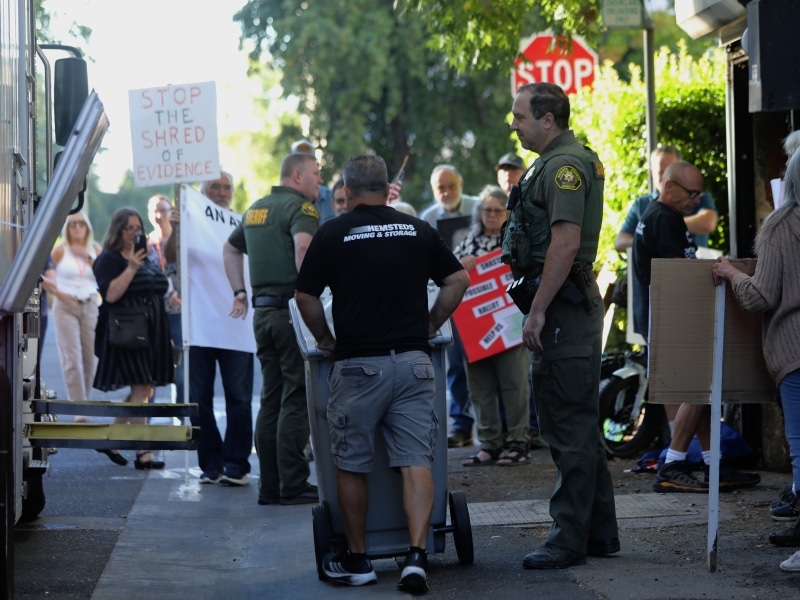
ROV Curtis oversees shredding of 2024 ballots amid activist protest
Several dozen people protested the mandatory shredding of 2024 ballots at the election office today. Amid the chaos, election official Clint Curtis supervised the proceedings with his signature cheerfulness.
Shasta County risks litigation after attempting to shield federal subpoena
The First Amendment Coalition has issued a legal demand on Shasta Scout’s behalf in an attempt to compel disclosure of a federal grand jury subpoena under public records law. A board meeting to discuss anticipated litigation is scheduled for Monday.
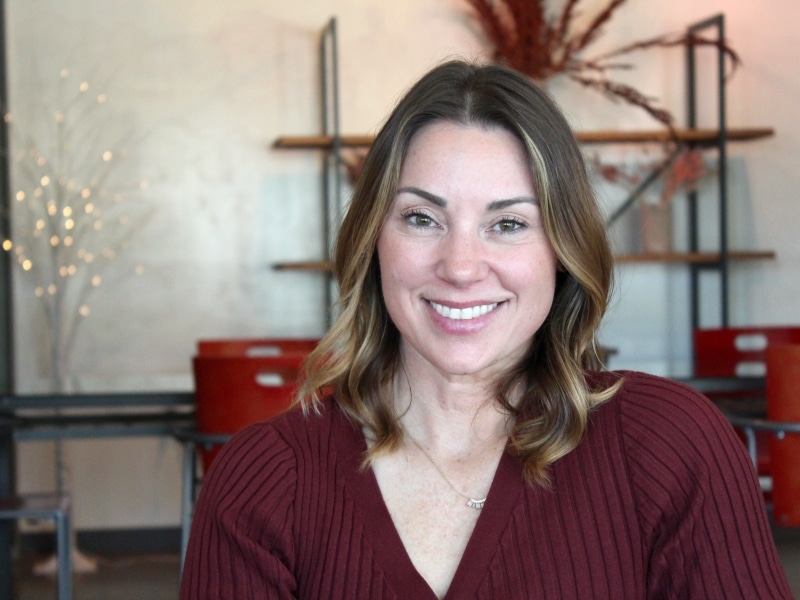
Meet Christina Prosperi for Redding City Council
There are nine candidates running for three seats on the council. Prosperi is a local business owner who wants to focus on the city’s budget, filling top leadership positions, collaboration within the council and staff morale.
Stroke is not something to ignore, especially the signs that lead to such. I claim my stroke to stress, self imposed or otherwise. I’m fortunate, so far, my only side affect seems to be short term memory and on-going exhaustion. Get to your primary Doc and see what is going on in your arteries. Yes, those halcyon days of Shasta County being Blue seem to be returning, as political cycles do. Check your registration at the Election Office. VOTE NO on Measure E & F in November.
If it wasn’t for term limits the Dahle’s would be milking us taxpayers for decades, and we would continue to be victimized by them for the rest of our lives. Chew on that! Sadly, the mostly urban District 1 voters will probably put another farmer/rancher/Trumper in their place 😒.
Where did you come from? Every time you write Shastanistan it shows that you never appreciated what we have always protected. 25 years is short time.
.
The electoral college keeps it from becoming group think on the coast leading the way. I love it when the red states come in on election night, like foreign armies to turn the tide of battle.
Spouses in politics is creepy, like evangelists.
.
Someone mentioned omicron… lol. Keep hope alive guys. More boosters anyone? Covid killed less people than a regular flu year, but by all means, never forget…. that it cost alot more than a regular flu year.
.
Guesstimating if her stroke was caused by covid is the same democratic science think that went into diagnosing Aaron Rogers achilles, Fauci’s ridiculous pronouncements, Gavins early dinner at French Laundry 6 feet distancing, child masking, shuttering only some businesses, and calling off school. Hey, masks at the hostess desk and then yank them for bread. Democrat science is #1.
Nice puff piece, but politics is a hardball game, and Megan Dahle was not asked the important questions that should be asked of the entire political class, which has such overwhelming power over citizens. So I’ll ask one. Mrs. Dahle, are you still a Trumper?
.
A point in question. Dahl co-wrote an anti-mail-in-ballot, restrictive voter-access act, CA AB 13 (Measure B light), with co-Trumper Acting U.S. Attorney Bill Essayli, a Trump appointee (demoted to assistant U.S. attorney by a federal judge) who promotes Trump’s false allegations of election fraud. That effort failed miserably in the CA Senate, but, based on as much of Dahl’s documented legislative record as a CA politician, I’ll bet $5.00 that Dahl would vote for the SAVE ACT, supports Trump’s white nationalist ICE mass-deportation program, and supports the Big Beautiful Bill that hurts hundreds of thousands of kids, seniors, workers, and health providers in her district.
.
Progressive and labor-tracking groups, including Courage California, regularly assign Dahle a low or failing score on their legislative report cards due to her consistent “No” votes on state-subsidized healthcare coverage and other public benefit expansions. Yet, Megan Dahle is confirmed to be covered by the State of California’s health insurance program, and as an elected member of the California State Legislature, Senator Dahle receives the same robust employer-sponsored health benefits package offered to constitutional and legislative officers.
.
Here are some interesting facts about Dahle’s district. According to the latest available U.S. Census Bureau data, there are approximately 135,854 people living below the federal poverty line in Senator Megan Dahle’s California State Senate District 1, This is about 25% higher than California’s overall statewide poverty average. About 40.3% of District 378,057 residents rely on state-subsidized health coverage.
.
A final question for Dahle voters:
.
“As you live in a vast, predominantly rural Northern California district—facing massive federal spending cuts that hit the region’s core social safety net and medical infrastructure, including SNAP (food for kids working families and senior citizens), Medicare, and educational opportunities, particularly hard—and as healthcare clinics and hospitals in Senator Dahle’s district are currently facing an extreme, documented risk of financial distress, service reductions, and potential closures, why do you vote for Dahle, a member of the Trumper–oligarchic economic political class whose family has received substantial personal tax advantages, massive direct federal farm subsidies, and specialized corporate deductions from Trump’s economic policies, as well as socialized medical care for their own……while the majority of Dahle’s district voters don’t?
Here’s more data illustrating the moral and medical problems citizens face in Senator Megan Dahle’s California State Senate District 1:
.
Of the roughly one million people living in California State Senate District 1, I estimate that 100,000 to 200,000 could directly lose or see significant reductions in Medi-Cal, CalFresh, or related benefits because of the Trump-backed H.R. 1 law. More than 400,000 Medi-Cal recipients in the district could experience indirect effects from reduced funding, provider availability, or access to care. This could translate into a loss of roughly 3,000–8,000 jobs in Dahle’s district.
The question, “Mrs. Dahle, are you still a Trumper?” is important because Trump is hurting her district. We know that Mrs. Dahle has enthusiastically endorsed politicians such as James Gallagher, a Trump-endorsed secessionist Trumper for California’s 1st Congressional District, and others, including Chad Bianco’s buddy, Michael Gates, a SAVE ACT proponent, former Department of Justice prosecutor, and ex-Huntington Beach city attorney who is aggressively interfering in our elections for Trump.
.
If Mrs. Dahle can’t (or won’t, out of embarrassment) answer this question, perhaps your Communications Director, Bruce Ross, can. Most of the nation is waking up to your party’s criminal leader. The newest Post-Ipsos poll, conducted between July 8 and July 13, shows that only 15% of 2,648 adults surveyed “strongly approve” of Trump’s job performance, and that a whopping 82% of working-class Americans say groceries and gas are unaffordable. If you’re still a Trump supporter, you’re on the wrong side of morality and democracy. Perhaps it’s time to differentiate yourself.
.
Perhaps the Dahles will eventually shift to a more centrist, if not progressive, position. After all, the Dahle Ranch was gifted to the Dahle family by FDR (hated by their Republican Party) under a Land Grant.
Just in; July 21.The court adjudicated rapist and 34 count convicted felon has just Cut Medicaid from two states, California and Minnesota, over allegations of fraud in their public health insurance programs.
.
Question. Will tRumpers Gallagher and Dahle just let this happen without puting up a fight?.
.
Remember, California is a doner state. Like MAGA Shasta County gets, tRump gets more $$$ from California then it gets.
WE voters can prevent Gallagher from ascending to Congress by voting for Mike McGuire, an experienced fighter for the north state.
Christian,
Thanks for keeping at the just resistance.
As long as I’ve been involved with Shasta county, 50 years, or since I moved to Shasta County, 35+ years, there seems to be and have been about a 60%/40% split between what has turned into conservatives and progressives living and voting in Shasta County.
What percentage of conservatives are maga? That’s the real question. I know there are sane republicans but where are they. Do any of them realize exactly what trump is doing?
He should have been removed from office after January 6th.
As a kid, I remember when Shasta County was “Blue” and voted for McGovern in 72. There are many folks resisting racism, sexism, legal, social, and economic injustice here in Shasta County. Folks like Frank Treadway, Don Yost, and Lee Macey are a few who have been at it for a long time and could list the who’s who of Shasta Co. Resistance. But poor education, white flight, and the conversion of the Dixie Democrats to Republicans have brought us to a point now where there are 60 K regestered republicans, 24 K Democrats, and 20 K NPP voters. Shasta is not half-and-half, but thousands have taken part in the local No Kings Protests here in Redding!
.
The MAGA count is subjective, but personally, I think if you’re still with Trump, you’re MAGA and are okay with fascism light; that includes all of what Trumpism is: racism, sexism, white nationalism, delousional thinking, lying, breaking political laws, and violation of the US Constitution, as the SAVE ACT does and breaking the law for Trump as in the 06 insurrection, and some Christo fascism, as in Bethel Chruch.
.
That said, I do know some well-known Republicans that I call Save and Save, who left the MAGA movement and Trump behind. However, they seem to be afraid to say so publicly. Heck, as a Democratic Progressive, I have even campaigned and contributed money to a couple, as we are so outnumbered.
.
There is hope. Some Republicans are waking up, and nationally, the adjudicated rapist- convicted 34-count felon- is polling underwater with the Independent vote.
.
Love how the adjudicated rapist- convicted 34-count felon- was loudly booed by fans during the 2026 World Cup final ceremony on July 19 at MetLife Stadium in New Jersey!
To some of you out there who like to yell about how Shasta scout is left-leaning, well riddle me this:
.
Then why the heck are they publishing stories like this about conservatives??
.
Don’t get me wrong, it’s definitely not far right leaning at all. Whether some of you people believe or not, there is a balance that can actually work for everybody.
Those Dahle’s sure have fallen in love with the government (taxpayer paid) pay checks, health care, vacation leave, sick leave, pensions, etcetera. Members of the California State Senate receive an annual base salary of $132,703. Additionally, they are provided with a per diem allowance of $236 per day for living expenses incurred while attending sessions or conducting official legislative business. I’m sure that the Dahle’s didn’t have that kind of financial security before getting on the government gravy train. It is puzzling to me why the mostly urban District 1 voters keep voting for farmers/ranchers. Most of us in District 1 by far are not farmers or ranchers.
I remember the dahls complaining about having to upgrade or replace their diesel fleet because of California clean air regulations.
I would imagine their fleet is just fine after tapping into the government tit.
Same as La mal fa
First, I want to acknowledge Ms. Dahle’s courage in the face of her stroke and resulting disabilities. Her story is why I feel lucky to be able to obtain medical care in Sacramento and the Bay Area when I need specialists, after suffering decades of misdiagnoses and mistreatments locally. I’m having back surgery at Stanford in 10 days.
.
I’m sick of the trope that rural areas are somehow victimized by being underrepresented. That notion is based on the mental calculus (better, gut feeling) that representation ought to be based on land area rather than people. It’s not just absurd—it’s the opposite of the truth. Rural areas are overrepresented in both the electoral college and the U.S. Senate. In the state Assembly and Senate, we are represented exactly in proportion to our numbers. Being in the political minority doesn’t change that. I have lived for 25 years as a political minority in Shastanistan. I’m not underrepresented on the Board of Supervisors. The MAGA assclown majority on the BOS are who my neighbors voted for. Thank the gods that the tide has apparently turned.
.
Further, as locals are loath to admit, we in Shasta County are revenue parasites, as are all the red rural counties surrounding us. We receive more money from Sacramento than we pay in. The same goes nationally. The blue states pay the bills, while most of the red rural states suck revenue from the national treasury. We are not forsaken—our country-cousin lifestyles are highly subsidized, and we are perpetually ungrateful. Ms. Dahle’s salty tears don’t alter any of that.
Thank you for this.
.
I feel like there’s more I would like to say on this subject, but I don’t think I could say it better than you have just said it.
A little off topic, can someone answer if Dahles husband ate the baby goat or participated in the bbq which cost taxpayers over 600k after the Sheriffs Office pulled out all the stops in retrieval of the animal.
I guess the reporter forgot to investigate. Mrs. Dahle has opened an FPPC Account to run for Lt. Governor in 2030. THAT account has over $50,000 in it. !!
We live in a subdivision in Redding and we don’t feel represented by Dahle at all. I guess it’s because we don’t live the same “rural” lifestyle that she does. She parroted the bogus State of Jefferson claim that rural areas are forgotten when the reality is rural areas receive much more money from the state than they contribute. I wonder if it was that “rural” ranching lifestyle of consuming large quantities of saturated fat (like beef) that led to her deteriorating health?
Covid, is that you?
Covid; still out there mutating, killing and maiming.
It is not ‘just the flu…’
There is SO MUCH info about what even a ‘mild’ Covid infection can do to your organs/blood vessels…and yet, everybody is happy to keep spreading, ignoring and pretending.
This is what happens when you ignore an airborne disease cuz MONEY…
WE live in a DEATH CULT.
The Covid-19 virus has mutated to become less virulent. It is not filling emergency rooms, ICUs, PCUs, and morgues like it did at the peak of the pandemic. The current variants don’t pose the threat of the original variants, though they remain a threat to people with vulnerabilities (as do other respiratory viruses). There’s an element of hysteria to your comment that doesn’t map onto reality.
.
The last major C-19 surge was late 2021–2022 with the Omicron variant. That’s a year earlier than Ms. Dahle’s 2023 cardiac event and stroke. It’s possible that her heart and lung issues were lingering effects from an earlier C-19 infection—especially given that she apparently spent a year prior to her hospitalization feeling hammered—but that’s pure speculation.
.
Even if C-19 was the precipitating cause of her health issues, it’s a huge reach to suggest that she became infected because she ignored social distancing and refused to get vaccinated. I’d like to know if that’s the case, because it goes to her intelligence and judgment, but I’ve never read anything to suggest she’s a science denier like so many of her MAGA supporters and allies.
Sounds a lot like a COVID related stroke to me.
It sounds more like arrhythmia, i.e. the need for a pacemaker —specifically atrial fibrulation. They performed a cardiac ablation to try and get her back into sinus rhythm. One of the huge dangers is that clots can form while the heart is in afib. The clots can be released when the heart returns to normal rhythm, causing a stroke.
There are medications like blood thinners that can help avoid this but if someone doesn’t come in right away it’s really a crapshoot.
Ask me how I know.