
New rules for public comment will take effect at Shasta board meetings starting July 1
The changes amount to a reduction in public access beyond what’s required by Senate Bill 707, the new state law which triggered the board’s discussion.
Yesterday, the Shasta County Board of Supervisors voted unanimously to make changes to rules governing public comment.
Some of the updates aim to comply with new state requirements under Senate Bill 707 which allows for increased remote participation by the public. SB 707 mandates that California counties provide a two-way telephonic or teleconferencing option, like Zoom, for public participation in meetings of local governmental legislative bodies — something the board will now offer.
But supervisors also voted to implement a 30-minute time cap on open public comment out of concerns that telephonic access would allow non-Shasta residents to take up valuable meeting time, with Supervisor Allen Long saying he’s “worried that we’re going to get hijacked from Europe.”
During the meeting, community members pushed back against the idea of a time cap, noting that it’s not uncommon for dozens of members of the public to sign up to speak during the board’s open comment period.
Chief Deputy Clerk of the Board Stefany Blankenship also assured the board that other counties which have maintained hybrid participation models since the pandemic have not experienced issues with telephonic overwhelm. She also noted that residency status will be collected during the speaker registration process, which will now be done electronically through kiosks placed outside the meeting room, or online.
Nevertheless, the board was united in its stance. Starting July 1, the county board’s open public comment period will be limited to 30 minutes total — meaning only about 10 speakers will get to participate.
The cap in number of speakers is a significant change from the board’s current rules, which don’t limit the number of participants who may speak to the board, giving all who request to do so a total of either two or three minutes to share their thoughts on any topic.
Why, and how, are supervisors changing public comment rules?
California has maintained transparent public meeting laws since the Brown Act was enacted in 1953, guaranteeing the public’s right to participate in legislative meetings. SB 707 amends the Brown Act to facilitate remote participation at those meetings, requiring jurisdictions across the state, including Shasta, to update local policies.
This is the second time Shasta supervisors have approved changes to comply with SB 707. In February, the board voted to begin the process of developing the platform and procedures necessary to accommodate public participation through telephonic services. The vote included additional rules intended to address the likelihood of increased public participation as a result of virtual participation. But as staff began readying the county to comply with those new county policies, Blankenship said yesterday, they identified several concerns.
The resolution approved by the board in February mandated that each speaker would only be able to speak on four agenda items. That’s something Blankenship asked the board to change yesterday, saying staff had not identified a reliable method for tracking or enforcing the item limit across multiple registrations.
Blankenship also requested that the board consider increasing the overall open public comment period from 20 minutes to 30, and that the period be divided equally between in-person speakers and telephonic participants.
When it comes to specific agenda items, the board set no cap, saying instead that the chair would have the authority to adjust the total time of public comment and number of allotted speakers per item.
The board’s new rules go beyond the requirements of SB 707, which does not set minimum or maximum time requirements for public comment periods, mandating instead that registration and comment opportunities must remain open for the duration of the comment period and that people be allowed to participate virtually.
Several public commenters expressed frustration with the board for implementing the 30-minute time cap, saying that this will impede citizens’ ability to relay their concerns.
Open public comment usually sees between 15 and 25 speakers take to the podium for two minutes each, with 19 at yesterday’s meeting. Supervisor Matt Plummer, who was recording the open comment period, said yesterday’s speaker time totalled to about 40 minutes, which the board agreed felt like a standard amount of time, historically.
Reducing open comment time to 30 minutes would be a significant reduction from that average. But supervisors moved forward anyway, citing concerns that telephonic access might balloon public speaking time beyond reasonable limits.
Chair Chris Kelstrom said that the board will “see how it goes” with this new system and make changes as needed, depending on how many participants decide to use the telephonic option. He said he is open to increasing the amount of public comment time at a later date if the current 30-minute rule proves too constraining, but did not say how he would assess constraints on public access.
Do you have a correction to share? Email us: editor@shastascout.org.
Author

Comments (11)
Comments are closed.
Related Articles
“No Kings” rally encourages civic engagement but sees a decrease in participation
Around 1,450 people attended the No Kings Get Out The Vote Rally on Oct. 17 in Redding, according to organizers. In March, about 2000 protestors organized.
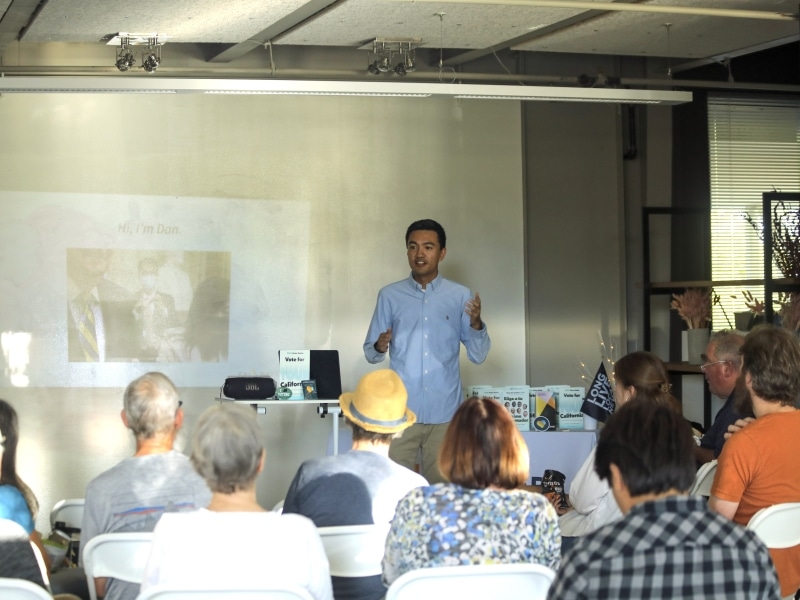
CalMatters, Shasta Scout host local voter information event ahead of midterm elections
CalMatters’ Dan Hu gave a presentation about statewide races and ballot propositions, as well as general information about CalMatters’ election tools. Shasta Scout’s Annelise Pierce presented about local ballot measures.
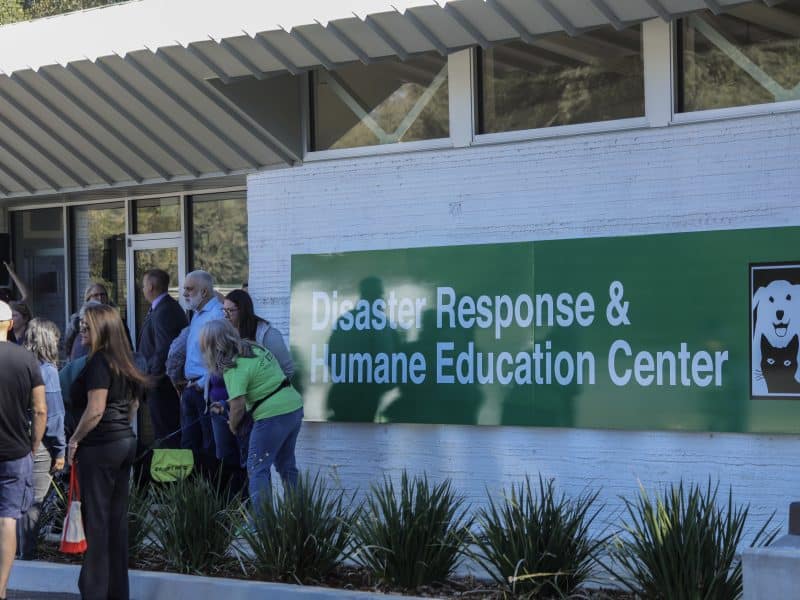
Haven Humane opens disaster response center built with Zogg Fire funds
The animal welfare organization opened a new disaster response and humane education center today next to its existing facilities in Anderson. The center was built with funds from the Zogg Fire that were designated for animal care in honor of Karen King.
During Covid the BOS had call in comments. It was great for those of us who are immune compromised & do not want to risk being in crowded rooms.
If things got out of hand, and they did a few times, Mr Moty would announce there would be a few more calls taken and then it had to end. It was later revealed that the clerk could see people calling multiple times. That was the problem, not people calling from out of county or country
On its face, the 30-minute cap, which goes above and beyond SB 707, seems to be a restriction, if not a violation, of the First Amendment and the right to petition the government. I wonder what the First Amendment Coalition says about this?
If your hobby is performing for your friends at berating the supervisors every week, this will feel like oppression.
People who actually have business with the board and have to sit through the show will be greatly relieved.
Is the 30-minute time cap per agenda item or 30 minutes total for each board meeting?
Robert: It’s a 30-minute cap for the open public comment period. For each individual item, the chair has latitude on open public comment time.
What to Avoid During Public Comment Exceeding Time Limits: Most agencies limit speakers to 2-3 minutes. Going over can result in your microphone being cut off, being ruled “out of order,” or removal from the room.
Using Profanity or Abusive Language: Obscene gestures, slurs, and aggressive, threatening behavior violate standard meeting decorum and First Amendment protections against true threats and disruptive conduct.
Directing Questions to Individuals: Do not try to engage in a back-and-forth dialogue or ask specific questions of individual council members, board members, or city staff. Address your comments to the entire legislative body as a whole, which will usually listen without directly responding.
Making Personal Attacks: Focus your comments on policies, procedures, and government operations. Avoid derogatory remarks or attacking individuals.
Displaying Large or Obstructive Signs: Many government entities (such as state or local boards) explicitly prohibit signs, placards, banners, and props that obstruct the view of others or present security risks.
Addressing Unrelated Topics: Ensure your remarks pertain to an item on the current agenda, or if speaking during an open comment period, ensure it falls within the agency’s jurisdiction.
I’ve lived here in northern California my entire Life. Right here in Shasta county. The rules you keep adding or setting that are against our constitutional rights. I will break every one of them!
Consider us educated. Now get Crye to conform. His forte is personal attacks.
If comments are suppose to be about items under county jurisdiction, why has Crye placed on board meeting agenda discussions about chemtrails and numerous election denier guest speakers like Dr. Frank and Brent Turner? Perhaps the hypocrisy is one reason Crye lost by a landslide.
“divided equally between in-person speakers and telephonic participants.”
I can just see it now: in-person speakers not allowed to speak will end up zooming from the audience to be heard…
Well, yeah. That’s gonna happen *now that you’ve planted the seed.*