
Open Notebook: As journalists, we too are threads in the fabric of our stories
Our Open Notebook series offers readers a behind-the-scenes look at how our journalists work. In this notebook entry, reporter Maya Nelson reflects on what it means to build relationships with sources and the public, and how those relationships play an integral role in shaping stories.
When I sat down to organize my thoughts for this open notebook, I started by making a list of all the lessons I’ve learned about journalism this summer as an intern.
It was three pages long.
One of those lessons was in brevity, so I will spare you the full enumerated list. And another was on trusting your gut — my impulse is to write about the first bullet point that came to mind, so that’s where I’ll start.
I came to Shasta as a reporter most drawn to journalism that gave the spotlight to ordinary people and their stories. At my campus newspaper at Brown University, my beat is undergraduate student life, and most of my portfolio is made up of features on students, clubs and staff. My preferred form of procrastination is to read 4000 word New Yorker articles. I wanted to do reporting with a beating heart in its chest, and the way to do that was to make real people the focus of my stories. That hasn’t changed. What has is the way I navigate working with, and representing, those people that breathe life into the stories I report.
It’s important first to know that I am, instinctually, a quieter person. Unlike the loud, fearless, perpetually-caffeinated journalist who is often the protagonist of early 2000s dramas, I am an introvert who on most Friday nights can be found with either a crochet hook or puzzle piece in her hand. I still get nervous before cold-calling. Many people are surprised when I tell them I’m a journalist. In interviews, my unassuming demeanor works well when a source just wants an open ear they can fill with their thoughts and worries, and less well when a PR representative is tactfully dodging all of my questions.
At the same time, I love people. I’m a city girl who feels most like herself in a bustling subway station and who created a cast of imaginary characters as a child. I love learning about people’s stories and trying to see the world from their perspective when talking to them. It’s why, even though I have to perform a breathing ritual before big interviews, I still identify deeply with the role of journalist.
I used to think drawing a good story out of someone meant sequencing a careful choreography of the right questions. That the strongest interviews would be the ones I prepared the most for, ones where I had a follow-up ready for every response.
Part of being a good journalist absolutely involves asking good questions — but it’s also about listening to what you’re being told. The best journalists don’t just ask, they respond.
The interviews that have stayed with me the most from this summer were those indistinguishable from a conversation. Well-crafted questions aren’t what gets a reluctant source to open up to you. How you respond is what sets the entire tone of the interview — determining whether a source feels heard or interrogated, or worse yet, used.
During many of the interviews I conducted for a deep-dive on pregnant patients with substance use disorder in Shasta, I would stop taking notes about halfway through, when the conversation drifted toward more vulnerable territory. Sometimes I closed my laptop. I knew I’d have the recording I’d asked their permission for, to rely on later — it was more important to give my source my full attention. I learned how to embrace interviews that took sharp turns off-course, where the carefully thought-through list of questions on my screen suddenly was useless to me, because the story wasn’t at all what I thought it was.
I stopped going into interviews with an agenda or a quote in mind. I let stories unfold as one connection brought me to the next, accepting that my web of sources didn’t have to be as neat as a spider’s, and that the threadwork would create a beautiful work of embroidery regardless. But above all, I learned how important it is to get every side of a story — to make sure the finished piece had enough threads to give it texture and depth.
Because journalism is, first and foremost, about what you owe the public. What makes that so hard is that you are balancing what you owe the public against what you owe your sources — people who have chosen to place in you an often-fragile trust that requires care. About halfway through my internship, I started confronting two very uncomfortable questions: how do you weigh those, sometimes competing, interests? How do you listen to a source with empathy and honor their openness while simultaneously scrutinizing everything you’re being told?
The first part of my answer came from an unexpected place: the Redding senior center. What started as a half-joking suggestion during our editorial meeting grew into a story that challenged what I thought I knew about fair reporting. On a sunny Thursday in July, I attended a protest being held by members of the senior center in response to proposed governance changes. The photos and interviews were great, and it would’ve been easy to head back to the office, write up what their demands were, quickly email the center’s president for comment, and put out the story.
But when my call with the center’s president made clear that there was much more to the story than I had seen that day, I didn’t know how to make sense of the conflicting accounts. I continued to meet several times with both groups, carrying competing accounts back and forth until I lost sight of the bigger picture. I realized I needed to step outside the conflict and understand what the center meant to the people who used it. What did seniors not involved in the dispute actually make of what was happening?
I arranged a tour with the center’s president, and saw firsthand the lively, dedicated energy of the volunteers and people attending classes and activities. Clearly, the center mattered deeply to people — there wouldn’t have been protests to begin with if people didn’t feel they had something worth fighting for. I realized that, for the people involved, this wasn’t a story at all: it was their community. And my reporting could inadvertently further intensify the conflict I was trying to document.
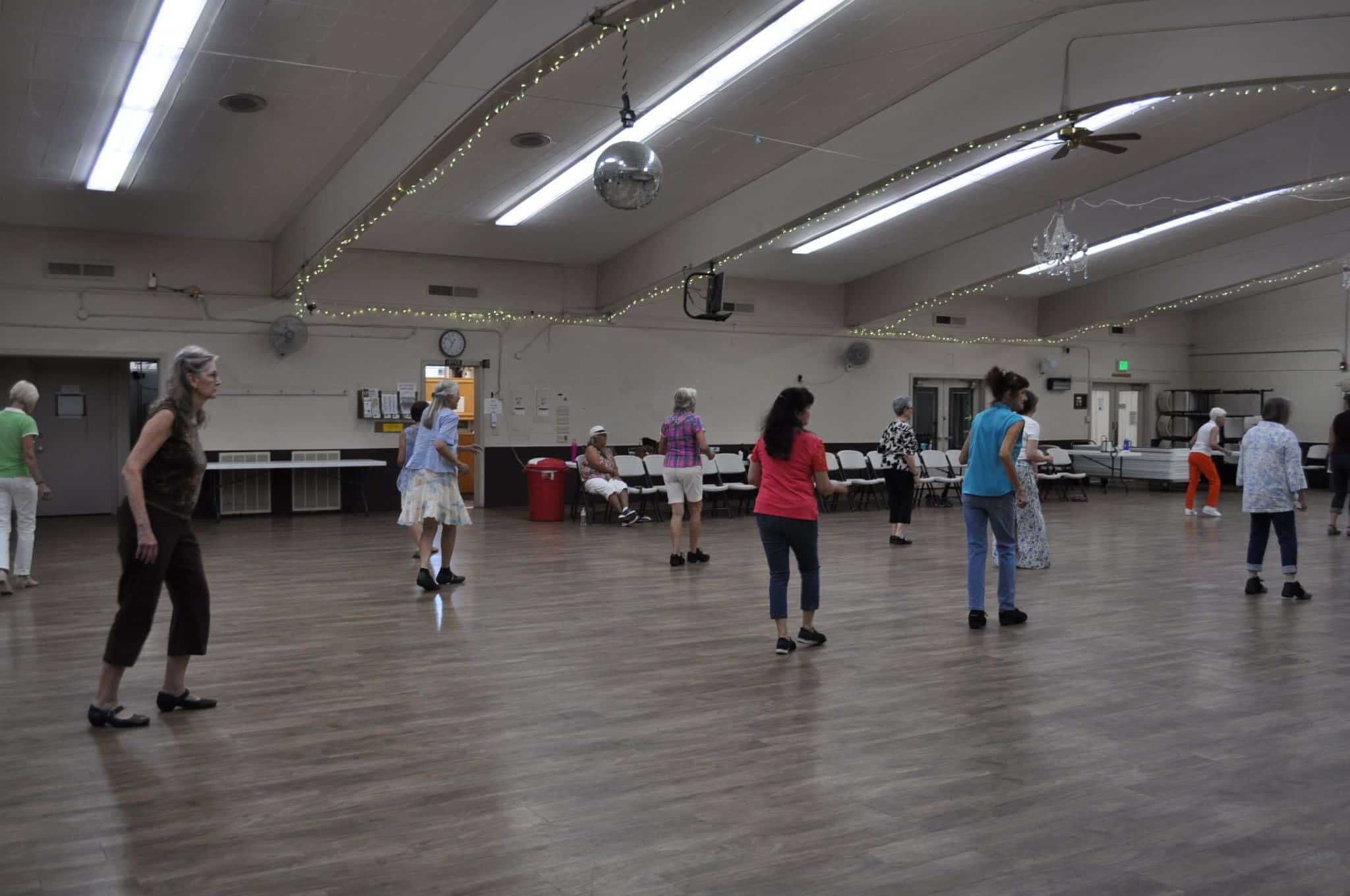
I spoke with several other seniors at the center who were running activities or participating in them, asking their perspective on the protest and what the center meant to them. I wanted the story to be about more than the spectacle of a protest. I wanted readers to see everyday life of the center, too, and to hear from the people whose experiences didn’t fit neatly into either side of the dispute. Thoughtful reporting isn’t just about getting both sides. It’s about getting many sides.
Seniors inside the center told me how grateful they were I was talking to them, when other outlets had focused their coverage on the visible protest outside the center. After the story’s publication, I had similar reach outs from people thanking me for taking the time to tell a more nuanced version of the story. I made a vow that in every future story I took on, no matter how straightforward it seemed on the surface, I would always dive deeper.
A few weeks later, I found myself putting that lesson into practice when a concerned parent emailed me about what was happening at their child’s school. I understood again how much impact my reporting could have on an entire community, and I wanted the story I wrote to illuminate rather than inflame. While reporting on a series of claims brought forward by staff, along with the school superintendent’s response, I wanted to understand the school beyond the allegations — to see its successes, its challenges and what it meant to the people who are part of it. I wanted to paint that more complete picture in my story.
As a journalist, your most important responsibility is protecting the trust you hold with your community. A newsroom is defined by its reputation, and that reputation is built through how it treats its sources and faithfully represents their stories.
I still want to do journalism that centers real people and their lived experiences as they relate to policies and systems. But I’ve learned that putting people at the center means more than making them the subjects of a story. It isn’t about casting a spotlight or pointing a microphone. Journalists can’t always step backstage and disappear from the story; how we conduct ourselves shapes what happens onstage too. Sources give a story its texture, but journalists are threads in the fabric.
Maya Nelson is a student at Brown University. She’s reporting for Shasta Scout as a 2026 summer intern with support from the Nonprofit Newsroom Internship Program — created by The Scripps Howard Fund and the Institute for Nonprofit News.
Do you have a correction to share? Email us: editor@shastascout.org.
Author
Comments (2)
Comments are closed.
Related Articles
Open Notebook: The intersection of mental health and criminal justice
Our Open Notebook series offers readers a behind-the-scenes look at how our journalists work. In this notebook entry, reporter Madison Holcomb shares insights into the considerations she makes as she reports on criminal justice stories, especially where mental health plays a major role.
Open Notebook: Justice for the Dead
Our Open Notebook series offers readers a behind-the-scenes look at how our journalists work. In this notebook entry, California Local News Fellow Nevin Kallepalli shares why he reports on the dead, as well as the living.
Open Notebook: Learning the relationship between caring and reporting
Our Open Notebook series offers readers a behind-the-scenes look at how our journalists work. In this notebook entry, summer reporting intern Moe Shimizu shares what she’s learned about the ways that care can inform meaningful reporting.
When you say “I came to Shasta” and “pregnant patients with substance use disorder in Shasta”, where exactly are you referring to? Shasta County?
I have only ever read someone use the term “in Shasta” on this news site. There are a lot of Shastas around here and most folks generally specify if they are referring to Shasta County, Shasta High School, Old Shasta, Mt. Shasta, Shasta Lake, Shasta Scout etc. etc.
Sorry, I don’t mean to be pedantic! I have enjoyed your writing and hope you have enjoyed your time in Redding. We appreciate the honest and thoughtful journalism.
I agree wholeheartedly with your statement about responsibility to the trust you must earn by telling the truth, even if doing so makes some uncomfortable. I have observed a huge change in journalism in my lifetime, from the days of Walter Cronkite, point-counterpoint news shows, elimination of the Fairness Doctrine, to our current age of news entertainment. Bias is a given as we all have our unique perspectives based on our life experiences, the challenge being to filter those biases out and present just the bare facts, free of spin. Keep up the good work and here’s wishing you well in your life’s pursuits.