
Open Notebook: Learning the relationship between caring and reporting
Our Open Notebook series offers readers a behind-the-scenes look at how our journalists work. In this notebook entry, summer reporting intern Moe Shimizu shares what she’s learned about the ways that care can inform meaningful reporting.
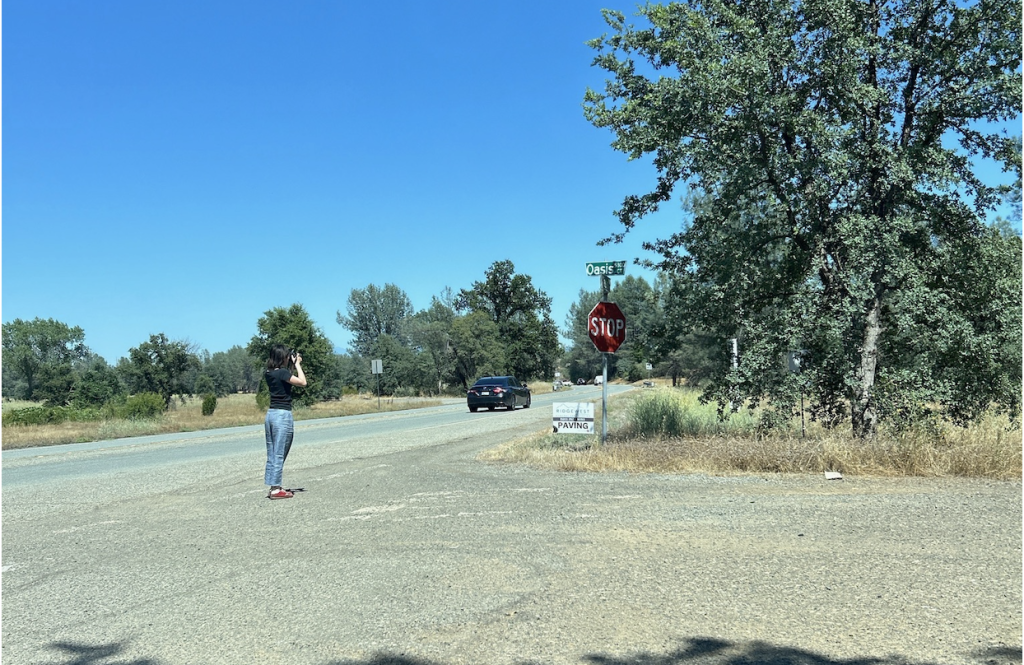
I came into this summer not quite knowing what to expect, but feeling excited by the prospect of getting to step into a community, most often described as “rural” and “conservative,” that had such complicated dynamics at play. I knew that I would, in many cases, feel like and be treated as an outsider looking in — I have no previous ties to California, let alone Shasta — and I was interested to see what reporting both as a journalist, and as an outsider, in such a unique community would look like.
I had never done daily news reporting before, with most of my background being in feature reporting and creative writing. To be frank, I have always had somewhat of an aversion to news reporting. I consider myself more interested in writing about ordinary people and emotions than dramatic events, and I associated much of the journalism world with reporters seeking out the most dramatic headlines for views, and even intruding into sources’ lives for a story, never to see or speak to them again.
When I chose Shasta Scout from a list of newsrooms on a national internship application portal, much of the appeal to me came from the fact that the newsroom seemed to approach journalism a little differently.
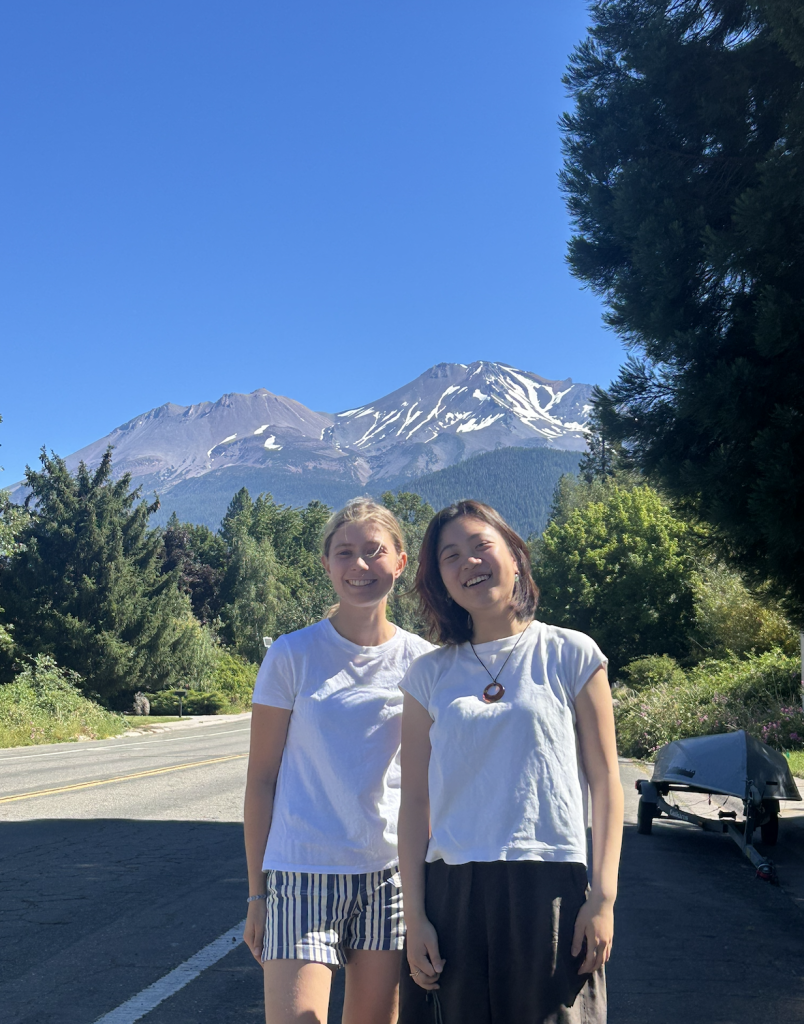
As we were thrown into election coverage on our first week in Shasta, followed by the county’s budget hearings the following week, one of the first stories I reported was on the Health and Human Services Agency’s budget presentation in front of the Board of Supervisors.
The main focus of the budget hearing was that HHSA was, and continues to be, facing a severe budget deficit, particularly in the social services fund. The research I did for that article was a great crash course for me in learning about the agency and public decision making, as well as the level of jurisdiction elected officials like county supervisors have in shaping people’s lives.
It was fascinating, but at the same time, I felt extremely nervous because I didn’t have the financial or technical expertise to understand all the details, and I wanted to get the facts right. I spent some hours in an endless rabbit hole of attempting to make sense of budget spreadsheets and agency documents, attempting to piece together what was going on.
There was a moment as I was reading back on the numbers in the transcript of the budget meeting, that the weight of the numbers and claims I was dealing with dawned on me in a different way. It seems obvious, but the social services fund supports some of the most crucial programs that can make or break a person’s life within the community. The numbers were one thing, but understanding what they represented for members of the community was another.
Following HHSA over the summer has taught me about how many competing issues, and their associated stakeholders, public agencies are responsible for balancing, and how directly their decisions can impact community members. It’s also made me reflect differently on the responsibility of the media in highlighting and explaining those decisions.
My summer reporting at Shasta Scout has been a repetition of these moments, where suddenly the tedious bits of research and reporting go beyond just gathering facts or piecing together interview quotes. The biggest lesson I’ve learned from the newsroom is that good reporting requires caring just as much as it does good thinking.
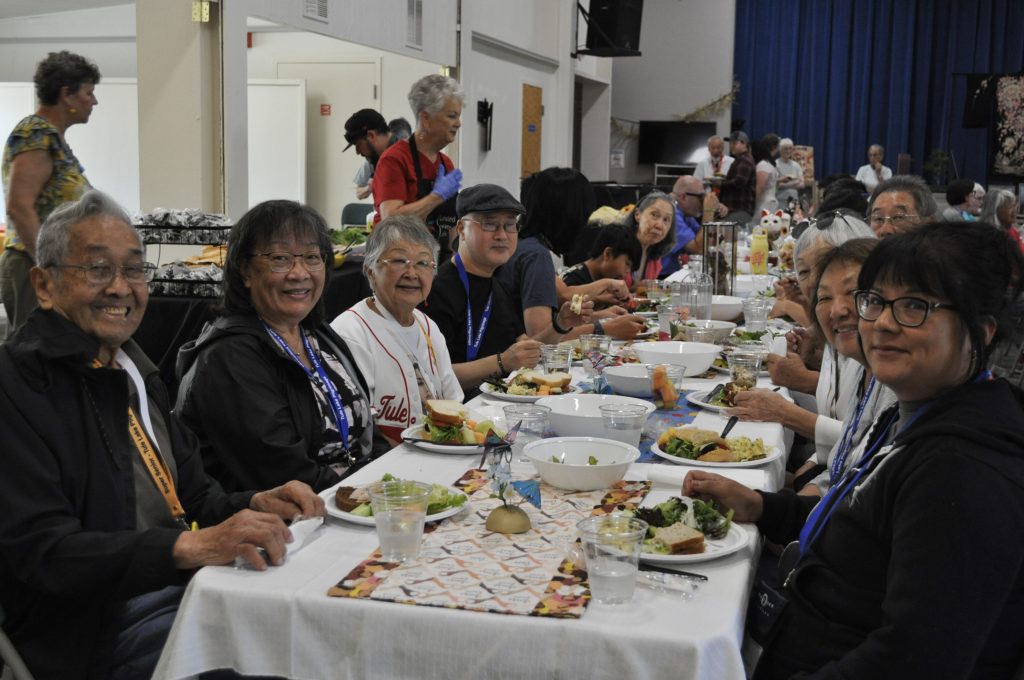
Around a month into my internship, I worked on a story about the Tule Lake Pilgrimage, an initiative by survivors and descendants of Japanese Americans who were incarcerated by the American government in the Tule Lake prison camp and segregation center during World War II. I reported on the pilgrimage’s lunch stop at the First United Methodist Church, where hundreds of pilgrimage members came through Redding as part of their long bus journeys to the prison camp site.
I was genuinely touched by the community the pilgrimage had created, as well as the effort the church members in Redding went through to make the pilgrimage feel welcomed. At the same time, I didn’t want to immerse myself in conversation too much — I’m Japanese, and my family currently lives in Japan, but I didn’t mention that fact to most people I spoke to, partly because I was aware I didn’t have the shared history of being Japanese American, and partly because I sensed that the article might become too personal for me. I wanted my job to be as a journalist, not an advocate.
One of the moments that sticks with me is a conversation I had with Mits Yamamoto, a 100-year-old survivor of Tule Lake.
Yamamoto was very friendly, and answered all of my questions happily, with a grin on his face. After I had finished asking him about his experiences as a young 16-year-old being in the prison camps, something shifted in me and I told him that I was Japanese, and had grown up in America.
He looked at me and said, “I was about to say, you look Japanese,” and gave me a big smile.
I don’t know why that moment affected me so much, but the simplicity of having common ground with someone I was interviewing shocked me. I didn’t want to have a sense of affinity for that particular story over other stories, but I couldn’t really help that so many of these people reminded me of my own family and the ways that I had been raised, and that I cared a lot.
From both the HHSA and Tule Lake reporting experiences, I realized that caring deeply about an issue and being a fair journalist aren’t necessarily two separate things — the two actually inform one another. The connection I felt with the sources who had opened up to me about their family’s stories at Tule Lake, and the knowledge that HHSA’s budgets were impacting real people who depended on these programs, were helpful to me in realizing my responsibility to the public in the piece. The caring only made me more rigorous about the facts I reported, and about making sure that I was being fair and clear in my writing.
Over the summer, I got to cover so many fascinating and complex stories — local nonprofit organizations, tribal celebrations, labor movements, and more. Each story was a repetition of questioning how the article could best be reported in a fair and thoughtful manner, but also questioning what the story would actually mean for readers, and what kind of change it could potentially create.
In my last story for the internship, I covered a local Shingletown movement to preserve the McCumber reservoir, a beloved body of water that may disappear as PG&E pulls out of its Battle Creek hydroelectric project. The story involved complex interests among local organizers, environmental organizations, tribal leaders, and elected officials regarding their respective priorities on the project, and their relationships to Lake McCumber — the complexity of the topic, I think, was fitting as a way to wrap up a summer of learning how many stories and perspectives coexist in Shasta, and how much each matters in its own way.
While I’m still an outsider in Shasta County, writing and reporting over the summer has made me grow to care about the community here. I’m leaving with a more complicated understanding of the responsibility of good journalism, and how much thoughtfulness and care that the work requires.
Moe Shimizu is a student at Yale University. She’s reporting for Shasta Scout as a 2026 summer intern, with support from the Nonprofit Newsroom Internship Program — created by The Scripps Howard Fund and the Institute for Nonprofit News.
Do you have a correction to share? Email us: editor@shastascout.org.
Author
Comments (8)
Comments are closed.
Related Articles
Open Notebook: The intersection of mental health and criminal justice
Our Open Notebook series offers readers a behind-the-scenes look at how our journalists work. In this notebook entry, reporter Madison Holcomb shares insights into the considerations she makes as she reports on criminal justice stories, especially where mental health plays a major role.
Open Notebook: Justice for the Dead
Our Open Notebook series offers readers a behind-the-scenes look at how our journalists work. In this notebook entry, California Local News Fellow Nevin Kallepalli shares why he reports on the dead, as well as the living.
Open Notebook: As journalists, we too are threads in the fabric of our stories
Our Open Notebook series offers readers a behind-the-scenes look at how our journalists work. In this notebook entry, reporter Maya Nelson reflects on what it means to build relationships with sources and the public, and how those relationships play an integral role in shaping stories.
Moe. You give me happy tears as I think of your generation carrying on as we boomers fade away. The USA is a nation of immigrants, and you are welcomed and loved for what you do.
I afirm you for stepping into the unknown – coming to Shasta County in CA. Huge leap! Then you came from ‘feature reporting and creative writing’ to reporting issues in a community with all of its complexities.
Job WELL DONE, Moe.
Wishing you all good in the future.
Moe, your skills are excellent and evident!
.
In your line of work, it must be challenging to balance “just the facts” with investigative reporting, which is too often maligned as “fake news” these days, while the social, political, and economic forces that shape our communities and nation also compete for control of “news.” And within this milieu, you jumped right out of the frying pan and into the fire and did great work!
.
Thank you!
Moe: Meeting you was a pleasure. You captured our communities’ desire to protect beauty. I admire your ability to report on the HHS crisis so objectively, yet reveal the love we have for Lake McCumber and the Tule Lake pilgrimage. I enjoyed reading your stories very much.
Moe, thank you so much for your time and energy you put into your work. I feel tremendous hope when I see young people rising to meet the challenges and diving in with curiosity, compassion, and professionalism. This is what it will take to get us back on track as a country.
I wish you all the best in your academic and professional pursuits.
I appreciate your hard work this summer and you will take Northern California with you wherever you go! Good reporting takes empathy along with the facts.
Thank you, Moe, for the care and thoroughness with which you handled your work this summer, and I’m delighted that it seems to have so meaningful to you. The piece this morning on Lake Macumber should stand as the benchmark against which future coverage should be measured, as you laid out the full range of complexities around this issue. As a Shingletown resident, I’m particularly grateful.
Thank you for using your talent for research and writing to teach us more about our area, Moe. You call yourself an outsider, but you have walked in our shoes, sat with us in our victory and defeat, and allowed yourself to be moved on our behalf. Just as you will take a bit of us with you, the imprint you leave behind is significant. You came as an outsider, but you’re leaving as much a local as you want to be. Thank you again.