
Redding efficiency study’s initial results identify $1.2 million available to return to general fund
A little over a million in funds that were designated elsewhere have been identified as available to be returned to the city’s struggling general fund. More comprehensive results and savings are expected to be presented later this month.
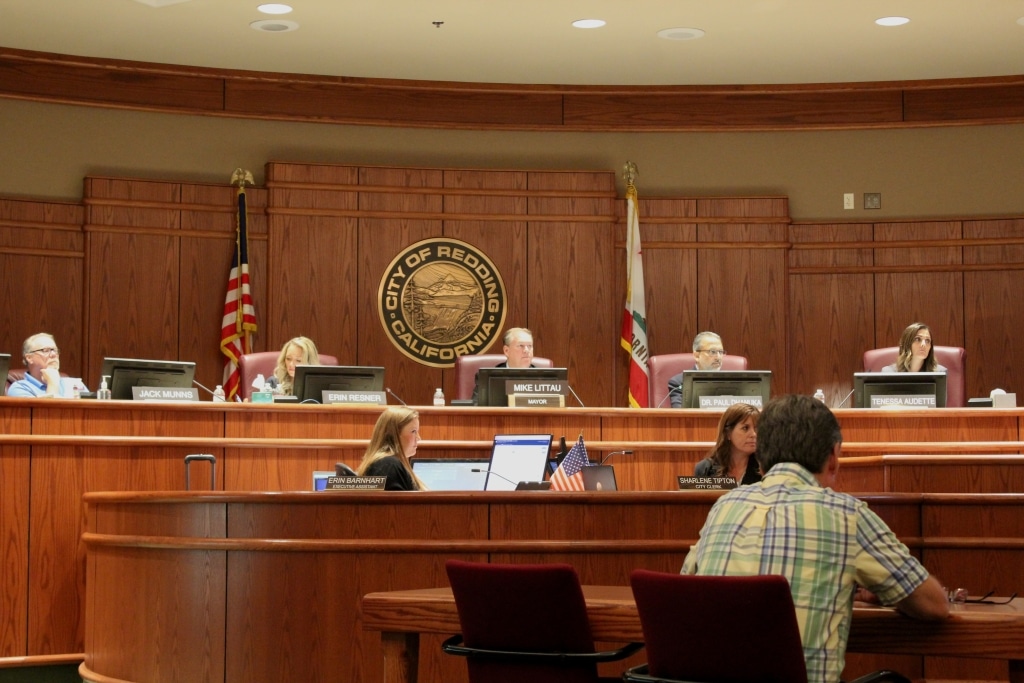
Initial findings from Redding’s efficiency study have identified about $1.2 million that was previously assigned for purposes where it is no longer needed, making the money available to be returned to the general fund.
The findings were presented at Tuesday night’s city council meeting, and they’re essentially funds that already exist in other areas of the city’s budget that aren’t being spent or weren’t already expended and can be moved elsewhere to relieve financial strain.
Late City Manager William Tarbox initiated the process of the citywide efficiency study shortly after he assumed office in February. He received council approval to use $300,000 to hire consulting firm Circle 6 to identify cost savings for the city, which has been struggling with its budget, especially when it comes to the general fund, a pot of money that can be used for a broad number of city purposes.
Interim City Manager Michael Webb presented what he referred to as “quick wins” from the study last night, which include $1.2 million that will be returned to the general fund and another $13.1 million to other funds including the enterprise fund, where water and electric user fees are held.
The initial returns found through the efficiency study are only a small fraction of the city’s $556.6 million budgeted expenditures. The general fund makes up a fifth of the overall budget, while enterprise funds make up over half.
The millions in freed funds identified through the efficiency study came from a variety of sources, Webb said, the largest being “carryovers,” which are funds or budget appropriations that weren’t spent in one fiscal year and carried over to the next. Other funding sources include stale encumbrances, or a budget portion that was set aside to pay for future obligations but never spent, and dormant Capital Improvement Project funds.
Council member Jack Munns noted that conversations around stale encumbrances and closed-out contracts were already had prior to Circle 6 pointing them out, and that processes to move funding around were already underway.
Another source of freed-up funds are the city’s vacant positions and a hiring freeze, which has been in effect citywide since the beginning of this year. Webb said there are currently 16 vacant positions, which is saving the city hundreds of thousands of dollars.
A more comprehensive assessment of findings from the efficiency study is expected to be presented by Circle 6 staff on Sept. 15. Circle 6 Principal Nathan Sprague attended last night’s meeting virtually and shared a few thoughts after Webb’s presentation.
“Tonight’s mostly about the quick wins, and they matter, but they’re not the whole story,” he said. “We really believe the greatest long-term value’s gonna come from the more complex operational and structural changes that you’ll see us discuss on the 15th.”
Those operational changes could include updates to the city’s financial processes and elimination of vacant positions.
During the public comment portion of the efficiency study discussion, community member Robert Sid argued that the city should be more focused on finding recurring annual savings to improve the budget in the years to come rather than on one-time fixes.
“Why are we paying an outside consultant up to $300,000 to identify financial and management issues that our existing management structure should already be identifying?” he asked.
“Finding old money is one thing,” he continued later in his speech. “Identifying management failure that allowed it to sit there and fixing that failure permanently is what I would expect from an efficiency study.”
Mayor Mike Littau asked Webb if long-term efficiency processes are included in the final results of the study, to which Webb said that is a priority.
The next city council meeting will be held on Sept. 15 at 6 p.m. at the Redding City Council Chambers.
Do you have a correction to share? Email us: editor@shastascout.org.
Comments (18)
Leave a comment
Related Articles

LaBarbera resigns from Anderson Union High School District Board
The school board member stepped down one day after the state authorized a lawsuit against her for the second time this year. She could still face legal action.
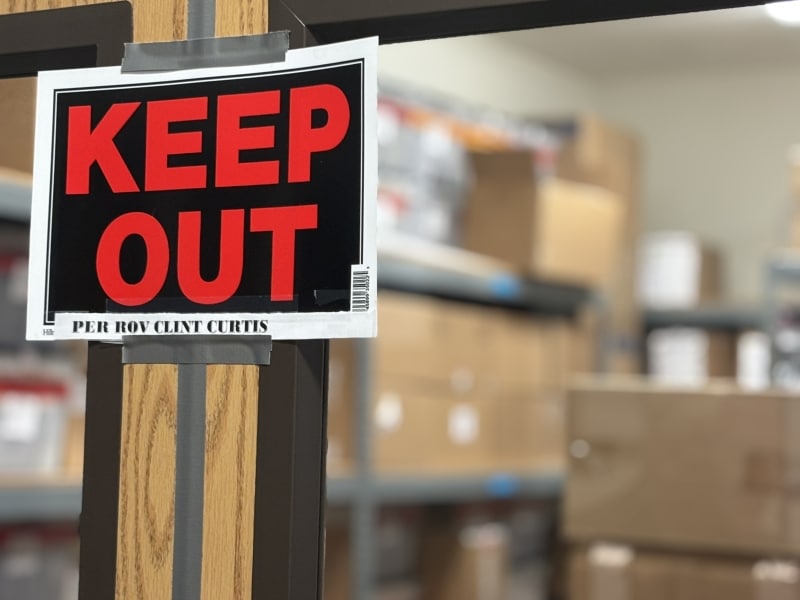
Curtis says he won’t appear in federal court tomorrow to testify
The elections official received a subpoena earlier this month to testify before a federal grand jury and bring June election ballots with him. He said he confirmed today he won’t have to go but did not explain who had informed him he was released from testifying.
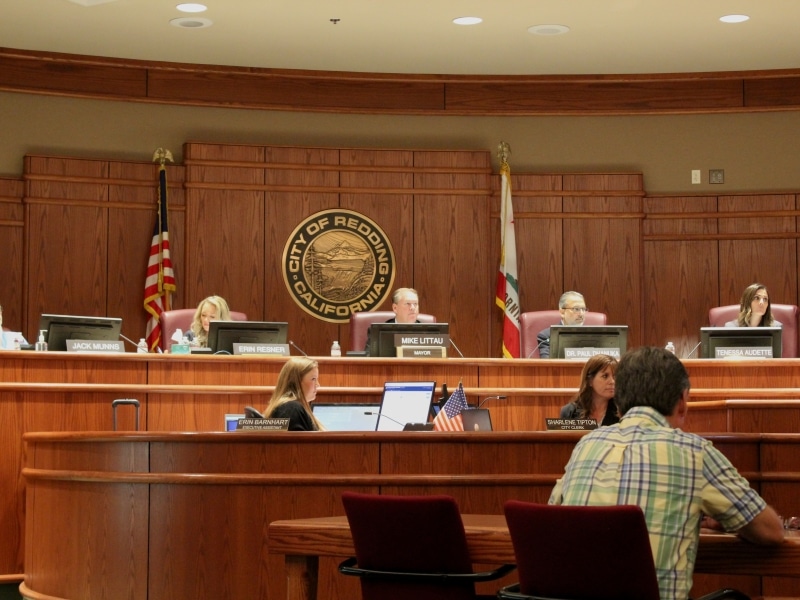
Redding council to open recruitment for a new city manager
The council is contracting Rocklin-based recruiter Ralph Anderson & Associates to run the recruitment. It’s a decision met with mixed opinions by council members, some of whom wanted to offer the role to the city’s interim manager.
I hope this isn’t a preview of the City Council asking for our utilities to be raised again, especially without a vote from the public. I do appreciate REU having the lowest rate of electrical fees in the State.
Trinity PUD:
$43/month + $0.05056/kwh
$68.28 for 500kwh
REU
$40/month + $0.1492/kwh
($114.60 for 500kwh)
Shasta Lake:
$26/month + $0.17788/kwh
$114.94 for 500kwh
Lassen Municipal
$30/month + $0.1900/kwh
$125 for 500kwh
PG&E
$5.91/month + $0.32561/kwh low income
$168.72 for 500kwh
$23.80/month + $0.32561/kwh high income
$186.61 for 500kwh
Those PG&E rates are why almost everyone in Palo Cedro has solar.
I would have solar if I had funding.
Unfortunately, for me the start up cost is prohibitive
And why did the council let the former city manager just let him choose, without other efficiency firm allowing to bid and spend $300k ? It may be time for the 2026 election to oust the incumbents and get fresh new voices on the council. Time for change at City Hall
So with all these millions of dollars found laying around, does this mean funding for mental health programs they want to cut can be restored, and the crater in front of the Target (and the other rapidly appearing potholes across town) can be fixed? Right? They’ll definitly do that and NOT spend it on more election ‘improvments’, right???
We don’t pay for those programs in large part—local taxes pay for only 2.5% of HSSA’s budget. The rest comes from state and federal funding. Trump’s “Big, Beautiful Bill” significantly slashed federal funding for human services to pay for tax cuts for the wealthy. That HSSA funding deficit won’t be filled by sweeping up money found lying around on the floor. Big cuts are inevitable.
.
MAGA is making life miserable for regular people. Funding cuts, slashed services, high food and fuel costs, high inflation on other good thanks to tariffs, floundering retirement accounts, reckless war adventurism… and it’s only going to get worse. Thanks, Obama.
“Council member Jack Munns noted that conversations around stale encumbrances and closed-out contracts were already had prior to Circle 6 pointing them out, and that processes to move funding around were already underway.”
.
Hopefully Circle 6’s presentation on Sept. 15 will hit the jackpot. So far, it looks like the City of Redding has paid Circle 6 $300k out of $1.2M to tell the Council what they already know.
I would have thought that end of project reviews and scrutiny of carryover budget items would be standard procedure. Seems like an obvious place to improve management.
Selah
“and another $13.1 million to other funds including the enterprise fund, where water and electric user fees are held.”
Prop 26 has entered the chat…
How much profit does REU generate over the cost of provisioning and salary/wages?
As a community-owned utility it is technically zero, although about 4% of REU’s revenue ($7 million out of $170 million) is diverted to the City of Redding’s general fund, ostensibly as a “payment in lieu of taxes” (PILOT).
Prop 26 doesn’t allow cities to raid their public utilities for funding, but in 2018 the California Supreme Court overturned a lower court ruling against Redding for this practice, claiming the transfers were a reasonable payment instead of taxes.
This is patently bullshit since PG&E serves half of Redding and they pay less than $500,000 in taxes to Redding. The city makes REU pay a 14x higher rate, more than straining the credibility of their legitimate PILOT claims…
There’s lots more that the city management can do to restore financial sanity at the city. Hey, City Council, here’s some low hanging fruit: Put some pressure on your managers to reign in the nonsense. For example: Pass a resolution that establishes the policy that requires managers to document why they are authorizing overtime. Find, then fire the managers who continue to allow overtime created by shift-trading or engage in chronic non-hiring to justify overtime.
“Tonight, mostly about the quick wins, and they matter, but they’re not the whole story,”
Standing in line for those quick wins in closed session, $1.2 million, was 13 unions representing city employees wanting raises.
So….where & what did they “take” the funding for?? What did they gut?
“Why are we paying an outside consultant up to $300,000 to identify financial and management issues that our existing management structure should already be identifying?” = a clear symptom of corruption + incompetence + wasteful spending.
FYI: the starting annual base salary for Redding’s City Manager is $295,000 = a SUMPTUOUS salary paid by taxpayers.
We get it. You’re resentful of successful professionals who make more money than you. You don’t need to keep humping the same key on the piano.
THIS!