
Shasta College reports early success with use of county opioid settlement funds
College officials say Shasta County’s $889,000 investment is helping students stay enrolled, complete degrees and enter the behavioral health workforce. The presentation follows public scrutiny over how the county’s using millions in opioid litigation funds.
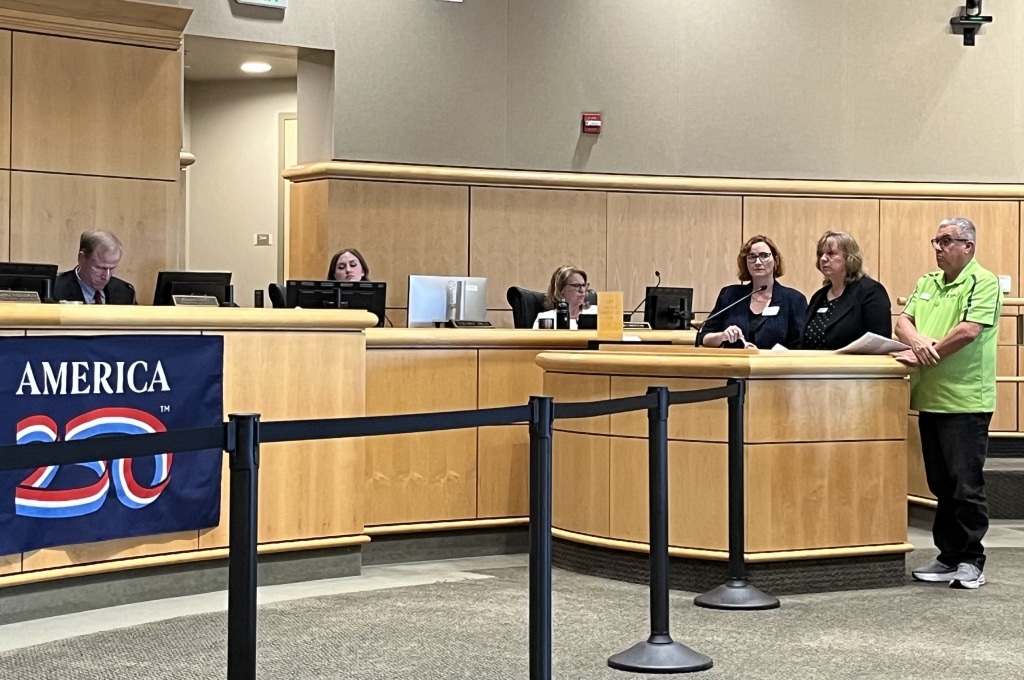
Seven months after the Shasta County Board of Supervisors approved about $889,000 in opioid settlement funding for two educational programs, Shasta College officials say the investment is paying off.
During today’s meeting, administrators from the college shared the first progress report on the use of opioid settlement funds for two programs, one that supports formerly incarcerated individuals and another that helps prepare students for careers in addiction response. The data-rich report is the first of five biannual updates required under the county’s agreement with the college, which runs through the end of 2028.
To date, Shasta County has received about $10.5 million of an anticipated $40 million from opioid litigation settlements. The funding is intended to support prevention, treatment and recovery efforts, addressing harms caused by pharmaceutical companies.
In late 2025, the board approved the use of settlement funds to expand the Shasta College STEP-UP program. The abbreviation stands for Shasta Technical Education Program-Unified Partnership, and provides financial and logistical assistance to formerly incarcerated students, particularly those affected by substance use disorder.
The ultimate goal of the program is to reduce recidivism rates. Students also receive the opportunity to apply their instruction in real-world situations through internships managed by the college’s Alcohol and Drug Studies program.
Dean of Student Services Sandra Hamilton told the Shasta County board today that 15 STEP-UP students — out of about 100 enrolled in the program — received a combined total of more than $12,000 in direct assistance for books, laptops and other educational expenses.
The funds, which averaged to about $800 per student, allowed them to take fuller courseloads and improve their academic performance, Hamilton said. Nearly all of the students qualified as low-income under federal financial aid guidelines, she added, noting that 60% still had more than $10,000 in unmet financial need, even after receiving aid.
Opioid settlement funds also supported students in the college’s Alcohol and Drug Studies program by providing stipends for students completing required internships in behavioral health settings. This spring marked the first cohort’s completion of practicum placements in community settings such as Empire Recovery, the Good News Rescue Mission and Visions of the Cross.
According to Career Services Director Jenny Beckman, a total of $38,000 in stipends helped reduce financial barriers for about a dozen students who are completing those unpaid internship requirements. The stipends can be used by students to address their most commonly cited financial challenges, including transportation, fuel and housing costs.
Several students participating in the internship program told the college the stipends allowed them to leave second jobs so they could focus on completing their education. The internships also appear to be translating into employment — 45% of participating students received job offers from their internship sites, Beckman said.
So far, the college has spent about $50,000 of the allocated $889,000 in opioid funding. The slow start was due to the funds arriving in late spring, only shortly before the end of the semester, college staff said.
The board’s decision to allocate opioid funding to Shasta College’s two programs was approved by the board last year, 4-1. The dissenting vote, Supervisor Matt Plummer, said at the time that he’d like the board to be more selective about the use of opioid money. Plummer asked several clarifying questions during the college’s presentation today, adding that it was “encouraging to see these early results.”
Decisions about how Shasta’s nearly $40 million in opioid settlement funds should be allocated has been the subject of ongoing debate over the past year. In addition to the Shasta College funding, the board has allocated $4 million toward youth organizations focused on substance use prevention, while another $2.2 million has gone to the Good News Rescue Mission’s drug treatment program.
That leaves nearly a third of what the county has received so far unspent, something former Supervisor Mary Rickert addressed in a fiery comment to the board today, asking them to take their responsibility to the public seriously.
“We worked really hard to get those millions and millions of dollars, and I really am troubled at not seeing after a year and a half how that money has been spent,” Rickert said, adding that the board will be “rendering an account to our Lord.”
Maya Nelson is a student at Brown University. She’s reporting for Shasta Scout as a 2026 summer intern with support from the Nonprofit Newsroom Internship Program — created by The Scripps Howard Fund and the Institute for Nonprofit News.
Do you have a correction to share? Email us: editor@shastascout.org.
Author

Comments (8)
Comments are closed.
Related Articles
Redding high school students call for tobacco ordinance enforcement
Students called on the Redding City Council to follow through on enforcement of a tobacco ordinance passed last year. Doing so, they said, would help address Shasta County’s high rate of teen tobacco use.

Redding declares emergency in anticipation of El Niño, makes plans to clear congested drainage ditch
The cyclical weather event is expected to bring heavy rainfall to Northern California this winter, something especially worrisome for those who experienced severe impacts from last year’s flooding.
Flock talk fizzles at Anderson council meeting
The council took no action even after Anderson Police Chief Oliver Collins’ acknowledged that the Anderson Police Department had previously granted Flock login access to employees of other agencies, something he described as “wrong.”

I agree about Mary !! she can certainly voice an opinion, but she has no business talking about this. It is out of her purview and control! Or is it?
Actually the opioid issue was something I worked very hard on as a supervisor. Shasta County has one of the highest substance abuse rates in the state. I got medically assisted treatment program in the jail until Covid hit. I’m 100% in favor of the Step Up program. What I’m upset about is this boards lack of awarding settlement dollars to treatment programs so the person on the street can get treatment now. The state guidelines are clear as to how this money should be spent and this BOS has NOT spent the money for timely treatment. And I do a have a right to voice an opinion because I assisted with our county counsel to secure $40m for treatment. I invested a lot of time and energy to get this money for our citizens to make Shasta County a healthier place to live. No supervisor on the current board had anything to do with securing these funds.
The city always funnels grants into local religious nonprofits 2.2 million $17.8 million state grant from the California Department of Health Care Services $100,000 Grant: Allocated via the city’s ERF program for micro shelters and $3,000,000 Grant: Provided through the City of Redding’s Encampment Resolution Funding (ERF) for some place to put those micro shelters, are we any better for it as I look out my car window and see a half naked homless man walking into traffic and screaming at imaginary things or the large group of homeless camped out in front of stores?
The Step-Up program has proven results and has helped local kids out of addiction and on their way with counseling and a college degree. This will give them confidence and a chance at a productive life. Even Supervisor Plummer now understands this is a good program. I’m not sure why Mary Rickert is hating on this program. I am losing a lot of respect for her.
My guess is she would like to see some of the money used to get addicts off drugs first, before they attend college or trade schools.
From the article, I don’t see that Mary Rickert was hating on the SC program, but that she wants to see more of the money committed.
I love this program! However it’s not a opioid treatment program. It supports people who have come out of addiction issues and I am 100% in favor of the program. Please watch my comment on the county video. Not sure why you thought I was against it. I’m not.
I think that you and your buddy Jon are confused. I do not see where Mary said anything bad at at about the Step-up program, per se. What I do see is her frustration with Couny’s foot dragging in the apportionment of the remaining $30M in funds.
In re her right to comment: I’ll double check, but I’m pretty sure that she is a Shasta County resident and taxpayer with all applicable rights and privileges. The ones who have no right to talk are those who lack the ability to read and comprehend.