
Shasta supervisors say voters should make decision on Flock cameras
County board members, who voted to approve Flock cameras last year, said they don’t want to be decision makers on removing the technology. Instead, they hope to let the electorate decide.
“Do I want to be responsible for your loved one not being protected?” Supervisor Corkey Harmon asked during today’s county board meeting. “I don’t want that responsibility.”
Harmon spoke those words after hearing from over 40 speakers during an agenda item on Flock cameras that took more than three hours. In the end both he and other Shasta County supervisors declined to make a decision on ending the county’s contract with Flock, instead voicing their hopes of passing the responsibility to future voters.
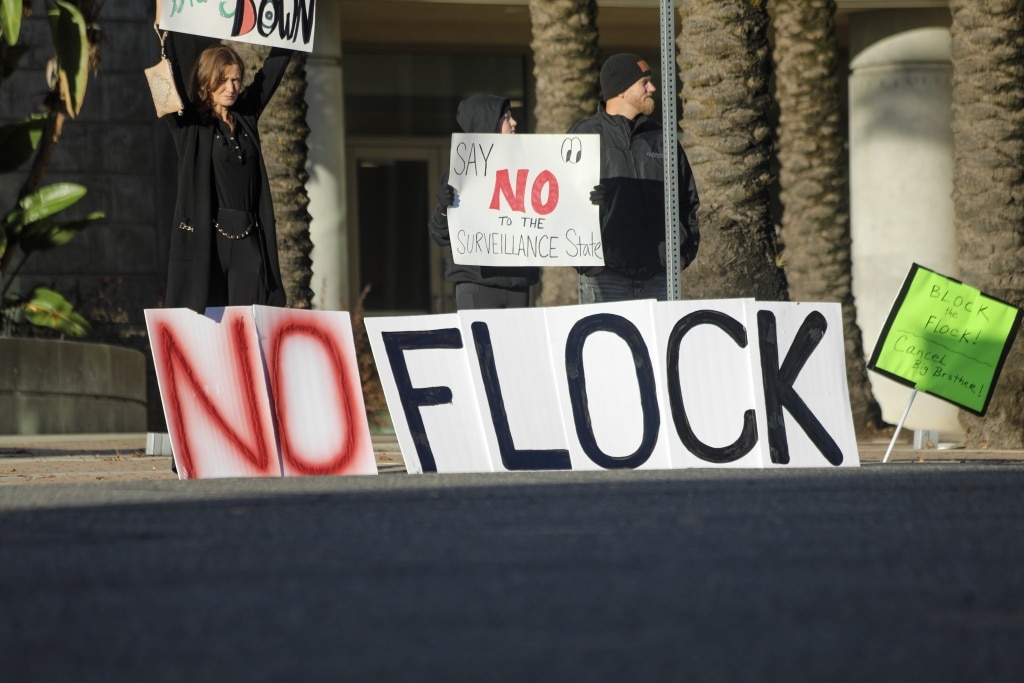
Since September, some Shasta residents have been organizing to have the 24 Flock cameras that were installed across the county last year, removed. Groups such as Flock Off Shasta County have documented community opposition to the cameras through petitions, public comments at meetings and, as of this morning, a small protest.
While supervisors expressed solidarity with many of community members’ concerns today, they took little definitive action, voting instead to look into how to bring the issue to local ballots. At Supervisor Matt Plummer’s insistence, the board also voted to request a presentation from the sheriff’s office on potential updates to policy.
Both votes left activists mostly disappointed.
A multitude of words with little action
Only about 30 protesters showed up for a protest outside the county’s administrative building today before the board meeting but many more arrived for public comment, including some who said they were speaking at a public meeting for the first time.
Most voiced their opposition to the Flock cameras, which are also known as automated license plate readers, or ALPRs. According to Plummer’s count, 33 speakers opposed the cameras while only eight supported them.
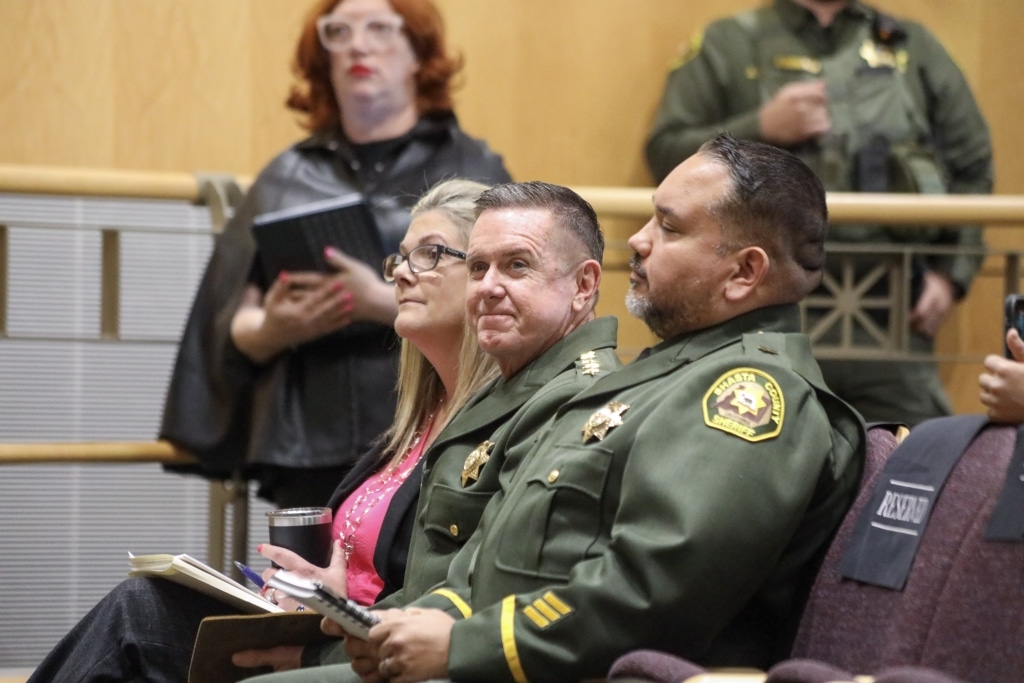
The public sounded off after a presentation from Shasta County Sheriff Michael Johnson and Lieutenant Kody Bodner on the cameras’ intended purpose and operation.
Johnson used the presentation to emphasize his willingness to make policy changes, and sharpen oversight in an attempt to keep the cameras operational. He said community pushback had been helpful to his assessment of what could be improved.
“I got educated on a lot of things and had a chance to look at our internal system and see that we do have the ability to tighten some things up and to maintain the integrity of that system,” Johnson said.
Bodner’s comments included an explanation of why Flock audit logs released by the sheriff’s office this summer in response to a Shasta Scout records request were missing information required under state law. According to Bodner, all required information was documented in audit logs as the state requires but wasn’t released because it included personally identifiable information.
Similarly to past meetings, Johnson and Bodner attempted to reassure the public with mentions of data retention limits, and rebuttals to concerns about facial recognition technology. They also summarized the perceived financial benefits that come from utilizing the cameras as a “force multiplier” at a much cheaper cost than employing extra staff.
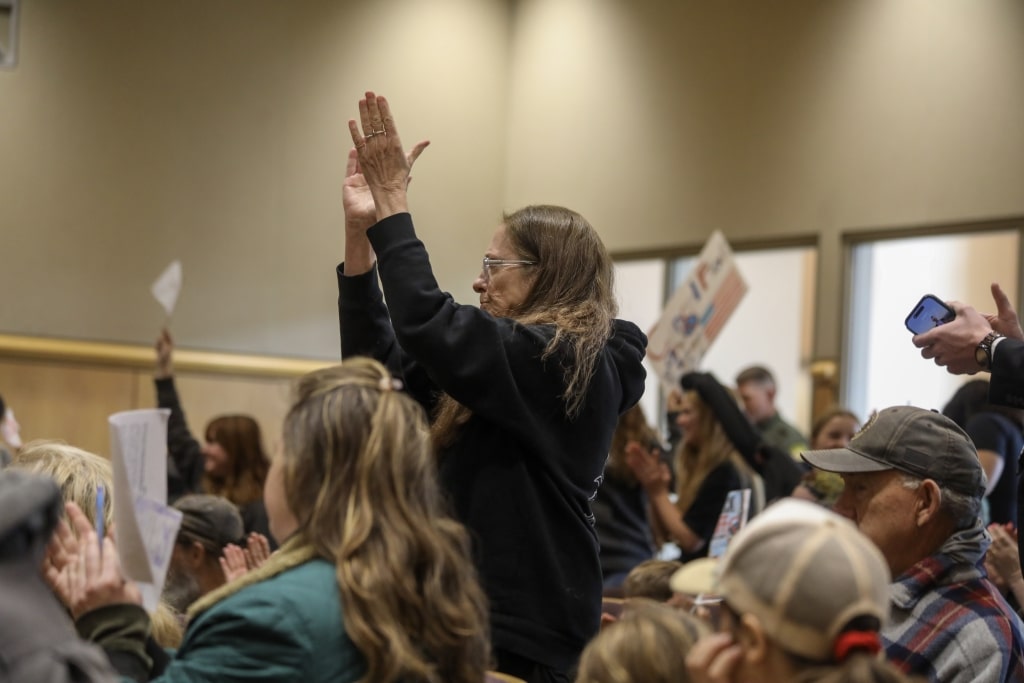
Public comment, which began after the sheriff’s presentation and continued for more than two hours, overwhelmingly opposed the cameras, calling on the board and the sheriff to take the cameras down or consider stronger safeguards. Some took issue with the sheriff not having addressed issues before being called out by the public.
“You should have seen [the problems] and realized the faults in what you were doing before we brought it to your attention, not after the fact,” said one public commenter. “So you’re asking us to trust you. I can’t trust you because you’ve already implemented this, and it’s wrong.”
Public commenters were not alone in their opposition, with some supervisors also sharing concerns.
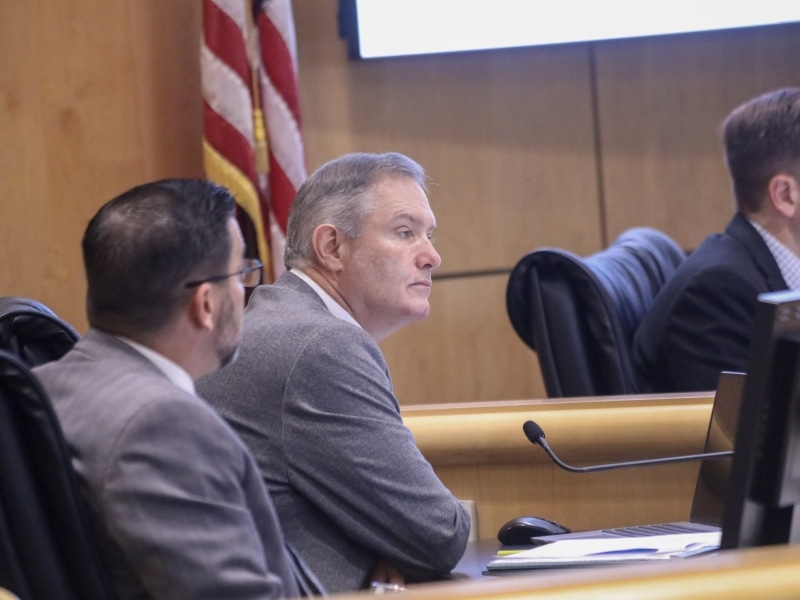
Calling out what he said were inaccuracies in the sheriff’s presentation, Supervisor Kevin Crye made a motion to bring Flock back on the next agenda in order to propose a charter amendment or other legal ballot option that would allow the public to vote on prohibiting Flock within the county’s jurisdiction in future.
“I’ve lost faith in government in my four years since I’ve been up here,” Crye — who runs county government along with his fellow supervisors — said. “I think at the end of the day, the electorate should be the ones to be able to weigh in on things of such a substantial nature.”
It was a change in tone since he voted to approve the use of Flock cameras, along with other supervisors, last year. His motion to attempt to bring Flock cameras to the ballot came only after an attempt to gain support from other supervisors to ask the sheriff to turn the cameras off altogether. No one seconded that motion.
Anderson City Council member Darin Hale and community member Ashley Rudolph, who have coordinated pushback against ALPRs in both Anderson and Shasta — said after the meeting that they felt some relief that there would likely be further progress on the issue. But they mostly expressed disappointment with how little action supervisors took.
“I am beyond frustrated with the way that board and our county elected representatives continue to circumvent the will of the people,” Rudolph said, expressing her perspective that supervisors should have voted to ask the sheriff to turn the cameras off, rather than simply pushing the issue to voters in the future.
Noting that opposition to Flock cameras crosses political divides, Rudolph said she feels the board’s lack of definitive action on the cameras has the potential to create new divides in the community.
“I keep making lots of new friends [around Flock activism],” she said, “and I think it’s one of the greatest things that could happen in our community. And the bad thing is going to be [that the board] is going to create a divide in our community between us and the police department.”
During the meeting, Johnson responded to the board’s decision to attempt to place ALPRs on ballots with acceptance, saying he agrees that the people themselves should decide what they want from local law enforcement.
“I’m an elected official just like the rest of [the supervisors] are and I’m elected to discharge the will of the people and I always have to balance that with public safety and what’s in the best interests of the county,” he said. “I trust the voters of this county to make that decision.”
Have a correction to share? Email us: editor@shastascout.org
Author

Related Articles
Supervisors vote to extend contract for Shasta CEO David Rickert
The extension does not come with a pay increase, but will add another four years to the CEO’s term, which was previously slated to end in December of 2028. Supervisors Crye and Kelstrom pushed through the 3-1 vote as they prepare to vacate their seats to make way for a new board majority.

California requires law enforcement to track reasons behind use of Flock cameras. It’s not clear if that’s happening in Shasta
Flock camera audit logs released by the sheriff’s office do not include documentation of the reasons for why the system is being accessed, something that’s required under state law. A staff analyst claimed reasons are being logged but weren’t disclosed.

Redding City Council to hold public hearing on Redding Electric Utility rate increase
REU is proposing a 6% increase for two years. The public is invited to share their thoughts during Tuesday’s public hearing.

Comments (0)
There are no comments on this article.