
Sikhs from Shasta and surrounding counties celebrate Vaisakhi in Anderson
Vaisakhi is a springtime celebration in the Punjab region of northwest India that’s celebrated by Hindus and Sikhs alike. For Sikhs, it commemorates an important moment in the religion’s early history.
From this past Friday to Sunday, the central Sikh holy text Guru Granth Sahib was read aloud in the prayer hall at the Sikh Centre in Anderson. The 48-hour marathon reading concluded on Sunday morning. About 200 congregants from Shasta and the surrounding counties came to observe the ritual and participate in other festivities commemorating Vaisakhi.
The festival is celebrated by Sikhs around the world. It predates the Sikh religion, which was founded by Guru Nanak around the year 1500. Before the foundation of Sikhism, Vaisakhi was observed as a regional springtime festival, which continues to be celebrated by Hindus in the region of Punjab. But for Sikhs, the festival marks Vaisakhi day in 1699, when a Sikh guru performed the first initiation ritual of five Sikh men, establishing what is now called the Khalsa. The Khalsa, or “pure,” refers to baptized Sikhs who commit to the principles and morals of the religion while adhering to specific requirements of the faith.
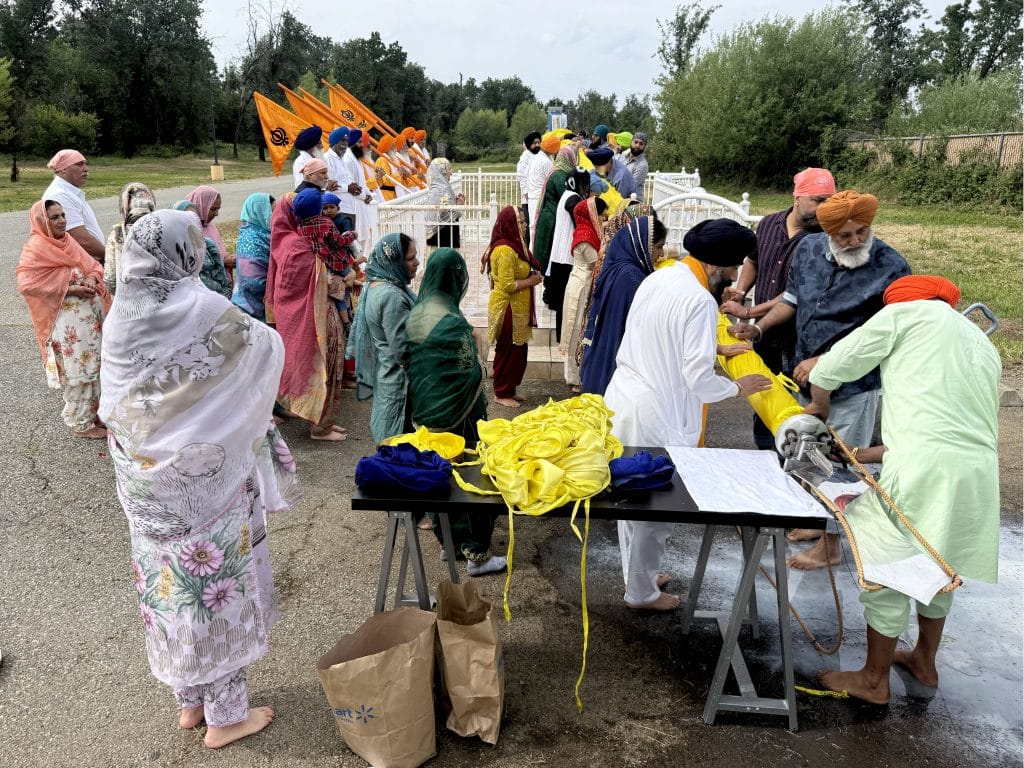
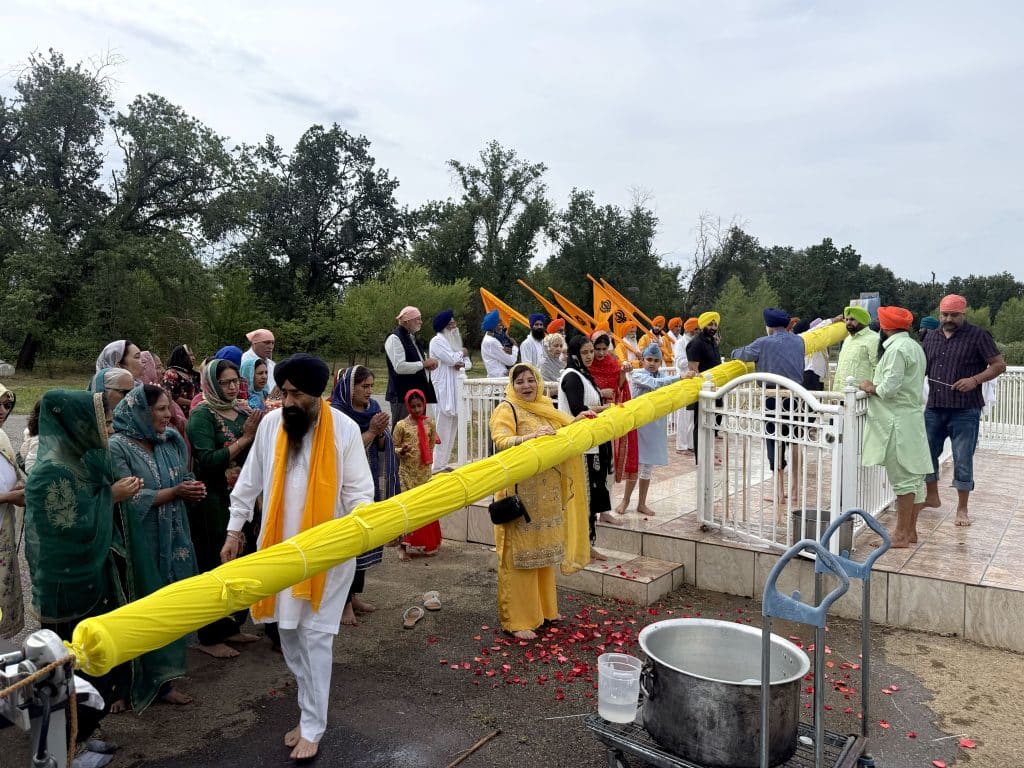
In Anderson, as the holy text was still being read on the morning of May 3, a group of congregants gathered outside to change the dressing of the nishan sahib, a flagpole in front of every Sikh temple that is wrapped tightly in fabric. The bottom of the 50-foot pole is fixed to a lever that can be tipped over to the ground. Worshipers chanted as they cut off the old dressing, bathed the pole in milk, rewrapped it with fresh fabric and threw flower petals as it was re-erected.
The ceremony happens twice a year, said Sikh Centre Director Amarjit Singh. Once the redressing was complete, Singh said a prayer and handed out prasad, a sweet offering made of clarified butter, sugar and whole wheat flour.
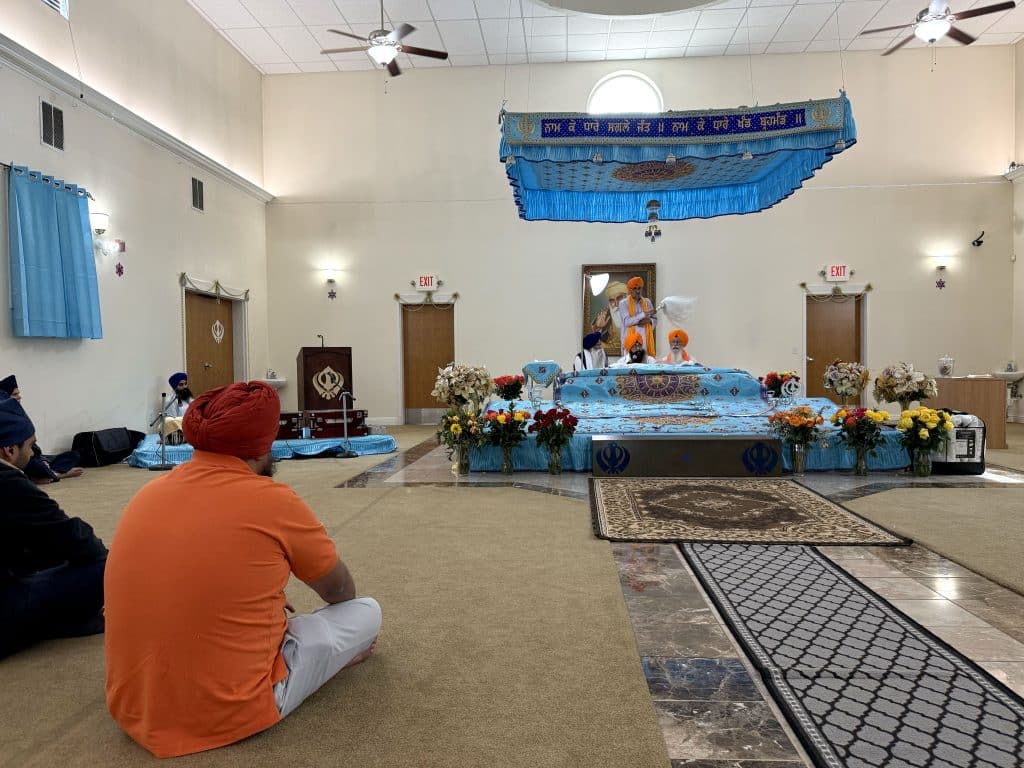
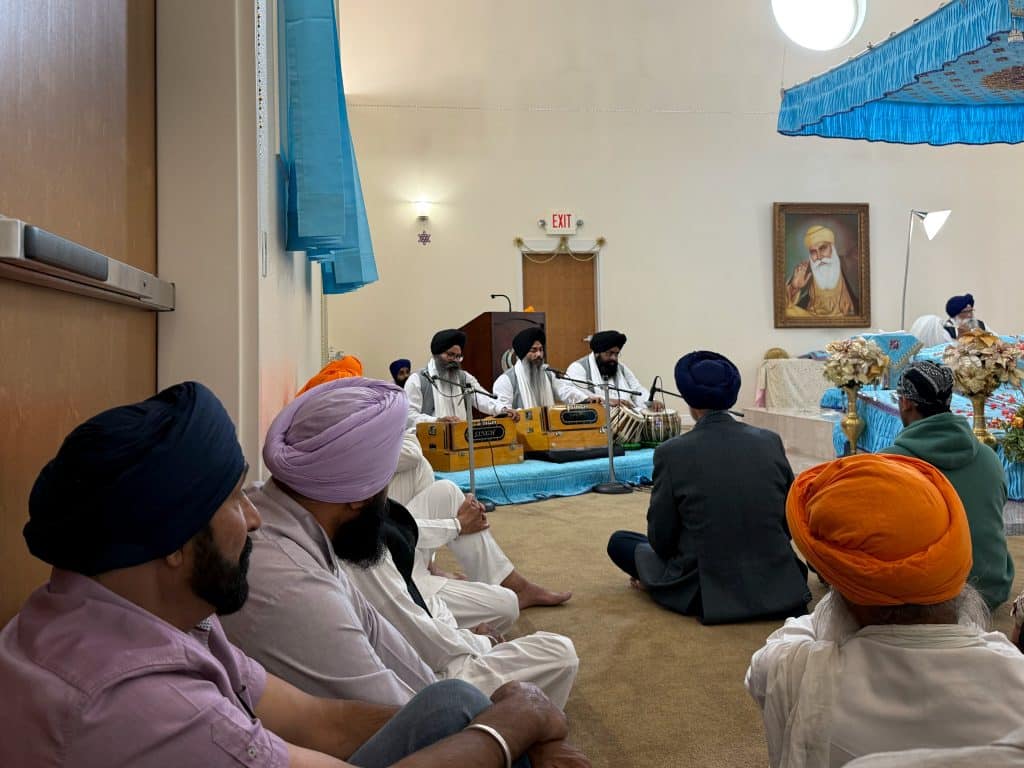
As the reading was wrapping up, congregants filed into the prayer hall and prostrated in front of a shrine with the Guru Granth Sahib and swords, which sat on a lifted platform under a canopy. Men sat on one side of the room, and women and children on the other, to observe the service. After the reading concluded, Singh and other congregants facilitated a kirtan, or a set of call-and-response devotional songs. Then, a troupe from the holy city of Amritsar in Punjab performed.
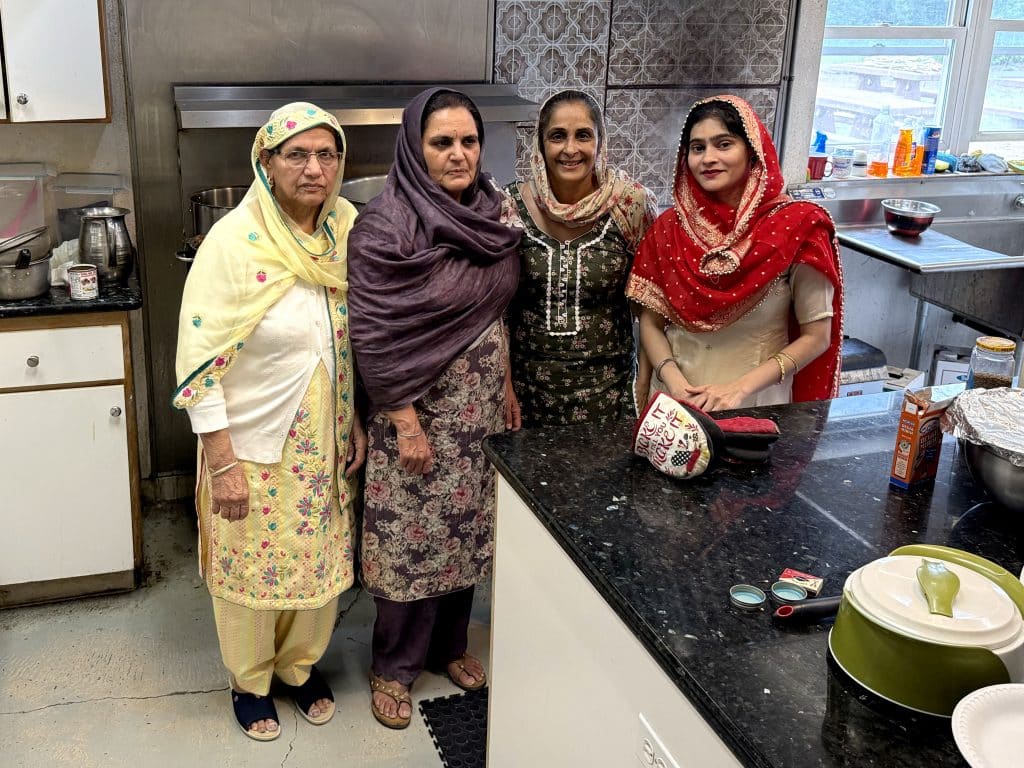
Meanwhile in the community kitchen, or langar, some congregants were hard at work stirring enormous pots of sabzi, or curried vegetables, and daal, or lentils, along with gajjar ka halwa, a pudding made of shredded carrots and cardamom. They stacked whole wheat flatbreads called chapatis and fried pakoras — a crispy fritter made of spinach leaves and thinly sliced onions battered in chickpea flour. The free meal was served to all after the services in the prayer hall concluded.
Throughout the day, visitors sat in the canteen, drank spiced milk tea and munched on sweet and savory biscuits. These vegetarian dishes are all typically served at Sikh temples, always free of charge.
Outside the prayer hall, one man fed long stalks of sugarcane, whole lemons and knobs of ginger into an industrial-grade press, producing an aromatic green juice, which he seasoned with a dash of kala namak, a unique sulfuric rock salt. Across the way, others pounded almonds with giant mortars and pestles to produce sweet nut milk. Young children played, teens chatted in circles in the parking lot, and some adults sat on benches relaxing. By afternoon, heavy rainclouds hovered overhead as families started to head home — some returning to areas as far as Corning.
This story is part of “Aquí Estamos/Here We Stand,” a collaborative reporting project of American Community Media and community news outlets statewide.
Do you have a correction to share? Email us: editor@shastascout.org.
Related Articles

Personnel emphasizes workplace safety, Shasta board votes to represent staff, amid fallout from Curtis investigation
Yesterday, Shasta’s head of personnel reminded the county’s thousands of employees of the commitment to a safe working environment after findings of abusive conduct by election official Clint Curtis. Today, supervisors voted in closed session to represent and indemnify election staff if they’re named in a lawsuit by Curtis.
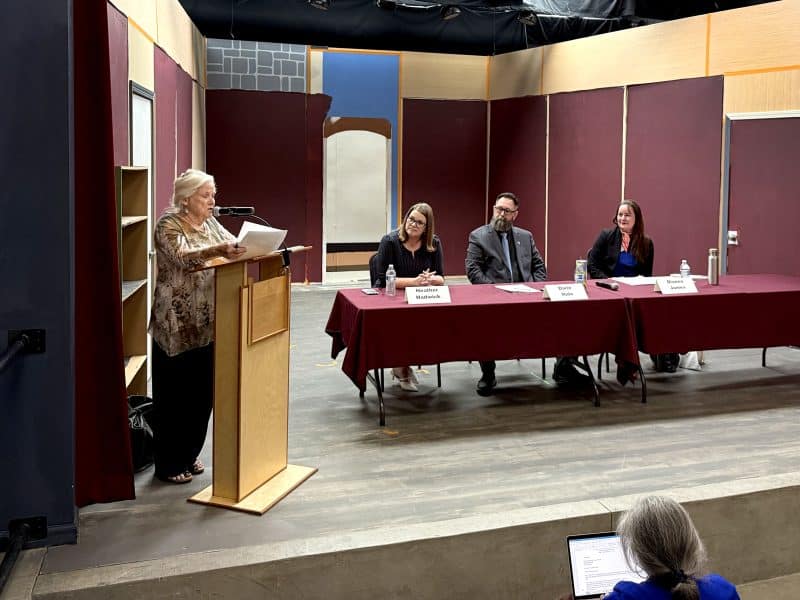
Candidates for California’s District 1 Assembly seat spar over bipartisan collaboration in Sacramento
At a candidate forum hosted by the League of Women Voters in Redding, incumbent Assemblymember Heather Hadwick stood her ground as Anderson City Council member Darin Hale took aim at her political decision-making. Mt. Shasta-based Dianna James spoke mostly about her campaign promises.
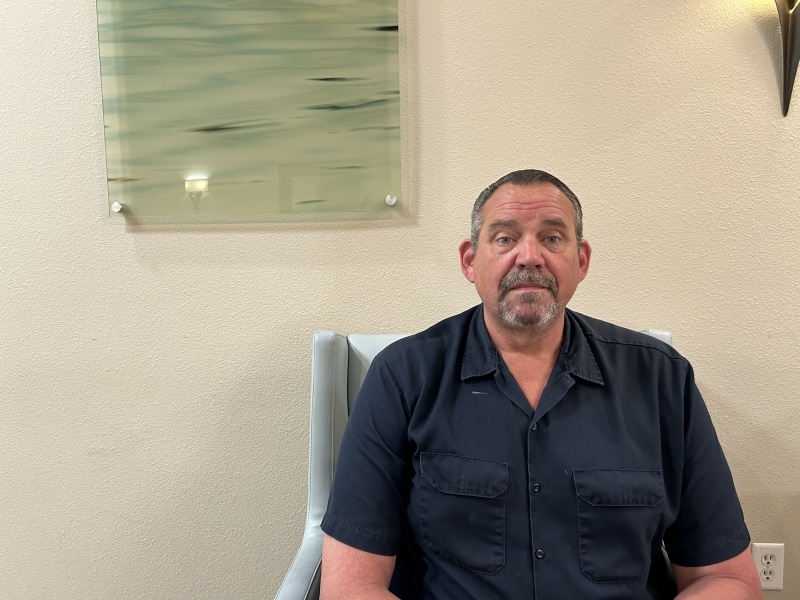
Meet Chris Kelstrom for District 5 Supervisor
There are three candidates running for Shasta County’s District 5 board seat. Chris Kelstrom says he’s running to make things better for the “little guy.” His priorities include improving public safety, stabilizing county finances and addressing issues related to the North Battle Creek Reservoir.
Comments (0)
There are no comments on this article.