
‘We need this project’: Family Dynamics seeks new path forward for youth behavioral health campus
A proposed youth behavioral health campus is still moving forward. Family Dynamics Director Sandra Wilson said the mistakes she’s made have led to positive growth, including new policies and engagement processes.
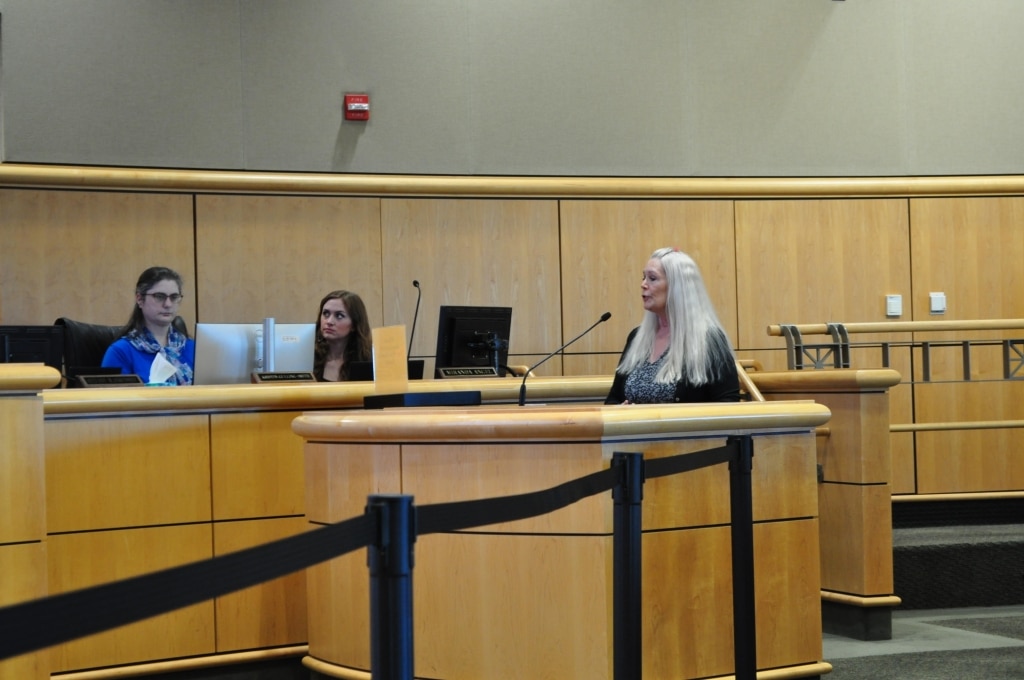
Sandra Wilson’s dream project — a youth behavioral health campus she believes will fill some of the gaps in Shasta’s mental healthcare — is within reach. Wilson is the Executive Clinical Director of Family Dynamics, a local nonprofit that offers counseling services and parenting classes. This spring, one of her two applications for Behavioral Health Continuum Infrastructure Program — or BHCIP funding — was selected by the state, granting her organization a provisional award of nearly $25 million to build a youth behavioral health campus.
Within a few weeks, Wilson’s project had been awarded another large provisional grant: $2 million in county opioid settlement funds to be used as a match to ensure the award of state funds. County supervisors who voted to grant Wilson the funds emphasized that she would need to obtain support from the law enforcement and from the city of Anderson — where she was planning to build the project on land owned by a co-applicant on the project, Anderson Community.
But the project was already receiving significant pushback. Some Anderson City Council members obtained copies of grant application materials and began publicly noting discrepancies and inaccuracies related to the project roles of Les Baugh, a former supervisor and the pastor of Anderson Community, and his wife, Susie Baugh, an Anderson City Council member.
Amid increasingly negative public commentary, Anderson Community withdrew from the partnership. Within weeks, fallout related to information shared in grant application materials led to Susie Baugh being censured by her fellow Anderson council members, who accused her of representing herself in ways they claim violated legal and ethical standards. She has denied all such claims, saying that she did not review grant application materials prior to their submission and was not aware of the information represented in those materials.
Wilson has backed that claim, taking responsibility for inaccuracies. Speaking to a reporter at her Twin View office Tuesday, Wilson’s eyes at times grew shiny with unshed tears as she discussed claims on application materials that led to the censure of Susie Baugh, who’s also one of Family Dynamic’s board members.
“She did nothing wrong, truly,” Wilson said. “It was all me. And I have to live with that.”
While Wilson acknowledges her missteps, she also believes those mistakes shouldn’t cost local kids the campus she’s planning to build with state funds. She calls it the Pathways to Leadership Campus. It’s a project that’s slated to include a 20-bed children’s crisis-residential care program, a 30-bed residential adolescent substance use disorder treatment program and a 10-bed peer respite program as well as 25-slot community mental health care clinic.
The vision for the campus, Wilson said, is something to be proud of. “It wasn’t a money grab,” she said of the proposal. “It was a dream grab.”
“It represents the work of 39 therapists, parent educators, support staff, supervisors and committed professionals who have spent years serving children, teens, parents, trauma survivors and families across Shasta and Siskiyou Counties,” Wilson explained. “Many of our programs grew because staff saw needs in the community and responded with compassion, personal sacrifice and hard work.”
Wilson agreed to speak to Shasta Scout after conversations with Supervisor Matt Plummer, who told Wilson he would only discuss the future of the project if she first responded to concerns publicly, either through an interview with him or with Shasta Scout. During a long-form interview on Tuesday, Wilson responded at length to about a dozen questions from a reporter about state application materials. She also provided a series of written answers to questions submitted by Plummer.
Here’s what she said.
On state funding
On the project’s status, Wilson said she’s informed the state of changes to the project, including the withdrawal of Anderson Community and updates to grant application materials.
“They know everything,” Wilson said, “and they told me they’ve been reading the media.”
Wilson explained that the state has told her she needs to accomplish two things to move forward: find a new site and regain county support. She said she’s working on both.
Ann Carroll, a representative with the Department of Health Care Services, broadly confirmed those statements earlier today, saying DHCS met with Family Dynamics on May 5 and has requested additional information about a possible project relocation proposal along with confirmation of the county’s continued support for the project. Carroll said DHCS will continue the post-conditional award process to ensure all program and funding requirements can be met.
On the project location
Wilson was not willing to disclose the location of two properties she’s considering for the project, saying she should have an update on site availability later this week. She’s aware of concerns about residential impact, adding that one of the sites has no residential property nearby and another has only a little. Once a site location is confirmed, she said, she will begin an engagement process that will ensure input from the community and the county, including law enforcement.
“We’re not going to hide anything,” she said.
On engagement
Community members and public officials have criticized the project for failing to engage with the city, the county and the community in the lead-up to state funding. In particular, critics have taken issue with claims in state application materials that project leaders had met “multiple times” with key City of Anderson departments, something the city manager said never happened.
Wilson acknowledged the validity of those criticisms, saying she believed Anderson Community was handling engagement with the city but did not verify or ensure such meetings had occurred prior to submission. Describing herself as the grant writer, she said she believed that the Baughs were “making things happen with the city.” But she also took responsibility for the inaccuracy.
“I have to own that there was some irresponsible writing on this document,” she said during her interview. She described the issue more fully in her written response to Plummer.
“I take full responsibility for the inadequate engagement with the City, law enforcement, zoning, and public safety stakeholders,” Wilson wrote by email. “My first direct meeting with City representatives took place on April 1, 2026. We have since put stronger requirements in place for early, documented engagement with all affected agencies before any future site decisions.”
These errors, Wilson further explained during her interview, have led to a series of new policies at Family Dynamics. She’s also hired someone to establish a positive engagement model moving forward.
On the partnership with Anderson Community, and the Baughs
Wilson said Anderson Community offered her the church’s property for the project in early August, after she failed to secure a different property that she had hoped to use for the grant application. She said she’s not a member of Anderson Community and has not attended the church other than to teach a class several years ago. She was not privy to communications between the Baughs and their church members, she said, but was grateful for the risk they were taking.
“They understood the 30-year commitment, that [the project] could inhibit their own expansion and that they would have had no control over the building,” Wilson said. “And if I failed, they knew they could lose the property.”
Writing about Susie Baugh in grant documents, Wilson referred to her as “mayor,” a formal title that some have interpreted as an attempt to leverage her role at the city. Wilson said she used the title because she was “so proud” of it, noting that the Baughs did not sign off on the decision to do so. She said the Baughs did not review grant application materials at all before they were submitted, despite being co-applicants on the project and frequently named throughout the document. There was also no formal legal review of the application, Wilson said, one of the missteps that’s led to a new policy.
As far as the Anderson Community property value, Wilson said she used numbers provided by Les Baugh rather than a formal appraisal in order to meet the compressed timeline she was working under to submit the grant on time. Differences in estimates for how the Anderson Community property was valued, Wilson said, occurred because she was filling in a state grant form that didn’t allow her to return to earlier fields to edit them.
Grant application materials also named Les Baugh as a project manager for construction at the site, indicating that he could be paid up to $225,000 for that work. Wilson said she came up with that amount herself, using industry-standard wages as a reference point.
“It was a substantial role that averaged out to about $75,000 a year,” Wilson said. “I put his name in there for transparency. That role represents the immensity or the size of the project and the responsibilities that would be included. I calculated what an average person might spend, and I calculated what the prevailing wage might be.”
“[The Baughs] wanted nothing,” she continued. “I was just shocked at how much they were willing to give. I see my error. It was not their mistake.”
On the potential risks of residential facilities for troubled youth
Supervisor Allen Long is among those who have publicly expressed concern about how the Family Dynamics project could impact surrounding residents, particularly because the facility won’t be locked-down. Wilson fielded a series of questions from Long during her public presentation to the board. He refused to support the project, saying the lack of engagement with law enforcement was problematic given the population she plans to serve.
Addressing such concerns, Wilson said such a locked-down approach is highly restrictive and beyond what’s needed for short-term crisis care, which is what she plans to provide. She said the facility will be secure, and children and youth won’t have permission to leave without parental consent, but it’s not a locked facility because the population she plans to work with doesn’t qualify for that level of restriction.
“If they require locked-down facilities, by law they cannot come to our facility,” she said.
Wilson added that when she responded to Long’s questions she was unaware of some of the nuances of language being used. While she used the term justice-involved in grant application materials, Wilson said, the facility is not designed to take incarcerated youth. She was referencing children who may have already had encounters with law enforcement but are not currently incarcerated, a different population.
On the number of beds and county collaboration
In grant materials, Wilson described a collaborative process with both Shasta and Siskiyou Counties. In her interview yesterday, she explained that the communications with other counties so far has been only preliminary. Determinations of service types and bed numbers were made internally by Family Dynamics, she wrote, and were “based on recurring gaps observed through years of direct service with youth and families.”
“The facility is primarily intended to serve Shasta County youth,” Wilson wrote. “There are currently no similar adolescent programs in the northern counties … Early planning estimated that 15-25% of utilization in the initial years might come from surrounding counties with similar gaps. Actual utilization would depend on this need, licensing, staffing, referral agreements and community awareness. We expected a gradual ramp-up rather than full occupancy at opening.”
In grant application materials, Wilson also used the term collaborator to describe individuals like Plummer, who was concerned to find himself depicted as more involved in the project than he actually was.
“This occurred due to differing interpretations of the term ‘collaborator,’” Wilson wrote, saying she used the term both to refer to “broader regional networking” and to “forward-looking planning for future partnerships … In hindsight, clearer language such as ‘anticipated future partnerships’ would have been more accurate.”
Here’s what’s next for the project
Wilson and Plummer spoke today about possible next steps with the project, something that Wilson hopes will lead to reopened doors with the county.
In comments yesterday, Plummer sounded wary. He said he was willing to meet with Wilson because she’s answered hard questions publicly, and because the community still needs youth behavioral health services and there’s already funding in play.
“But that in no way indicates my support for the project,” Plummer said. “That will be dependent on whether there’s a viable plan, a viable site location and on whether we can trust her and those involved to be honest throughout the process.
“If the county were to support the project,” Plummer continued, “I would want a committee involved to consider reshaping the size and scale of the project, help with finding the appropriate location and have some measure of involvement or oversight in how the project unfolds.”
Resources:
5.27.2026 10:08 p.m.: We have updated the story to include sections on the project’s status with the state and it’s possible location.
Do you have a correction to share? Email us: editor@shastascout.org.
Author

Comments (9)
Comments are closed.
Related Articles
Flock, data centers and development: Here’s what two Anderson council candidates want — and don’t want — for the city
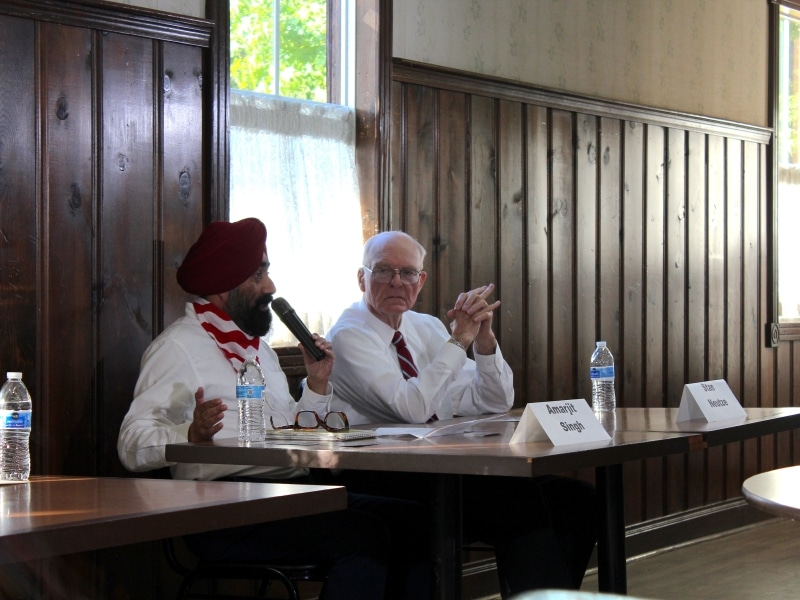
The League of Women Voters held a forum for Anderson City Council candidates last week. Former Mayor and Council member Stan Neutze and Sikh Centre Director and Shasta community organizer Amarjit Singh discussed their top priorities if elected. They’re among three candidates competing for two vacant seats on the council.

Shasta HHSA will close its California Street eligibility services office
The office has been used by those seeking eligibility for CalFresh, CalWORKS and Medi-Cal. HHSA said the closure is due to a move, but did not announce when or where an eligibility office will reopen.
ROV Curtis claims scheduling issues are preventing him from complying with state law to shred November 2024 ballots
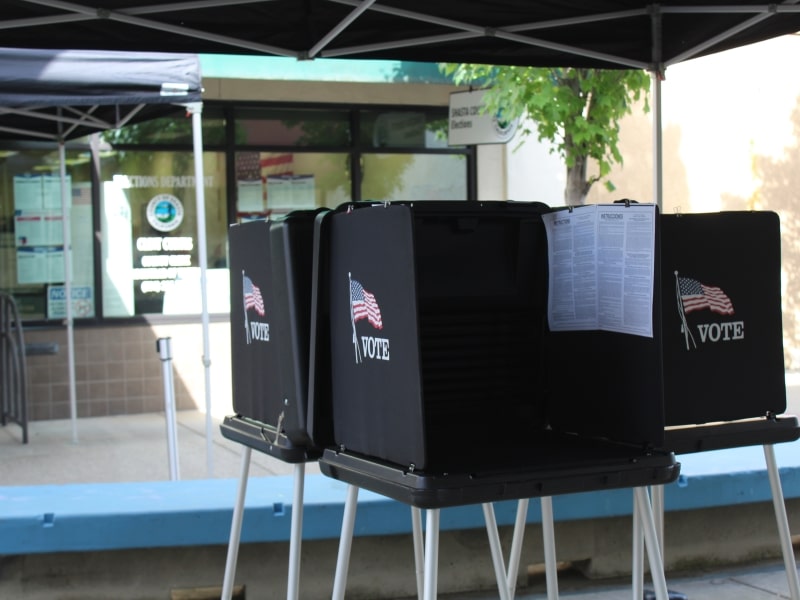
The ballots were supposed to be retained only through Sept. 5, but they still haven’t been destroyed, allegedly due to a series of scheduling missteps and delays.
Lies, lies, lies. If this was such a great thing why all the lies and deception? Why??? This is totally a bunch of self serving politicians scamming the public. That proven and presented at official meetings this should be stricken and never heard about again.
Why do the officials that WE THE PEOPLE employ lie and invite grift into our neighborhoods? I for one am sick and tired of FILTHY POLITICIANS abusing their authority. We do not want this in our community. End of story. If those in favor want something like this then get the ‘H’ out of our community, go elsewhere and degrade yourselves there.
The character of the seeker of money and the amount of money sought comes after the primary consideration: Is the facility really needed? I strongly suspect that it is not needed. Yes, “if you build it, they will come,” but that phenomenon is not adequate–or even close to adequate–justification for the building of the facility sought. Somehow and somewhere, the area that is purportedly to be served by the yet-to-be-built facility is currently being served otherwise. The Shasta County Board of Supervisors should inquire where and how that service is being provided. No, not for considering approving the request in issue: That request must go into an archived “round file.” Having knowledge of a need or lack of a need for the describe facility can guide the Board as to ongoing business of the County of Shasta. Whether one hates or loves President Trump and/or Elon Musk, there is no doubt that there is an incredible amount of “fraud, waste, and abuse” in California. The citizens of Shasta County should participate in the abatement of that fraud, waste, and abuse: Funding something that is not needed and/or funding through the wrong “not-for-profit” entity is not that participation.
Regretfully we must walk away from this project, despite our need. Failure to uphold the even the most basic prifessional standards is a clear sign that Family Dynamics is not quite ready to run such a project
She needs to be investigated for why she lost her psychology license within the first year of receiving it. She should not be receiving any money. There are qualified and good people who could do amazing things with that money. It isn’t Sandra Wilson. She is crooked and right off the bat it was revealed luckily before it was too late.
I’m am truly surprised Sandra Wilson still holds a leadership position within Family Dynamics. The handful of experiences I was forced to have with her, she claimed to be licensed to provide reunification therapy for children. She was found to not be licensed at all. In addition, she made false allegations and reported false information in two (that I know of ) civil cases in Shasta county. Ms. Wilson is not an honest individual, just in my experience.
A dream of providing help and healing to trauma survivors, especially children, is wonderful. I do wonder, though, if Ms. Wilson is more economically or financially driven.
People seem to be leaving out key facts regarding $. Lots of lies. Normal political manipulation and fraud here.
It’s always amusing watching someone try to put a full tube of squeezed-out toothpaste back in the tube. Plummer’s skepticism is entirely warranted. The original proposal contained sizable mounds of bullshit, including about his own role. If I were a decision-maker, I’d vote the project not be funded unless Wilson resigns and hands everything off to a new leader who is honest *before* the lights come on and pants are down around ankles.
Too late now, once facts are altered and received by the power players all trust is good as gone.
I agree , the trust was absolutely BROKEN……. She has admitted to so many mistakes , it’s clear she is not qualified to do this project.
She is not trustworthy . Her heart may be in the right place, but the way she navigated the process by hiding the project from those whose support she needed says it all …..