
Sheriff wants Shasta County board to reinstate impact fees
Shasta supervisors eliminated impact fees for developers several years ago, hoping to incentivize more construction in Shasta County. That’s had a negative effect on his department’s budget, Sheriff Michael Johnson told supervisors during last week’s budget hearings.
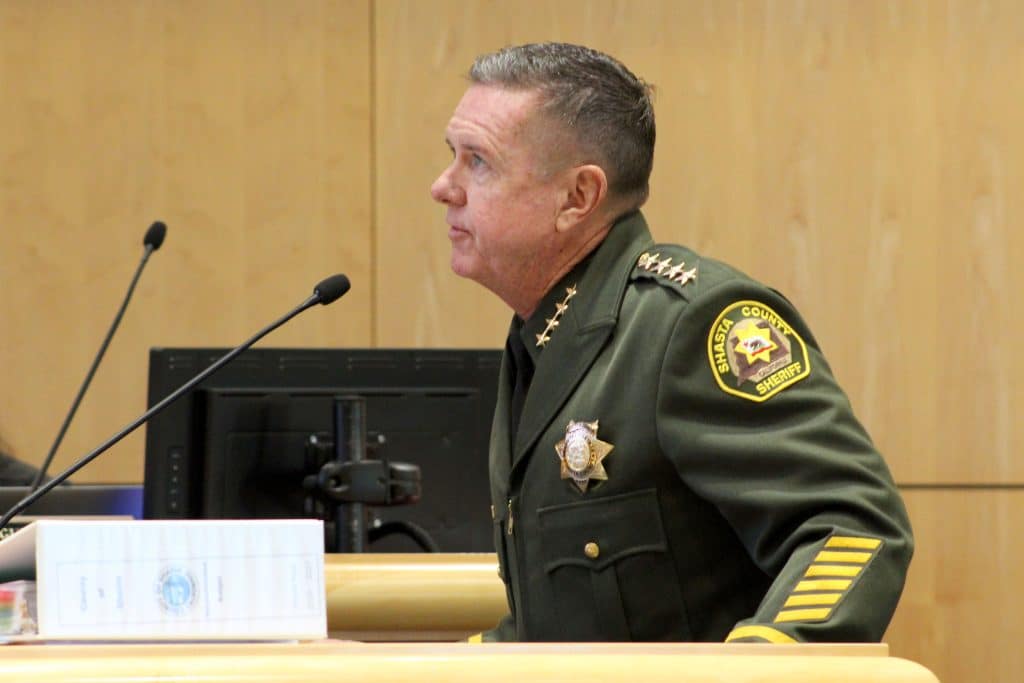
Last week, during annual budget hearings, the board approved the sheriff’s budget, settling at around $83 million in planned expenditures — about $12 million less than last year, due to capital projects that are now completed, deputy county CEO Erin Bertain confirmed.
During the hearing, as Sheriff Michael Johnson forecasted the financial landscape of public safety in Shasta County, he resurrected the question of impact fees. Flying through his department’s complicated budget needs, he proposed two changes he’d like to see at the county level: reinstated impact fees and another attempt to implement a sales tax.
“[Impact fees] do offer a revenue source where we can improve services,” Johnson said. “It’s not going to solve our budget needs, but we need revenue coming in one way or another.”
Impact fees were indefinitely suspended in early 2024 by Supervisors Kevin Crye, Chris Kelstrom, and former Supervisor Patrick Jones. They’re one-time charges that builders pay when they embark on a new project. Paid by developers, impact fees are intended to compensate for the effects a new development will have on schools, parks, transportation, and other public resources.
In Shasta, past impact fees have been a source of revenue for libraries, public health, sheriff patrol facilities, fire mitigation, and other services. During board discussions in 2024, Crye suggested that eliminating the fees would encourage growth and development in the county. But reporting from the Record Searchlight earlier this year found that permits for new construction actually fell behind during Shasta’s first year without the fees.
Nevertheless, Crye and Kelstrom have both cited the elimination of impact fees as evidence of their strong decision-making in office, with Crye calling himself a “tax fighter” during what turned out to be his losing campaign for reelection as supervisor. He’s at times backed his perspective by citing a Supreme Court case, which sided in principle with a California homeowner challenging the fee he was made to pay, but actually upheld impact fees as constitutional — as long as they’re linked, at least somewhat, to the actual cost of development.
Johnson used his budget presentation to both recommend reinstating impact fees and moving towards implementing a public safety sales tax. But only one of the two is within the county’s immediate control, impact fees. An impact fee can be imposed by the county, but legally speaking, must demonstrate a “nexus,” or clear connection, between the fee charge and the infrastructure the fee will support. Taxes, in contrast, are usually subject to voter approval.
In recent years, public safety sales tax measures have been presented to voters both county-wide and in the city of Redding. Both attempts failed. But Johnson still hopes the county will consider moving towards another attempt at a sales tax.
To argue for that idea, he cited a similar initiative enacted in Butte County last year, a possibility that District Attorney Stephanie Bridgett also mentioned in her presentation about the DA’s financial hardships. Multiple local prosecutors have recently relocated to Butte to join that county’s district attorney office for higher pay and better benefits, something made possible by the sales tax measure.
At last week’s budget hearings, a common theme emerged from the sheriff, DA, public defender, and probation departments, as each department head described their teams as under-resourced to varying degrees. They said recruiting and maintaining staffing remains a challenge given noncompetitive salaries in Shasta, and described how changing legislation at the state level can present new unexpected costs to local public safety sectors.
Reinstating impact fees, Johnson emphasized, would help. Crye sparred briefly with the elected sheriff over whether it was even his place to make such a recommendation, once again backing his own decision to eliminate the fees and referring to them as an “illegal tax.” But despite Crye’s continued opposition, impact fees could return as Shasta’s board shifts. With Redding City Council member Erin Resner now the heir-apparent to Crye’s seat, it’s possible the fees – and their associated revenue – could return to Shasta as Sheriff Johnson hopes.
Asked by a reporter if she would support impact reinstating fees, Resner didn’t answer directly, instead asking two rhetorical questions indicating that those who profit from development should carry the burden of that development’s costs. She added that its important to remember that any time a fee is eliminated there is always an associated cost to be paid somewhere, either in the short-term or the long.
Meanwhile Supervisor Allen Long indicated that he would “absolutely support” reinstating impact fees while Supervisor Matt Plummer was less definitive, saying he would want to do some research on the legal scope of impact fees before committing to a position on them.
Plummer did definitively state that he would not support another sales tax. He said the community’s past rejections of sales tax measures indicate how little trust the public has in how their elected officials are handling public finances. He added that he would want to exhaust all other solutions to bolstering support for public safety before asking taxpayers to contribute more to the county.
Do you have a correction to share? Email us: editor@shastascout.org.
Comments (20)
Comments are closed.
Related Articles
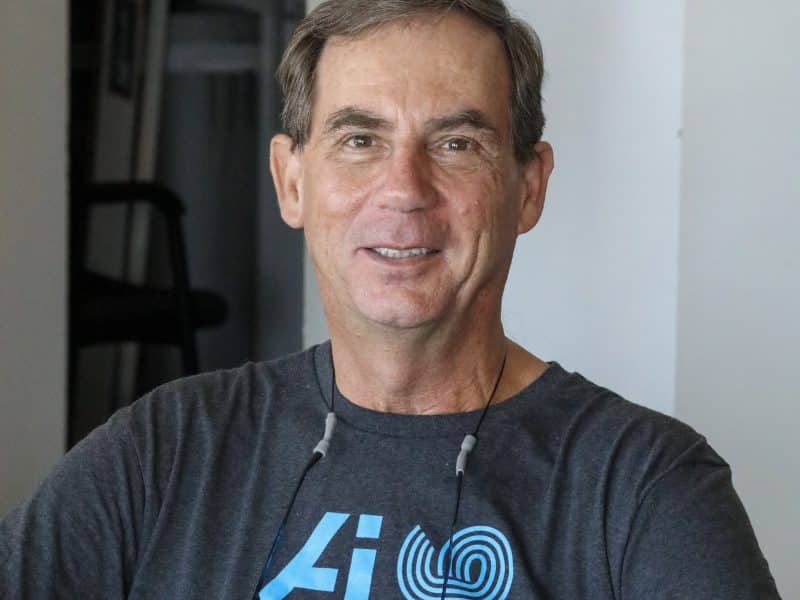
Meet Dan Sloan for Shasta County Office of Education Trustee
Dr. Dan Sloan is running for one of four open seats on SCOE. Sloan is a Redding-born candidate who hopes to bring his multicultural and law-focused perspective to the school board.
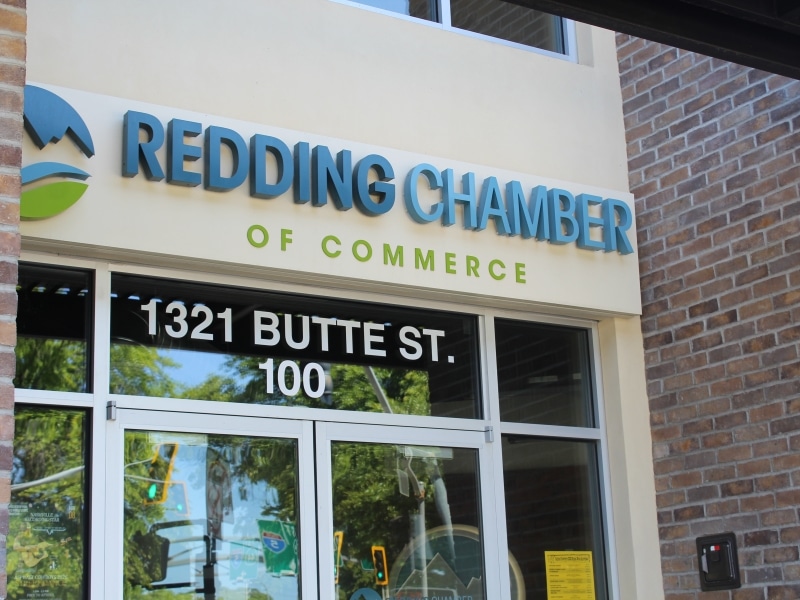
Redding Chamber of Commerce endorses Wenham and Prosperi for City Council.
With three seats open, the Chamber has endorsed two candidates after an evaluation “measuring competence over confidence.”
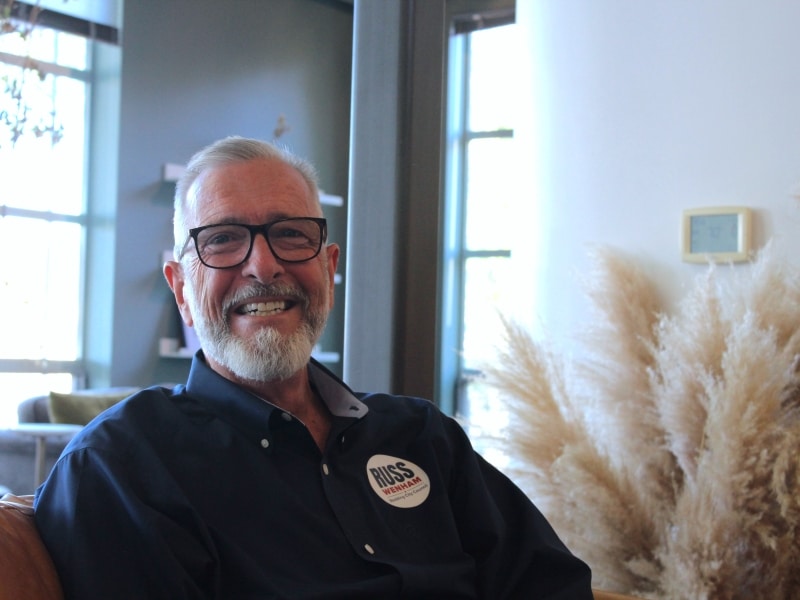
Meet Russ Wenham for Redding City Council
There are nine candidates running for three seats on the council. Wenham is a civil engineer who’s focused on the city’s budget, public safety, infrastructure and job expansion.
When the county put those impact fees in place, it was at the height of the housing boom, and some big developments were actually a possibility in the county. It might well have made sense to plan for managing services to accommodate that growth.
How are the impacts of growth in the county affecting the sheriff? Impact fees are not just a generic revenue source. They are legally required to maintain infrastructure at the level of service that was provided before the growth. The jail is full — but not because of population growth.
Oh yeah? Where is the data to prove the population growth has nothing to do with the jail?
Ill support reinstatement of the impact fees… the nexus being whenever a new development is built more LEO service to cover it become necessary.
The fee should have never been dropped… simple political points more for Crye and Kelstrom with the clear understanding of the impact. This is because these people did not do a good job running their own lives before politics…Crye was near bankruptcy… Kelstrom driving a bread truck if I recall correctly but they sure have enriched themselves becoming supervisors
More sales tax… nope…sorry Mike
I wouldn’t use my real name either if I was being as dishonest as you. Crye’s businesses were growing leaps and bounds before he became supervisor and continues to grow today with over 400 employees. As for Kelstrum, truck driving is one of many hats he has worn over the years. You, I’ll wager drew a government check your whole life.
400 employees? Not a chance. Prove it.
Hey Nikki, Crye doesn’t have 400 employees.
.
Prove me wrong.
Mitch Blardner, please prove that Crye has 400 employees.
.
He doesn’t, but I still challenge you to prove your claim.
Local government has been asking for a sales tax increase for decades now. Every time, they say it’s specifically to pay for Police (sometimes Police and Fire, but always for Police). And every time, it gets voted down.
Maybe people would be more interested in paying for… something that’s not Police?
It will be a pleasure watching many of the stupid decisions made by Los Tres Pendejos reversed.
.
Careful with this one, though. Local developers are a powerful political cohort, for one thing. For another, California has an affordability problem and a housing shortage. Resner is right—someone’s gotta pay for the civic costs of development, and first in line should be the profiteers. But be cautious about adding to the affordability and availability crises.
Although I disagree with the philosophy of constitutional sheriffs.
On this item I agree with the sheriff (The horror).
Yeah, halting the impact fees wasn’t a good idea by Crye, but then again most of his ideas aren’t very well thought out.
Wow. Would you look at that?
.
Even the sheriff wants to reinstate impact fees.
” An impact fee can be imposed by the county, but legally speaking, must demonstrate a “nexus,” or clear connection, between the fee charge and the infrastructure the fee will support”
Maybe you could explain how law enforcement is considered infrastructure.
Under California Government Code Sections 66000 and 66016.5a, development impact fee is a monetary charge, other than a tax or special assessment, that a local agency imposes on a developer in connection with project approval to cover all or part of the cost of related public facilities. The statutes define “public facilities” broadly to include public infrastructure, community amenities, and PUBLIC SERVICES.
.
That, and of course new LE and fire stations as well as vehicles and other equipment are considered infrastructure.
disagree–roads, water, sewer,electricity are infrastructure–police and fire are a service
AI Overview
Yes, police and fire services are officially recognized as vital public facilities and critical infrastructure in California. Under state guidelines, the physical buildings (police and fire stations) and the systems required to support them are classified as essential public infrastructure.
California Governor’s Office of Emergency Services (.gov)
+3
How Police & Fire Fit the Infrastructure Definition
Critical Facilities: The California Governor’s Office of Emergency Services (Cal OES) classifies the Emergency Services Sector—which includes emergency dispatch centers, police stations, fire stations, and emergency operations centers—as a component of state critical infrastructure.
California Governor’s Office of Emergency Services (.gov)
+2
Public Facilities: Under California Government Code Sections 66000 and 66016, local agencies are authorized to use development impact fees to fund public infrastructure and services. Both law enforcement and fire stations qualify as public facilities under these statutes.
Essential Services Buildings: Police and fire stations are heavily regulated under the Essential Services Buildings Seismic Safety Act to ensure they remain structurally sound and operational during and after disasters.
ICC Digital Codes
+1
Disagree all you want. Statutes define what it is, and not you.
Here’s how much it matters that you disagree compared with what’s actually written into the statutes:
Aw, man… You gave Nik the answer.
.
I was hoping that maybe he could have figured that one out on his own.
When commercial or residential development happens in county, there is an increased need for law enforcement services. The new fire and Sheriff substation in Cottonwood is an example of impact fees used to expand and modernize these services to that part of county.