
What to Know About Shasta County Ballot Measures E, F, and C
Measure E would prevent the county from using eminent domain to transfer property from one private owner to another, while Measure F would give the Board of Supervisors another way to fill vacancies when elected officials leave their positions early. Versions of both were rejected by voters in 2024.
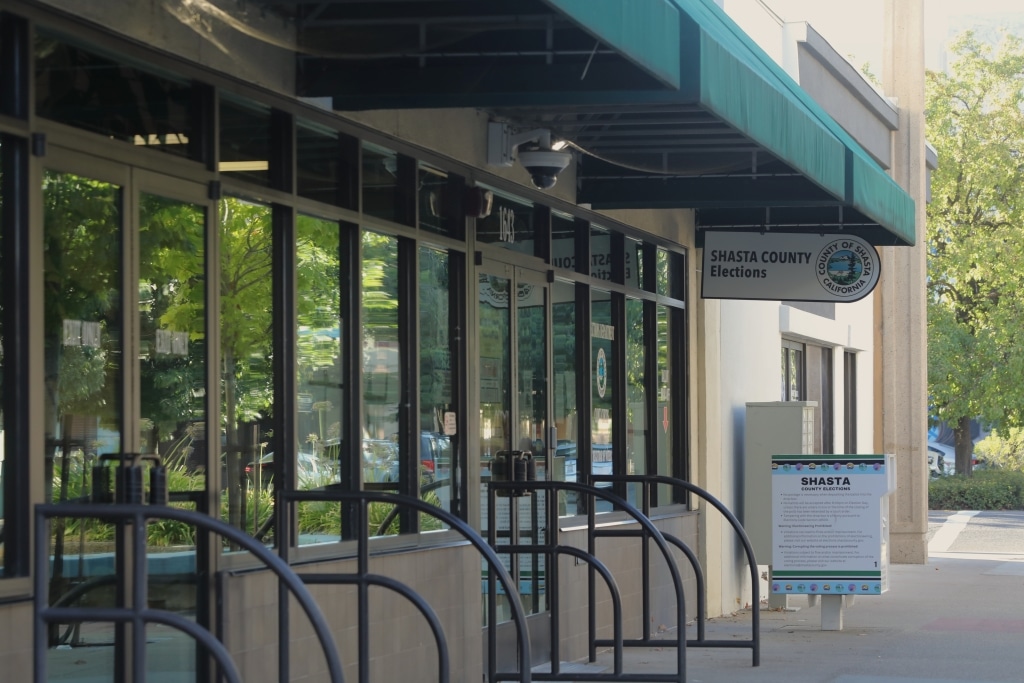
Shasta voters will see county-wide measures on their ballot this Tuesday — and some might look a little familiar. Measure E determines how the county is allowed to use eminent domain, or the right to appropriate private land for public use. Measure F deals with how board members are allowed to fill vacancies when elected officials leave their posts early.
Versions of both measures were also on the ballot in 2024, as Measures P and Q, respectively. They were voted down then, but the Shasta County Board of Supervisors, led by Supervisor Kevin Crye, has returned them to voters — with some changes — in hopes of a different outcome.
Here’s what you need to know.
What is a ballot measure?
A ballot measure provides voters the opportunity to have a direct say on an issue, as opposed to electing an official who then makes that decision for them. Ballot measures have been part of California’s constitution since 1911, and allow residents to vote directly on changing state and local law.
Individuals can place a measure on the ballot by collecting signatures and submitting their text for review by the government. The local legislature can also put measures on the ballot — and they’re required to when amending the constitution, seeking approval for bonds, or revising a statute previously passed by ballot measure.
Measures E and F were put on the ballot by a majority vote of the board. Both would update Shasta’s charter law.
Measure E explained
Ballot Measure E would prevent the county from using eminent domain to transfer property between two private owners. As it stands, California law allows the government to appropriate land from private parties, even if those parties do not want to sell, provided that land is put towards public use — like building a bridge or a highway.
Since a Supreme Court ruling in 2005, the government has also been able to use eminent domain to acquire property for private entities in this way, as long as those entities put the land towards public use just as the government would. Ballot Measure E would prevent this from happening, something that’s already forbidden at the state level by Proposition 99.
The ballot measure was rejected in 2024 by just over 50% of voters, but a majority of the board, led by Supervisor Kevin Crye, put the measure back on this year. Crye claimed the public did not understand the proposition, which is why it needed to be reintroduced.
Measure F explained
Measure F deals with how the board is allowed to fill a vacancy when some elected officials leave their job early. State law currently requires the board to appoint a replacement for local elected officials including the assessor, registrar of voters, sheriff, auditor, district attorney, and treasurer, but lets them decide whether that replacement will serve only until the next election or through the entire rest of the term.
Measure F would update Shasta’s charter law to require the board to fill those positions if they become vacant mid-term by special election, as long as there’s a regularly scheduled election within a year. If there isn’t, the board would appoint a candidate, but would have to do so by a four-fifths vote.
Notably, the law would not apply to how county supervisors replace mid-term vacancies on the board itself, which is already addressed in Shasta’s charter.
Over 58% of voters rejected the proposition in 2024 when it appeared on the ballot as Measure Q, though the measure has been significantly changed this time.
Measure C explained
Voters living in the Shasta-Tehama-Trinity Joint Community College District will also be able to vote on Measure C, which would issue bonds for just under $130 million to fund construction and improvement projects at Shasta College.
A yes vote would approve levying an annual tax on property owners of $7.76 per $100,000 of their property’s assessed value. For the average home in the district, which according to Shasta College is worth roughly $378,000, this equates to just under $30 which would be paid as part of annual property taxes.
Funds would go towards replacing HVAC systems and roofs in existing buildings, as well as making them ADA compliant. Levies would also fund a new extension site in Corning for hands-on career training, a new agriculture classroom at the Shasta College Farm, and new EMS simulation labs, among other projects.
Do you have a correction to share? Email us: editor@shastascout.org.
Comments (3)
Leave a comment
Related Articles
In the North State, changes driven by redistricting loom. Some fear a loss of representation, others see opportunity
Proposition 50, passed by voters last year, redrew part of the North State into a new district, one likely to elect a Democratic representative this November. Sources are divided on what that will mean for the North State.

In race for four open SCOE Board seats, Gorman has almost five times the donations of his closest competitor
With nearly $44,000 in campaign earnings, Gorman leads the pack among a pool of 10 candidates. He’s promoting a slate he hopes will win three of the open seats.

Shasta elections chief says he doesn’t plan to set aside ballots of individuals flagged by Trump administration
The U.S. Department of Justice attempted to sue California in an effort to force election officials statewide to set aside roughly 20,000 ballots it claims belong to noncitizens. The attempt failed in court, and Shasta’s Clint Curtis said he’ll obey the court’s ruling.


Measure E was well within the 2024 election’s massive margin of error.
Measures E and F are Crye-Baby’s last middle finger to us voters who failed to recognize his awsomeness, before he fades into well deserved irrelevance on his highway of broken dreams.
Selah
Kevin Crye owns and runs a company with over 400 employees! How many do you have?