
Shasta’s recent election signals shift in what California’s most conservative voters will tolerate
Interviews with about two dozen sources — including former, current and future county leaders — suggest the result of Shasta County’s June election was less a rejection of conservatism than of a tumultuous leadership style that emerged during the pandemic.
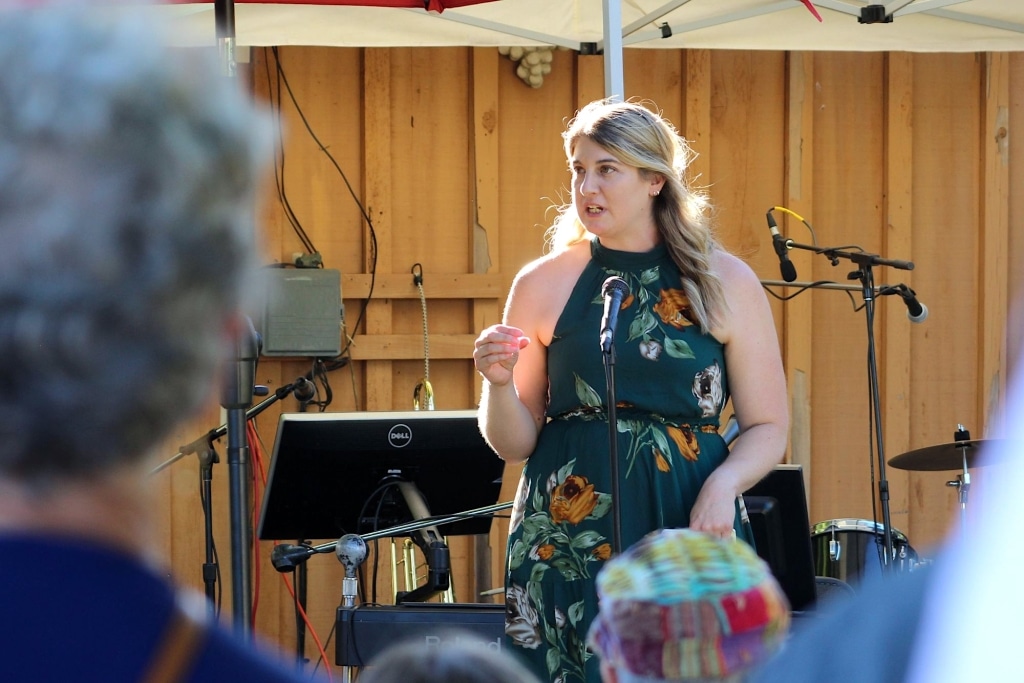
On a mild summer evening at a vineyard in Cottonwood, Joanna Francescut stood proudly in front of a crowd of around a hundred.
The former Shasta County assistant registrar of voters was hosting a party — not to celebrate her recent win for ROV, but to honor the work of her campaign team during her run for election.
“You stood up for integrity and stability, and I’m excited to bring that to the table in January,” she said in an uplifting speech to her supporters, one that drew teary eyes and wide smiles from Francescut and the audience alike.
Francescut, who has about 17 years of election experience, won by nearly 60% in the June 2026 primary election after having been passed up twice for appointment to the position by the county’s board of supervisors. Last year, after Shasta’s board majority appointed an attorney who was outspoken about mistrust in election systems and had no prior experience in election administration instead of Francescut, she was angry. One of her first thoughts was about her family and what this moment meant for her as a mother.
“I needed to step up and show my daughter to not allow people to determine what your worth is,” she said.
This June, Shasta County voters rejected several incumbents who rode a pandemic-era wave into office, either by election or appointment. Now, a question has emerged: Do the recent election results signify a political shift in the county — one that’s made national headlines for being a hub of the so-called far-right movement in California — or were voters simply tired of the leadership tactics that have defined some in their local government over the last few years?
Lisa Pruitt, a rural law professor at the University of California, Davis, who’s familiar with Shasta’s political landscape, thinks it’s likely the latter.
“Maybe what’s really prevailing for people when they’re deciding who to vote for is, ‘Who do I think is actually going to deliver the services that I expect from my school board, from my board of supervisors?’” she said.
Interviews with about two dozen sources for this story — including former, current and future county leaders — indicate that many of Shasta County’s residents remain steadfastly conservative, even as voters are rejecting a way of governance they found too chaotic and not in line with their values.
Among their grievances over the last few years, sources cited decisions including overlooking Francescut’s election experience two years in a row to appoint ROVs with no election administration experience, removing fees that helped pay for infrastructure development, signing a contract with a local Tribe despite the financial concerns of county department heads, opposing a widely supported behavioral health campus and implementing changes to election processes, including a significant reduction of ballot drop boxes.
Sources also took issue with local officials’ behavior and tone when it came to their interactions with the public and other officials, such as the repeated instances when board members publicly ridiculed community members at meetings.
“There have been so many hostilities and anger over the past few years that I think a lot of people have had enough,” said Happy Valley resident Tammy Cole, who’s part of a group called Civil Shasta that was formed during the pandemic to decrease polarization and improve civility in the county.
For former Shasta Supervisor Leonard Moty, a self-proclaimed Reagan Republican ousted from the county board during the pandemic revolt, the June election results are a glimmer of hope.
“Maybe enough people finally realize that these people have done nothing but be destructive, to get rid of good people who help the county function,” he said, referring to outgoing county leaders ushered in by a wave of dissatisfaction with him and other long-time Republicans in office several years ago. “Maybe people realize this isn’t getting us anywhere.”
Some sources say the shift away from pandemic leadership began in 2024, when Supervisor Matt Plummer beat out former Supervisor Patrick Jones, who was among those who rode a wave of outside funding into office over recent years. Plummer, a self-described conservative with a Yale education, won with almost 60% of the vote.
His approach to governance, focused on data-driven policies and evidence-based practices, has been its own form of disruption to the status quo under the new wave of leadership since 2021.
“I think we’re just seeing the continuation of that disruption now,” said former Shasta Health and Human Services Agency Director Donnell Ewert of the latest election results, which will reshape Shasta’s board majority come January and shift it closer toward Plummer’s conservative, data-driven approach.
How a new style of leadership surged in Shasta County
Deeply conservative politics have been prevalent in Shasta since long before the pandemic started. Around 65% of the county’s registered voters chose President Donald Trump in the past three presidential elections. The region’s history of anti-government agitation set it apart from other rural areas across the country, Pruitt said, noting the ongoing presence of the Cottonwood Militia and State of Jefferson movement as part of what makes Shasta distinctive.
“Shasta County is just this hub, or this very core of government skepticism, anti-government sentiment,” she said.
Underneath this sentiment lies real struggle: Shasta residents often feel unheard in a state dominated by urban interests, and the county faces persistent challenges: among them a health care provider shortage, high suicide and opioid-related death rates and deep scars left by the 2018 Carr Fire.
Erin Resner is a Redding City Council member who beat incumbent Shasta Supervisor Kevin Crye in the recent election, toppling the board’s current majority. Like Moty, who was removed from office by local activists in the wake of the pandemic, she describes herself as an old-school Republican.
Referring back to 2020, she said a lack of communication and public engagement, as well as the long tenures of several county supervisors, led some residents to feel their local government had grown complacent. By the time the first confirmed case of COVID-19 hit the county that spring, two supervisors had been serving on the board for a decade, and another had just finished serving for 20 years. Resner said the combination of these factors created a perfect storm.
“We came sort of out of this era of the community really rallying to support each other and very quickly moved into this space [where] those wounds aren’t necessarily healed yet,” she said. “Then we moved into a period of isolation.”
The pandemic gave oxygen to the sparks of discontentment in Shasta County under long-standing conservative leadership: Lockdowns angered local business owners, mask mandates enraged civil liberty advocates, school closures forced overwhelmed parents to be teachers and impeded children’s educational and social growth, and new vaccine requirements drew intense scrutiny. Many Shasta residents grew angry with the county government for not pushing back more against California’s strict regulations, arguing that the county should defy what they saw as the liberal infiltration of their freedoms.
Simultaneously, Trump’s claims that the 2020 election was stolen combined with local government mistrust ignited cries of election fraud in the county.
A group of Shasta County residents — relatively small but outspoken compared to the county’s population of nearly 180,000 — began taking out their frustration on the local government. Agitated residents banged on the doors of the county board chambers during meetings they were barred from physically attending, and threats of violence were made to various public officials ranging from county supervisors to the heads of Shasta’s health and election departments.
Richard Gallardo, a local conservative activist, attempted to perform a citizen’s arrest on all five supervisors in October of 2020 for their response to the pandemic. He used the public comment period to make a fiery speech before being escorted out by police. Since then, he’s unsuccessfully run for three elected positions, including against Crye and Resner in the June 2026 primary. Gallardo received only 663 votes, or about 7% of the total vote.
The state’s pandemic restrictions gave conservatives a reason to blame Gov. Gavin Newsom — and anyone who followed his orders — said former Supervisor Moty, who was on the board from 2009-2022 and is a former Redding police chief.
“A lot of people who were unhappy with the state, they wanted something to latch onto [and] lash out, and this gave them something,” Moty said. “We were a fairly conservative board, and we weren’t conservative enough to the people out there who were upset.”
An effort began in April of 2021 to recall three of the five supervisors on the county board — Moty, Mary Rickert and Joe Chimenti — largely due to their adherence to state COVID regulations. Only enough signatures were received for Moty to be considered by voters for a recall, and in early 2022, nearly 56% of voters recalled him. He was replaced by Tim Garman, a former member of the Happy Valley Union School Board who had led a resolution opposing vaccine requirements for children.
At first, Garman was part of an ideologically driven majority on the board, often voting in a bloc with former Supervisors Jones and Les Baugh. In May of that year, the three supervisors voted to fire Shasta Health Officer Dr. Karen Ramstrom, who led the county’s COVID response.
But after spending some time on the board, Garman began making decisions in opposition to Jones and Baugh — a shift typified by his decision to sport a shirt supporting the recall effort against Supervisor Crye, who was elected in 2022 and often fell in line with Jones.
Today, Garman said he feels his one mistake was voting to fire Ramstrom, who worked for HHSA since 2018 and implemented COVID restrictions that “were never more restrictive than the state required,” she said.
“I did not give her a fair opportunity,” Garman said. “I met with her one time — that wasn’t enough.”
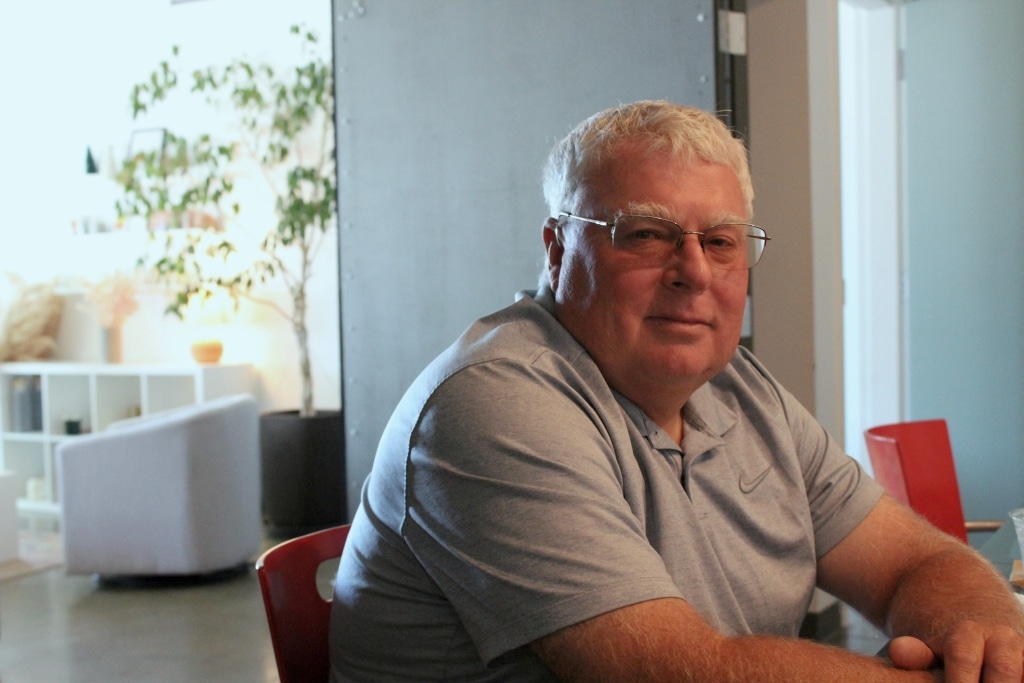
About a month before Ramstrom was fired, Shasta’s HHSA Director Ewert retired after more than two decades with the county. Now a board member of the California Endowment, he said he left due partly to the political turmoil, as well as the deaths of his daughter and a close friend. Retiring gave him agency, he said, when others — like Ramstrom — weren’t afforded such a choice.
“I’d rather go out that way than have [the board] have some big meeting and fire me for doing the right thing,” Ewert said.
Something that made Shasta distinctive when it comes to this era of local politics, multiple sources noted, was the financial influence of Reverge Anselmo, a wealthy donor from Connecticut with prior grievances with the county. Within less than four years, Anselmo gave nearly $2 million to Shasta candidates and political action committees, including the effort to recall Moty and the campaigns of Garman, Jones, Crye and current Supervisor Chris Kelstrom.
“We were a rich person’s little puppet game,” Ewert said of Anselmo’s financial influence, which was distributed through the efforts of local activists.
Anger over COVID became a vehicle to achieve other political means for many in the county, Ewert added. Amidst the push against COVID restrictions, there was also a movement against Shasta’s elections office, with some community members making claims of voter fraud that were fanned by national flames. Former Shasta ROV Cathy Darling Allen said she spent the final year or two of her career responding to attacks, lies and verbal abuse. She retired in 2024 due to an onset of heart problems, something she thinks was exacerbated by the stress she was put under during this time.
“It wasn’t my choice to retire,” she said,” but the situation became untenable.”
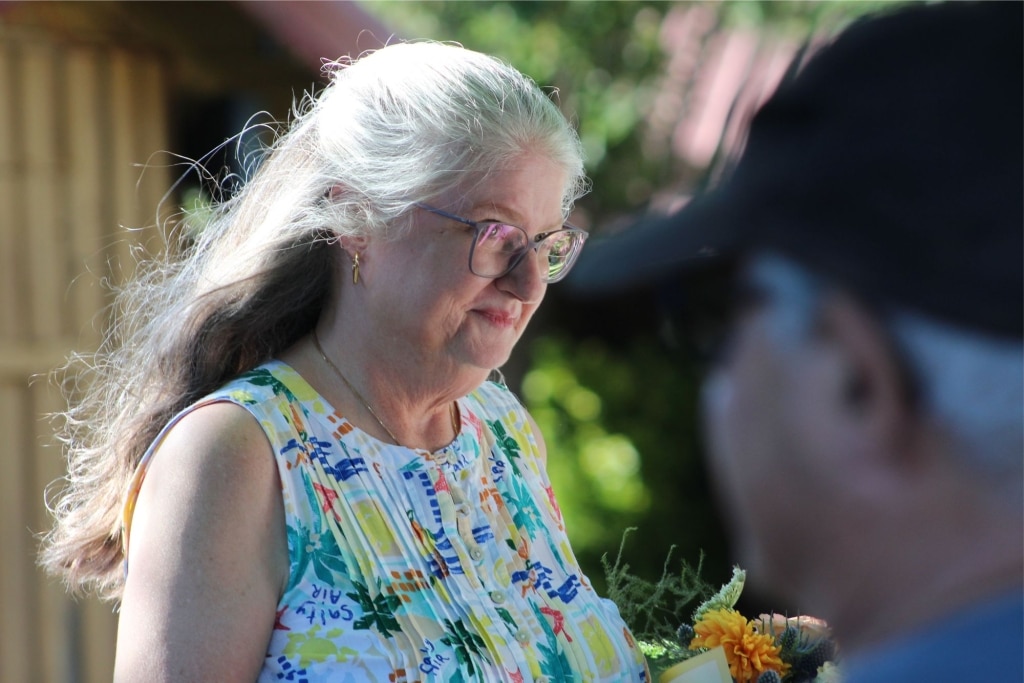
In November of that year, former Supervisor Rickert was voted out and replaced by Corkey Harmon, a local business owner who joined Supervisors Crye and Kelstrom to form another ideologically-driven majority. Supervisors Plummer and Allen Long, elected in 2024 and typically seen as the more moderate voices on the board, often push back against the current majority — but are regularly outvoted.
Running a county on ideology
In the years following the start of the pandemic, the county board made several controversial decisions — raising questions about the role of ideology and self-interest.
In early 2023, Shasta supervisors voted to end the county’s contract with Dominion Voting Systems, citing unproven concerns over voter fraud. It sparked a scramble by Darling Allen, who was left in charge of planning and implementing elections for a constituency of more than 100,000 registered voters, this time without machines. The decision to cancel the Dominion contract prompted the state to pass a law prohibiting hand counting in jurisdictions as large as Shasta. It also sparked an unsuccessful recall movement against Supervisor Crye, who voted in favor of terminating the Dominion contract. Due to legal constraints, including federal laws protecting voters with disabilities, the board soon learned it would have to sign a new contract for voting machines, pivoting to work with Hart InterCivic, instead.
Later that year, the board approved a controversial intergovernmental agreement with the Redding Rancheria that set a price for allocating county law enforcement and fire resources toward maintenance and safety on roads leading to the Rancheria’s new casino. Sheriff Michael Johnson and District Attorney Stephanie Bridgett opposed the contract. But it was still ratified by supervisors — several of whom received significant campaign support from the Rancheria. Critics argued the agreement didn’t cover costs, essentially diverting resources from county services, like the DA’s office and jail. In 2025, the contract was found unlawful by a superior court, a decision the board is trying to appeal.
Supervisors voted in 2024 to eliminate impact fees — one-time charges levied on builders during new development that generated hundreds of thousands of dollars in annual revenue — leaving a gap in the county’s budget. It was a decision questioned by some of the county’s fiscal conservatives, including supervisor-elect Resner, who has pointed out that the cost of development should be borne by those who most stand to benefit from it.
That same year, despite growing budget strain, supervisors voted to increase their own salaries from about $53,000 to more than $78,000 annually, triggering a wave of opposition that’s still active, as members of the public continue to advocate for a small raise for some the county’s lowest-paid workers: in-home caregivers. Supervisor Plummer, who opposed the vote to raise supervisor salaries, made a public pledge to return some of his salary to the county.
In 2025, the board majority voted to send a letter to the state opposing a proposed behavioral health campus in Shasta, despite widespread local support for the project. It was a decision opposed by deeply conservative leaders including the county’s sheriff, who would have been among those most affected by the creation of crisis beds to divert mental health patients from the jail and local emergency rooms. The board later reversed course and sent a letter of support, but the project ultimately did not receive state funding.
The county board also made several appointments and hires that critics said prioritized ideology and personal connections over qualifications. Toward the end of 2023, supervisors appointed Dr. James Mu as the county’s public health officer, a family medicine doctor who had no public health credentials and actively opposed state COVID mandates. Early last year, the board hired Chriss Street, a former Orange County treasurer, as a temporary health care consultant despite his lack of experience in the field.
One of the most controversial appointments came in May of 2025, when supervisors — for the second time — passed up former Assistant ROV Francescut for the county’s lead election role, appointing attorney Clint Curtis, instead.
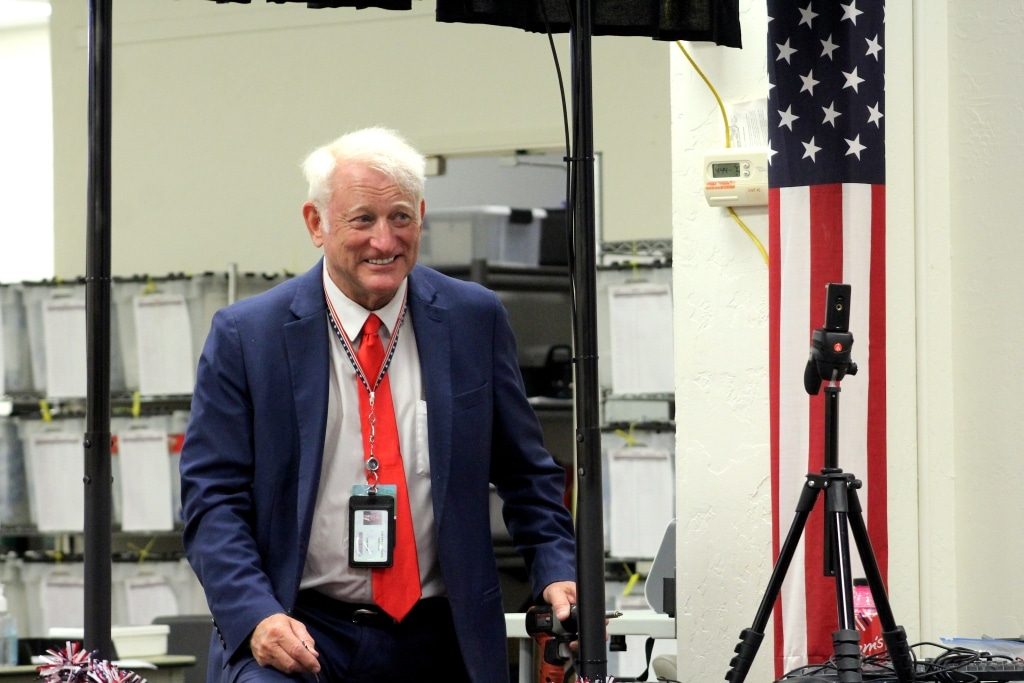
Years ago, Curtis famously made claims that he could develop software capable of changing election results. Though living in Florida, Curtis had already made his presence known in Shasta by the time he sought the ROV role in 2024 and again last year. In March of 2023, Curtis spoke to the county board in an activist role, advocating against voting machines and claiming California’s deputy secretary of state had provided the public with “a massive amount of misinformation” about hand-counting votes. A year later, when Darling Allen stepped down for medical reasons, he interviewed for Shasta’s ROV position but didn’t get it when the board selected Redding attorney Tom Toller instead.
When Toller resigned less than a year later, in the spring of 2025, Curtis had another chance for the role. The board voted 3-2 to appoint him in a similarly ideologically driven interview process. Despite the fact that Francescut had successfully worked with Toller as his assistant ROV after being passed over for the ROV role, Curtis fired her within his first few days on the job, a decision she said disappointed her.
“I would always say, ‘What do I have control over?’ And it was always myself and always my integrity,” Francescut said. “I was very disappointed that I was let go, not given the opportunity to really even have a conversation with him.”
In the year following his appointment, Curtis made sweeping changes to Shasta’s election system in the name of increasing transparency and improving security. One of the most visible changes he made was in the appearance of the elections office, including taking down a security gate and creating a new observer space filled with American flags and TV screens intended to show livestreams of ballot processing.
Curtis removed most of the county’s ballot drop boxes, several of which served isolated voters in the rural stretches of the county. He also ceased the use of electronic poll books, saying he believed the devices could add voters to the registration system all on their own, an unproven claim. The change slowed poll processes and affected voter access.
A slew of new election staffers have been hired under Curtis, including some who are involved in a political movement to partition California, along with one of the central proponents behind Measure B, a controversial ballot initiative being challenged by the state. He also added positions he refers to as “poll closers” in the June primary, a new process involving dozens of paid staffers that was described as chaotic by multiple poll rovers who have served the county in volunteer positions for years.
Curtis brought a partisan approach to the elections office, from sponsoring an event in support of a specific ballot measure to hosting a tour of the elections office for political candidates, using the opportunity to accuse his predecessors — including his opponent Francescut — of election fraud without evidence. He called his partisanship honest, saying everyone has a political opinion. Francescut has steadfastly taken a different approach, saying her personal political views should be kept private in order to protect the trust of diverse voters.
In an interview with Shasta Scout this week, Curtis said he feels good overall about the changes he’s made and his leadership while in office. He’s slated to hold the role through the end of this year until Francescut assumes office in January.
He said his biggest struggle was working with long-term staff who were hired at the elections office before he started, saying it was hard working with people who didn’t want him there. Several staffers threatened to quit shortly after he came into office, he said, adding that their departure would’ve been preferable to the “hostile work environment” he feels they created.
“It was difficult because I didn’t have a crew that wanted me to succeed,” he said. “It would have been easier if I had come into a blank slate, like everybody had actually walked out.”
While he accuses long-term staff of creating a hostile work environment, it’s Curtis who the county says engaged in abusive conduct against staff. Two separate investigations over the last year have resulted in substantiated findings of verbal abuse, including threats of violence. He’s denied those findings, calling them a “hit job.”
Curtis saw his role in the county as something bigger than Shasta, saying the changes he made had national and even international relevance and will continue to do so, in a more sympathetic environment.
“I am dedicated to making sure that the elections work perfectly and that we set the example for the world,” he said. “I can do that somewhere else with someone who wants to cooperate.”
‘The tipping point’: How Shasta’s voters may be shifting
Referencing the dual investigations into Curtis, former Shasta Supervisor Rickert said she believes Curtis’ behavior, along with his sweeping changes to the local election system, were what made people start paying attention to their local government.
“As painful as it was to have Curtis come here, he was the tipping point,” she said. “I think he was the one person that really started getting people’s attention.”
For Supervisor Crye, several sources pointed to his aggressive opposition to the behavioral health campus — a project he said he wanted to kill because it was evil and would infect the county — as what ultimately turned voters against him.
“The desire here really is chaos, and not to actually serve the community,” supervisor-elect Resner said of his opposition to the project.
Crye did not respond to multiple requests to interview for this story.
On Election Day in June, Shasta Scout spoke to voters who had come to cast ballots at the Market Street elections office. Those who agreed to interview expressed frustration with the direction the county had taken. One said the local push around elections had been “a lot of drama over nothing.” Another said she was against the changes the county has made to elections.
“I did see an impact on the last election and how much it slowed things down, and that was disappointing,” said Katie Middlebrook, a Redding resident who works in mental health. “I know it feels like there’s been a little bit of a waste of county funds in order to dismantle previous voting systems that maybe didn’t need to be dismantled.”
Election results were certified last week. Curtis lost to Francescut, and Crye lost to Resner. Supervisor Kelstrom, who mostly votes with Crye, is heading to a runoff election in November after receiving almost 800 fewer votes than his opponent, Mike Gallagher.
When asked if this election marks a political shift in Shasta’s voters, ROV-elect Francescut said she thinks it may take another election cycle to determine whether voters are shifting politically. But she said this election marks “a shift with what people will tolerate,” in terms of behaviors.
Similarly, Resner believes Shasta’s conservative values haven’t changed — voters just want less chaos and more policy-driven approaches.
“They’re probably experiencing and witnessing that the things they were told in 2020 and in 2022 are not necessarily impacting their daily lives in the way that they thought,” she said.
Former ROV Darling Allen said she feels if voters had been paying more attention years ago, the progression of Shasta’s conservative extremism would’ve been brought to a “screaming halt.”
Pruitt, the rural law professor from UC Davis, said these results are telling, but not because voters are becoming more moderate. The swing may simply be cyclical, she said, a natural correction when politics lean too far in one direction. Or it may reflect something more visceral: voters exhausted by combative personalities that they believe did not serve them properly.
“I think it’s probably analogous to what you see nationally, which is a lot of disaffection right now with Trump and the whole MAGA lot,” she said.
Garman, the supervisor who replaced Moty when he was recalled, resonated with that sentiment. When he first joined the board, he aligned with the board’s staunchly conservative majority — at first composed of Supervisors Jones and Baugh, then Crye and Kelstrom. But once he had a chance to learn the facts about some of the misinformation that had spread in the county, he started voting against them, such as when he voted in opposition to terminating the contract with Dominion Voting Systems.
He said he still considers himself very conservative, but he’s tired of people like Trump and Shasta’s board majority contributing to political polarization and a lack of civility.
Kelstrom thinks the personalities and behavior of Curtis and Crye are what drove the results in this election — something multiple voters on Election Day, including Middlebrook, also expressed. He said while he agrees with Crye on 99% of subjects, “he comes off sometimes as not the kindest, most polite person in the world, even though he’s got a heart of gold.”
As for Curtis, Kelstrom said it seemed “like he couldn’t do anything without causing a ruckus.”
“He’s done some things that we brought him in here to do, and I’m happy for the things he’s done,” Kelstrom said. “With that being said, some of his behavior is not acceptable.”
He added that he has to own his decision to appoint Curtis as ROV, with the resulting fallout.
When it comes to his own performance in office, Kelstrom said he feels his tenure has been a success, pointing to his focus on public works, resource management and relationships with department heads. When asked about the public’s dissatisfaction with the board majority and whether he’ll attempt to set himself apart from the ousted Crye ahead of the runoff, he said he has to consider every issue on a case-by-case basis.
He added that he feels confident heading into the November runoff. But he understands what the primary results mean for the board’s balance of power moving forward, even if he wins.
“I will probably be on the board minority, I’m guessing,” he said.
Where is Shasta now, and where is it heading?
The decisions of the past few years have left Shasta in a precarious financial position. In an email sent to community members across the county, Supervisor Plummer warned last month that the county’s financial cushion — or money leftover in the general fund that’s used for public services — is shrinking, calling it “scary low.”
Several departments are, or will be, facing financial strain, including social services, mental health and county fire. Local leaders warn that public safety funding isn’t keeping pace with expenses — a gap that could force the county to draw even more heavily from its already strained general fund.
Department heads and community leaders are also bracing for the impacts of H.R. 1, or Trump’s Big Beautiful Bill, which is expected to significantly affect local social services.
Multiple local leaders also said Shasta’s political turmoil and years of negative media coverage have made it difficult to attract experienced professionals. It’s an issue taking root in several areas of the county: a prosecutor vacancy crisis worsened by the board majority’s hardline on funding the district attorney’s office has forced the department to reduce case filings, and a health care provider shortage has impeded access to medical care.
Law professor Pruitt is concerned about what Prop. 50 means for Shasta’s congressional representation. It’s a part of the North State that was previously represented by the late Rep. Doug LaMalfa, someone she said genuinely understood the rural area’s needs — but under new district lines, the county is likely to be represented by a Democrat beginning next year.
“I find that regrettable because it’s only going to make them feel more embittered and disenfranchised,” she said of Shasta’s conservative population.
Supervisor-elect Resner knows she’s stepping into a challenging role. She and other sources pointed out that she’ll be the first female on the board in several years, adding that this area seems to have a habit of ousting women and labeling them as enemies — a reference to leaders like Ramstrom and Darling Allen, among others. She said watching Francescut — and her campaign manager, former Shasta Acting CEO Mary Williams — take on this election has “felt like a real redemption sort of moment.”
Resner wants the county to start tackling its financial problems with an efficiency study, something currently being executed in Redding. She’s also hoping to rebuild Shasta’s standing in the California State Association of Counties, a statewide body representing the state’s 58 counties whose relationships former Supervisor Moty said he spent years cultivating.
As of yesterday, Francescut is fielding a new opportunity: a potential return to her assistant ROV role in the months leading up to her swearing-in next year. She hasn’t decided whether to take the role if it’s formally offered.
As she takes her seat next year, Francescut said she doesn’t plan to immediately reverse all of Curtis’ changes when she takes over as ROV; she wants to analyze every operation at the elections office carefully, weighing costs and removing processes that are duplicative or slow the counting of ballots. She said a lot of changes will be dependent on how Measure B is handled in the courts. The office will also be prioritizing preparation for the next presidential election cycle in 2028, she said.
Through it all, one of her central goals will be repairing public trust in elections after years of damage. She plans to start with leaders and community members in the political middle ground, then work her way outwards to improve relationships across the political spectrum.
“There’s wounds here, and we’ve got to figure out how to heal this,” she said.
A year from now, Francescut’s hoping to not have to speak to reporters often — that will be a sign, she said, that the elections office has returned to the quiet stability it’s supposed to have. If her wish becomes reality, it would mark a stark contrast to the years of national headlines and political warfare that consumed Shasta’s elections office — and the county.
“I’m here for the voters; I’m here for the community,” she said. “I’m not here for myself. I think that’s the biggest win — that people can see that and trust that.”
While Shasta’s future leaders are looking ahead to what’s next, former leaders, who experienced firsthand the major shift the county initially took six years ago, are wary about the ongoing toll of decisions made over recent years. Former HHSA Director Ewert captured the mood of many who lived through this tumultuous era.
“It takes a short time to destroy,” Ewert said. “It takes a long time to rebuild.”
Do you have a correction to share? Email us: editor@shastascout.org.
Comments (24)
Comments are closed.
Related Articles
Redding plans to appoint a top REU executive as interim finance director
Joseph Bowers, an assistant director at Redding Electric Utility, could temporarily step into a department head role that was recently vacated by Greg Robinett. If appointed, Bowers would split his time between his current role at REU and Redding’s top finance role, at no additional cost to the city.
Efficiency study recommends Redding as ‘Data Center Hub’
The firm that completed the study said a data center project could attract hundreds of millions in private capital investment. The recommendation comes amid significant public pushback against data centers across the state and nation.
Forums beginning this week will feature Redding City Council candidates and other political hopefuls
Events are being held by three local organizations. They will publicly interview candidates about their approach to business, the environment and other topics of interest to local community members.
I agree with most of UC Davis lawyer political/analyst Pruitt, but I think the some 300 new registered folks I registered over the last year will have something to say about future elections and direction in Shasta County. Further, Democrat Representative Jared Huffman, will show us he’s capable of representing all constituents from Marin to Modoc county. A refreshing moment in partisan politics. Smoother times ahead.
““I’d rather go out that way than have [the board] have some big meeting and fire me for doing the right thing,” Donnell Ewert said. ”
You mean like lying about San Antonio not needing another jail because they put their resources into homeless programs and that alleviated their need for more jail space? or maybe deceiving the board about the Home Key program by sneaking that through on the consent calendar? you know, the county buying homes and placing homeless in them in our neighborhoods?
When you deliberately deceive someone, you’re lying to them
Sources, links? Most of us have learned by now not to accept anything you say without proof.
BOS meeting 5/14/2019—time stamp 57 minutes—a total lie
Thanks Madison for this in depth report. Please add to your good analysis the prominent role of Darling -Allen relating to voting system contracts in general. Her partnerships extend throughout the state as we have discussed . If we are to stabilize our election foundation we MUST pressure Secretary Weber to encourage the Democratic Party platform position regarding open source voting. Shasta County should lead on this issue by convincing incoming administration folks to disavow corporate alliances that lead to allegations of corruption. For the sake of the democracy let us look beyond those who keep secrecy at the heart of election software.
How about no?
This was a nice recap for people not following along, but your story completely miscasts Garman as a reborn hero. He was, is, and always will be a jellyfish— spineless and slimy. He was useless for Millville residents on the gun club, played by Jones multiple times, left Mary to fend for herself, and looked like a fool when he voted himself up for a raise. So glad he is gone. You shouldnt have interviewed him, we already knew he was easily manipulated. Adios Tim!
Many staff in the admin building referred to Supervisor Garman as Tim the Tool. He was worthless and spineless.
Excellent article Madison! Great unbiased and detailed reporting. Excellent overview of where we have been as a county and where we might be going.
Great article, thank you. Perhaps a national media outlet will pick this up to give people an opportunity to see Shasta County in a more favorable light.
Excellent article, thank you! I agree with Mr. Ewert: it takes a moment to destroy and a lot of time and effort to rebuild. Fortunately, we have Ms. Francescut and Ms. Resner who work hard and will roll up their sleeves to get Shasta County back in shape.
Respectable article, thanks, Madison, and Shasta Scout. Will Shasta County trade in its hardcore MAGA politicians and shy away from the court-adjudicated rapist – convicted white nationalist – wantabe fascist / 34–count convicted felon, for good ol’ “Shining City on the Hill” Ronald Reagan? Aw, such fond memories on the good old days… But really, do things change that much?
.
Reagan was a racist who, under the guise of his buddy Grover Norquist, president of “Drown Government In The Bathtub” Americans for Tax Reform, kicked off the Tea Party movement, which gave birth to MAGA, drastically cut health care, and propagated trickle-down economics. Also, in 1986, in what became known as the “kinda neat”Iran–Contra affair, Reagan had his administration secretly sell weapons to Iran in exchange for the release of American hostages. Profits from these illicit weapon sales were secretly funneled to the Contras, a right-wing rebel group fighting the government in Nicaragua.
.
And today, under the adjudicated rapist, Republicans are still at war with Iran, and the Trump–Republican Party’s HR 1 and Project 2025, the epitome of trickle-down economics, along with Measure B, are slamming Shasta County with a socioeconomic tsunami that’s just starting. We can thank people like Hawas, Jones, Crye, Kelstorm, Curtis, and Hobbs, ( I would add CFrye’s puput Corkey, but I don’t think he knows where his at half the time…), who all voted for trump and his policies (both polling underwater, deep in the toilet), and their misguided, undereducated followers, who get their news from Fox and Facebook, for getting us where we’re at locally and nationally.
.
Will the New and Improved, good ol ‘ Ronald Reagan Republicans save America and Shasta County?
.
Yeah, right…
Unfortunately it doesn’t appear to be bedtime for Bonzo quite yet.
Campaign promises are worthless and at this point anyone who believes them, well… deserves what they get.
The question everyone needs to ask Reisner, over and over until she answers is:
How many times did you vote for Donnie Diapers?
Excellent reporting. We are lucky to have you here with us.
Excellent journalism, Madison. Well done outlining how our once healthy, growing, and proud community has evolved into a stagnant, divided, and poorly governed county due to Anselmo’s puppets Jones and Crye. Reversing the damage may take decades. Kelstrom better own up to his mistakes if he wants any chance of getting reelected.
With all the power that the BOS has over issues that impact every citizen in the county, I believe that every registered voter should have the opportunity to vote for all 5 BOS positions.
Also, I welcome a democrat to represent me in congress. For too long la mal fa and his predecessor represented things I was opposed to.
I would respectfully disagree with you that every registered voter should be able to vote for all 5 BOS Positions.
The issues facing one living in say, Burney, would be different than those living in Anderson, or West Redding.
Representative Government is just that, and Supervisors should be elected by those living in their specific district to represent their specific interests.
I respectfully disagree with you on that. All city of redding residents get to vote on each group of candidates.
Just think: how would things be different if kevin cry had been recalled, if moty had not been voted out?
There are plenty of options to contact supervisors.
Not letting me vote on all 5 is denying my right to let my voice be heard at the ballot box.
Herger and LaMalfa were both inconsequential back benchers. Herger was a complete non-entity, LaMalfa was an election denying MAGA chud. Jared Huffman is well regarded in the Democratic Party. It remains to be seen how much attention he will pay to this part of the district, but we have nowhere to go but up.
Selah
I’ve been following Huffman. I’m encouraged by what I see.
HE IS NOT MAGA.
Look at Kelstrom sort of taking the message: Voters will reject an incumbent who acts like an unrelenting flaming asshole, like Crye, Curtis, and Kelstrom’s buddy PHGWMF Jones.
.
Look at Kelstrom not taking the message: Voters don’t want to be bullshitted with statements like, “(Crye’s) got a heart of gold.” Nah, bro—that outrageous whopper is why you’re next out the door. Most of us see that Crye is a mean, grifting, self-serving reptile. A bull in the China shop with flamethrower isn’t what we want. There are real problems to be dealt with. The job isn’t all grandstanding for fellow MAGAs, who are a dwindling breed. Tic toc, dude.
I dealt with Crye for many years as a local basketball official. Heart of gold is laughable.
Selah
Agreed. Try dealing w him for 40 years.
What is interesting the so-called changes in Kelstroms ability to be a chameleon . He followed Crye baby’s making stupid decisions for the county and costing the county millions by running off experts or true professionals running the county. You voted to install Tuller then Curtis , Mu , new county CEO and county counsel with a golden parachute which if removed would also cost the county millions.
Pack your bags Chris the milita can’t save you from your destiny out of government.
January can’t come soon enough in the el action office not only is Curtis being shown the door but the other 2 disrupters will be hitting the pavement.
Corkey your next.