
Shasta Regional nurses strike for fair contract, safe staffing levels and improved patient care
The strike in Redding is just one of several strikes happening across the country against Prime Healthcare, a for-profit company that owns 55 hospitals in 15 states.
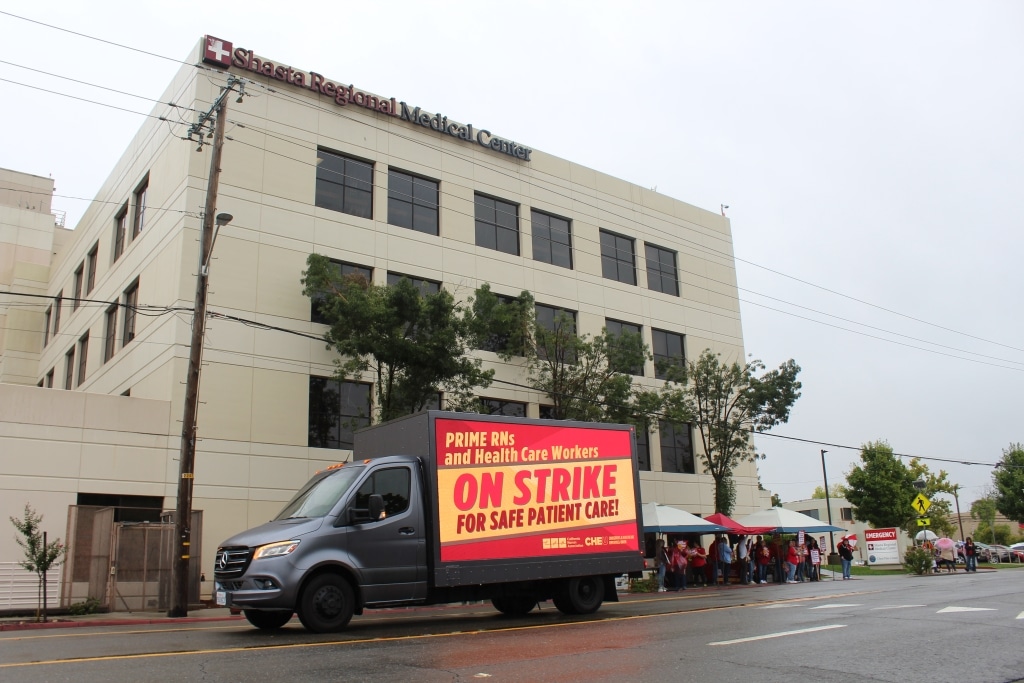
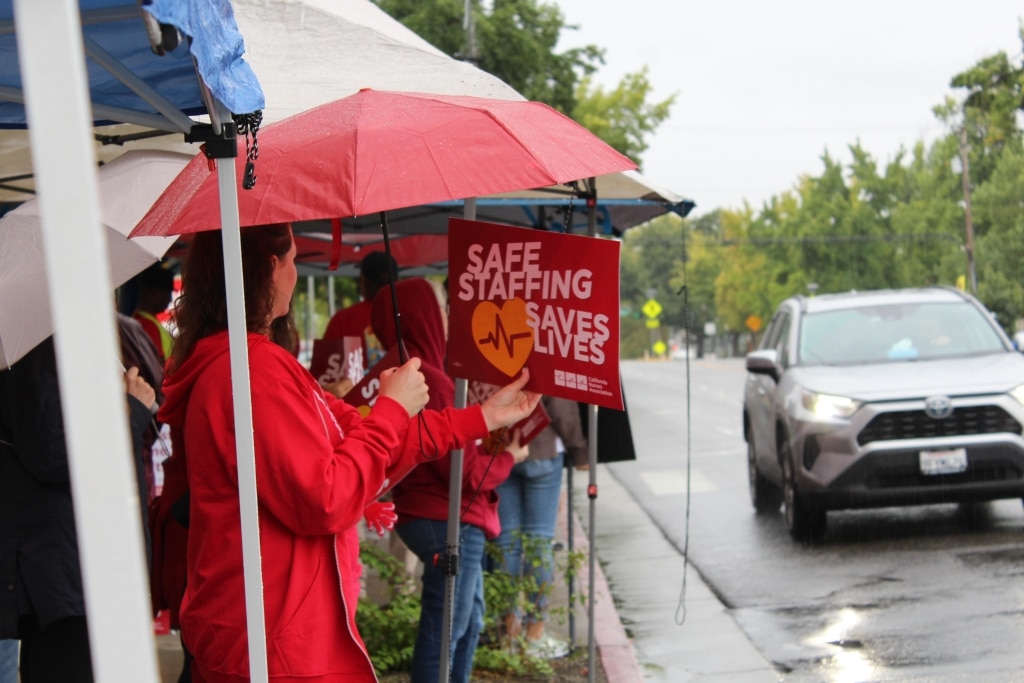
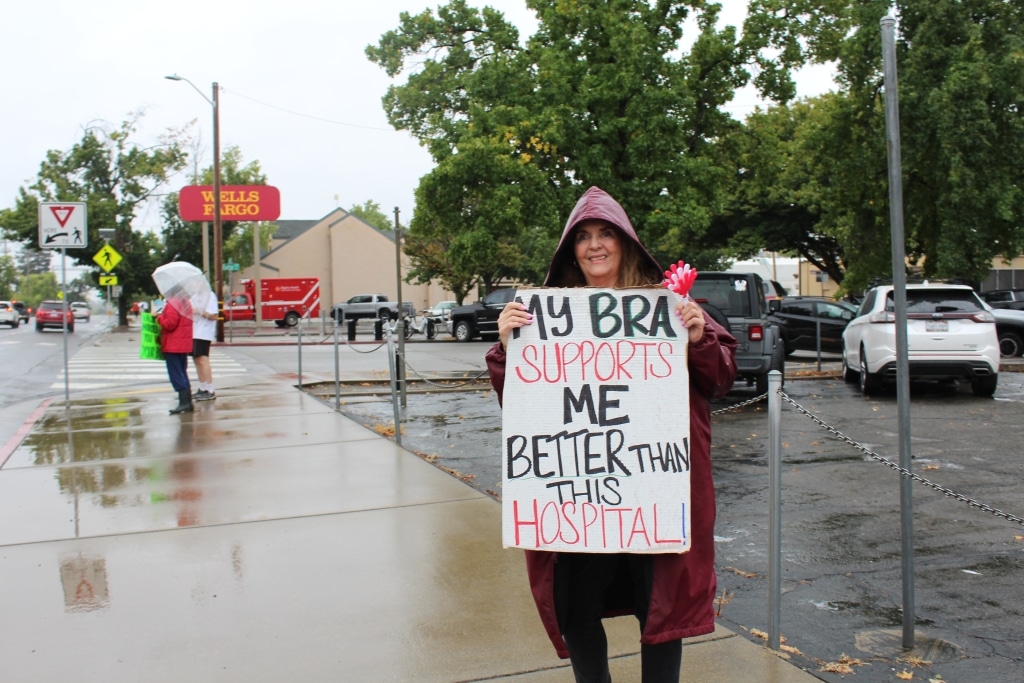
Dozens of nurses and health care workers stood outside of Shasta Regional Medical Center in the drizzling rain today to strike, most wearing red and holding picket signs. They were protesting hospital management and Prime Healthcare — the company that owns Shasta Regional — for what nurses described as their refusal to agree to a fair contract.
Registered nurse Michelle Gaffney, who works in the intensive care unit at Shasta Regional and is a union representative of California Nurses Association/National Nurses Organizing Committee, said before the strike that contract negotiations with hospital management started last year and that management hasn’t been receptive to the nurses’ and health care workers’ demands.
Specifically, they’re pressing for safe staffing levels and improved patient care, she said, adding that there’s been issues with recruiting nurses and retaining experienced ones due to working conditions and a lack of a strong contract. She said these issues create concerns about overall patient safety.
Gaffney added that having a strong union contract can help prevent retaliation when nurses speak out about poor conditions.
“We’ve done what we could, but management has not been receptive to that, and so now we’re having to strike to pressure them to come back to the table,” she said.
The strike is only intended to last for one day, and it started around 6 a.m. this morning. Nurses and health care workers gave over a week of notice to the hospital to ensure that alternative plans could be made to provide patient care.
A hospital spokesperson said Shasta Regional bargained in good faith with the unions representing nurses and other staff, but that despite “significant investments and continued efforts to reach an agreement,” the unions proceeded with a strike.
“This decision is particularly concerning given the extraordinary demands currently being placed on healthcare providers,” the spokesperson said.
The strike comes as Shasta County, along with several other rural areas of California, faces a long-term lack of health care providers, something that led to county Health Officer Dr. James Mu declaring a public health crisis more than a year ago.
Shasta Regional is owned by Prime Healthcare, which is a large for-profit company that owns 55 hospitals across 15 states. Several other hospitals owned by the company are also striking today, announced the labor union California Nurses Association/National Nurses Organizing Committee, an affiliate of National Nurses United.
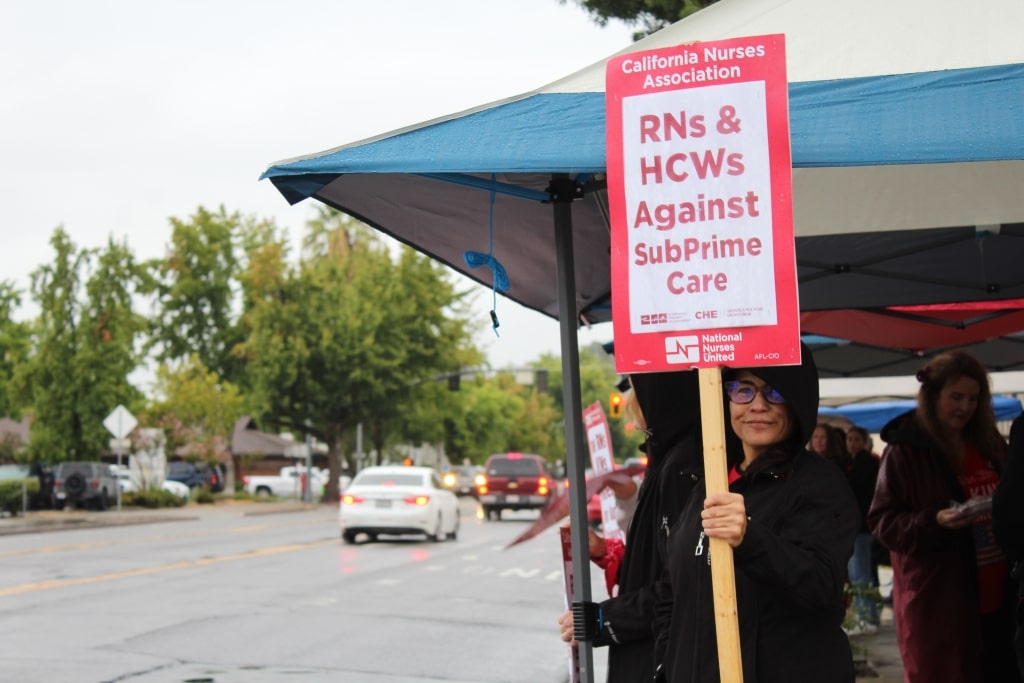
Gaffney explained that the policies made by Prime are similar across hospitals, and that having multiple strikes in one day helps show solidarity and how issues are prevalent in more than just one hospital.
“Because we are dealing with a large corporation,” she said, “one small voice is not nearly as powerful as the unity across multiple facilities.”
Cathy Kennedy, who recently retired from being a registered nurse for 46 years, drove from Sacramento for the strike. She’s the president of the California Nurses Association/National Nurses Organizing Committee and a president of National Nurses United.
She emphasized Prime Healthcare’s billions of dollars in revenue, claiming that the company places profits over patients and health care workers.
“We’re trying to say to them, ‘You need to put those resources back into the hospital, into the workers, so that we can provide the care that we need for our patients because they deserve it,’” she said at the strike.
Kennedy also pointed out that California mandates hospitals to maintain nurse-to-patient ratios, adding that if there are nurse shortages, it’s not because there’s a decline in the number of nurses available to work, but that hospitals aren’t doing enough to retain them. According to Bureau of Labor Statistics data, there are more than a million registered nurses with active licenses who weren’t employed as RNs as of May 2025.
“Nurses will come back if the hospitals provide them with the resources that they need,” Kennedy said.
A hospital spokesperson said in a statement yesterday that several proposals presented to nurses and health care workers during negotiations, included wage increases and comprehensive benefits.
“These investments reflect our commitment to recognizing and rewarding the dedication of our nursing professionals and staff,” the spokesperson said without responding to questions about how management plans to address their employees other concerns. The hospital spokesperson emphasized that the facility will remain fully open and appropriately staffed to ensure patients continue to receive care while the strike takes place.
Gaffney, the ICU registered nurse, said she wasn’t just striking for herself and other nurses at the hospital, but also for the community.
“We just want to make sure that our community knows that this fight is for them, as well,” she said. “This goes beyond just what is affecting nurses. … We are members of this community. We choose to stay and care for our families, our neighbors, everyone else that’s here. That’s the reason why we’re speaking up.”
9.4.2026 9:23 a.m.: We have updated the story to include reference to health care workers, who were among those striking.
Do you have a correction to share? Email us: editor@shastascout.org.
Comments (6)
Leave a comment
Related Articles

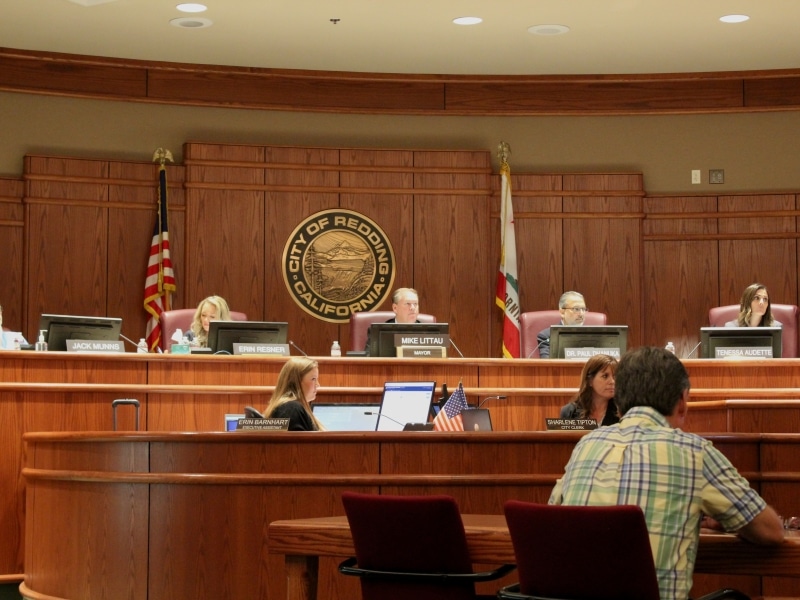
Survey: What do you most want to know from Redding’s city council candidates?
We’re flipping the script by centering readers’ voices in our coverage of the Redding City Council race this November. Taking our anonymous survey will help us decide what questions to ask.
Redding efficiency study’s initial results identify $1.2 million available to return to general fund
A little over a million in funds that were designated elsewhere have been identified as available to be returned to the city’s struggling general fund. More comprehensive results and savings are expected to be presented later this month.
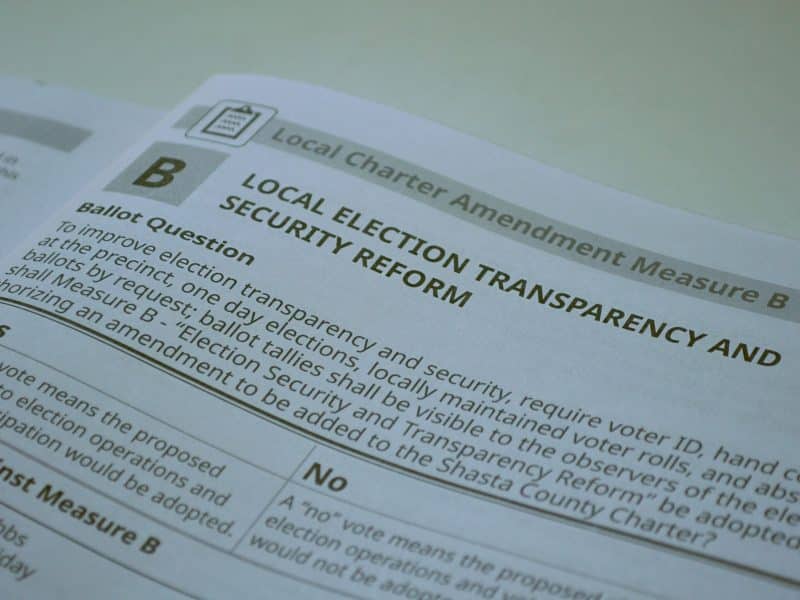
Measure B remains suspended after latest court ruling
Elections are still slated to be held as usual this fall after proponents’ most recent attempt to ensure implementation of Measure B failed in court late last week.
SRMC hasn’t maintained legally mandated staffing levels since before 2008 when they elected to lay off nurses with DECADES of experience, with nothing but a handshake and their last paycheck, in favor of new grads who they could higher cheaper and predominately not have to offer benefits to. I used to think it would only take ONE person dying and they would fix it. Oh how nieve. One person died, they blamed the nurse, and NOTHING ELSE CHANGED. That was only one person, one day, one unit, one avoidable death. How many people have died in the mighty name of PRIME profits?? The quality of care has only further deteriorated there in the intervening years. I’m sure Prime has some pretty, BS, vision statement and motto but their actions indicate that their true driver is Profits Over Patients. Staff are only an insignificant means to that end. My prayers to the nurses and HCW on the line. If you end up with pneumonia out there, you might want to head over to MMC for care…
Your paper continues to do an amazing job of reporting and writing and keeping us informed! Thanks.
And why is a hospital in the business of health for profit? OMG. Let us get the profit motive out of health care, from insurance all the way to the dr. office and for sure the hospital.
I support them 100%! I’m in awe of RNs and HCWs and the important job they do. They are truly angels!
The comparison between working conditions and pay are severe when comparing Dignity/Mercy and Redding’s Shasta Regional, that’s the difference between private for profit and non-profit corporations.
This way of providing health care went out with the “Hula Hoop”. So far the “system” is working the way corporate USA, the politicians and their donors designed it. Throw in big Pharma and the fleecing of America is a great success. It’s up to the people to stop the madness…it always is.
“PRIME RNs and Health Care Workers ON STRIKE FOR SAFE PATIENT CARE!”
Americans rely heavily on healthcare and prescription drugs due to high rates of chronic illness, a medical system focused on treatment rather than prevention, and aggressive pharmaceutical marketing.
Doctors are trained and financially rewarded to manage diseases with procedures and medications rather than lifestyle coaching (patients often see multiple specialists who each add more medications to their daily routine).
Ironically, a significant percentage of healthcare workers in the United States live with overweight or obesity!