
Meet Jack Munns for Redding City Council
There are three council seats on the ballot this November, and nine candidates are running. Munns is a current council member and former police officer.
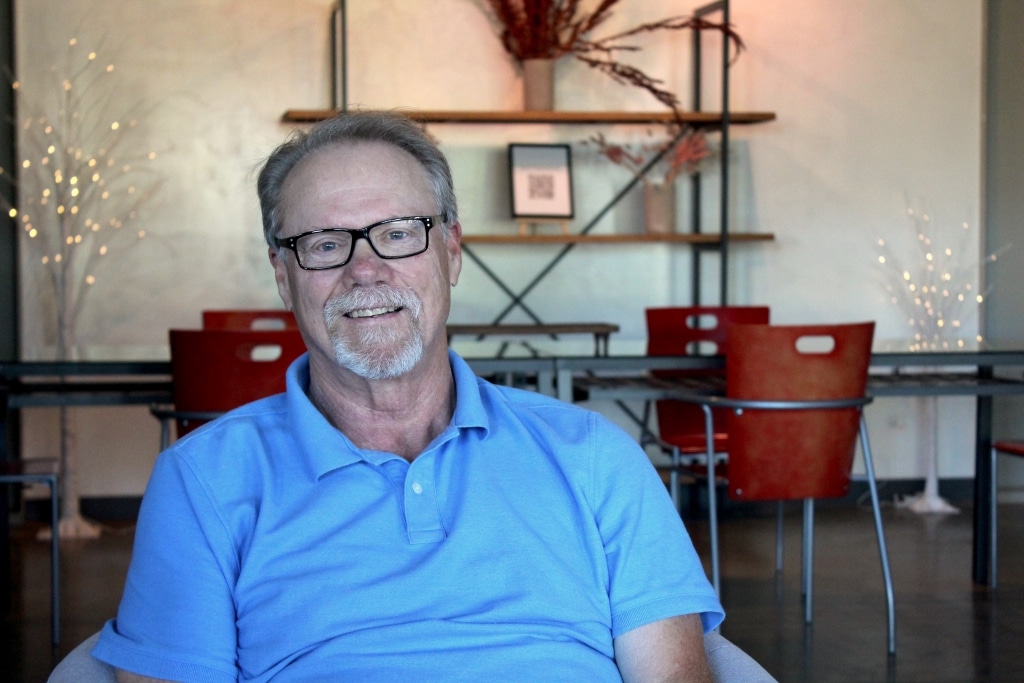
In the upcoming November election, nine candidates are running for three seats on the Redding City Council. Shasta Scout interviewed the candidates, including current council member Jack Munns.
Interview questions were inspired by a reader survey that asked participants to identify their top priority issues along with questions they want answered. Each candidate was asked the same questions, and they were asked to keep their answers concise and to the point.
What personal or professional qualifications have prepared you for the role of city council member?
Munns said he was a police officer for 21 years in Reno, Nevada. His duties included being a hostage negotiator and staff trainer. During his career, he said his team started a program — which won two national awards — where they’d go door-to-door to check on unhoused people, give immunization shots, administer baby checkups and connect individuals with services.
He said he earned three degrees while being a full-time police officer, including an associate’s degree, a bachelor’s in criminal justice and a master’s in social work, noting that he’s also already worked on the city council for a full term.
“I have the education, I have the experience, I have four years on the council,” he said. “The first couple years has been relatively smooth, but the last year, you know, the waves are high. As you know, we got a lot of vacant positions and challenges with revenues and expenditures and stuff. So, yeah, I would suggest that I’m well qualified.”
Why should the public trust you as a leader, and how would you approach issues of transparency, conflict and decision-making processes?
Munns explained that every vote he’s made is recorded, so the public is able to see how he operates. He said he reads staff reports and meets with constituents, directors and staff in the field so he can make better-informed decisions.
He said he usually knows how he’ll vote before heading into a meeting, but he tells people he’s 80% sure because he leaves room for more information, mainly from other council members, “although not a whole lot through public comment.” He said he does this so he can leave room to change his mind.
He said he’s also learned that emotions can lead you the opposite way of an answer, saying that he tries not to let his feelings guide him.
“I want to guide me with data, with accuracy, and what’s right for the city,” he said. “Not what’s right necessarily for me, but what’s right for the city, what’s right for the people.”
How would you work to address the city’s significant financial instability?
Munns said the city is already planning to make significant fixes in the near future regarding finances. He said as a retired police officer, quality of life is important, and that comes through feeling safe.
“Yes, roads are nice, we want better roads,” he said. “But quality of life says, ‘When I go to the park, am I going to be harassed by people trying to get money from me? Am I going to be harassed by homeless, or what have you?’”
He said the city has around 40 vacant positions that it will probably eliminate so the money from the positions can go back into the budget. He also said he hopes more money can be saved through contract negotiations. He emphasized he’s not in favor of layoffs or cutting salaries but that he’s interested in furloughs.
“The key point is we can’t just lose services,” he said. “Services are important.”
How would you as a council member work to provide resources for homeless individuals and ensure people have access to permanent housing?
“It’s not our job to take care of the homeless,” Munns said, speaking of himself and others with the city. “That job falls with the HHSA and the county.”
He said what the city does is partner with organizations who do take care of homeless individuals, and it has vouchers that it gives out to help people with housing. He said the city also has the money needed to house homeless veterans.
“The funny thing is that there’s a few that don’t want it,” he said. “We have the money, but they don’t want it, which is interesting to me. Why is that?”
He said the city has partnered with organizations such as the Good News Rescue Mission. He added that the city also helps with cleanup — last year, about 90,000 tons of trash was cleaned up, he said.
“That’s the way we operate, mostly, like, we help [service organizations] with their finances, with being their administrator or something,” he said. “So there’s just a lot of things we can do around the edges to help those who are actually in the field get better and do it right. Give grants and other stuff like that.”
There are several groups that have major influence in Redding, including Bethel Church, the Redding Rancheria and the McConnell Foundation, among others. When considering any influential groups you may be involved with, how can you ensure your leadership will stay objective and not persuaded by conflicts of interest?
Munns said he hasn’t taken any money from those groups, and that none of them have come out to support him. He said he’s turned down about $12,000 in support.
“What happens is, you meet with these organizations,” he said, “and when they give you lots of money, then they like to say, ‘Hey, I gave you this money. Now you have to vote this way on this item.’ So I have no hooks in me.”
He said no matter if someone gives him $5 or $5,000, he will still treat them the same.
“I just don’t take a lot of money that I feel like people will try to dictate what I do,” he said, “and I’m trying to do what’s right for the city every time.”
What would your biggest priorities be if you’re elected?
Munns’ first priority is to hire a city manager. He said he supports hiring interim City Manager Michael Webb because he’s been doing a great job. He also said he wants to ensure top city staff are hired, including the police and fire chiefs, city attorney and finance director.
Getting the budget back on track is also a priority, he said. He also wants to focus on increasing safety and quality of life for the community, as well as reopening the Civic Auditorium.
“The future’s bright,” he said. “Maybe in the moment we’re having challenges, but challenges don’t last forever.”
He said he loves being on the council and that it’s a great job, making a joke about how little council members are paid.
Do you have a correction to share? Email us: editor@shastascout.org.
Related Articles
Meet Lisa Barry for Shasta County Office of Education Trustee
Lisa Barry is running for one of seven seats on SCOE. She has a background of service in the Intermountain area including as a community organizer with Burney Friends and Neighbors.
Meet Joana Rebollar for Redding City Council
There are three open seats on the council, and nine candidates are in the running. Rebollar is a tax preparer and accountant who has a primary focus on the city’s finances.
Redding clerk race not included on Shasta ballots
The candidate for Redding city clerk, appointed incumbent Sharlene Tipton, has no opponents. It’s not yet clear what impact leaving the race off the ballot might have on the election process.
Comments (0)
There are no comments on this article.