
Accountability vs. micromanagement: Shasta board debates its role during wide-ranging discussion
Supervisor Matt Plummer was accused of micromanagement for asking for data in response to an assessment of fire services. Meanwhile, Supervisor Kevin Crye spent nearly thirty minutes questioning a decision by the HHSA director with no such accusation sent his way.
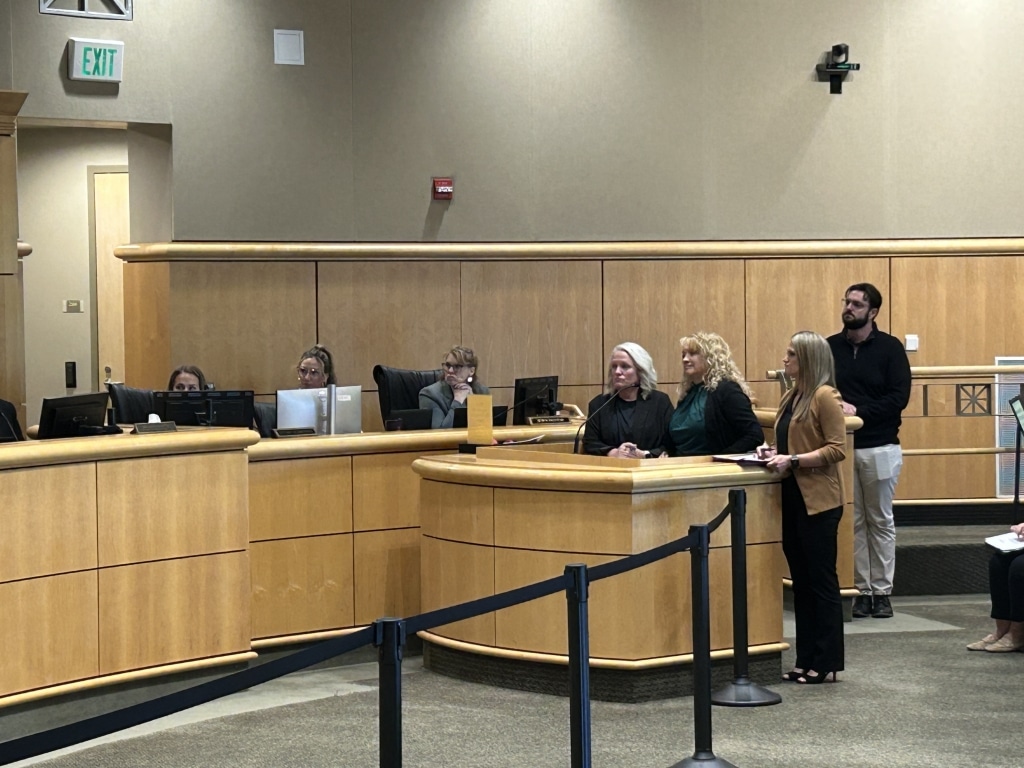
One word came up several times during Tuesday’s Shasta County Board of Supervisors meeting: micromanagement.
It was mostly lobbed towards Supervisor Matt Plummer, who unsuccessfully pushed forward motions related to both fire management and substance use amid accusations that he was interfering with staff management.
Supervisor Kevin Crye did not receive the same critique when he spent nearly thirty minutes questioning a decision by Shasta Health and Human Services Agency that was made in collaboration with Deputy CEO Erin Bertain.
Here’s how the incidents played out.
Fire management
Plummer responded to a presentation on long-term fire management by suggesting that the board should direct county leaders to meet with city leaders and elected officials on opportunities for consolidation and collaboration when it comes to wildfire response.
The supervisor also suggested that the board direct Shasta County Fire Chief Sean O’Hara to return with recommendations on what fire stations could be consolidated to reduce costs, and what savings that might produce. And Plummer said he’d like the chief to provide recommendations to the board on how to better track the performance of the Shasta County Fire Department on hard-to-compare metrics moving forward.
Kelstrom responded to the interaction negatively, saying of Plummer’s proposals: “I think this really gets close to micromanagement.” He asked O’Hara if he was already working on the things Plummer had brought up, and O’Hara said yes, “pretty much.”
Then Supervisor Kevin Crye broke in to say that he wouldn’t support any type of micromanaging, to which Supervisor Allen Long responded that Plummer’s approach wasn’t micromanaging, but exploring options. Crye shot back that Plummer’s suggested action items were political theatre.
Plummer’s motion to direct county leaders to meet with the city ultimately failed 2-3, with Kelstrom saying there was “no way he was going to direct the CEO or Chief O’Hara.”
Another vote, asking O’Hara to report back on station consolidation passed, with the chief agreeing to do so before next year’s budget meetings. The board did not vote on Plummer’s motion asking O’Hara to provide direction on how to better track the performance of the fire department because there was no second to the motion.
Hill Country loan forgiveness
Jo Campbell, the director of Hill Country Community Clinic, faced a slew of questions from supervisors when she rose from the audience to present on a proposed agreement for the county to forgive a 15-year, $300,000 loan that was made in 2007.
Deputy CEO Bertain told the board that Campbell herself had brought forward the unaddressed loan back in 2024, asking that the matter be resolved in order to clear her books. The county had two options, to request the funds back or to forgive the loan, the latter of which HHSA Director Christy Coleman said was the original intent of the board when the money was given to Hill Country. The board’s staff report recommended that the loan be forgiven over the next three years of continued services by Hill Country, but Crye took issue with that approach.
“Government’s not supposed to operate like that,” Crye said.
“I’m not going to forgive it,” he added, saying he understands where Hill Country and HHSA are coming from, but things need to change with how the county operates in these situations.
Coleman explained to Crye that the specific kind of loan can by law be forgiven saying she sees doing so as the best use of the funds at this time. Over a thirty-minute debate driven by Crye’s distaste for forgiving the loan, several additional staff rose to address the matter in response to Crye’s concerns, including Auditor Nolda Short and HHSA Administrative Branch Director Erinn Watts.
“I’m just trying to research,” Crye said.
The board eventually voted 4-1, with Crye dissenting, to forgive the loan over a three-year period, just as originally recommended in the staff report.
‘Recovery First’
Late in the meeting, Plummer introduced a resolution regarding what he termed Recovery First, an approach to county substance use programs that he described as “centering recovery” as a way to address Shasta’s high rates of addiction and overdose. The resolution provided to the board was generally vague on specifics, prompting questions.
“The idea behind this is to say that we want people to come off of drugs,” Plummer told his fellow supervisors. “We want our programs to be aimed at helping people get off of drugs, and you know, that will be the explicit intent — and that we’ll seek to kind of measure progress towards that as we implement and continue to run the programs we have.”
Kelstrom asked Plummer the same question a Shasta Scout reporter asked the supervisor yesterday: aren’t we already doing this in Shasta County? In response, Plummer suggested that some programs, such as the county’s safe needle exchange program, could be either eliminated in the future or updated to include education for users in an attempt to discourage drug use.
“Again,” Kelstrom responded with a sigh, “I’m kind of a firm believer in letting our department heads run their departments as they run them. I mean, you know, giving direction if you think they’re doing something wrong or setting up a meeting with them, but I just don’t feel comfortable with a resolution to tell them how to do their jobs.”
CEO David Rickert also weighed in, saying the resolution by its nature would require additional administrative efforts by staff. Plummer responded by saying he felt such additional efforts were worthwhile, noting that accountability often comes with additional costs and emphasizing his belief that the county has to do something differently to have different results.
His motion to pass the resolution failed for a lack of a second.
What came next
After the meeting, Plummer issued a social media post recounting some of the day’s events.
“Accountability is not the same as micromanagement,” Plummer wrote in the caption. “We can value employees while setting clear expectations, measuring outcomes and following up when progress isn’t made.”
Speaking to Shasta Scout by phone afterwards, Kelstrom stood behind his actions during the meeting. When it came to Crye’s interactions on the Hill Country loan, Kelstrom said he didn’t see that as micromanagement because “Crye was just seeking to hold Hill Country accountable.”
But when it came to Plummer, Kelstrom claimed the supervisor “has a habit of telling department heads how to do their jobs.”
In a phone call with a reporter, Plummer shot back saying the board majority “has a habit of taking no action when a problem is presented.”
Citing initiatives he’s pushed for, including a directive to HHSA to reduce its cost by $1 million a month, something the agency has succeeded at doing, Plummer said it’s important to set metrics for staff and then hold them accountable.
“I think there’s a perception that if someone is doing a good job you shouldn’t attach accountability,” Plummer said, “but ultimately people act consistently with the incentive structure that’s attached to them.”
He said he thinks the problem with the government overall is that incentive structures for the public sector are most commonly designed to facilitate compliance and the execution of duties rather than delivering value and solving problems.
“Our responsibility is first to the people of Shasta County and then to the employees,” Plummer added. “You can’t prioritize being a nice guy over delivering results. But I think you can hold people accountable without being mean.”
Do you have a correction to share? Email us: editor@shastascout.org.
Author

Comments (1)
Leave a comment
Related Articles
For Shasta, collaboration needed to solve physician shortage
Political division is a barrier to improving healthcare access in Shasta County. Experts say solving the entrenched problem requires working together.
Meet Rebecca Anne Miller for Redding City Council
Three seats are up for grabs on the council this fall, and nine candidates are running. Miller is a substitute teacher with the Shasta County Office of Education and a caregiver with In-Home Supportive Services, or IHSS.

Gallery: Downtown Redding hosts fourth annual Hispanic Heritage Month celebration
Red Bluff-based entrepreneur Araceli Gutierrez collaborated with Viva Downtown to bring the celebration of Hispanic Heritage Month to Redding.
Supervisor Plummer is constantly trying to direct HHSA staff. He does this because he knows the voters and the Board of Supervisors do not want to make funding homeless programs the county’s top priority. Plummer also wanted to put a 200 bed open door drug treatment center in Shasta Lake.