
For Shasta, collaboration needed to solve physician shortage
Political division is a barrier to improving healthcare access in Shasta County. Experts say solving the entrenched problem requires working together.
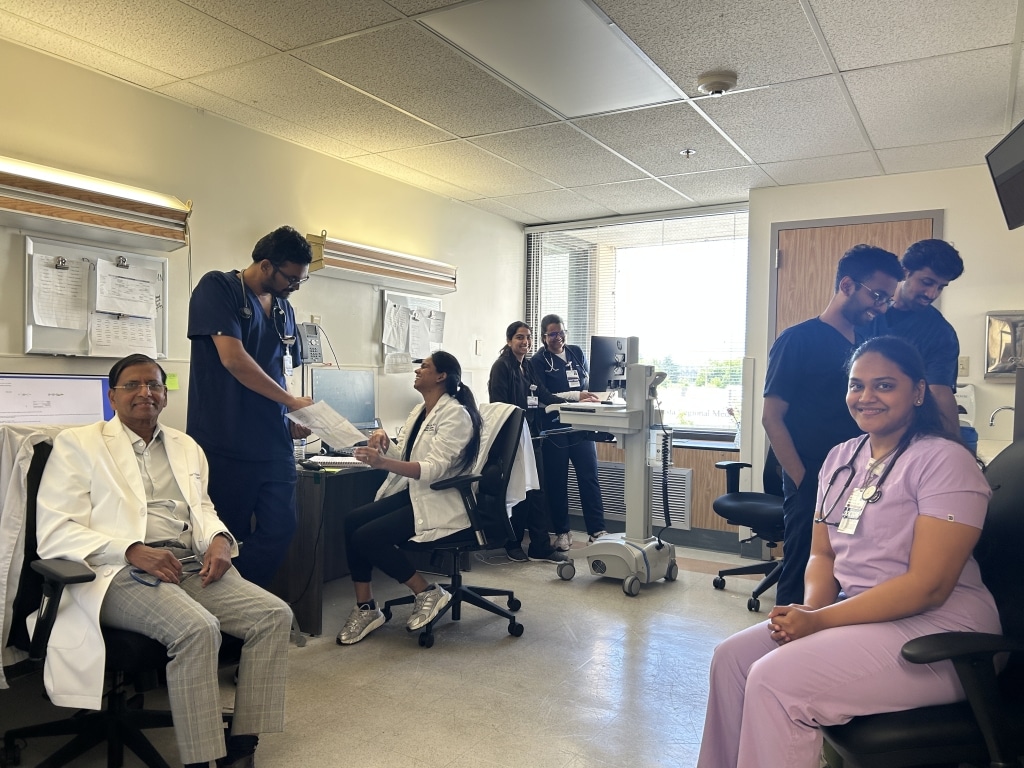
One doctor gulped down lunch during a brief break before rounds as others spoke to a reporter about the residency that brought them from southern India to rural Shasta County. They also talked about why they’re considering staying: to invest in a local community facing a critical physician shortage.
“The people have been truly wonderful,” said Dr. Deepika Reddy Bandi, as others added in similar thoughts. “They tell us how much we’re needed. And they thank us for being here.”
Shasta Regional Medical Center is home to more than a dozen immigrant residents, doctors-in-training who’ve entered the country as part of the J-1 visa program which promotes the exchange of skills between other countries and the United States.
Their reception from locals, the majority of whom are white and conservative, might be surprising if not for the dearth of medical care that Shasta faces. Many communities in California’s North State, which includes Shasta County, have reached the crisis point.
Physician shortages in rural communities are common. Across the nation, communities far from urban centers lack the critical population to support thriving medical practices.
In Shasta, numbers have worsened over the last decade, driven in part by an aging physician population. In response, experts and local policymakers have been searching for solutions to this workforce shortage, drawing on regional expertise, potential university partnerships and state and national data about what works.
Building the complex web of education needed to train new physicians has been slow. Some politicians have recently suggested launching a private medical school at a local Christian university at a cost of $100 million or more, $10 million of which Shasta County taxpayers might be asked to pay.
The result has been a deepening political divide over an issue that has historically united much of the population: the need for better medical care.
That divide now appears to be worsening the healthcare shortage itself. Last year the California Health Care Foundation published a study noting that politics is a significant force behind the county’s failure to secure funding to improve mental health care across the region.
“In Shasta County, local politics and divisiveness mirror national patterns — with direct implications for health care,” the study says, listing that divide as among the top five causes of the physician shortage.
“This politicization of public health creates additional barriers in a region already struggling with workforce shortages and limited resources.
The pipeline to a physician workforce
Becoming a doctor takes around a dozen years of higher education including a four-year undergraduate degree, followed by another four years of medical school, which incorporates both classroom work and hands-on clinical experience.
The title of doctor is used in the next phase, residency, where the trainee provides direct patient care while continuing to work under the supervision of licensed physicians. Those pursuing practices such as cardiology or pulmonology must complete a specialty fellowship before completing final licensure exams. Physicians must pass a state exam to become a board-certified medical doctor, M.D. or doctor of osteopathy, also known as a D.O.
Building this pipeline is key to solving the physician workforce shortage in Shasta and elsewhere. Studies show that where doctors serve residencies influences where they’ll launch their careers.
That’s behind the push for more doctor training in the North State. Experts hope expanding clinical rotations and residencies will build a pool of physicians committed to staying.
Choosing a starting point
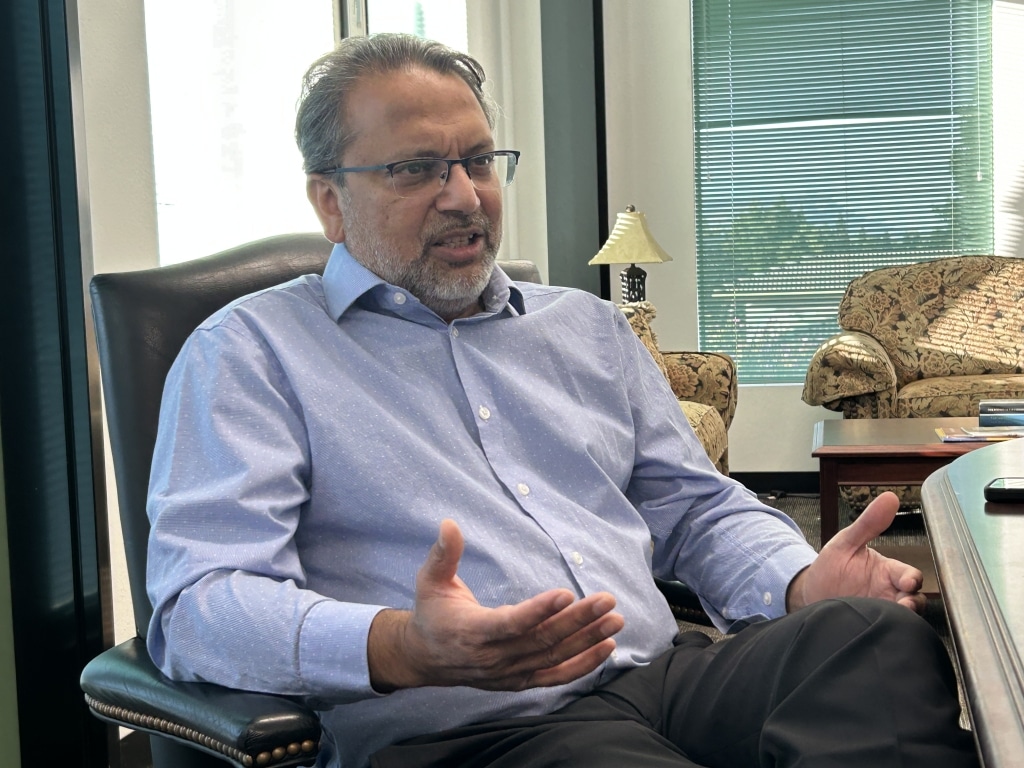
Redding City Council member and gastroenterologist Dr. Paul Dhanuka dreams of a full-fledged medical school in Shasta, providing the first four years of medical education and inspiring locals from the greater North State to become physicians.
Dhanuka himself is a transplant to the region who, like his oncologist wife, grew up in India. But he’s lived in Shasta for decades now, raising a daughter who is also on the path to becoming a doctor.
More than a year ago, Dhanuka approached the president of Simpson University, Norman Hall, who runs the small private Christian school in Shasta. Hall has no experience with physician education, but he quickly picked up Dhanuka’s dream of expanded training options which could also provide increased financial stability for the university.
It’s the most expensive approach that’s been broached for building Shasta’s physician workforce. But Dhanuka has also gained support from county Supervisor Kevin Crye, a powerful — and controversial — political force in the North State.
Dhanuka, Hall and Crye believe that building such a university is feasible despite its hefty price tag — and the dozens of physicians that would have to be lured to Shasta just to train the medical students.
They hope to launch with 100 students who would serve clinical rotations across the region. The school would train students to become doctors of osteopathy, with core rotations in family medicine, internal medicine, surgery, obstetrics and gynecology, pediatrics and psychiatry.
Shasta has only a few hospitals, and physicians-in-training must meet California standards both in terms of the number of patient interactions documented during each rotation and the specific skills they’re exposed to.
That standard would be particularly difficult to meet for certain rotations, like pediatrics, with just one local hospital serving a relatively small pediatric patient load. Seriously ill children are flown out for care, often to the University of California, Davis.
During an almost three-hour long interview in the Simpson University chancellor’s office last month, Dhanuka and Hall said they’re not worried about finding physicians to teach medical school classes and supervise clinical rotations, although they estimate an additional 27 physicians would have to move to the area to meet their need.
“The reason we have less rotations right now,” Dhanuka said, “is because there has been a lack of vision. Because we have always assumed that we cannot do it, and that has been what has held us back.”
What it takes to establish a clinical rotation
By phone, Dr. Mark Servis called clinical rotations the “rate-limiting step” in the medical workforce pipeline.
“It’s certainly not easy or automatic,” Servis said of the process.
He’s worked to solve healthcare shortages for decades as part of the University of California system. As a vice dean at UC Davis, Servis oversees undergraduate and graduate medical education and supports continuing medical education programs, including clinical rotations.
Davis has just launched a regional branch of its medical school in California’s Central Coast in partnership with UC Santa Cruz at a cost of about $4.4 million over the next four years. Servis said a similar regional branch campus in the North State would add to the university’s rural and Tribal pathway programs, which aim to train homegrown doctors.
“A North State branch campus,” he said, “would … take students from the North State, train them in the North State, so that they will practice in the North State — fulfilling our mission as a public university.”
The campus could be based in Redding, Chico or possibly halfway — where students could serve out their clinical rotations at Shasta’s Mercy Medical Center and Butte-based Enloe Medical Center. But basing a program between two cities would likely mean the school would have to provide housing due to the distance students would be asked to travel.
The campus Servis is envisioning would begin by serving between six and 12 students a year. Those numbers correspond with the required six clinical rotations. He noted there are two rotations already, and said he’s working along with others to develop the other four rotations in partnership with local facilities.
For Dhanuka and Hall, that number of placements is laughable and won’t solve the physician workforce crisis.
Servis agrees training more doctors more quickly in the North State would be ideal, but says a four-year medical school would be challenging to establish from scratch in Shasta. He favors a more incremental and smaller-scale approach.
Experts agree: Clinical rotations are a key challenge
Emmie Johnson is the CEO of the Chico-based Healthy Rural California, a nonprofit started in the aftermath of the deadly Camp Fire with the hopes of improving medical care. About four dozen physicians left the area when the town of Paradise was largely destroyed by the wildfire.
Johnson said clinical rotations are hard to establish in rural settings — but they’re also one of the most important factors to increase the rural physician workforce long term.
“There’s all these confounding obstacles, they’re not insurmountable, but it’s real work,” Johnson said by phone.
She added she feels pretty confident the necessary clinical rotations will soon be in place in the North State, but that’s only because, “a lot of people are working as hard as they can to set up as many high-quality learning opportunities as they can.”
Kathryn Phillips agrees. She’s the associate director of the California Health Care Foundation, a nonprofit focused on increasing medical access across the state. She said the idea that high-quality clinical rotations are easy to establish is not borne out by the research she and others are conducting.
Statewide, California faces a number of barriers, Phillips said, including a lack of a centralized system for establishing and distributing students into rotations.
“Without compensation or mission-alignment it can be hard to make a case (to facilities) for expanding clinical rotations,” Phillips said.
She’s working with a colleague to assess efforts across the United States to encourage recruitment and retention of specialist physicians in rural settings. One major barrier comes down to “community amenities,” or quality-of-life factors, such as housing stock and school quality.
“It can be difficult to go as a new person into a new community,” Phillips explained. “Will you make friends? How will you be perceived? Will your partner find a job?”
In Alaska, for example, some rural communities sell physicians on access to nature and hunting.
Rebecca Baer is the president of the Shasta Economic Development Corporation. Informally, her organization has long played a role in physician recruitment through its First Friends program, working to draw prospective physicians by helping line up opportunities for their spouses in rural Shasta.
Asked if she could bring more 24-hour food options and a better-stocked Indian grocery option to downtown Redding to improve quality of life for residents at Shasta Regional, Baer lit up with her trademark energy.
“I’d love for our community to find a way to make that happen,” she said.
“Medical services is our largest industry in Shasta County,” Baer noted. “It is both an industry and a necessity for quality of life.”
Her collaborative approach is the kind that almost everyone Shasta Scout spoke with for this story said is key to closing the gaps in the current physician workforce pipeline.
‘I fell in love with this place’
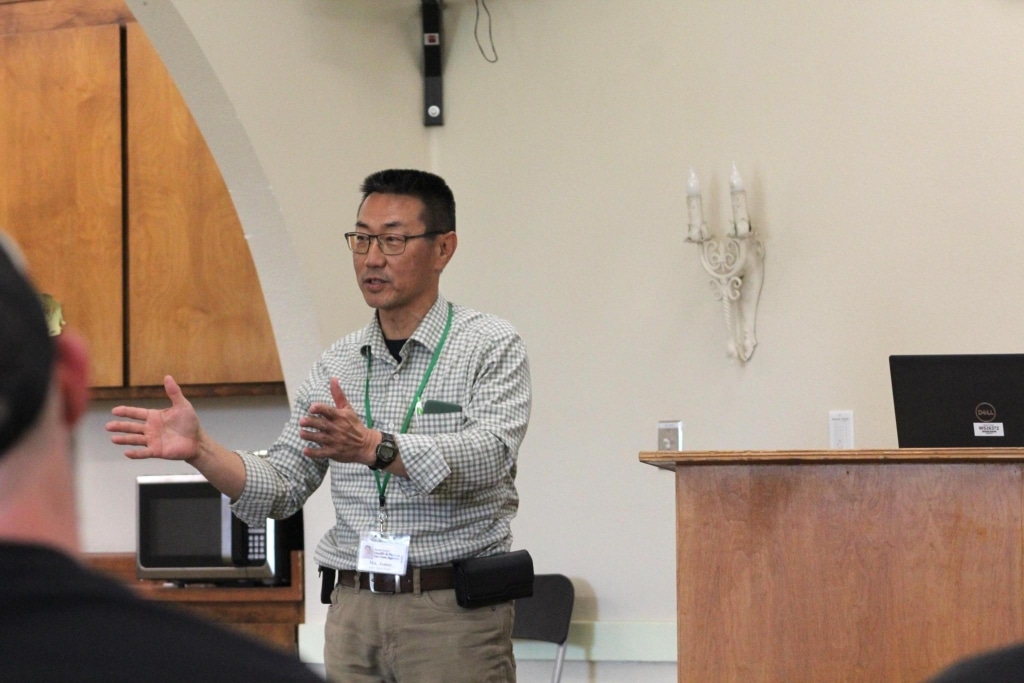
Another such collaborative effort has come from Shasta Public Health Officer Dr. James Mu. Last year, he declared a public health crisis due to the local physician shortage. Phillips, of the California Health Care Foundation, said that declaration had a real impact because it hadn’t been done in California before.
But more than a year later, Mu noted that Shasta remains in crisis with many having to leave the county on a regular basis for healthcare.
Mu, whose predecessor was fired for enforcing state COVID mandates, said Shasta should apply every possible solution, including welcoming clinical rotations from UC Davis — and supporting a Simpson-run medical school.
“That will increase the odds of us having extra physicians,” Mu emphasized.
Noting his own experience of having moved to Shasta from L.A. for his residency, Mu said he believes exposing physicians-in-training from other regions of California to the beauty of the North State is key.
“I had an opportunity to come up for the residency position and I fell in love with this place,” Mu said. “The air is clean, none of that L.A. smog, rent is reasonable, I could have an apartment with my dogs. Just one visit changed my mind.”
This reporting is part of a collaboration with the Institute for Nonprofit News‘ Rural News Network. Five nonprofit newsrooms were involved: Barn Raiser, Carolina Public Press, Mountain State Spotlight, Oklahoma Watch and Shasta Scout. The series was edited by veteran investigative editor Dee J. Hall, co-founder and former managing editor of Wisconsin Watch. Support from Ascendium Education Group made this project possible.
Oct. 12, 2026 11:55 a.m. We have updated wording in the story related to the number of hospitals in Shasta.
Do you have a correction to share? Email us: editor@shastascout.org.
Author

Comments (14)
Leave a comment
Related Articles
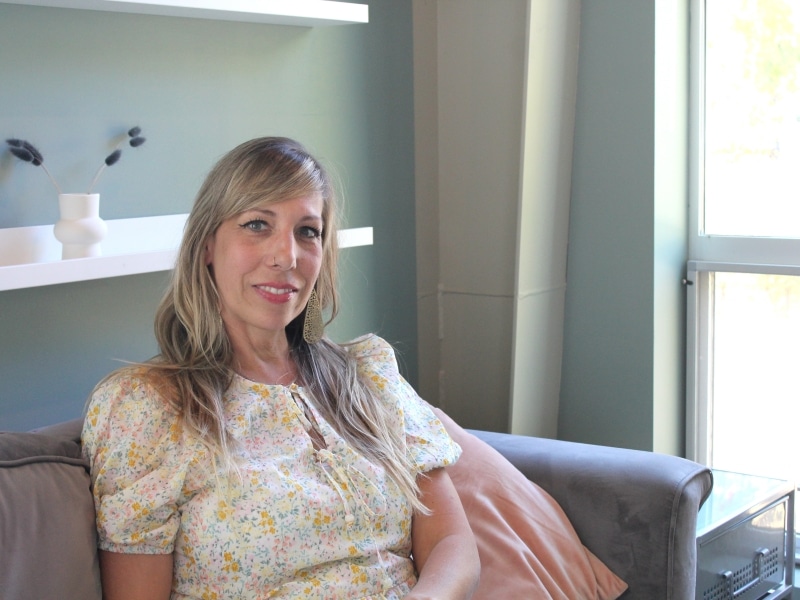
Meet Rebecca Anne Miller for Redding City Council
Three seats are up for grabs on the council this fall, and nine candidates are running. Miller is a substitute teacher with the Shasta County Office of Education and a caregiver with In-Home Supportive Services, or IHSS.
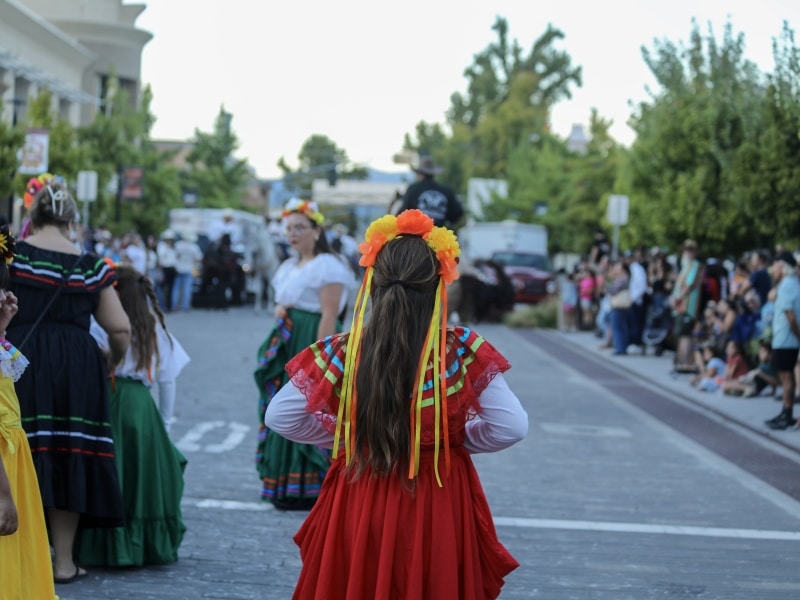
Gallery: Downtown Redding hosts fourth annual Hispanic Heritage Month celebration
Red Bluff-based entrepreneur Araceli Gutierrez collaborated with Viva Downtown to bring the celebration of Hispanic Heritage Month to Redding.
Meet Jack Munns for Redding City Council
There are three council seats on the ballot this November, and nine candidates are running. Munns is a current council member and former police officer.
The delivery of healthcare in our country is crippled by for profit institutions.
I believe that it will become more and more obvious that a system delivering healthcare to all without insurers prioritizing their profit when authorizing care is needed. Similarly, hospitals, clinics and private physician’s practices are doing a great injustice by considering maximizing profit over the best delivery.
I do not think that a conservative evangelical university should be given the task of developing a medical school from scratch using public funds.
Considering the financial crisis that the City of Redding is going through, seeding a new devopment of a medical school at Simpson seems ill-considered and shortsighted.
UC Davis is already providing specialized and acute care to the people of Shasta County and is the clear choice in expanding and training staff to serve us.
While some good suggestions have been made on how Northern California can slow the decline of health care for residents, I can’t help reading them as much more than a “rearranging the deck chairs on the Titanic” response.
America has the world’s worst health care system.
One aspect of which is that we restrict Medical school admissions largely by high tuition.
Rather than choose the most qualified students, and provide the necessary schools to train them, America has too few students, and selects them largely on their willingness to pay, either with inherited wealth or by incurring huge debts.
We intentionally have a nationwide doctors shortage, particularly in the less-lucrative specialties and geographic areas, essentially everywhere in the USA outside of major population centers.
Not having a decent national healthcare system in the USA is not an accident, it is the policy dictated by our corporate overlords.
The solution, a national managed healthcare system, is not possible as long as our elected representatives are bought-and-owned by the health care and insurance industries which are profiting mightily, by bleeding us dry.
Yep. We have the most expensive per-person healthcare system in the developed world by double, with middling quality and health outcomes, high system disenfranchisement (non-insured), and the lowest ratings of patient satisfaction.
.
And it’s all by design, and only possible because Republicans have convinced half of America that every other option is communism.
Simmons University keeps wanting to reinvent the wheel. Why? Because they have a social-political agenda.
.
Simpson y is an explicitly evangelical Christian private school. With affiliations and a documented relationship with both Turning Point USA (TPUSA) and Bethel Church, the campus appears interested in promoting evangelical Christian teachings and expanding its social base. As a private college, Simpson has more control over admissions than a public university like UC Davis, and its documented policy expressly reserves the right to prefer applicants based on religion. And Simpson’s proposed medical school hopes to open around 20340 and does not guarantee that its graduates will stay and practice in Shasta County. The plan also
.
UC Davis, a public, diverse, and nonpartisan school (by law), and has an accredited, established track record of more than 50 years of work with Shasta County and local residency programs specifically designed to address rural physician shortages, training more than 300 doctors to date. Additionally, UCD documents that more than 150 of those doctors have stayed in the North State. A 2019 study by the National Center for Rural Health estimated that one rural primary-care physician practicing in a community with a hospital supports about 23.3 local jobs and $1.7 million in annual wages, salaries, and benefits, including direct and secondary effects.
.
It’s clear that the diverse, public, non-religious UC Davis program has been rolling right along for half a century, delivering massive health and economic benefits to Shasta County and the North State. And the PUBLIC UCD Medical School can easily expand because its infrastructure is already in place. No need to reinvent the wheel.
.
At a recent Shasta County Board of Supervisors meeting, Simpson University’s “Norm” Hall spent about 20 minutes praising Ronald Reagan as a great president, followed by a formal agenda item and a Shasta County resolution. I brought up that Reagan’s explicit racist phone call with Nixon was so alarming that Reagan’s daughter, Patti Davis, had to publicly state, “There is no defense, no rationalization, no suitable explanation for what my father said on that taped phone conversation.” Reagan also opposed the Civil Rights Act of 1964 and the Voting Rights Act of 1965 and opposed making MLK’s birthday a federal holiday.
.
Simison College’s hero Ronald Reagan gutted funding and local financial independence for California’s and National PUBLIC schools and colleges while trying to use taxpayers’ money to fund private religious schools. And now far-right Shasta College politicians are trying to use taxpayers’ money to fund what, Simpson’s evangelical Christian R. Reagan Medical School?
.
Over 75% of us support taxpayer funding for PUBLIC colleges! (New America’s Fourth Annual Survey on Higher Education Rachel Fishman, Sophie Nguyen, & Myra Francisco). Let’s keep church and state separate!
The idea that politics keeps doctors away from Shasta County is ridiculous. Doctors generally become conservatives as they begin to earn real money and have kids.
.
What actually keeps doctors from moving to Redding is the heat. I have many, many doctors and other professionals for clients in the Bay Area and this conversation has been repeated ad nauseum. Combine the rough summer weather with a lack of UC or CSU (no concerts, no restaurants) and it isnt an attractive landing pad.
.
I asked one doctor recently about the political shenanigans in Shasta and he said he hadn’t heard of it but he remembered an awesome college houseboat trip. “And boy was it hot!” I’ve had that conversation 10 times. Save me the Shastanistan cop outs– Crye will be long gone but it will still be 110 degrees all August with no live music. Physician assistants for all! The solution is already here.
Yale University’s School of Public Health keeps track of this in a longitudinal study. The majority of MDs are Democrats. It’s true that the statistics tend to trend Republican in some specialties (surgery, anesthesiology, urology…), and that these tend to be high-paying specialties. The causality is uncertain. Does making more money turn MDs into Republicans? Or are Republicans attracted to specialties that make more money?
.
Female and young MDs are more likely to be registered as Democrats—that tracks with overall party affiliation among women and younger American voters… it’s not unique to doctors.
.
https://www.advisory.com/daily-briefing/2016/10/11/political-affiliation-doctors
“Political division is a barrier to improving healthcare access in Shasta County”
This issue has NOTHING TO DO with politics, specifically Democrats vs Republicans, conservatives vs liberals, rural people vs suburban folks, MAGA vs BLM, etc.
The COVID pandemic COMPULSORY VACCINATION PROGRAM OF EXPERIMENTAL SUBSTANCES WHOSE ADVERSE EFFECTS ARE STILL UNKNOWN TO SCIENCE forced many health professionals in Shasta County to make drastic decisions for themselves: either losing their jobs or accepting the risks of becoming lab rats.
How many COVID-vaccinated health professionals have perished or become permanently disabled?
Oh please. This is arrant, wilfully ignorant nonsense. The COVID vaccines went through the same testing as any other vaccine and saved millions of lives. Hysterical attitudes like this is why there are measles outbreaks all over the country, after having been effectively eliminated a generation ago. Lock yourself in your survival bunker and let the adults solve problems.
Selah
“For Dhanuka and Hall, that number of placements is laughable and won’t solve the physician workforce crisis.”-in response to Dr. Mark Davis -UC Davis comment above.
– Why do Dhanuka and Hall not acknowledge we have residency rotations here at Mercy, SRMC and Shasta Community Health Center and have for years? Some physicians have remained from those programs. There is already a connection with UC Davis. They appear to be dead set along with Crye to develop a medical school through Simpson. Will Simpson welcome physicians of all faiths?
The shortage was further exacerbated with both Drs. Mu and Dhanuka recently eliminating and/or limiting their own medical practices along with other physicians retiring as mentioned,
Political division and the current administration’s move to limit healthcare access is a conscious choice supported by the local MAGA movement in this county. Shasta county is proud of their political stance with the Trump administration and Project 2025 -I guess you get what you pay for in this instance…
So, after Karen Ramstrom was harassed by the anti-vax and anti-mask MAGA fools then fired for doing her job, and the politicization of the Health Dept., medical professionals don’t want to come here? It is a mystery that will never be solved.
Selah
Great story. Thank you for the coverage.
One detail: Mayers Memorial Hospital over in Fall River Mills and even Patients Hospital and Vibra right here in Redding might disagree with your statement that there are only two hospitals in Shasta.
They are obviously smaller and more specialized in the services they offer, but I believe they are all licensed as General Acute Care Hospitals.
Sorry, everyone’s out here in the peanut gallery hurling something.
Dr. Dhanuka needs to explain how establishing a medical school from scratch hosted by our local Christian University diploma mill is preferable to expanding the presence of UC Davis Medical School here, which it has expressed interest in doing (with the benefit of public funding). He also needs to explain where the funding for a private medical school is coming from. Until Dhanuka comes up with answers, I prefer the UCD option.
.
Dhanuka also needs to realize that having Crye as an ally is a liability. By now, most Shasta County residents are aware that Crye is a grifter who doesn’t support anything unless he sees it as an artery into which he can greedily jam his blood siphon. That’s largely why he’s a lame duck county supervisor.
.
Lastly, North State MAGA Republicans need to realize that the J-1 visa program forming the backbone of SRMC’s program of importing talent from India is under direct attack from the Trump Administration. The Administration just launched a (punitive) investigation of 9 universities, including UC Davis, Stanford, and Harvard, looking for “fraud.” The fraud is alleged because a majority of certain grant-funded research positions at these schools are occupied by students working under J-1 visas. That’s not fraud—it merely reflects where the best and brightest students are coming from and that they gravitate to the best universities.
.
As this article clearly articulates, many of those foreign students choose to stay in the USA. (How to get more of them to stay in Shasta County is an unanswered question.) I’ll just say that favorite specialist I’ve encountered at a local hospital was a nephrologist from India. He not only helped fix my acute blood pressure crisis, he had the best bedside manner I’ve ever encountered. (It turns out that I have two renal arteries conveying blood to one of my kidneys. Not especially rare—about 25% of the population are similarly endowed—but interesting. No real issues unless you’re having kidney surgery, when it apparently can become a jack-in-the-box moment if it hasn’t been previously discovered.)
I’m also interested in Dr. Dhanuka’s explanations to Esteban’s questions. I’ve seen the doctor engage with readers in the past, perhaps he’ll chime in on this site. UC Davis makes the utmost sense to me, Dr. Dhanuka – change my mind.
I strongly favor starting with the UC Davis program. It’s an established successful program that could start work years before the Simpson program. It’s boots on the ground vs dreams in the clouds. If Simpson follows- great- but let’s get Davis here as soon as possible